Discoveries for brass players, once a month. Join our free newsletter →

4 min. read

This article is for subscribers.

Valsalva Maneuver - Why?
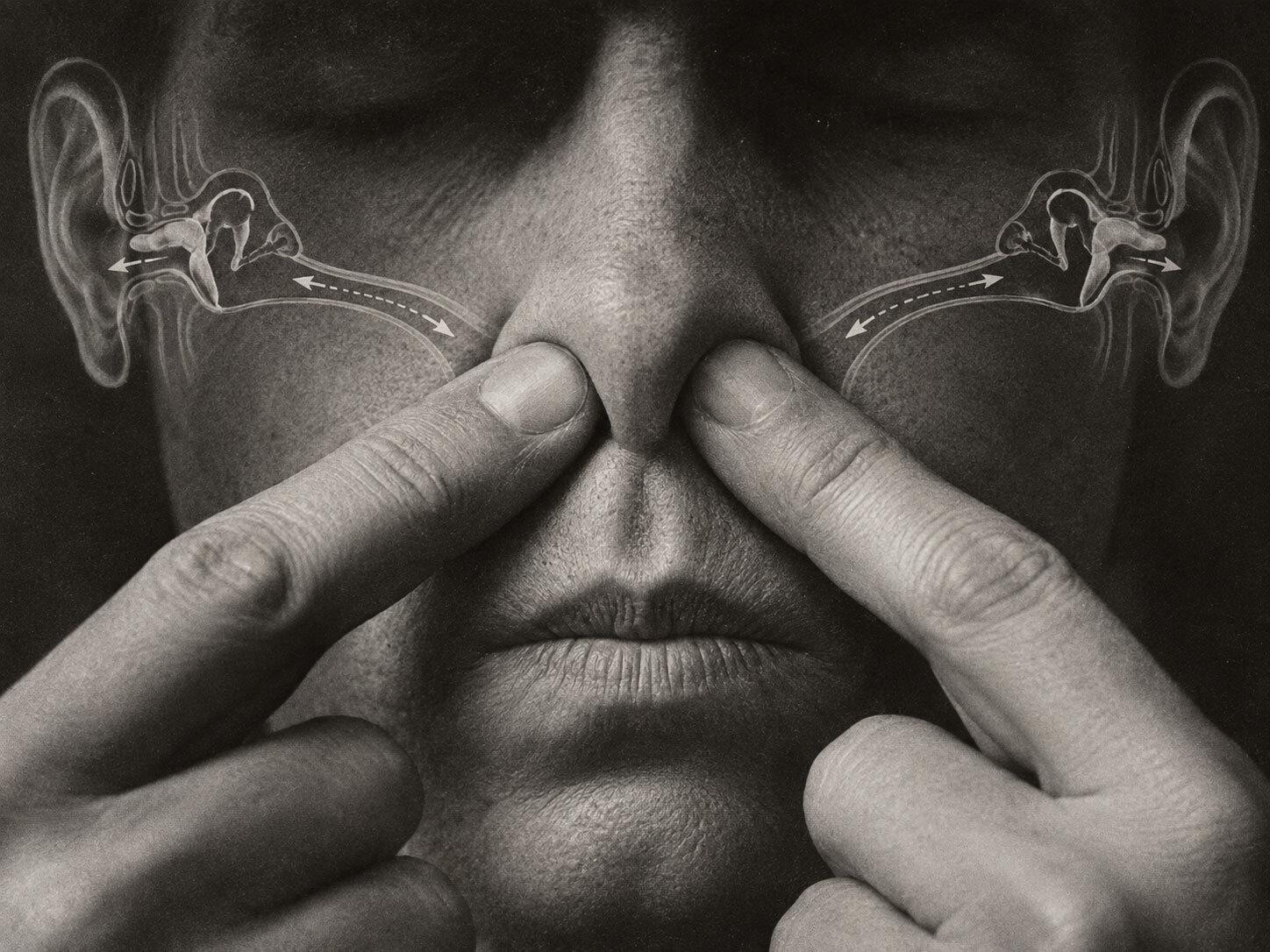
A familiar breathing technique becomes a source of resistance and tension, as William F. Cramer argues instead for an open throat and freer airflow.
Valsalva Maneuver - Why?

Occasional references in wind instrument literature to the Valsalva Maneuver as a technique for controlling the rate of expiration in wind instrument performance have given an impression which may be misleading, misunderstood or ambiguous. The following remarks are offered in an attempt to clarify the problem and perhaps to elicit — or even provoke — discussion!

Valsalva is not the name of any part of the human body. It is the name of a man. Antonio Valsalva was an Italian anatomist who lived from 1666 to 1723. His experiment included a maneuver which was essentially “the act of forcing air into the middle ear [through the Eustachian tubes] by blowing while the nostrils and mouth are closed, to relieve partial deafness.” (Webster’s Deluxe Unabridged Dictionary, Second Edition, 1983).

The maneuver as described is well-known to scuba divers and aviators, each group having the problem of equalizing pressure on opposite sides of the ear drum in order to relieve the pain accompanying unequal pressure. It is quite difficult to imagine any use to which the modern-day wind instrumentalist might put this technique; therefore the Valsalva Maneuver would seem to be a dead issue for the musician.

In medical practice, however, there is a modern adaptation of the Maneuver which is used in the diagnosis of certain cardiovascular disorders or heart murmurs. In this adaptation, the Valsalva Maneuver is essentially the forced expiratory effort against a closed glottis. Great pressure is built up within the abdominal cavity with no thought of expelling the air. The action is analogous to the straining effort used in executing a difficult bowel movement. The physiological result, however, of the prolongation of this Maneuver is an elevation in arterial blood pressure which may give rise to cranial pains. At the same time there may be an impairment in the return of venous blood, particularly from the legs; this leaves the heart with less blood to pump and the result is a blackout.

In wind instrument performance, advocates of the Valsalva Maneuver are asking for the careful and controlled use of the epiglottis to release the air in whatever quantity is necessary and with whatever pressure is needed for performing the musical passage. This action seems analogous to a variable Venturi tube with its accompanying resistance. To the casual observer this would appear to be a case of self-induced choking or strangulation and for the performer there is the ever-present threat of pain and blackout.

This article is for subscribers.

CHF 5.00 per month · Cancel auto-renewal anytime.

Enjoy unlimited access to all digitized Brass Bulletin articles.

Brass Bulletin 52, IV / 1985 pages 36–38

All content is protected by copyright © Brass Bulletin 1985–2026

Share this article

Facebook LinkedIn
Loading…

Questions & Answers

How the Digital Edition works

What does the Digital Edition include?

The Digital Edition brings together the articles already digitized as searchable online texts—not simply as scans or PDF files—along with their original illustrations, notes, authorship, issue information, and available translations. Related-article suggestions currently include only this digitized material.

Are the digital articles identical to the originals?

We preserve the original text, language, illustrations, captions, footnotes, and editorial context as faithfully as possible. The presentation is adapted for comfortable online reading, and obvious transcription or scanning errors may be corrected. The substance and character of the published article remain unchanged.

Which languages are available?

Brass Bulletin was published in English, French, and German throughout its history. Italian and Spanish translations were added from issue No. 60 onward.

On the Italian and Spanish sites, articles from issues 1–59 are therefore shown in English by default.

How often are new articles added?

New articles are added almost daily, with approximately one complete issue digitized each week. The pace may vary depending on the preparation, image work, and editorial checking required.

Why aren’t all articles available digitally?

The complete Brass Bulletin collection contains 1,246 articles published between 1971 and 2003. The full index is already available online, allowing readers to discover every article in the collection, including those whose complete text has not yet been digitized.

Digitization began in February 2026. Each article is carefully prepared for online reading, checked, and connected to its issue, authors, subjects, and illustrations. At the current pace of digitization, the complete collection is expected to be available online by February 2028.

Why do some references mention articles that are not available yet?

References in the original articles are preserved even when the material they point to has not yet been digitized. This keeps the historical and editorial record intact. As more issues are added to the Digital Edition, an increasing number of these references will lead to articles that can be read online.

Can I suggest an article or report a transcription error?

Yes. If there is an article you would particularly like to see digitized, or if you notice a possible transcription error or missing detail, please contact us. Reader feedback helps us improve the Digital Edition and prioritize useful connections within the archive.

How can I support Brass Bulletin?

Your support helps fund the preparation, verification, and online publication of the complete collection.

Subscribe to the Digital Edition

Prefer to support us without subscribing?

Make a donation

How is the digitization progressing?

We’re gradually making the Brass Bulletin available online, article by article. You can read newly digitized articles as soon as they’re ready, even before an entire issue is complete.

Visit our Digitization Roadmap to browse recent additions and see estimated availability for upcoming issues. These estimates follow our recent pace and may change.

Search Brass Bulletin.