Explore institutional access Explore institutional access

4 min. read

Steve Lewis, Hornmaker

Old World Craftsmanship plus New World Technology
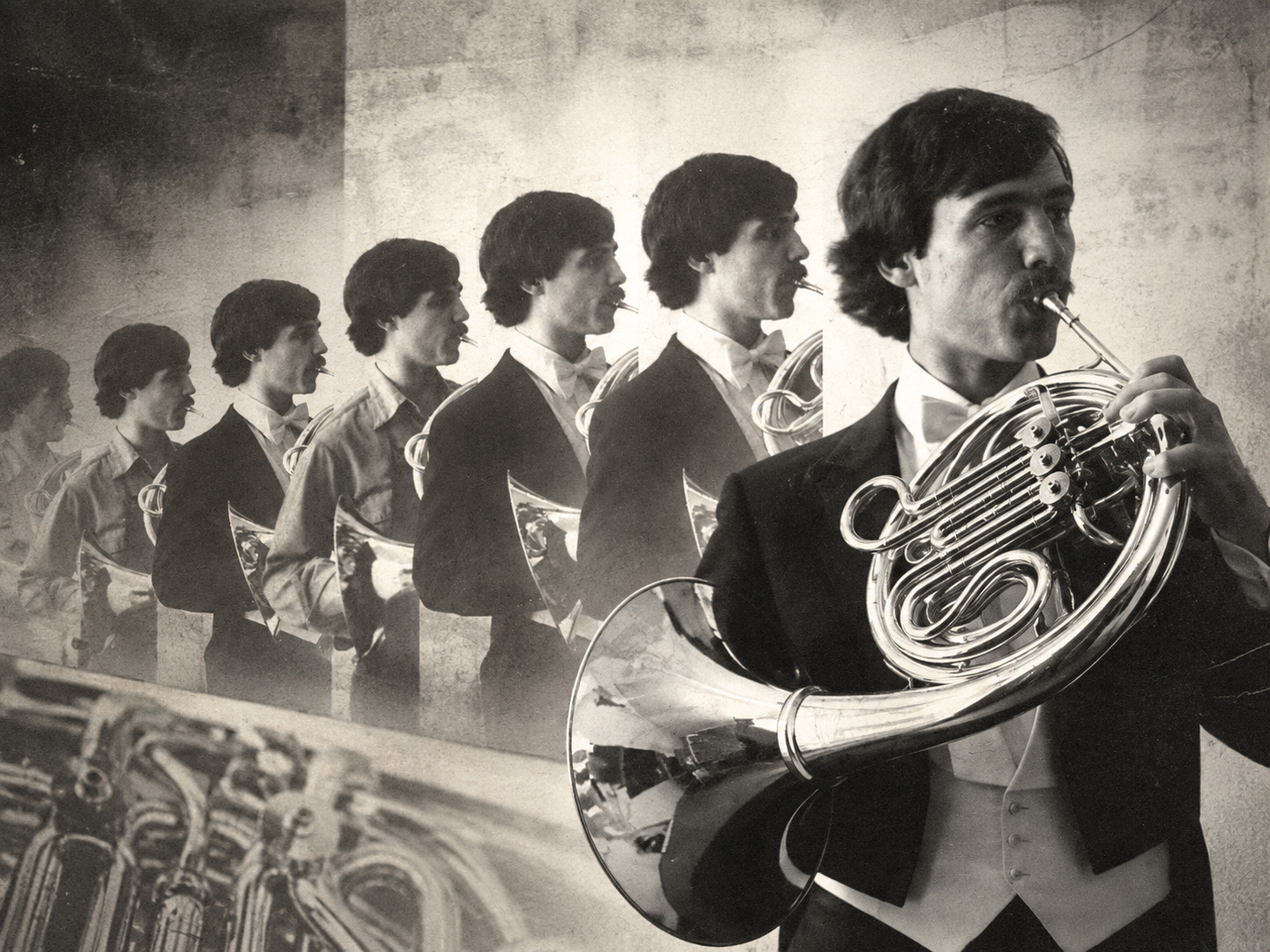
In 1980s Chicago, Steve Lewis joined Old World bench craft to modern precision, building horns one by one around the player, the metal and a distinctive sound.
Steve Lewis, Hornmaker

Steve Lewis

It usually takes years, sometimes generations, for a new instrument to be fully accepted by professional musicians. This has never been a problem for Chicago horn maker Steve Lewis, who in the 8 years since opening his shop has sold 111 custom-made horns to advanced students, major educators, and professionals in orchestras throughout the world. His first five horns went to the Pittsburgh Symphony. Conductor André Previn asked Dale Clevenger, solo horn of the Chicago Symphony, how he could get a sound like Chicago’s from his section. Clevenger replied, “Part of it is concept, and part of it is instrument. Concept is up to you, and for the instrument, there’s only one place to get them: Steve Lewis.” At that moment, Steve Lewis had not yet made his first horn! And shortly thereafter followed orders for four from the Syracuse Symphony…

Steve Lewis originally came to Chicago to study horn with Dale Clevenger. To earn a little extra money, he took a job in instrument repair at Schilke’s. As it happened, he was paired with Jerry Lechniuk, a master craftsman who learned his skills in the Ukraine and in Poland before World War II. Lechniuk taught him a step at a time to make and repair every part of the horn. (Lewis also made six horns before leaving Schilke’s.) This apprenticeship lasted four years, until Lechniuk’s fatal stroke in 1976. “Jerry taught me restoration,” says Lewis, “But more than anything else, he taught me pride of workmanship, to slow down and take my time doing something step by step.”

Lewis left Schilke’s a few months after Lechniuk’s death. It was then that members of the Chicago Symphony brass section suggested to him that he set up his own shop in horn making and repair, and they later backed up the suggestion with a $25,000 loan to help him do so. So, with that plus a personal loan for $10,000, Steve Lewis spent five months selecting and ordering machinery, parts, tools, and supplies, assembling an impressive array of the finest equipment which enabled him to establish a state-of-the-art shop to manufacture new and restore old horns.

What kind of horn does Steve Lewis make? “All my career I’ve played a Schmidt model Geyer (made in 1919), a beautiful horn… I thought if I could ever make a horn, that would be the horn I’d want to make. The problem with that is that there are just a few people who will play a horn with a piston change valve. I had to have a horn more universal in appeal from a mechanical standpoint, so I used a traditional model with a rotary change valve, a 70 year old Knopf. You could call it a Geyer model. Knopf always said that Geyer copied him, and Geyer said that Knopf copied him. Knopf was in Markneukirchen, which is where Carl Geyer born, so… it’s a very beautiful design. It seemed like a natural evolution from the piston change valve to a rotary change valve. The Schmidt to me is the ideal design, but in lieu of that, this Knopf-Geyer model seems to be the best design.

Continue reading

Access the full Digital Edition.

Brass Bulletin 49, I / 1985 pages 36–39

All content is protected by copyright © Brass Bulletin 1985–2026

Share this article

Facebook LinkedIn
Loading…

Questions & Answers

How the Digital Edition works

What does the Digital Edition include?

The Digital Edition brings together the articles already digitized as searchable online texts—not simply as scans or PDF files—along with their original illustrations, notes, authorship, issue information, and available translations. Related-article suggestions currently include only this digitized material.

Are the digital articles identical to the originals?

We preserve the original text, language, illustrations, captions, footnotes, and editorial context as faithfully as possible. The presentation is adapted for comfortable online reading, and obvious transcription or scanning errors may be corrected. The substance and character of the published article remain unchanged.

Which languages are available?

Brass Bulletin was published in English, French, and German throughout its history. Italian and Spanish translations were added from issue No. 60 onward.

On the Italian and Spanish sites, articles from issues 1–59 are therefore shown in English by default.

How often are new articles added?

New articles are added almost daily, with approximately one complete issue digitized each week. The pace may vary depending on the preparation, image work, and editorial checking required.

Why aren’t all articles available digitally?

The complete Brass Bulletin collection contains 1,246 articles published between 1971 and 2003. The full index is already available online, allowing readers to discover every article in the collection, including those whose complete text has not yet been digitized.

Digitization began in February 2026. Each article is carefully prepared for online reading, checked, and connected to its issue, authors, subjects, and illustrations. At the current pace of digitization, the complete collection is expected to be available online by February 2028.

Why do some references mention articles that are not available yet?

References in the original articles are preserved even when the material they point to has not yet been digitized. This keeps the historical and editorial record intact. As more issues are added to the Digital Edition, an increasing number of these references will lead to articles that can be read online.

Can I suggest an article or report a transcription error?

Yes. If there is an article you would particularly like to see digitized, or if you notice a possible transcription error or missing detail, please contact us. Reader feedback helps us improve the Digital Edition and prioritize useful connections within the archive.

How can I support Brass Bulletin?

Your support helps fund the preparation, verification, and online publication of the complete collection.

Subscribe to the Digital Edition

Prefer to support us without subscribing?

Make a donation

Search Brass Bulletin.