Brass Bulletin 13, I / 1976 (page 52–55) · 2 min. read
All content is protected by copyright © Brass Bulletin 1976–2026

My new developed descant double horn

Search in this article

Theo Westhof, hornist with the Utrecht Symphony Orchestra, relates his newly developed descant double horn.

The horn player’s first problem today is the choice of the correct instrument. Even the most renowned firms offer a confusing number of models. What one usually wants is an instrument with ease of blowing and a firm response in all registers, as well as a well-balanced, warm tone quality. If you begin to look for such an instrument, you will soon find out that it does not exist. Indeed, for many years there have been good instruments on the market, and it was thought that with the introduction of the B♭/F double horn, perfection had been reached. Yet not even this horn meets the demands of modern horn players.

For the high horn player especially, the descant double — possibly even a triple — would be ideal, if (at least with present models) one did not have to put up with:
a) the well-known tuning problems, and
b) the loss of tone quality caused by the — here inevitable — short mouthpipe.

Consequently, the descant double horn’s use is limited, and many horn players return to the B♭ or double horn, whose tone is much better, although it is rather unreliable in the higher register.

Brass Bulletin image

Having been an orchestral musician for many years, I have given a great deal of attention to these problems. Now, after much experimenting, I believe I have found the solution:

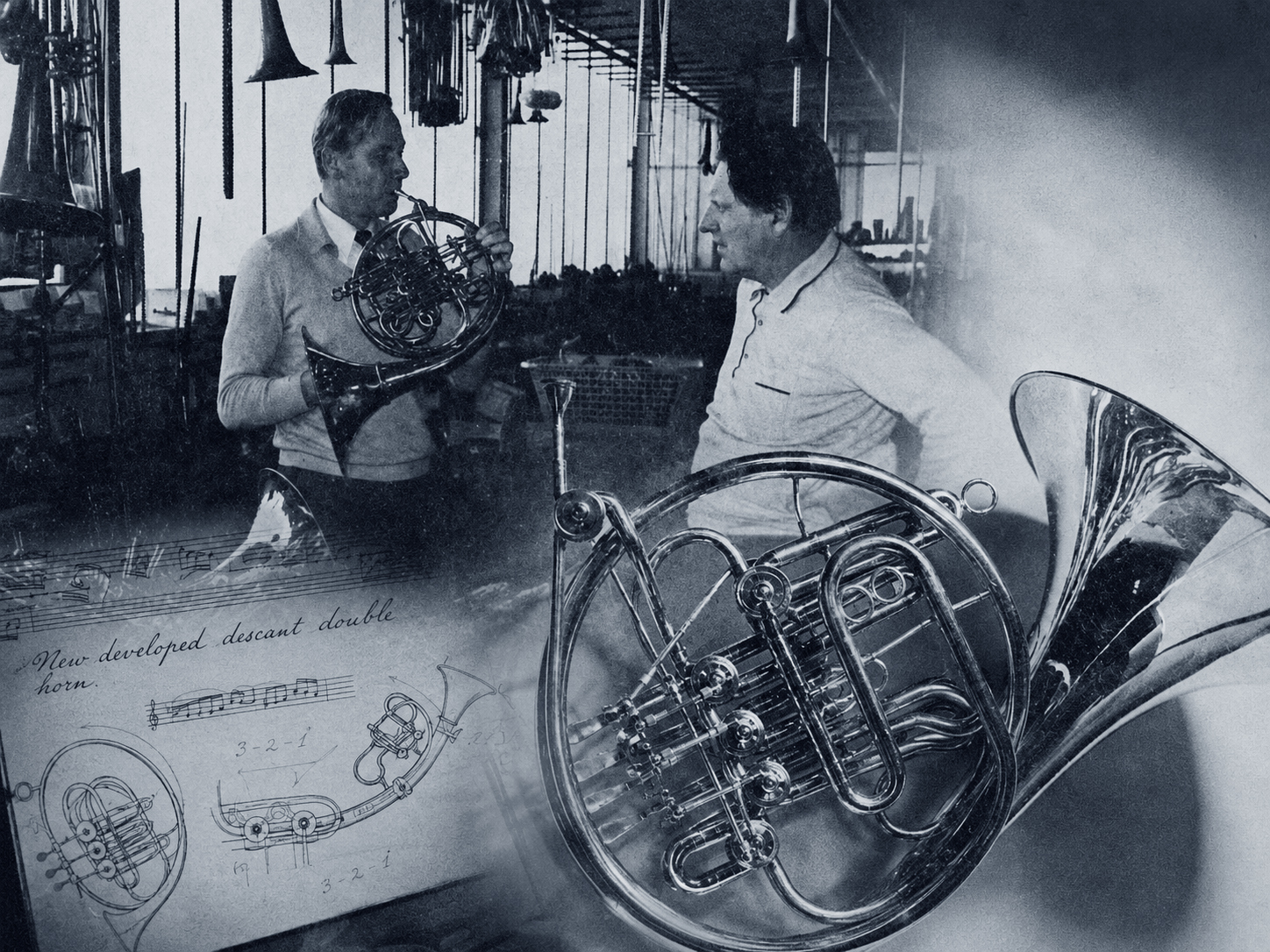
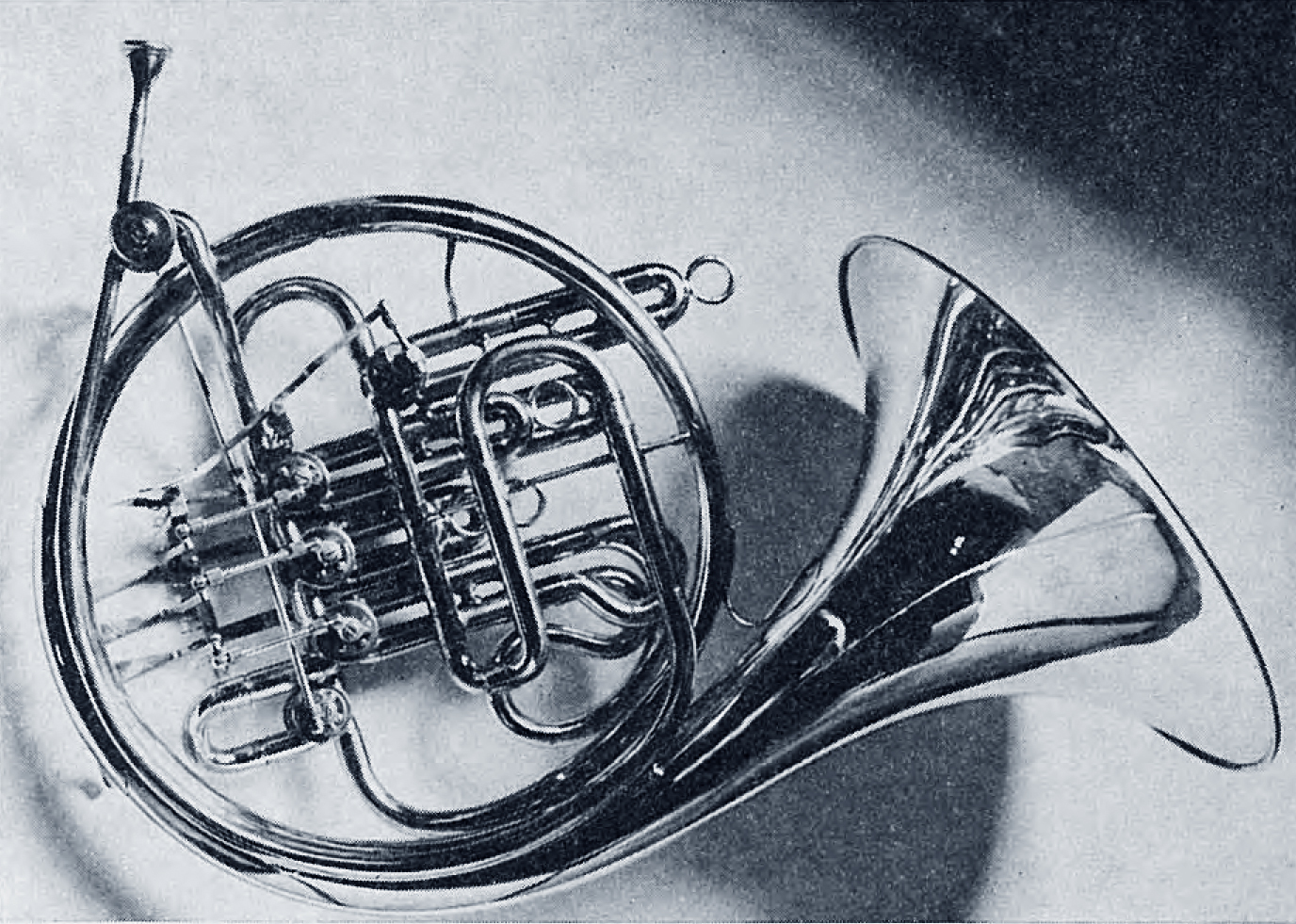
The present descant double horn is to be changed in such a way that the B♭ horn (in the case of the triple: B♭ and F horn) remains unaltered — i.e. also the long, slim conical mouthpipe. One of the two change valves will be soldered onto the mouthpipe immediately behind the mouthpiece, instead of in the main valve cluster. From this valve, the alto F horn will now lead off and join the main body behind the cluster at the second change valve (see illustration).

Advantages:
a) Both horn sides have their own set of tubing, with both mouthpipes independent from each other;
b) each mouthpipe produces a sound ideally suited to the respective horn side;
c) each horn side has its own independent main tuning slide, since the valve slides are separate.

I have constructed this horn with the firm Helmuth Finke in Vlotho/Exter, while Dr. Klaus Wogram of the Acoustics Institute (P.T.B. Braunschweig) has been extremely helpful, using computer programs to assist in solving the tuning problems. I dare say that we have succeeded in constructing a horn that is very straightforward, without the conglomeration of tubing found in most other horns.
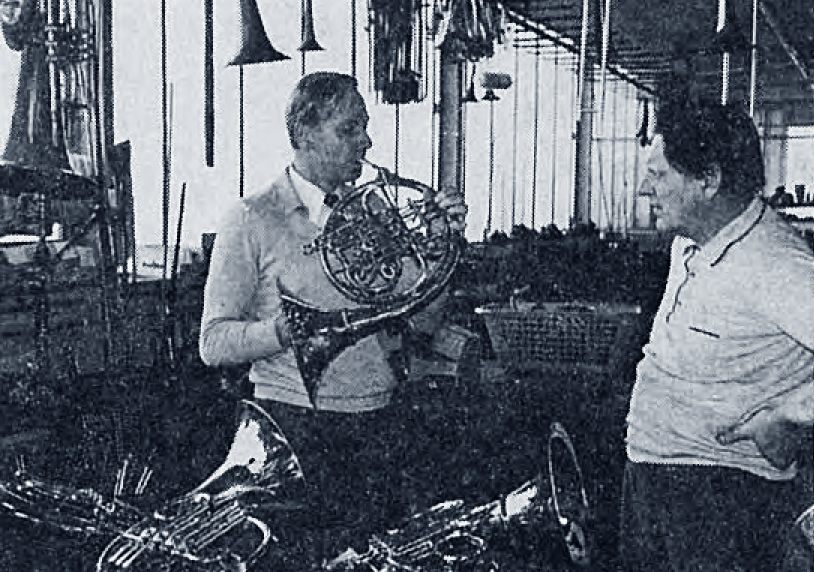
Theo Westhof, Helmut Finke

Share this article

Loading…