Ofrezca Brass Bulletin en su universidad, conservatorio o biblioteca Descubra el acceso institucional

4 min de lectura

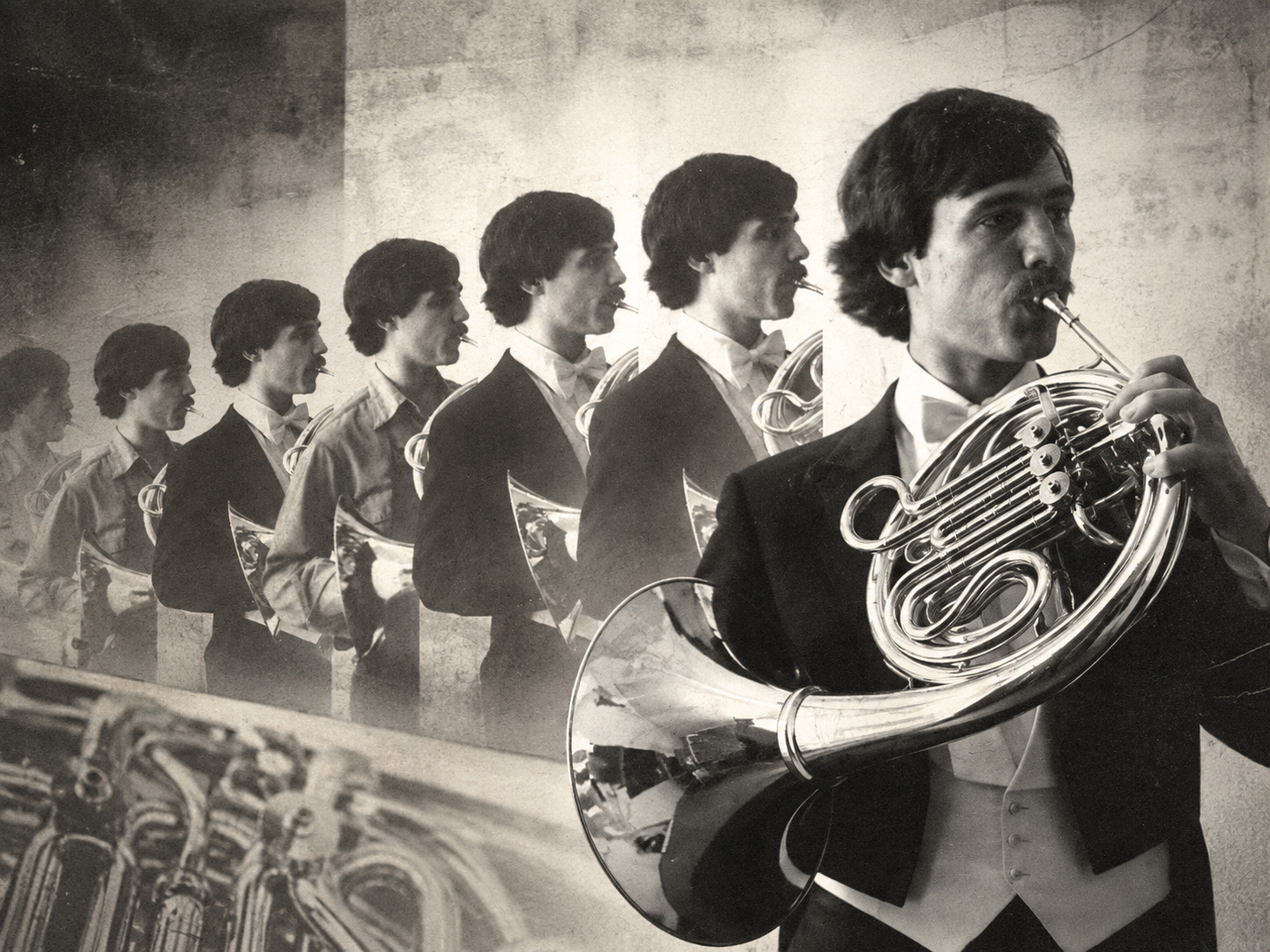
Steve Lewis, Hornmaker

Old World Craftsmanship plus New World Technology

In 1980s Chicago, Steve Lewis joined Old World bench craft to modern precision, building horns one by one around the player, the metal and a distinctive sound.
Steve Lewis, Hornmaker

Steve Lewis

It usually takes years, sometimes generations, for a new instrument to be fully accepted by professional musicians. This has never been a problem for Chicago horn maker Steve Lewis, who in the 8 years since opening his shop has sold 111 custom-made horns to advanced students, major educators, and professionals in orchestras throughout the world. His first five horns went to the Pittsburgh Symphony. Conductor André Previn asked Dale Clevenger, solo horn of the Chicago Symphony, how he could get a sound like Chicago’s from his section. Clevenger replied, “Part of it is concept, and part of it is instrument. Concept is up to you, and for the instrument, there’s only one place to get them: Steve Lewis.” At that moment, Steve Lewis had not yet made his first horn! And shortly thereafter followed orders for four from the Syracuse Symphony…

Steve Lewis originally came to Chicago to study horn with Dale Clevenger. To earn a little extra money, he took a job in instrument repair at Schilke’s. As it happened, he was paired with Jerry Lechniuk, a master craftsman who learned his skills in the Ukraine and in Poland before World War II. Lechniuk taught him a step at a time to make and repair every part of the horn. (Lewis also made six horns before leaving Schilke’s.) This apprenticeship lasted four years, until Lechniuk’s fatal stroke in 1976. “Jerry taught me restoration,” says Lewis, “But more than anything else, he taught me pride of workmanship, to slow down and take my time doing something step by step.”

Lewis left Schilke’s a few months after Lechniuk’s death. It was then that members of the Chicago Symphony brass section suggested to him that he set up his own shop in horn making and repair, and they later backed up the suggestion with a $25,000 loan to help him do so. So, with that plus a personal loan for $10,000, Steve Lewis spent five months selecting and ordering machinery, parts, tools, and supplies, assembling an impressive array of the finest equipment which enabled him to establish a state-of-the-art shop to manufacture new and restore old horns.

What kind of horn does Steve Lewis make? “All my career I’ve played a Schmidt model Geyer (made in 1919), a beautiful horn… I thought if I could ever make a horn, that would be the horn I’d want to make. The problem with that is that there are just a few people who will play a horn with a piston change valve. I had to have a horn more universal in appeal from a mechanical standpoint, so I used a traditional model with a rotary change valve, a 70 year old Knopf. You could call it a Geyer model. Knopf always said that Geyer copied him, and Geyer said that Knopf copied him. Knopf was in Markneukirchen, which is where Carl Geyer born, so… it’s a very beautiful design. It seemed like a natural evolution from the piston change valve to a rotary change valve. The Schmidt to me is the ideal design, but in lieu of that, this Knopf-Geyer model seems to be the best design.

Continue reading

Accede a la edición digital completa.

Brass Bulletin 49, I / 1985 páginas 36–39

Todo el contenido está protegido por derechos de autor © Brass Bulletin 1985–2026

Compartir este artículo

Facebook LinkedIn
Cargando…

Preguntas y respuestas

Cómo funciona la edición digital

¿Qué incluye la edición digital?

La edición digital reúne los artículos ya digitalizados como textos legibles y consultables en línea —no simplemente como escaneos o archivos PDF— junto con sus ilustraciones originales, notas, autoría, información del número y traducciones disponibles. Las sugerencias de artículos relacionados incluyen actualmente solo este material digitalizado.

¿Los artículos digitales son idénticos a los originales?

Conservamos con la mayor fidelidad posible el texto original, el idioma, las ilustraciones, los pies de imagen, las notas y el contexto editorial. La presentación se adapta para facilitar la lectura en línea y pueden corregirse errores evidentes de transcripción o escaneado. El contenido y el carácter del artículo publicado permanecen inalterados.

¿Qué idiomas están disponibles?

Brass Bulletin se publicó en inglés, francés y alemán a lo largo de toda su historia. Las traducciones al italiano y al español se añadieron a partir del número 60. Por este motivo, en los sitios italiano y español los artículos de los números 1 a 59 se muestran en inglés de forma predeterminada.

¿Con qué frecuencia se añaden nuevos artículos?

Se añaden nuevos artículos casi a diario, con aproximadamente un número completo digitalizado cada semana. El ritmo puede variar según el trabajo de preparación, tratamiento de imágenes y revisión editorial necesario.

¿Por qué no están disponibles todos los artículos en formato digital?

La colección completa de Brass Bulletin contiene 1.246 artículos publicados entre 1971 y 2003. El índice completo ya está disponible en línea y permite descubrir todos los artículos de la colección, incluidos aquellos cuyo texto íntegro todavía no ha sido digitalizado.

La digitalización comenzó en febrero de 2026. Cada artículo se prepara cuidadosamente para la lectura en línea, se revisa y se vincula con su número, sus autores, sus temas y sus ilustraciones. Al ritmo actual de digitalización, se prevé que la colección completa esté disponible en línea en febrero de 2028.

¿Por qué algunas referencias mencionan artículos que todavía no están disponibles?

Las referencias de los artículos originales se conservan aunque el material al que remiten aún no haya sido digitalizado. De este modo se mantiene intacto el contexto histórico y editorial. A medida que se incorporen más números a la edición digital, un número creciente de estas referencias conducirá a artículos que podrán leerse en línea.

¿Puedo sugerir un artículo o informar de un error de transcripción?

Sí. Si hay algún artículo que le gustaría especialmente ver digitalizado, o si detecta un posible error de transcripción o algún dato que falta, póngase en contacto con nosotros. Los comentarios de los lectores nos ayudan a mejorar la edición digital y a establecer prioridades útiles dentro del archivo.

¿Cómo puedo apoyar a Brass Bulletin?

Su apoyo ayuda a financiar la preparación, verificación y publicación en línea de la colección completa.

Suscríbase a la Edición Digital

¿Prefiere apoyarnos sin suscribirse?

Haga una donación

Busca en Brass Bulletin.