2 min. read
This article is for subscribers.
George Swift, You see who I mean?
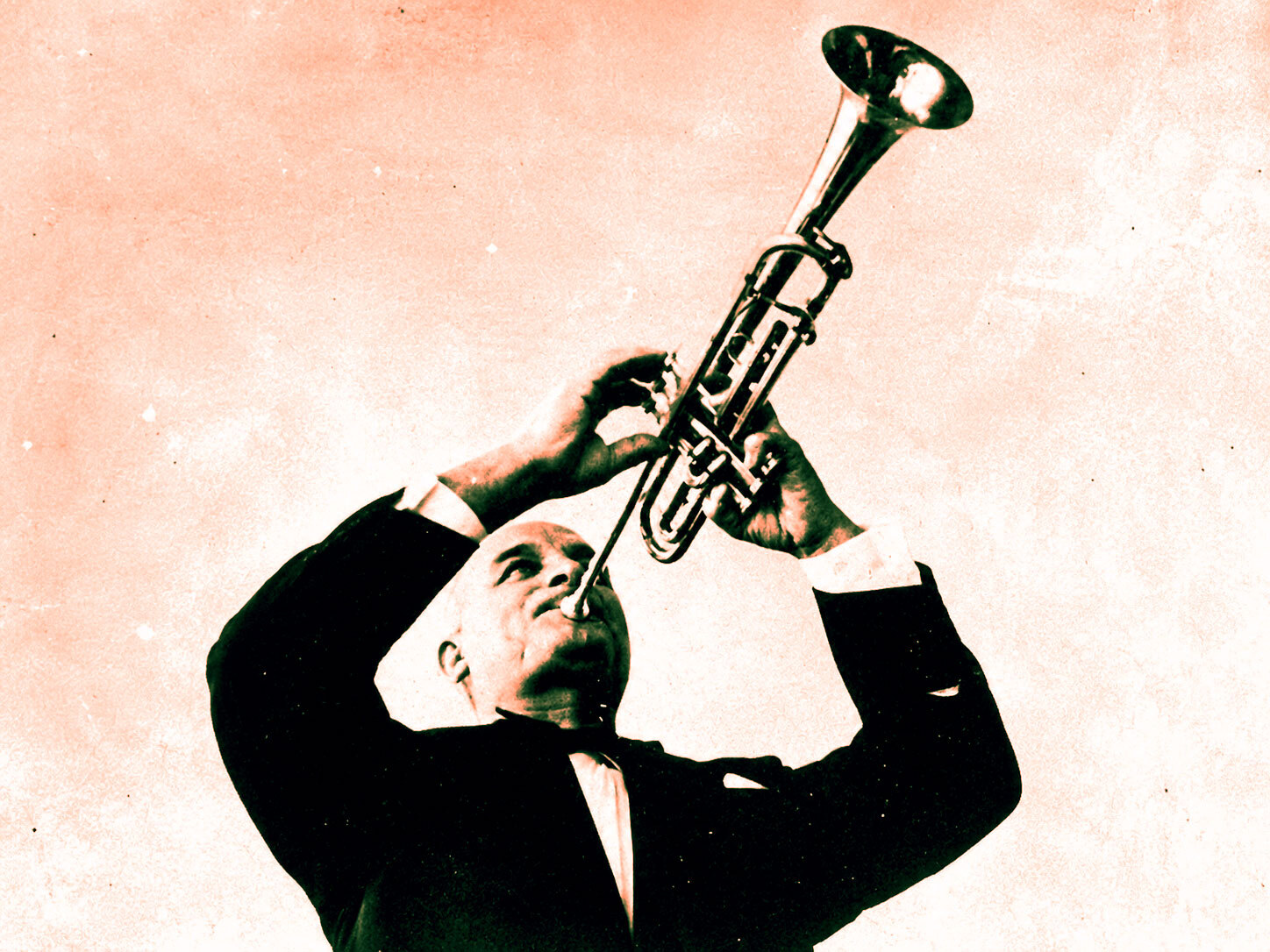
George Swift
Ten years ago Marcel Damant told me about an extraordinary trumpet technician: George Swift. This player died in early 1986 and the legends concerning him, born of a lack of hard information, are alive and well. As it happens, I was in touch with him when he lived in Marbella, in Spain, and he entrusted to me a cassette which tells his life story.
France knows George Swift through an old 78 (Odeon 279.083), issued around 1936 and broadcast on radio, where, accompanied only by Alec Templeton at the piano, he plays "Bohemian Airs" by Pablo de Sarasate and his own (although attributed to Templeton) "Sonia", named after his daughter. His superlative technique impressed some connoisseurs. Before that time the "concert trumpet" had for all practical purposes not existed. It was either the cornet repertoire, well represented in Swift's day and in his own country by Jack Mackintosh and Harry Mortimer, or else jazz, unquestionably dominated at that time by Louis Armstrong. There was in fact another Briton on the horizon, one who had at about the same time recorded the 2nd Brandenburg (1935, with Adolf Busch) and was preparing to present the world with two extracts from the Haydn concerto (1938, issued in France on two 78s, Columbia DX 933) — George Eskdale.
Eskdale and Swift were to have the historic privilege of creating a solo concept for the trumpet, of both having come from brass bands and of having been involved with jazz. Swift was born in South Shields, in the north-east of England, in 1911. His father played cornet in the Bolden Colliery Band. This prompted the ten-year-old Swift to take up the cornet and five years later he was playing in the celebrated St. Hilda Band. This gave him the chance to play the classic solos of the repertoire, notable "Zelda", "Cleopatra" and "Pretty Jane". He is also said to have played at the Canadian National Exposition (in Toronto) with this band when it had turned professional. He then joined a dance band led by Bobby Hines, with which he toured Germany and Switzerland. It was at this time that he married Elfriede, to whom he dedicated a trumpet solo. He then joined the Bernhard Ette band in Germany (1932-1934). During this time, while in Berlin, he had a phone call from the famous bandleader Jack Hylton and so joined this very popular dance band as 1st trumpet, staying there until the Second War.
This article is for subscribers.
CHF 5.00 per month · Cancel auto-renewal anytime.
Enjoy unlimited access to all digitized Brass Bulletin articles.
Brass Bulletin 55, III / 1986 pages 69–73
All content is protected by copyright © Brass Bulletin 1986–2026