3 min. read
This article is for subscribers.
Understanding the mouthpiece
By John Stork
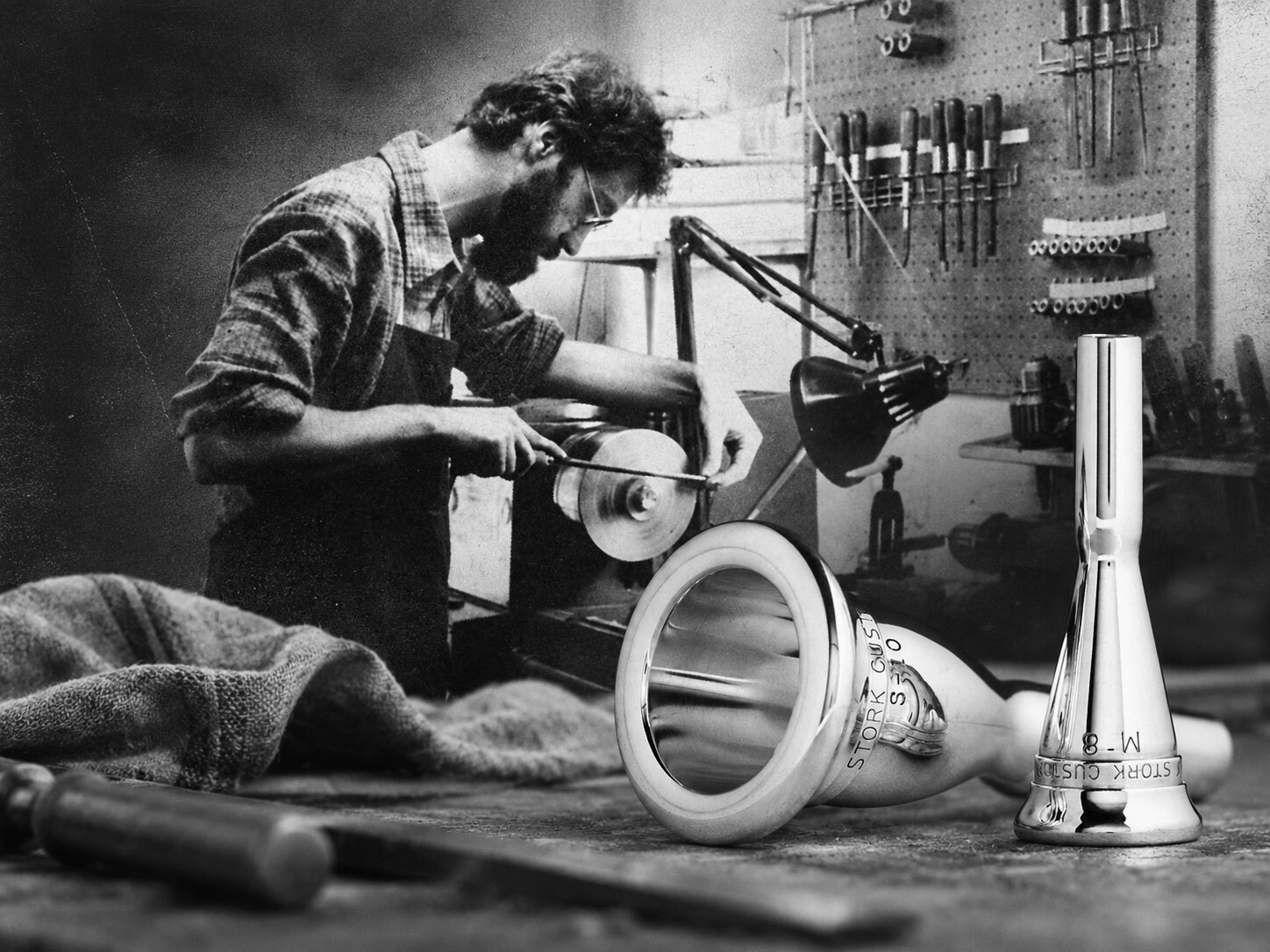
John Stork
The first step towards understanding mouthpieces is to be clear about the role they play.
A mouthpiece allows the flexibility to adapt the idiosyncrasies of a player’s physical make-up to the instrument he or she plays. It is the degree to which a mouthpiece successfully translates the vibrations produced by a player’s lips that decides the quality of performance. The instrument merely functions as an amplifier for what the mouthpiece catches. Of course, the instrument enhances the vibrations, but the mouthpiece dictates what there will be to work with. Seen in this role the mouthpiece becomes the most important piece of equipment in a brass player’s arsenal, second only to a player’s own talent and abilities.
Obviously, no mouthpiece will enable someone without any innate talent to play, but an improper mouthpiece can certainly keep even the most talented individual from a successful career.
I’ve seen many obviously talented players struggling with aspects of their playing because of a mouthpiece that either doesn’t fit them, or simply has not been balanced to fit them or the instrument they are playing. Often this type of player, because of tremendous natural ability, is enjoying some degree of success. Whatever he is unable to do he naturally comes to accept as his personal “ceiling”.
Physical vs. mechanical approaches
Often such players are conditioned to believe that brass playing problems can and should only be corrected through a change of embouchure or other completely physical means. Unfortunately, along with this view usually comes the belief that mouthpiece experimentation is mere gimmickry and a waste of time. It is all too easy to hear scoffing on the idea of “magic mouthpieces”. Yet it’s just as ridiculous to watch someone trying to make an embouchure change, stare into a mirror and contort their face into some unnatural grimace that some embouchure specialist has assured them is the “ultimate” setting.
Just as there is no one “correct” embouchure, there is no one mouthpiece that will work well for everyone. Indeed, it makes far greater sense for a more advanced player, who feels comfortable with the embouchure he is using, to try and correct different aspects of his playing by altering his mouthpiece.
Using a different mouthpiece can cause the jaw line to change, the position of the tongue to move and the embouchure itself will either compress more or loosen depending on which direction is required by the individual. These changes will be experienced, almost unconsciously, as a natural consequence of the change in equipment. Anyone who has tried to change embouchures knows how uncomfortable one can feel trying to accomplish any one of the above mentioned goals by conscious effort. Once again this is not to assert that a mouthpiece will solve all playing problems. What is true is that mouthpiece experimentation has not received the credibility for being the valid alternative to correcting problems that it merits.
Sadly enough, mouthpiece experimentation will most likely continue to have the bad name it does until people become more informed about the actual workings of a mouthpiece.
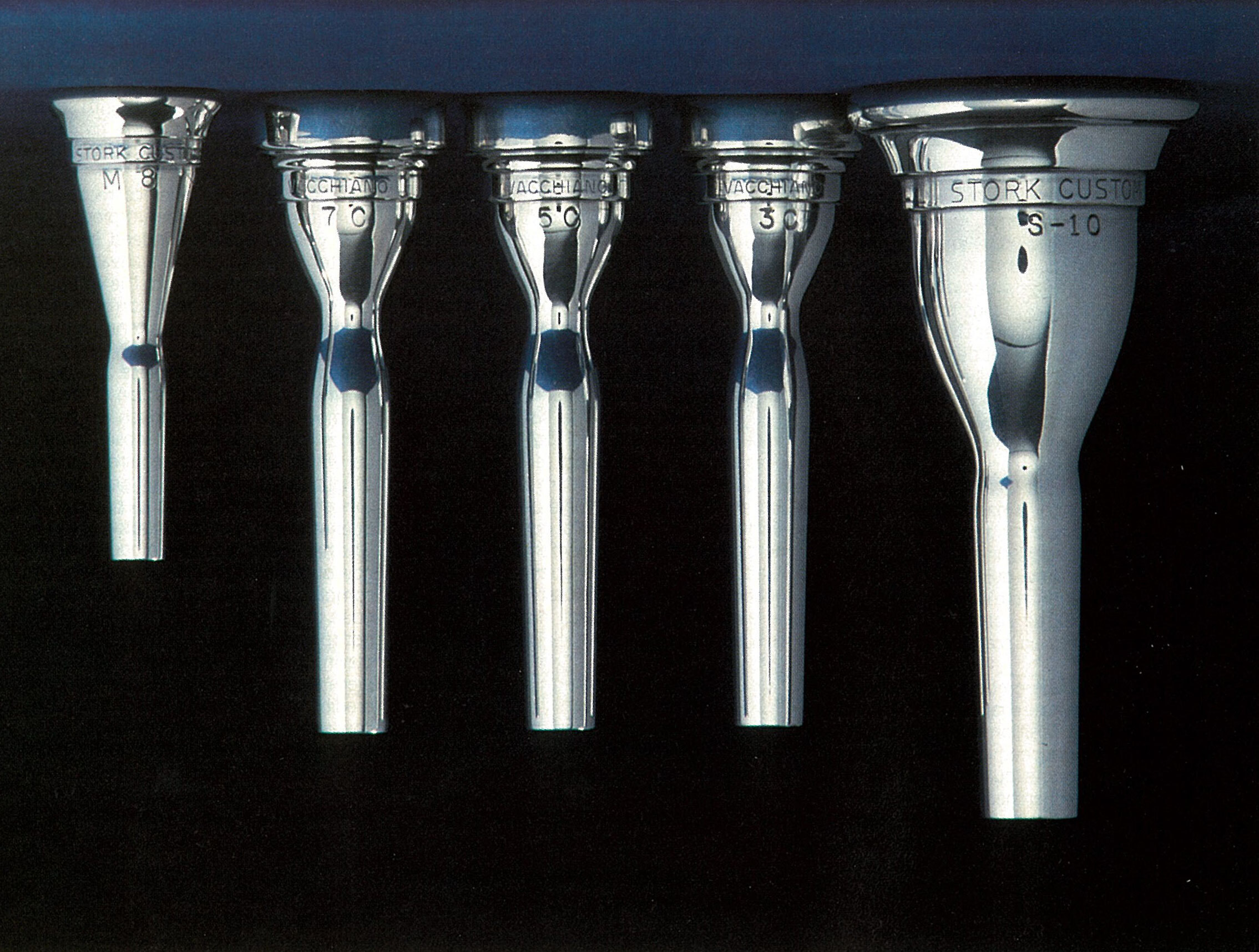
Stork Mouthpieces
What’s involved in understanding the mouthpiece?
Valid information on mouthpieces is so hard to come by because of the complexities involved. A mouthpiece has nine major facets that affect its performance. How each one functions individually and how each responds when another is altered takes years of study to digest. Once this aspect is mastered, it must then be made to apply to a myriad of changing data which are the individual characteristics of each player one works with. This kind of knowledge only comes through experience.
This article is for subscribers.
CHF 5.00 per month · Cancel auto-renewal anytime.
Enjoy unlimited access to all digitized Brass Bulletin articles.
Brass Bulletin 55, III / 1986 pages 64–68
All content is protected by copyright © Brass Bulletin 1986–2026