Explore institutional access Explore institutional access

4 min. read

Jabbo Smith

The Unrecognised Jazz Trumpeter
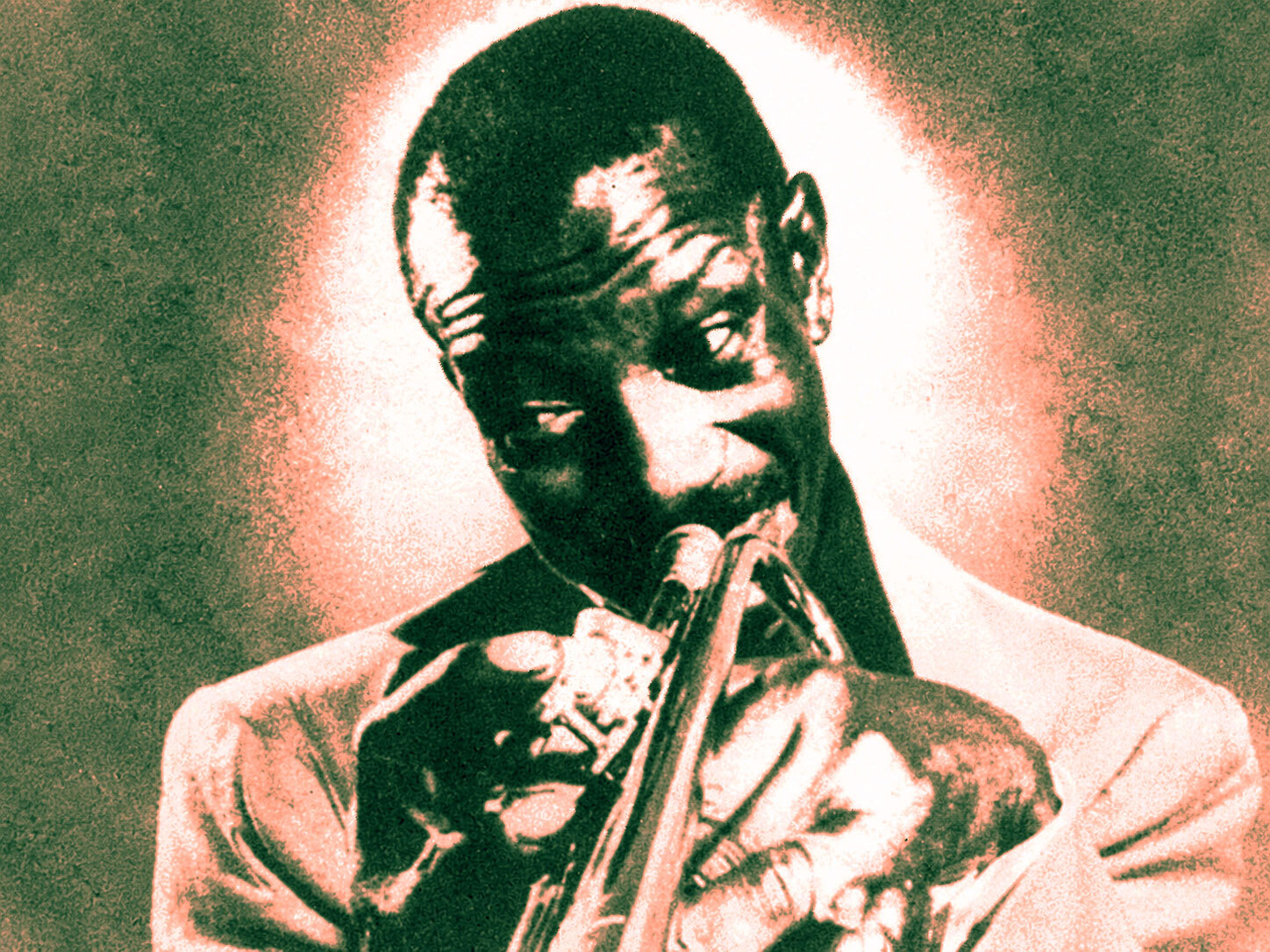
Overshadowed by Armstrong and later by Eldridge, Jabbo Smith emerges as a crucial trumpet innovator whose speed, range and phrasing anticipated modern jazz.
Jabbo Smith

Jabbo Smith

His fabulous technique was better than Louis’s. We often used to criticise each other in the group and we said he was too impetuous. We took Jabbo to New York and it has been said that Roy Eldridge drew a lot of inspiration from his technique.*¹

These are the words of the saxophonist Benny Waters, discussing a musician discovered by Gunther Schuller in 1968² who is also the subject of much current thinking³. This sudden interest comes rather too late for Cladys “Jabbo” Smith to be able to benefit from it as he decided to give up playing in the summer of 1983.

As I have already indicated,⁴ Jabbo belongs to the second wave of innovators in the “classical period”. He was born in Pembroke, Georgia, on 24th December 1908. He was an orphan and at the age of six he went to the Jenkins orphanage in South Carolina where he started to play cornet, trumpet and trombone (at various times he also played bass trumpet and mellophone). It seems that he took his first steps under the direction of Gus “Rice” Aiken (a famous disciple of Johnny Dunn) and certainly started in the orphanage band. He left the orphanage in 1924, was noticed by the pianist and bandleader Charlie Johnson and worked for him from autumn 1925 until early 1928. This band became famous at the Small Paradise in New York; this is where Bill Coleman heard Jabbo and was impressed by him.⁵ According to Benny Waters Jabbo had some difficulty in getting established because he was not a union member; this might explain why, apart from the Charlie Johnson records, he was underemployed in New York for someone of his talent. Even this early in his career Jabbo was very inventive and could play something entirely new from one take to another of the same number (Ex. 1).

Example 1“You ain’t the one” — Charlie Johnson’s Paradise Orchestra — January 24, 1928Jabbo’s chorus (entry)take - 1

Example 1
“You ain’t the one” — Charlie Johnson’s Paradise Orchestra — January 24, 1928
Jabbo’s chorus (entry)
take - 1

Example 1“You ain’t the one” — Charlie Johnson’s Paradise Orchestra — January 24, 1928Jabbo’s chorus (entry)take - 2

Example 1
“You ain’t the one” — Charlie Johnson’s Paradise Orchestra — January 24, 1928
Jabbo’s chorus (entry)
take - 2

One of the rare sessions he did away from his employer revealed his talent: Duke Ellington called him in to record a second version of “Black and Tan Fantasy” (November 1927). The critic J. P. Daubresse says the Duke offered Jabbo a job in his band but that Jabbo turned it down because he was better payed with Johnson. In 1928 a tour with the show “Keep Shufflin’” brought him to Chicago where he immediately succeeded Louis Armstrong in the Carroll Dickerson band; this speaks volumes for him but it was also the beginning of a misunderstanding. Although his technique enabled him to play anything, he was obliged by his contract to sound much like Armstrong as possible. This was also the case with his contract with Brunswick in 1929 and it led conventional criticism to class him as an imitator and to disregard him from then on.

And yet these sides for Brunswick are important historically. Although he fulfilled his contract by sounding like Louis in the vocal parts and in a few turns of phrase on the trumpet, Jabbo kept his own identity, as anyone who listens properly will hear. His style is based on fast playing and the use of the whole register of the instrument.

Continue reading

Access the full Digital Edition.

Brass Bulletin 49, I / 1985 pages 47–50

All content is protected by copyright © Brass Bulletin 1985–2026

Share this article

Facebook LinkedIn
Loading…

Questions & Answers

How the Digital Edition works

What does the Digital Edition include?

The Digital Edition brings together the articles already digitized as searchable online texts—not simply as scans or PDF files—along with their original illustrations, notes, authorship, issue information, and available translations. Related-article suggestions currently include only this digitized material.

Are the digital articles identical to the originals?

We preserve the original text, language, illustrations, captions, footnotes, and editorial context as faithfully as possible. The presentation is adapted for comfortable online reading, and obvious transcription or scanning errors may be corrected. The substance and character of the published article remain unchanged.

Which languages are available?

Brass Bulletin was published in English, French, and German throughout its history. Italian and Spanish translations were added from issue No. 60 onward.

On the Italian and Spanish sites, articles from issues 1–59 are therefore shown in English by default.

How often are new articles added?

New articles are added almost daily, with approximately one complete issue digitized each week. The pace may vary depending on the preparation, image work, and editorial checking required.

Why aren’t all articles available digitally?

The complete Brass Bulletin collection contains 1,246 articles published between 1971 and 2003. The full index is already available online, allowing readers to discover every article in the collection, including those whose complete text has not yet been digitized.

Digitization began in February 2026. Each article is carefully prepared for online reading, checked, and connected to its issue, authors, subjects, and illustrations. At the current pace of digitization, the complete collection is expected to be available online by February 2028.

Why do some references mention articles that are not available yet?

References in the original articles are preserved even when the material they point to has not yet been digitized. This keeps the historical and editorial record intact. As more issues are added to the Digital Edition, an increasing number of these references will lead to articles that can be read online.

Can I suggest an article or report a transcription error?

Yes. If there is an article you would particularly like to see digitized, or if you notice a possible transcription error or missing detail, please contact us. Reader feedback helps us improve the Digital Edition and prioritize useful connections within the archive.

How can I support Brass Bulletin?

Your support helps fund the preparation, verification, and online publication of the complete collection.

Subscribe to the Digital Edition

Prefer to support us without subscribing?

Make a donation

Search Brass Bulletin.