3 min. read
Natural trumpets, basic techniques
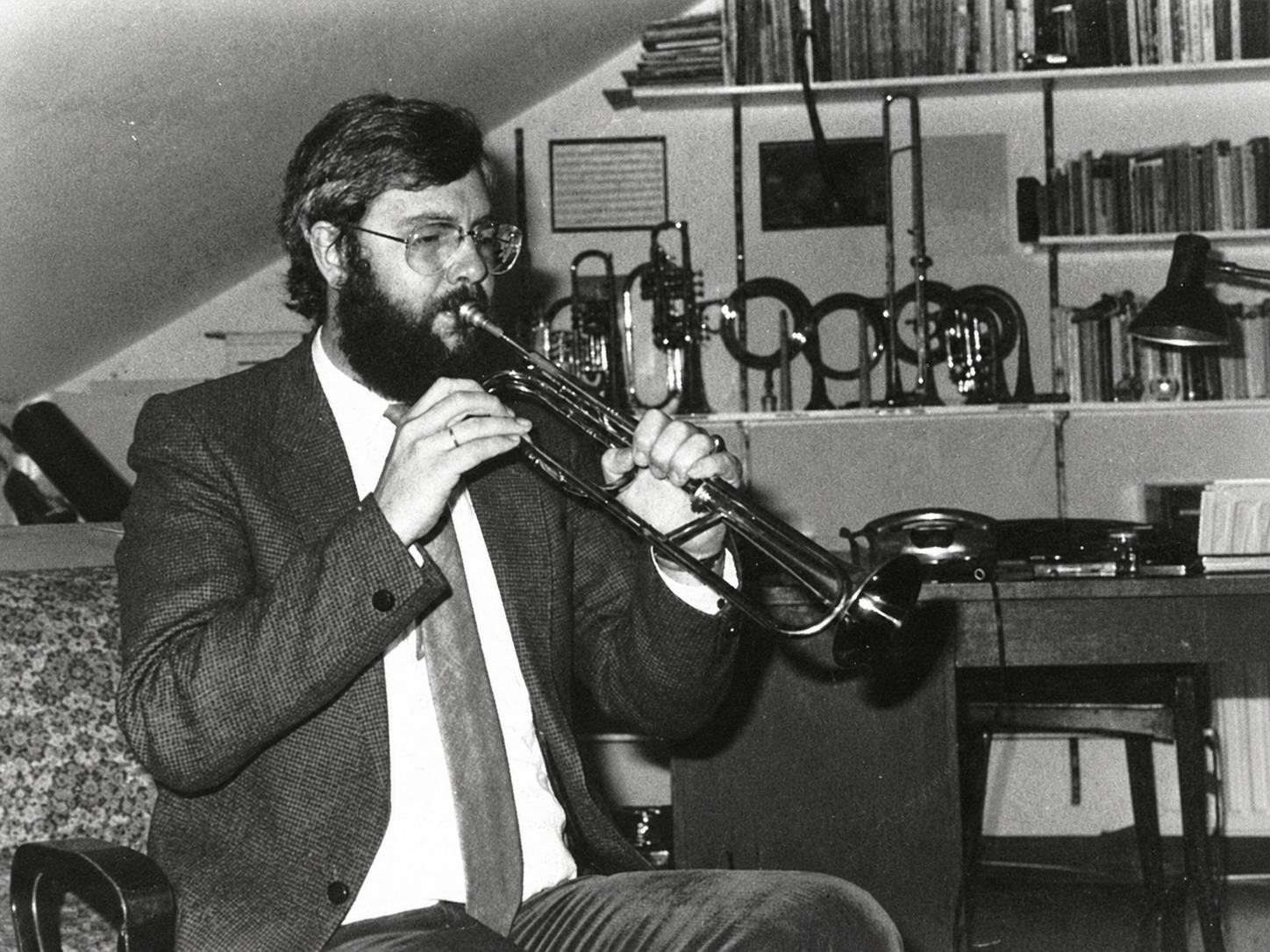
Friedemann Immer
All over the world brass players have realised the importance of increasing their artistic awareness of early music and of starting to play early instruments again. Today Friedemann Immer (see B.B. no. 50, p. 76), who teaches at the Cologne College of Music, is considered one of the finest trumpet experts, especially where the natural trumpet is concerned.
Do not let us deceive ourselves: the essential prerequisite for playing the natural trumpet is to be a good musician on the modern trumpet and to master the high register with as light and flexible an embouchure as possible.
Precision and security of sound production
The key to playing the natural trumpet is mastering precision in sound production. Breathing techniques, support and self-control are even more necessary than on the modern trumpet (although, once you have acquired these, you tire much less than on a modern piccolo trumpet!). From the very beginning you must concentrate on clean, precise sound production (accuracy) throughout the range of the instrument. Learn to “aim” for each note in the exact position where it lies. When you begin to work on the repertoire, this precision and security must be constantly maintained and developed.
Trills and lipped notes
Trills and notes which must be “lipped” into tune are factors which must be studies with great care.
Style
The problem of style must be studied to avoid ridiculous anachronisms. “Playing the notes” is not enough. You must take the time to study the key works of the age (Fantini, Altenburg, Quantz etc.) and rediscover freedom of improvisation and ornamentation.
Brass Bulletin 51, III / 1985 pages 70–73
All content is protected by copyright © Brass Bulletin 1985–2026