Explore institutional access →

1 min. read

Emile Joseph Trognée (1868-1942)

Discovery of unpublished trumpet studies

Emile Joseph Trognée (1868-1942)

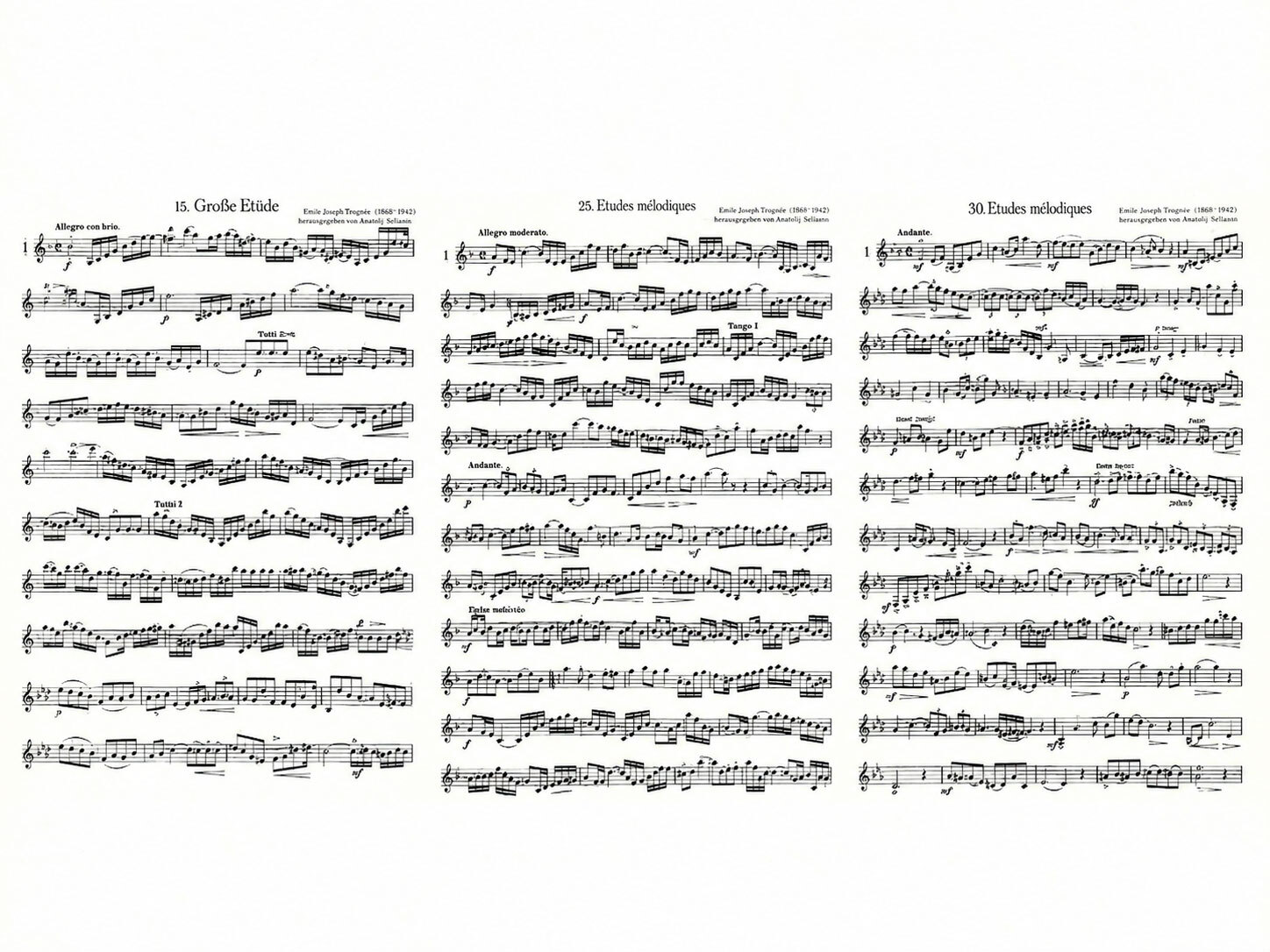
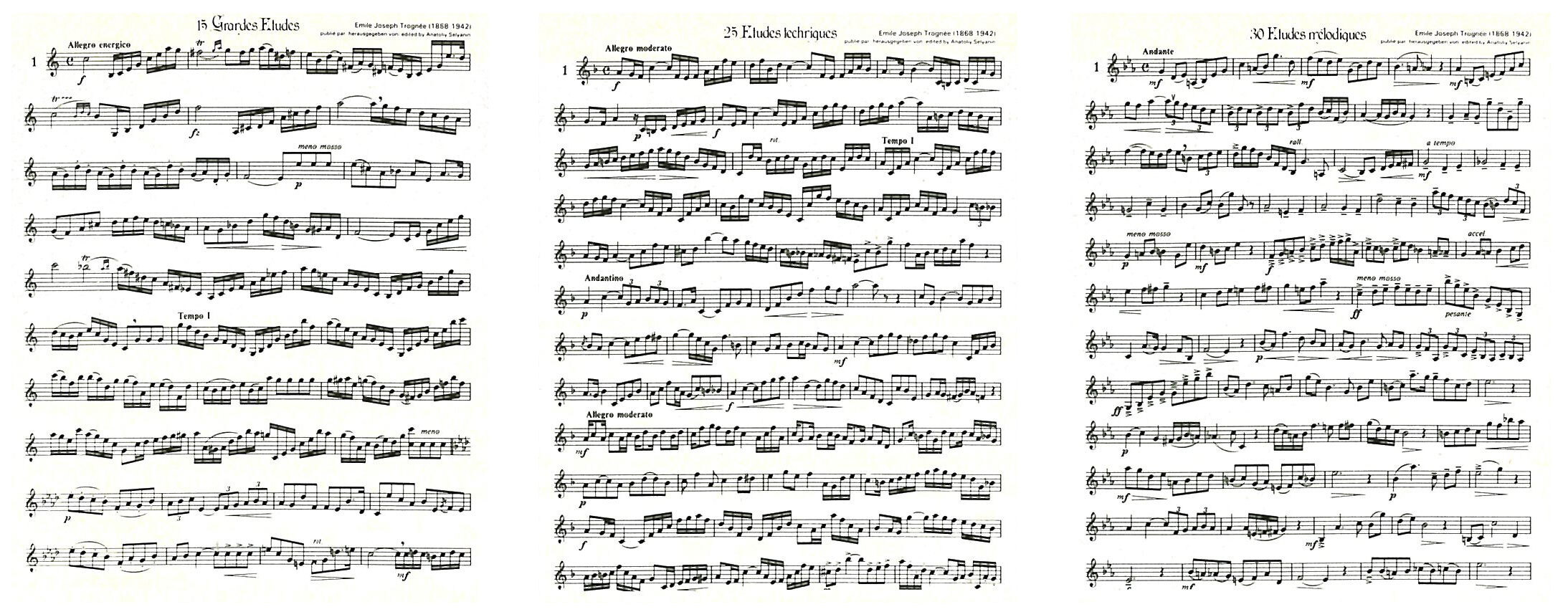
Thanks to Anatoliy Selyanin Editions BIM is publishing three volumes of previously unpublished studies for trumpet or cornet by the Belgian virtuoso Emile Joseph Trognée.

In view of their importance special care has been taken with the presentation and engraving of these studies, so characteristic of the style of the first half of this century. Written by a master hand, they are particularly useful for studying articulation and phrasing. They are not excessively difficult and will afford the student real pleasure. Trognée occupies an esteemed place among the great names of the famous Belgian trumpet and cornet school, in the lineage of Duhem, Charlier and others. His move to Leningrad and his important position at the opera prevented his fame from spreading further in Europe. Now it is time to bring his name out of oblivion; the publication of these three volumes will redress the balance. Here is some biographical information on Trognée taken from Anatoliy Selyanin’s preface.

Emile Joseph Trognée was born in Tirimon, in Belgium, on 4th July 1868. He studied trumpet at the Brussels Conservatoire. After winning a European competition in 1902, he became solo trumpet and cornet at the Mariinskiy opera theatre in St. Petersburg (the theatre is now the Kirov and the city is now Leningrad). He spent the rest of his life in Russia, working at the Mariinskiy for 25 years.

Trognée was an outstanding musician. A well known Soviet conductor, Karl Eliashberg, wrote:

Trognée had a unique feeling of ensemble; his playing was remarkable for accurate dynamics and for an infallible sensitivity towards the meaning and character of the musical phrase. His sound was never forced but always bright, powerful and even in all registers. He was also a great master of very soft sound production (without using the tongue). He was noted for his performances of Wagner’s “Ring of the Nibelungen”, “Rienzi” and “Lohengrin” and of operas by Tchaikovsky and Verdi

Brass Bulletin image

Trognée was recognised by both performers and composers. He advised Rimsky-Korsakov to make some changes in the trumpet parts of his opera “The Legend of the Invisible City of Kitezh” (the well known difficult trumpet phrase in the symphonic picture “The Battle at Kerzhenets”). He taught at the Baltic Fleet music school from 1911 to 1917 and at the Leningrad “Rimsky-Korsakov” special music school from 1928 to 1941.

He wrote several works for trumpet and cornet. His “Fantasia-Caprice”, which appeared in Tabakov’s “Elementary Progressive Trumpet Tutor”, published in Moscow in 1946, was especially popular for many years. His “Studies for Trumpet”, published in Leningrad by the state publisher Triton in 1932 and dedicated to Tabakov, are also well known. The studies presented in this edition were written at various times but not published during Trognée’s lifetime. After his death in Leningrad in 1942 they were preserved by the Soviet trumpeter, composer and teacher Sergey Bolotin.

Brass Bulletin 51, III / 1985 pages 68–69

All content is protected by copyright © Brass Bulletin 1985–2026

Share this article

Facebook LinkedIn
Loading…

Questions & Answers

How the Digital Edition works

What does the Digital Edition include?

The Digital Edition brings together the articles already digitized as searchable online texts—not simply as scans or PDF files—along with their original illustrations, notes, authorship, issue information, and available translations. Related-article suggestions currently include only this digitized material.

Are the digital articles identical to the originals?

We preserve the original text, language, illustrations, captions, footnotes, and editorial context as faithfully as possible. The presentation is adapted for comfortable online reading, and obvious transcription or scanning errors may be corrected. The substance and character of the published article remain unchanged.

Which languages are available?

Brass Bulletin was published in English, French, and German throughout its history. Italian and Spanish translations were added from issue No. 60 onward.

On the Italian and Spanish sites, articles from issues 1–59 are therefore shown in English by default.

How often are new articles added?

New articles are added almost daily, with approximately one complete issue digitized each week. The pace may vary depending on the preparation, image work, and editorial checking required.

Why aren’t all articles available digitally?

The complete Brass Bulletin collection contains 1,246 articles published between 1971 and 2003. The full index is already available online, allowing readers to discover every article in the collection, including those whose complete text has not yet been digitized.

Digitization began in February 2026. Each article is carefully prepared for online reading, checked, and connected to its issue, authors, subjects, and illustrations. At the current pace of digitization, the complete collection is expected to be available online by February 2028.

Why do some references mention articles that are not available yet?

References in the original articles are preserved even when the material they point to has not yet been digitized. This keeps the historical and editorial record intact. As more issues are added to the Digital Edition, an increasing number of these references will lead to articles that can be read online.

Can I suggest an article or report a transcription error?

Yes. If there is an article you would particularly like to see digitized, or if you notice a possible transcription error or missing detail, please contact us. Reader feedback helps us improve the Digital Edition and prioritize useful connections within the archive.

How can I support Brass Bulletin?

Your support helps fund the preparation, verification, and online publication of the complete collection.

Subscribe to the Digital Edition

Prefer to support us without subscribing?

Make a donation

How is the digitization progressing?

We’re gradually making the Brass Bulletin available online, article by article. You can read newly digitized articles as soon as they’re ready, even before an entire issue is complete.

Visit our Digitization Roadmap to browse recent additions and see estimated availability for upcoming issues. These estimates follow our recent pace and may change.

Search Brass Bulletin.