Discoveries for brass players, once a month. Join our free newsletter →

1 min. read

This article is free.

Editorial

Editorial

Many of you, especially those of you who are students, have asked that we publish more articles on instrumental technique, on the “trade secrets”... We will therefore try to start a series of succinct but stimulating articles on the various subjects that interest us: lips, breathing, mouth cavity, holding the instrument etc. The aim of these articles is not to supply the definitive answer (does one exist, anyway?) but rather to encourage debate and individual reflection. The “human condition” of the artist is linked with the fact that we are never in the same place at the same time, not with our knowledge, or our abilities, or our consciousness, or our sensations, or our hopes, or with anything at all. We work alone, with our teachers, our sources of interest and our intelligence for guides.

Thus each one of us must walk the road of “artistic culture” by clearing the path which will free our intimate personality. No easy task!

We do not all speak the same language; we do not all like the same things. Words do not mean the same thing to all of us (a word means something in our mind according to the resonance we have given it: “water”, for example, would not mean the same if we were in the desert and had none or if we were rowing on a lake in Finland).

So let us help one another! Let us explain, write and think in as many ways as we can about the same subjects, the same problems. That is the best way to pass on, at some crossroads, the knowledge that will enable one or other of us to go a little further. Curiosity has led us to see these things.

It is in this spirit that, for 1986, my wish for you is that you may successfully complete new stages towards reaching your destiny and I hope that your reflections will bring you the revelations essential to you lives as artists.

Influences are immeasurable, vital and innumerable. The essential thing for a musician to know is that Mozart, Monteverdi and Maurice Ravel are before him for music, under him for earthly life, elsewhere for emotional life and in him for the energy to take flight.

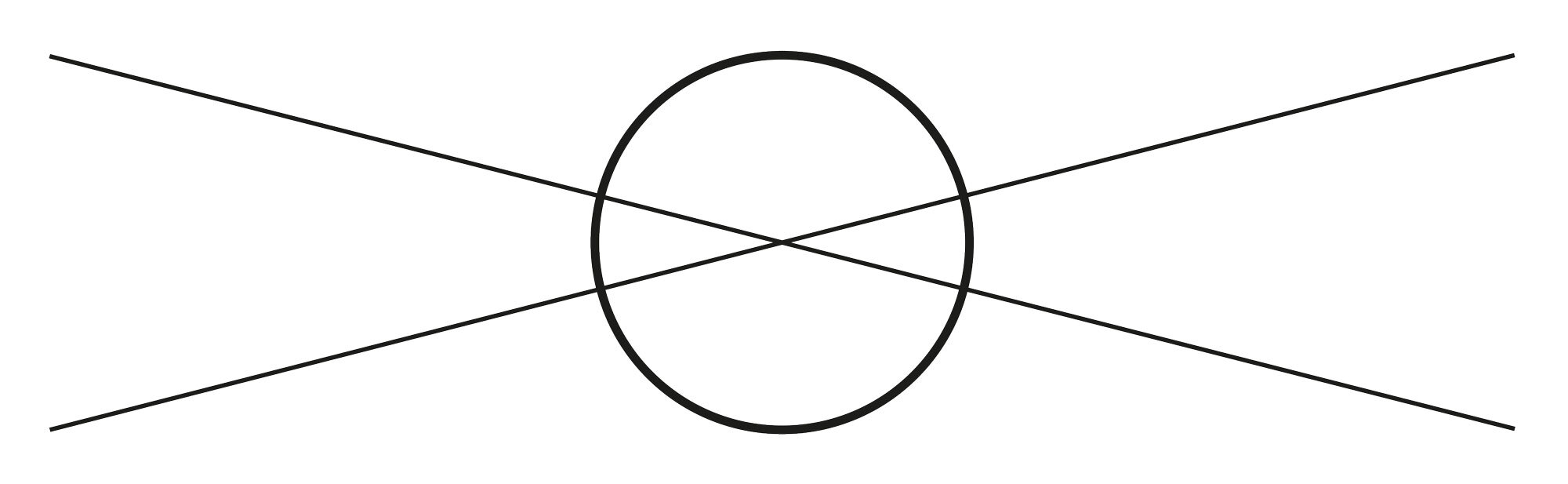
encounter with an idea, with a person (privileged place)

encounter with an idea, with a person (privileged place)

Reference points: you can follow an idea which passes close to you going in the opposite direction, a model which is travelling in parallel with you. (Weak personalities: those which identify totally with a life other than their own.)

Brass Bulletin 52, IV / 1985 pages 13–14

All content is protected by copyright © Brass Bulletin 1985–2026

Share this article

Facebook LinkedIn
Loading…

Questions & Answers

How the Digital Edition works

What does the Digital Edition include?

The Digital Edition brings together the articles already digitized as searchable online texts—not simply as scans or PDF files—along with their original illustrations, notes, authorship, issue information, and available translations. Related-article suggestions currently include only this digitized material.

Are the digital articles identical to the originals?

We preserve the original text, language, illustrations, captions, footnotes, and editorial context as faithfully as possible. The presentation is adapted for comfortable online reading, and obvious transcription or scanning errors may be corrected. The substance and character of the published article remain unchanged.

Which languages are available?

Brass Bulletin was published in English, French, and German throughout its history. Italian and Spanish translations were added from issue No. 60 onward.

On the Italian and Spanish sites, articles from issues 1–59 are therefore shown in English by default.

How often are new articles added?

New articles are added almost daily, with approximately one complete issue digitized each week. The pace may vary depending on the preparation, image work, and editorial checking required.

Why aren’t all articles available digitally?

The complete Brass Bulletin collection contains 1,246 articles published between 1971 and 2003. The full index is already available online, allowing readers to discover every article in the collection, including those whose complete text has not yet been digitized.

Digitization began in February 2026. Each article is carefully prepared for online reading, checked, and connected to its issue, authors, subjects, and illustrations. At the current pace of digitization, the complete collection is expected to be available online by February 2028.

Why do some references mention articles that are not available yet?

References in the original articles are preserved even when the material they point to has not yet been digitized. This keeps the historical and editorial record intact. As more issues are added to the Digital Edition, an increasing number of these references will lead to articles that can be read online.

Can I suggest an article or report a transcription error?

Yes. If there is an article you would particularly like to see digitized, or if you notice a possible transcription error or missing detail, please contact us. Reader feedback helps us improve the Digital Edition and prioritize useful connections within the archive.

How can I support Brass Bulletin?

Your support helps fund the preparation, verification, and online publication of the complete collection.

Subscribe to the Digital Edition

Prefer to support us without subscribing?

Make a donation

How is the digitization progressing?

We’re gradually making the Brass Bulletin available online, article by article. You can read newly digitized articles as soon as they’re ready, even before an entire issue is complete.

Visit our Digitization Roadmap to browse recent additions and see estimated availability for upcoming issues. These estimates follow our recent pace and may change.

Search Brass Bulletin.