2 min. read
The Pitch Finder
By Jack Holland
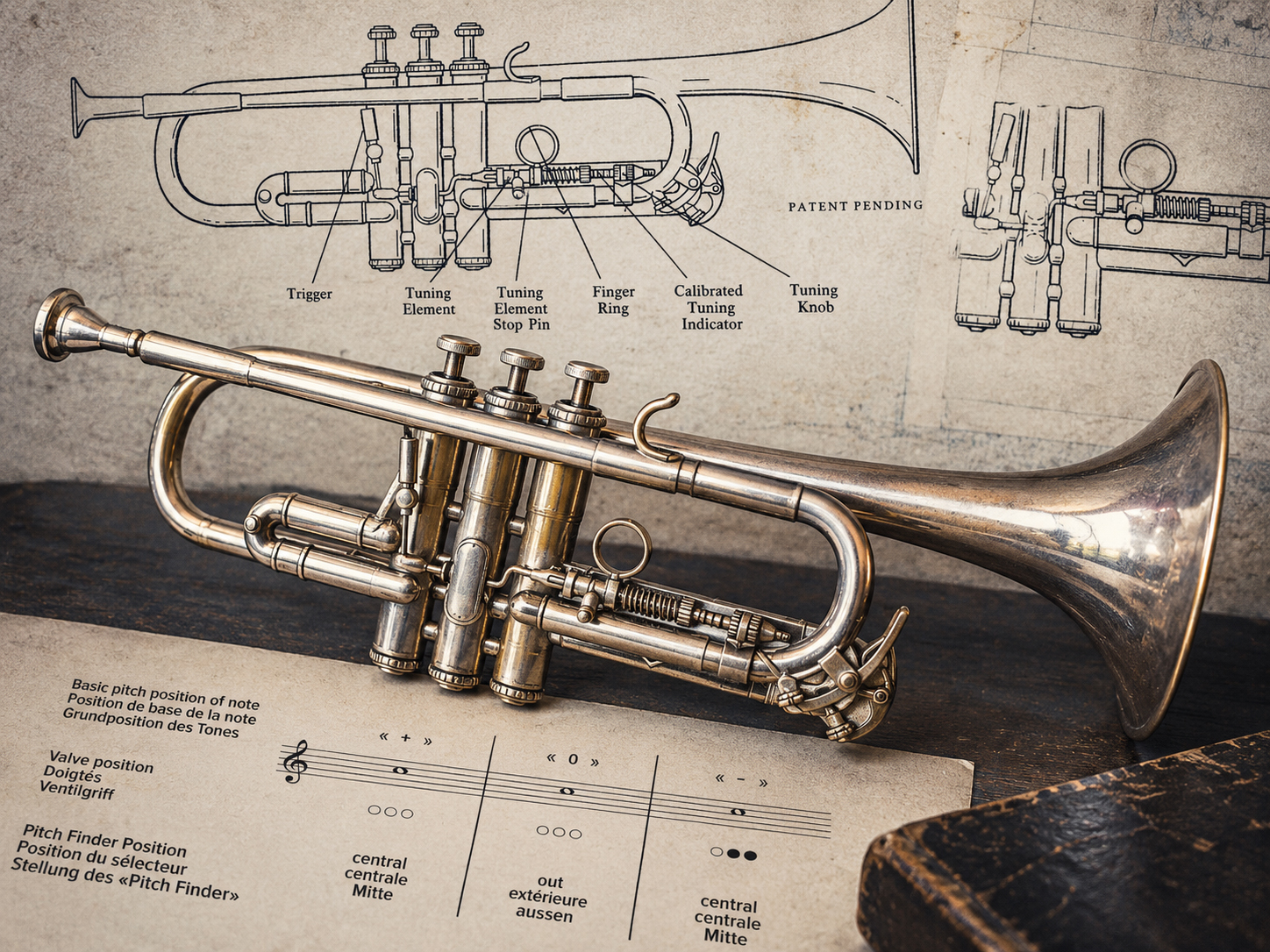
These three exact central points of the three basic pitch positions (shown in figure 14)¹ are the exact points located by the Pitch Finder with its three selected positions: (1) central, (2) in, and (3) out. Figure 15 shows the Pitch Finder in the central position, selected by the player when tuning, for example, to A-440. This position can be very finely tuned with the tuning knob and is easily identified on the calibrated tuning indicator.
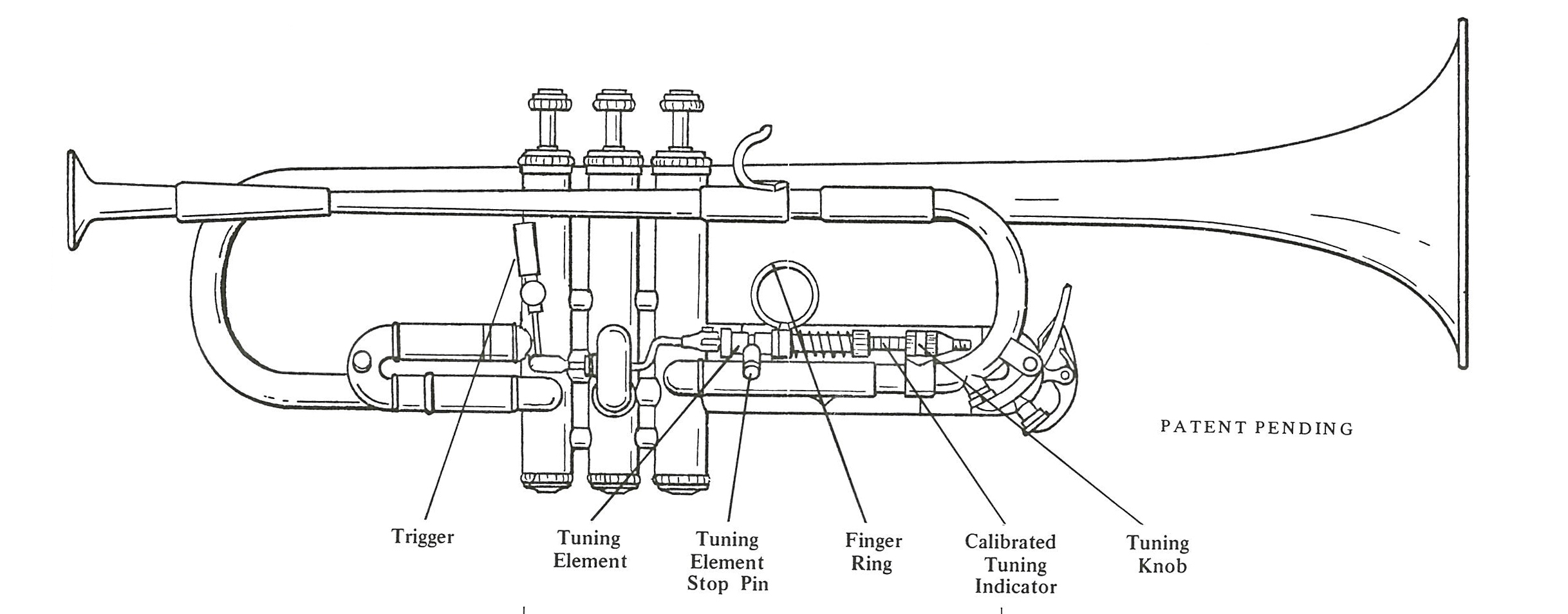
Figure 15
The pitch Finder in "Central" position
Figure 16 shows the Pitch Finder in its “in” position, obtained when fully depressing the trigger. The distance of tuning slide travel to the “in” position is determined by the dimensions of the tuning element and limited by the stop pin. At this stop point the entire instrument is pitched +15.641 cents above the central pitch established at tuning and results in a frequency change from A-440 to A-444.
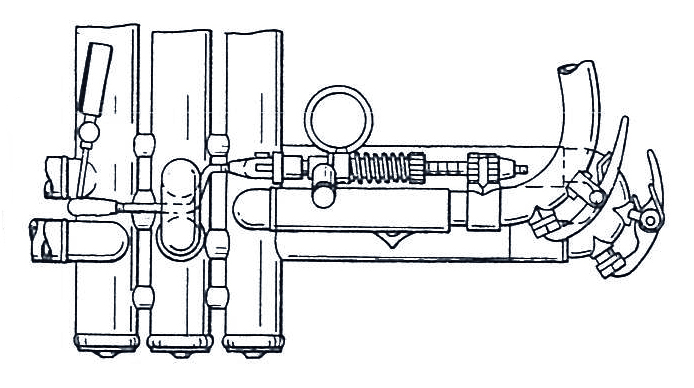
Figure 16
The Pitch Finder in its “in” position.
Figure 17 shows the Pitch Finder in its “out” position, obtained by extending the finger ring. The coupling action of the spring moves the tuning slide and 3rd valve slide simultaneously. The distance of tuning slide travel to the “out” position is determined by the dimensions of the tuning element and limited by the stop pin... a slight resistance from the spring is felt at this point. While the finger ring may further extend the 3rd valve slide from this point, its movement will have no effect upon the stopped position of the tuning slide. At this stop point the instrument is pitched -13.686 cents below the central pitch established in tuning and results in a frequency change from A-440 to A-436.5.
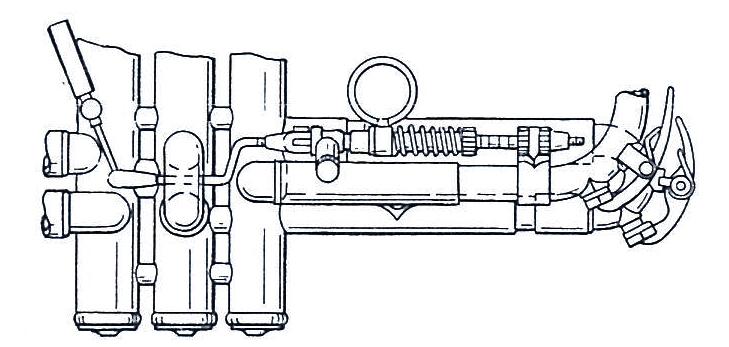
Figure 17
The Pitch Finder in its “out” position.
Figure 18 shows the Pitch Finder in its “out” position with the 3rd valve slide extended beyond the point where the movement of the tuning slide is stopped by the stop pin. As the pitches of notes incorporating the 3rd valve will vary, some of these notes will require positioning by feel... just as the player has always done. However, the coupled action of the 3rd valve slide and the tuning slide reduces the distance of the 3rd valve slide travel on an average of 50%. As the 3rd valve slide is positioned by feel for certain notes, so may the tuning slide be positioned between central and the stopped points of “in” and “out”. (The stop points may even be exceeded by withdrawing the stop pin if desired.) But it is rare that the player with a basically good instrument to start with will ever find this necessary, as he is totally accustomed to automatically “lipping” adjustments of ±4 cents and beyond with perfect ease and virtually no loss in resonant tone quality. However, because the trumpet is basically a fixed resonator, pitches beyond approximately ± 8 cents from the center of a note are obtained only with increasing loss of resonant tone quality and excessive demands upon the player to depart from his ideal playing embouchure.
Brass Bulletin 46, II / 1984 pages 58–61
All content is protected by copyright © Brass Bulletin 1984–2026