20 min. read
Johann Ernst Altenburg (1736-1801)
The last representative of the heroic art of the trumpeter and drummer
By Arno Werner
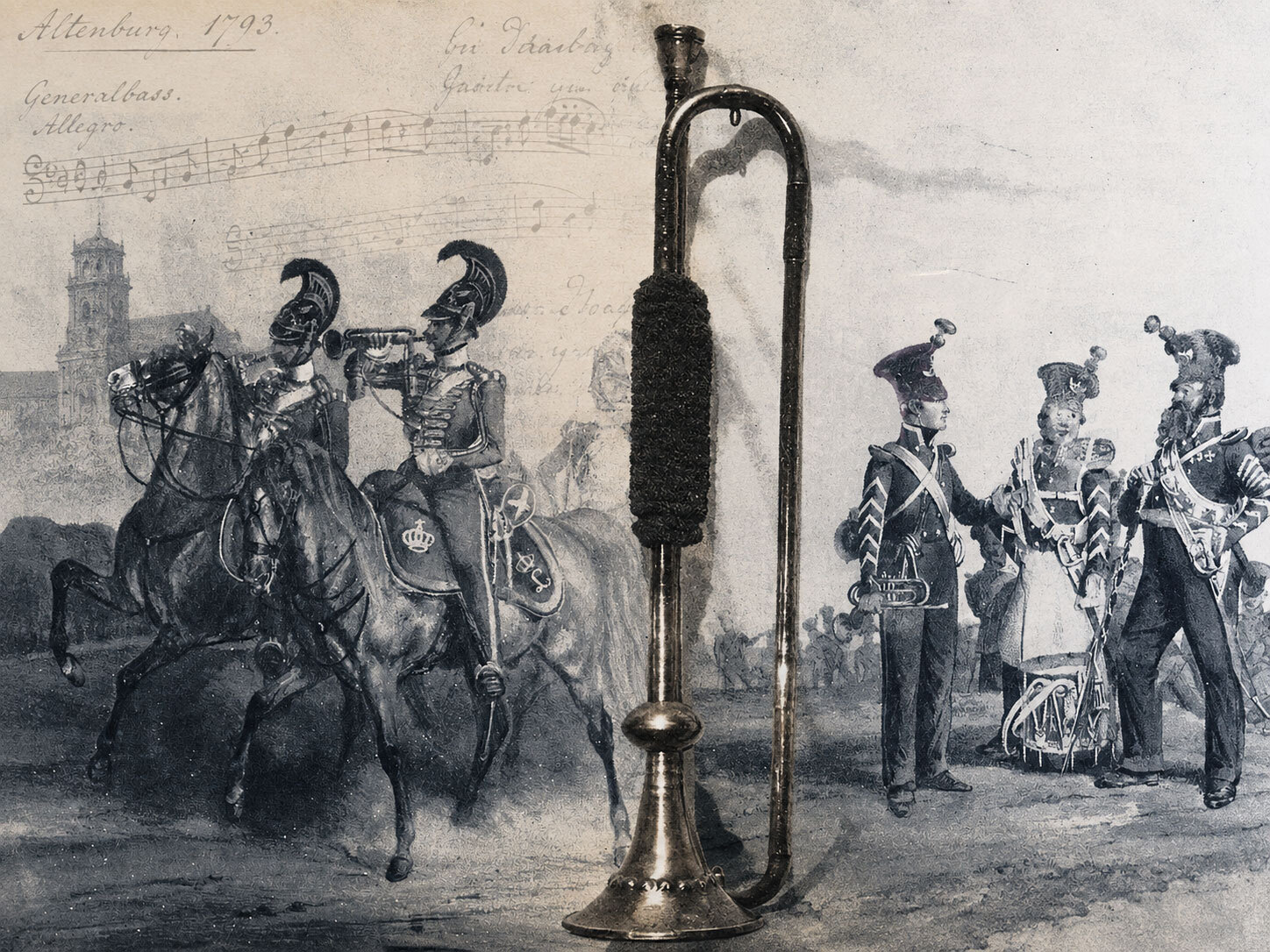
Johann Ernst Altenburg, “a lawyer, trumpeter, composer and writer on music”¹ is, as is well known, the author of the famous work “Experimental Introduction to the Heroic and Musical Art of the Trumpeter and Drummer” published in Halle in 1795. This is a surprising book and one which is still worth reading today². We reproduce here, in a slightly abridged form and with illustrations supplied by us, Arno Werner’s³ biography of Altenburg (1736-1801). It is probably based originally on Altenburg’s autobiography written in 1769⁴. Werner then researched the remainder of the talented musician and writer’s life⁵ and eventually published the complete biography in the Zeitschrift für Musikwissenschaft (Breitkopf ans Härtel, Leipzig) in 1933. Werner portrays most impressively the greatness and tragedy in the life of a genius without, in my opinion, doing justice to the greatness, when one considers that Eichborn wrote of Altenburg: “A well educated, scholarly and generally respected man, lawyer, writer, composer and master of the trumpet […]”⁶ We hear little of this from Werner.
Emiliie Mende
Background and Education
Johann Ernst, son of the court and concert trumpeter Kaspar Altenburg, first saw the light of day in Weissenfels (now in East Germany) on 15th June 1736. His father wanted to make something of this late arrival, his only son by his second marriage. His education was not properly planned, however, and the numerous attempts and failed plans produced a personality which caused annoyance to many people but brought misery to him himself. “His first years of study were spent partly at the local school and partly with various teachers who gave him private lessons in writing and arithmetic as well as the rudiments of music and of French until his fifteenth year. His first piano instruction, which his parents sent him to at an early age, he received from the then city organist Schwalbe. In 1751 he entered secondary school where he studied for several years.” Altenburg’s teacher Schwalbe, lawyer and organist in Weissenfels, was an argumentative hothead who brought contempt and poverty on himself. One of his frequent and passionate petitions bore the headline: “Irregular, outrageous organist’s pay in Weissenfels.” His pupil’s later attacks on superiors and authorities showed the same excessive passion and brought the same disastrous results.
Six weeks after the boy’s birth, on 1st August 1736, fourteen Weissenfels court and field trumpeters assembled at his father’s behest and, in a letter of indenture, gave their solemn assent that Johann Ernst Altenburg should be bound apprentice to his father in the venerable art of the trumpeter. He was to remain a pupil until the age of sixteen and only then be released from his articles. This move on the father’s part, committing his son to a trade while still an infant, indicates that he was completely satisfied in every way with his position and that, in his eyes, the trumpet had prospects for the future.
But a new age was already dawning. The number of princely courts, like the splendour of those remaining, was on the wane. A mere fraction of the number of court trumpeters of earlier days was still retained. The rising bourgeoisie was taking over the patronage of music from the nobility, and the rights, once granted by charter by kings and emperors and keenly defended by the companions of the art of drums and trumpets, were gradually being lost. Thus town musicians — the Stadtpfeifer — and non-guild musicians were now making free use of trumpet and drums, which the old laws said were only to be used before emperors, kings, counts and lords. The strings, furthermore, had increasingly taken over the leading role in the orchestra and pushed wind instruments to one side. This, it was clear to all, was the death of a craft which had flourished for two hundred years and had created its own laws, the special administration of which was closed to all outside the guild. No-one still in training at this time of change had any prospect of further subsistence; such people were ruthlessly thrown out on to the street. This was the unenviable situation in which Altenburg found himself when, on 14th April 1752, scarcely sixteen years old, he took the trumpeters’ examination, which generally required a minimum apprenticeship of six to seven years. In these few years of transition the ageing father, like his fellow guild-members, had seen a world of glory disappear.
Brass Bulletin 46, II / 1984 pages 63–77
All content is protected by copyright © Brass Bulletin 1984–2026