The six-valve trombone - invented around 1852 by the Belgian manufacturer, Adolf Sax (1814 - 1894) - was very successful in Belgium, and with time it gave rise to a particular and singular situation¹: the « six-valver » became the principal instrument in the Royal conservatories. In preparing for the first-prize diploma, pupils were required to study the six-valve trombone for three or four years, as opposed to about one year on the slide trombone.
It is easy to imagine the result: technically difficult passages on the slide trombone became practically unplayable, through simple lack of practice.
Through the beneficial influence of Jules De Haes, at the time professor at the Royal Conservatory of Antwerp, the slide trombone finally took its rightful place towards 1930. The poor tone quality and the other imperfections - such as weight - of the Sax model contributed to its own demise.
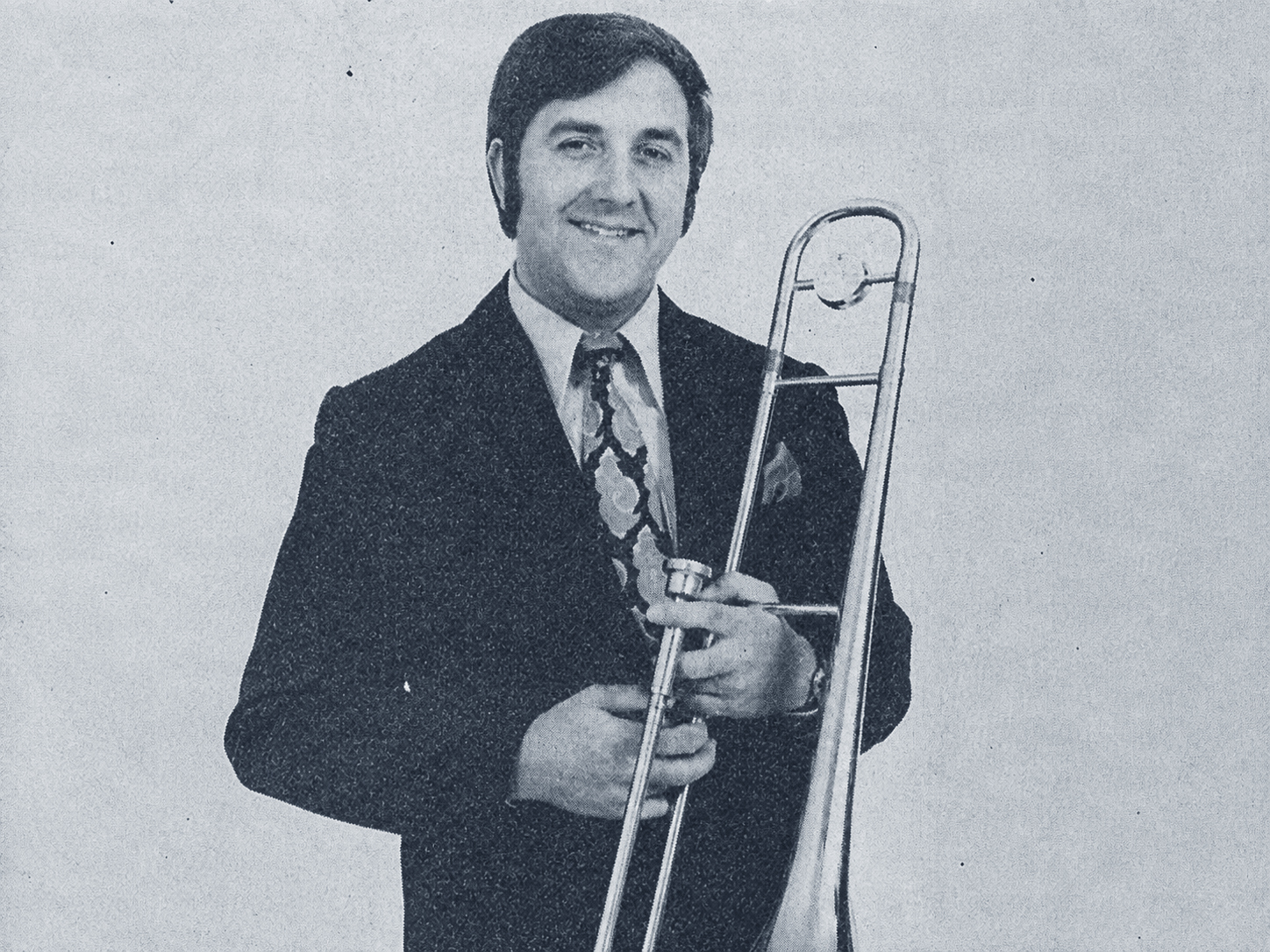
I had the privilege of studying after this important change, and thus of perfecting my technique on the slide trombone.
When one observes what jazz musicians are doing on these instruments, one realizes that full technical perfection in the domain of classical music is still far from being achieved. It is only in playing all kinds of music, as divergent as their styles may seem, that one realizes the absolute necessity of uniting the technique of the jazz musician, based on relaxation and suppleness, with the traditional classical preparation, for there are still important gaps to be bridged.
A confrontation between different interpretations and styles brings us to the realization that our chief goal should be to forget the instrument which we are playing, and simply to make music.