Ex. 1
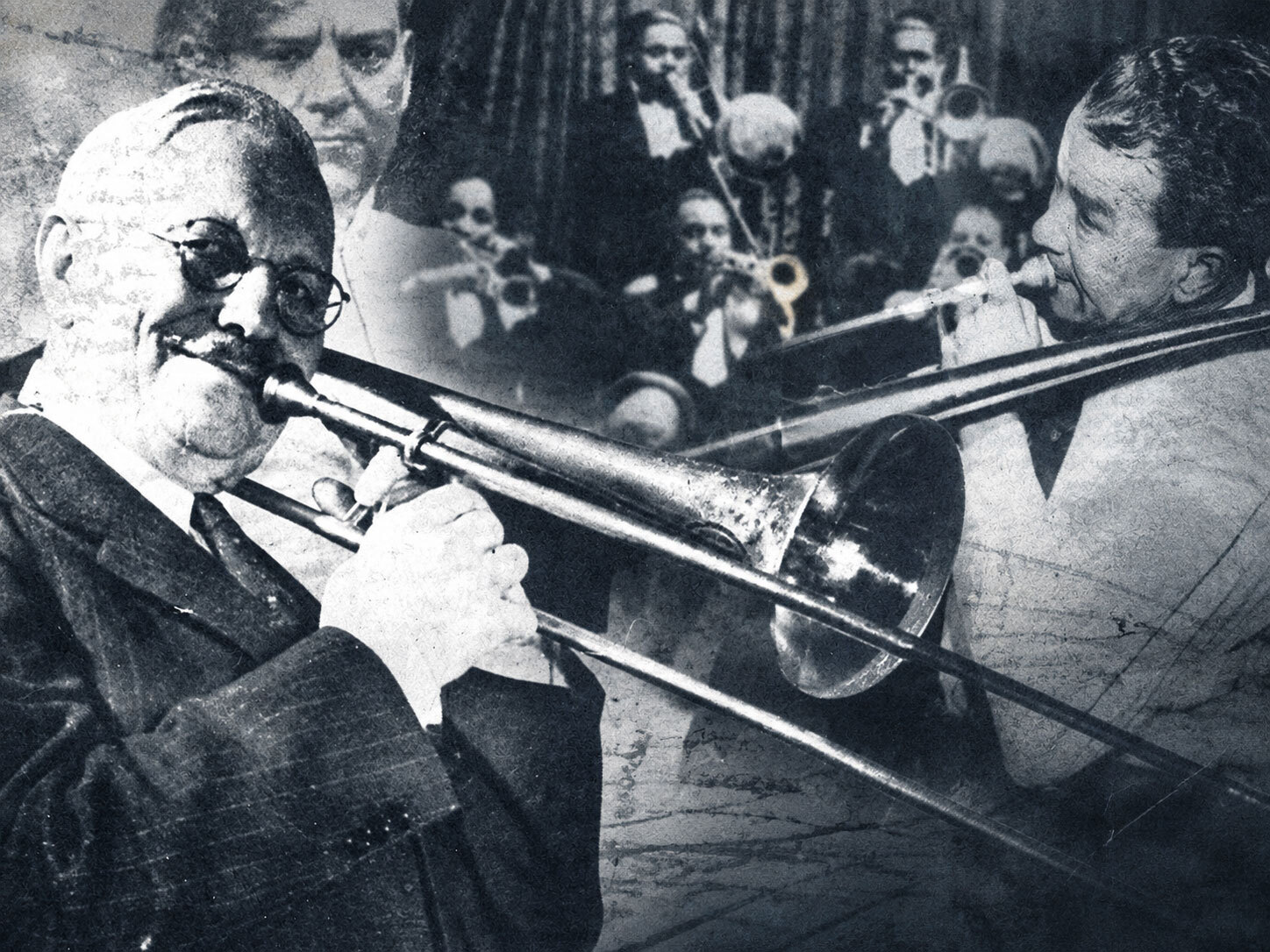
Tailgate (Leo Arnaud, 1975)
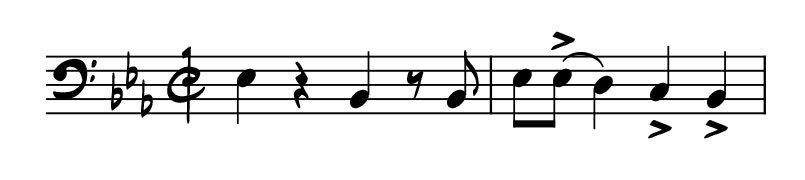
The trombone players of New Orleans did not invent this procedure, therefore, even if Kid Ory (1886-1973) was a good match for Pryor in his mastery of these broad glissandos (Ex. 1). Ory’s west-coast record of 1922 containing “Ory’s Creole Trombone” is important historical evidence on tailgate playing but it is only a gimmick, not a technical revolution. When Ory re-recorded the number in 1927 with Louis Armstrong’s Hot Five, the difference was noticeable: the trombone phrasing is rigid alongside the trumpet’s flexible agility. The technical standards of the New Orleans jazzmen and the symphonic players of the time seem to have been close, with the same preference for detached playing. Note that the tailgate style did not become established immediately as in New Orleans the valve trombone held out for a long time. Baptiste Delisle (c. 1870-?) was the first to opt for the tenor slide trombone, around 1895. These were narrow-bore instruments of course. Besides Ory the other New Orleans pioneers were Alvin ‘‘Zue’’ Robertson (1891-1943), Roy Palmer (1892-1964) and Preston Jackson (1904-1983). Some of Palmer’s recordings from 1929 seem to indicate that he was moving away from the tailgate style towards flexible, agile playing. His pupil Preston Jackson evolved in the same way although his “Trombone Man”, recorded under his own name in 1926, remains archaic in conception. In broader playing, like the classical players of the time, these pioneers have a tendency to ‘‘declaim’’ (Honoré Dutrey, etc.).
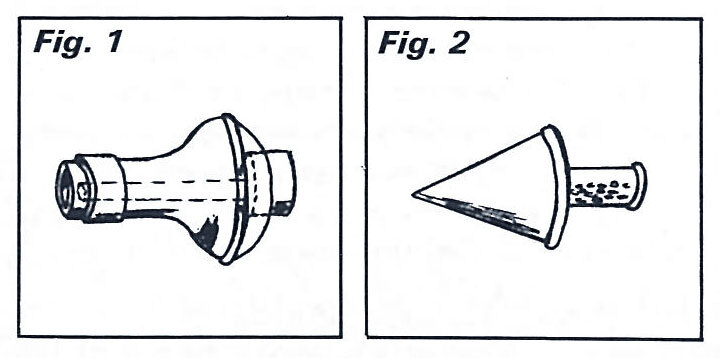
Fig. 1 & Fig. 2
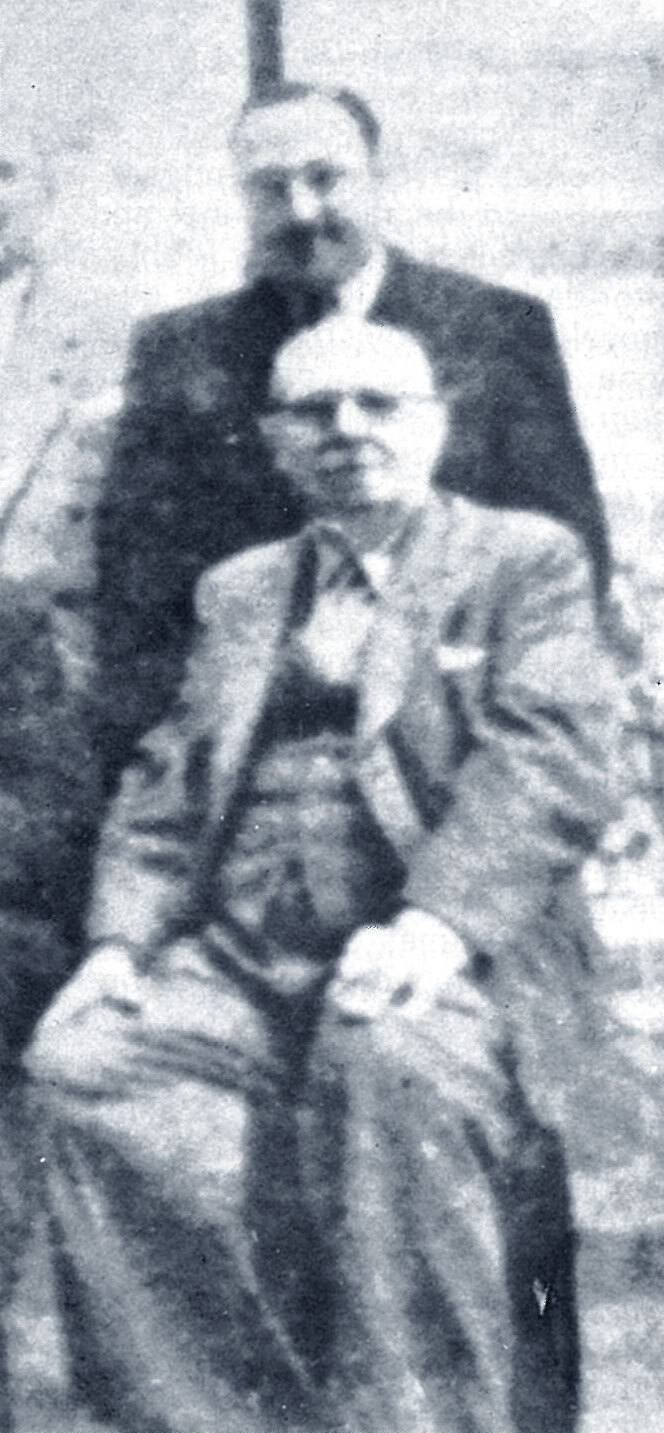
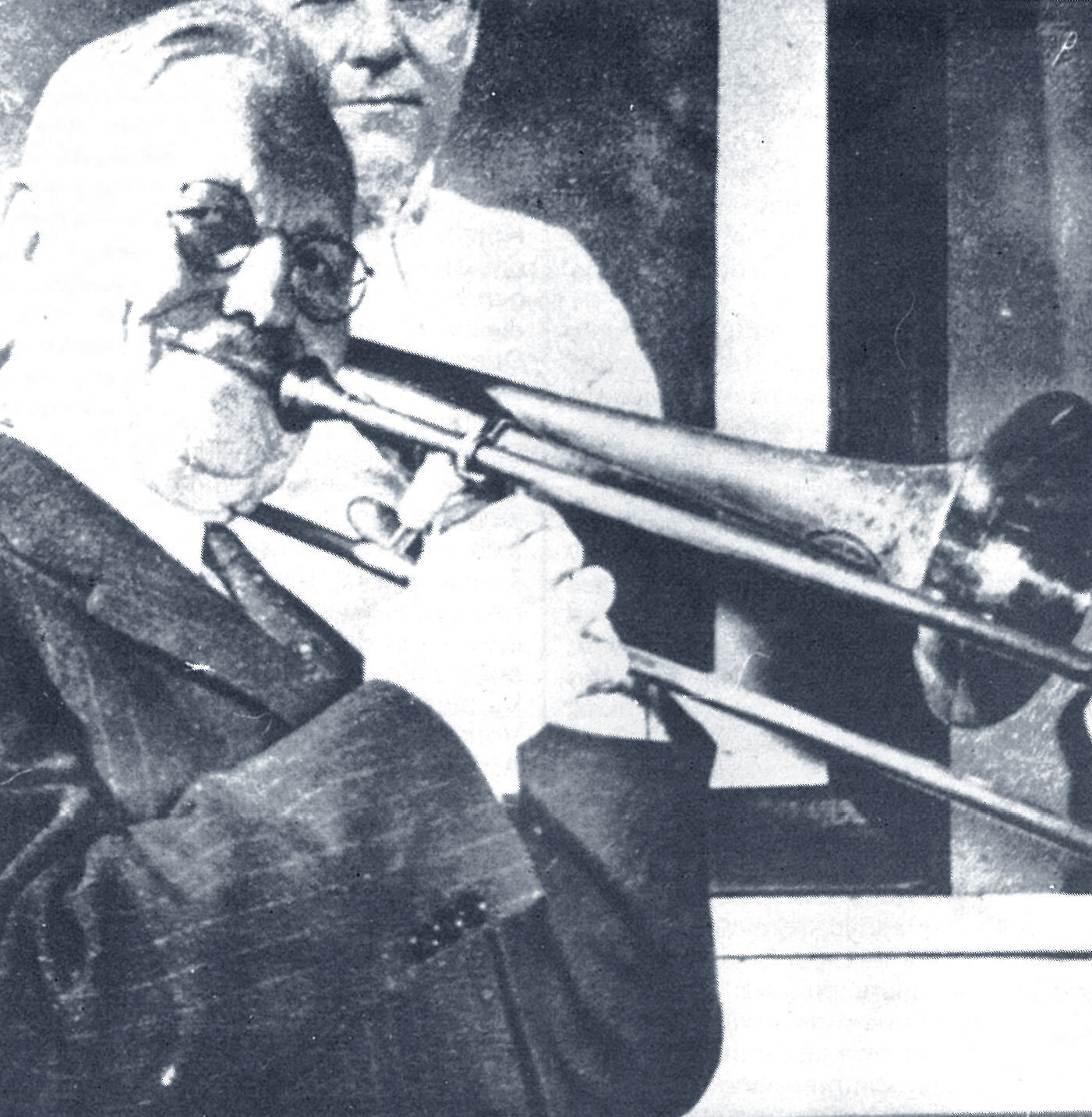
In addition to his role as leader of the New Orleans style, Kid Ory was also a skilful user of mutes. He used a harmon (fig. 1; larger than those of today) in “Deep Henderson” and “Too Bad” and a derby in “Wa-wa-wa”, all recorded with King Oliver in 1926. The British trombonist Keith Nichols² has, by means of a diagram (fig. 2), drawn attention to a mute invented by Ory in the twenties (but which he did not use until his second career, during the revival). Ory also used the straight mute, beloved of Charlie Green in New York. Along with Joe ‘‘Tricky Sam’’ Nanton, (1904-1946), Green was one of the first black masters, apart from the New Orleans players who had moved to Chicago. Nanton manipulated the plunger mute with skill of a Bubber Miley; he played very well in tune, even with the plunger very close to the bell, because he corrected with the slide.
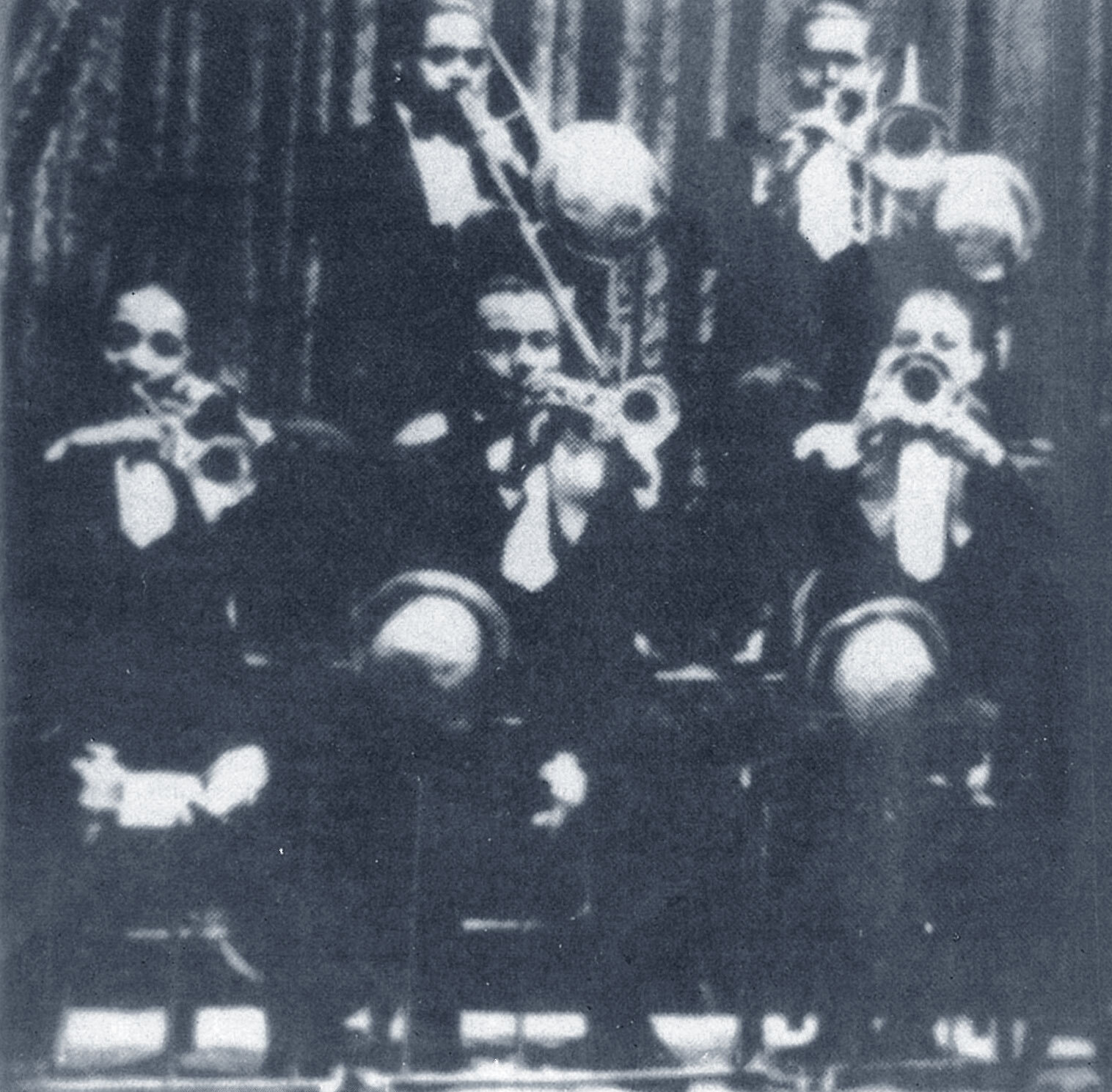
Brass section of Duke Ellington’s orchestra around 1929.
➜ Freddy Jenkins (tp, playing left hand), Joe Nanton † (tbl), Cootie Williams, Juan Tizol † (valve trombone). See use of “Derby” mutes. (Coll. M. Laplace)
Among the whites in Chicago Carroll Martin (1887-1939) is like a pivot between the big concert-band virtuoso style and the nascent dance-band style; he played for Isham Jones from 1920 to 1925. It was at this time that the slide was really liberated, in both New York and Paris. The white Miff Mole (1898-1961), a pupil of Charles Randall, established himself after 1922 in the Original Memphis Five as the father of the modern trombone. His flexible legato playing with a flattering sound was already a model of the type. At the same time Léo Arnaud-Vauchant (*1904) was already well known in France; he appeared at the “Boeuf sur le toit” in 1924 playing trumpet parts on the trombone. In 1926 Guy Paquinet played with him in the band of the Belgian saxophonist Paul Gazon. Léo had an advanced technique which served a virile style while Guy, with his flexible playing and warm sound, seduced his listener like a Tommy Dorsey.
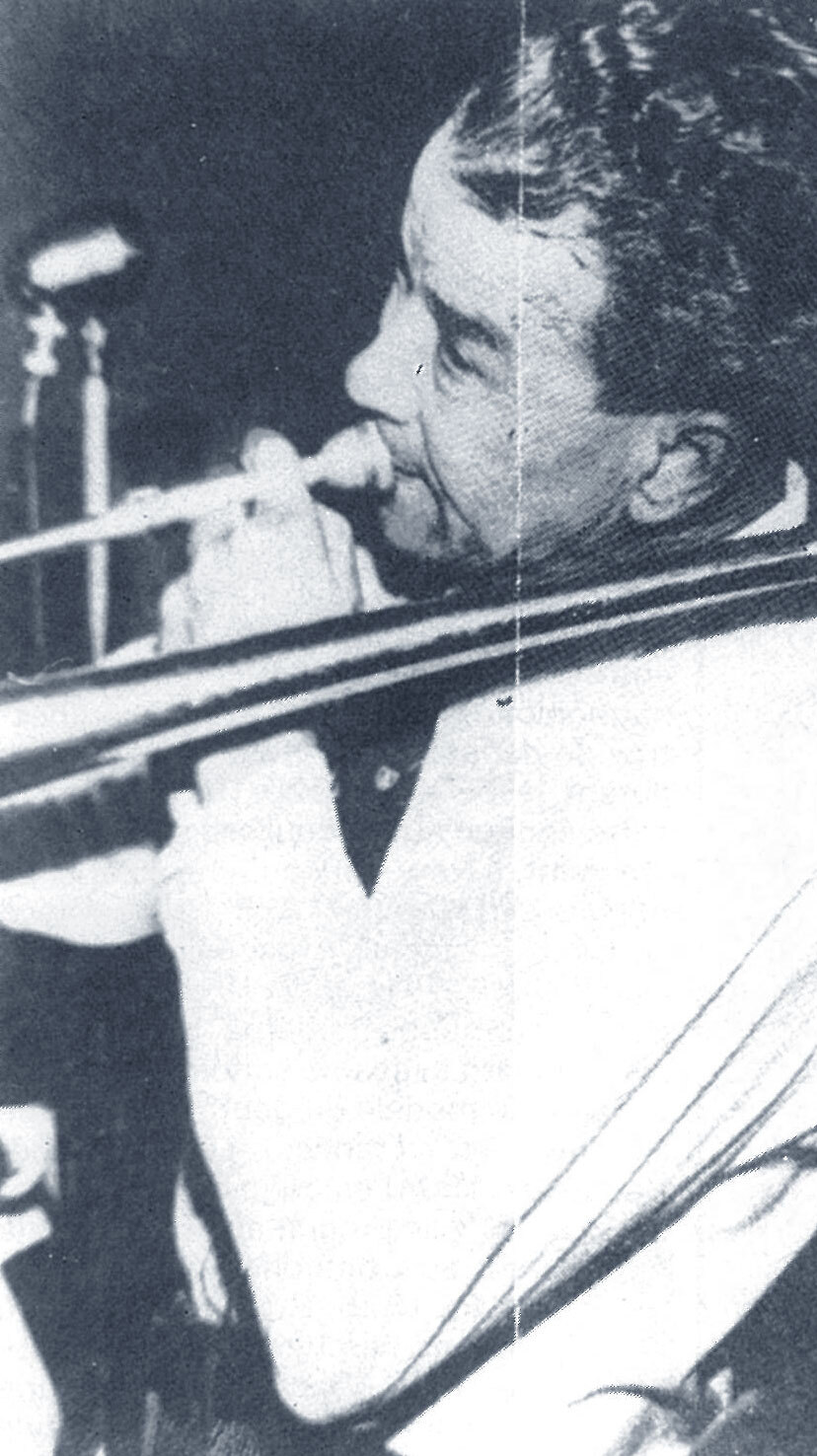
«Kid» Ory. Photo Decca Record Co.
Dorsey himself began to record a lot from 1924 onwards. The age of the bandstand virtuosos was still quite recent and the reciprocal influences could still be observed. Guy Paquinet told me he decided to take up the trombone (he had been a violinist) after hearing a certain Mr. Robert, soloist with the 31st Infantry Regiment, playing a solo from “Carmen” in the Luxembourg Gardens in Paris. According to the pianist Itzy Riskin, Simone Mantia played alongside Tommy Dorsey on a job with the trumpet player Benjamin A. Rolfe and later declared, ‘‘I am so impressed with this Dorsey fellow — his tone, his style, his whole approach to trombone playing.’’ (in “Metronome Music Co.”).
As we end this chapter, it does not seem that jazz, at this early date, was the trombone’s point of departure towards an innovative style. It had little standing as a soloist. At the same time the big names in the concert bands and the first white dance bands, thanks to their solo responsibilities, were discovering the benefits of legato — a good omen for the future.