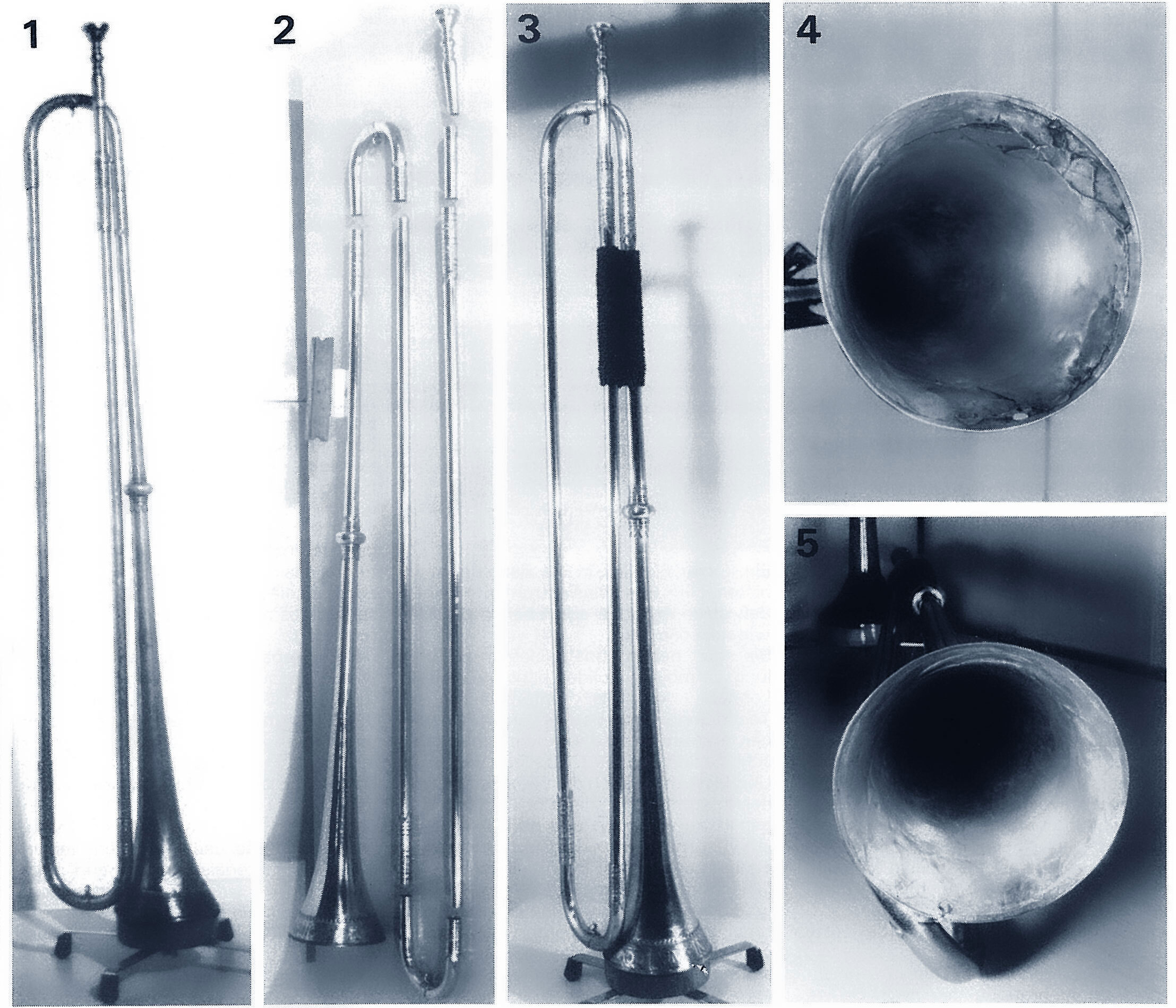
Trumpet in C
by Hans Hainlein, Nürnberg, 1632, from the collection of the museum of musical instruments in the Münchner Stadtmuseum
- Oxydised material at risk. Inexpertly repaired. Tubing sections wrongly re-assembled.
- Completely dismantled and chemically cleaned.
- Damage due to repair work largely made good. Original construction restored. Wooden block and binding restored.
- Inside bell after removal of tin used in repair.
- Appearance corrected and stabilised with reversible adhesive coloured to match.
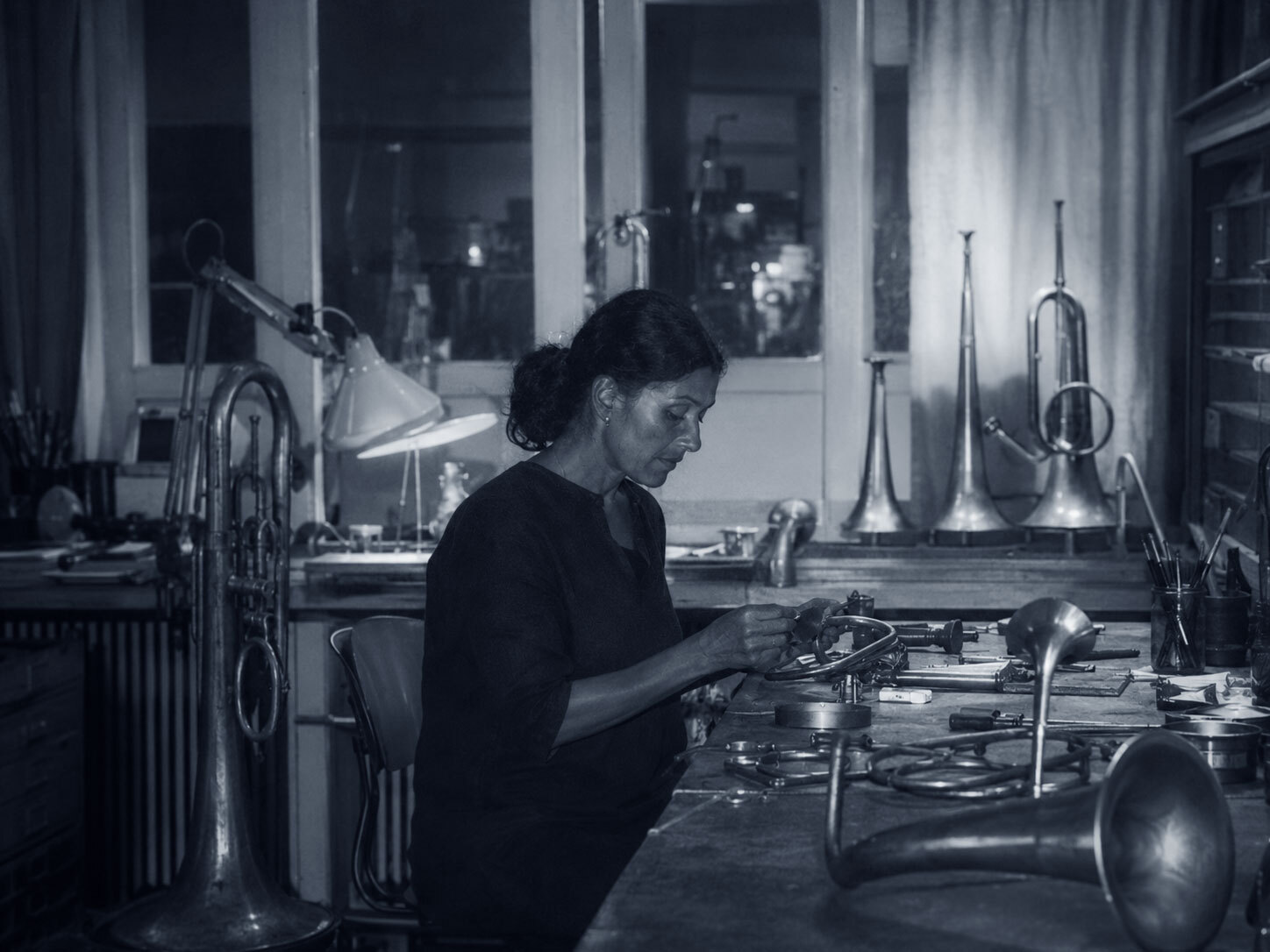
Museums throughout West Germany have sent her many irreplaceable instruments for restoration. The pictures printed here give some idea of her work.
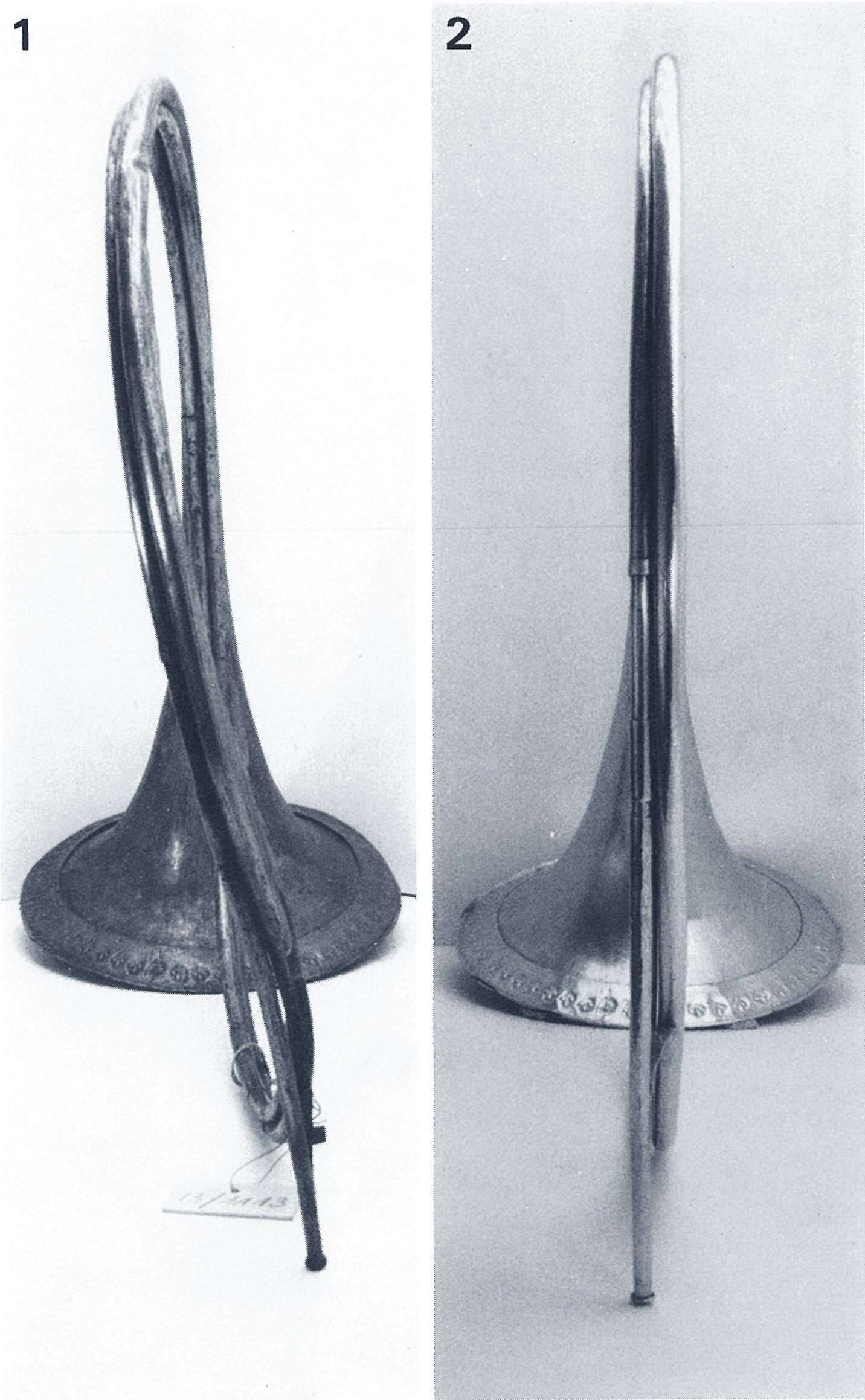
Parforce horn in C
made by Cretien in Paris, 2nd half of the 17th century. From the collection of the Bayerisches Nationalmuseum, Munich
- As received: Brass partly covered with a layer of polymerised grease. Dark-coloured brass under this, remains of the outer surface dark brown through oxydation. Kinks and gaping cracks. Circular profile distorted into an octagon. Parts of the tubing flattened to half its original diameter. No original soldering, inexpert repairs. Unplayable.
- After restoration: Layer removed, instrument thoroughly cleaned and preserved chemically. Tubing dismantled, original shape restored carefully by various appropriate methods. Instrument reassembled with tin solder. Necessary supplementary tubing made up to replace broken sections. Cracks largely sealed and retouched.
In accordance with German craftsmen's regulations even Mrs. Menzel the restorer had to take her master craftsman's examination when she became independent. She built a Wagner tuba, one which was missing from the display collection in the Deutsches Museum; she was the first woman to sit the examination in this trade and, for producing the best work of the year, received distinctions from the Upper Bavarian Chamber of Craftsmen in Munich and the Foundation for Support of the Gifted in Bonn.
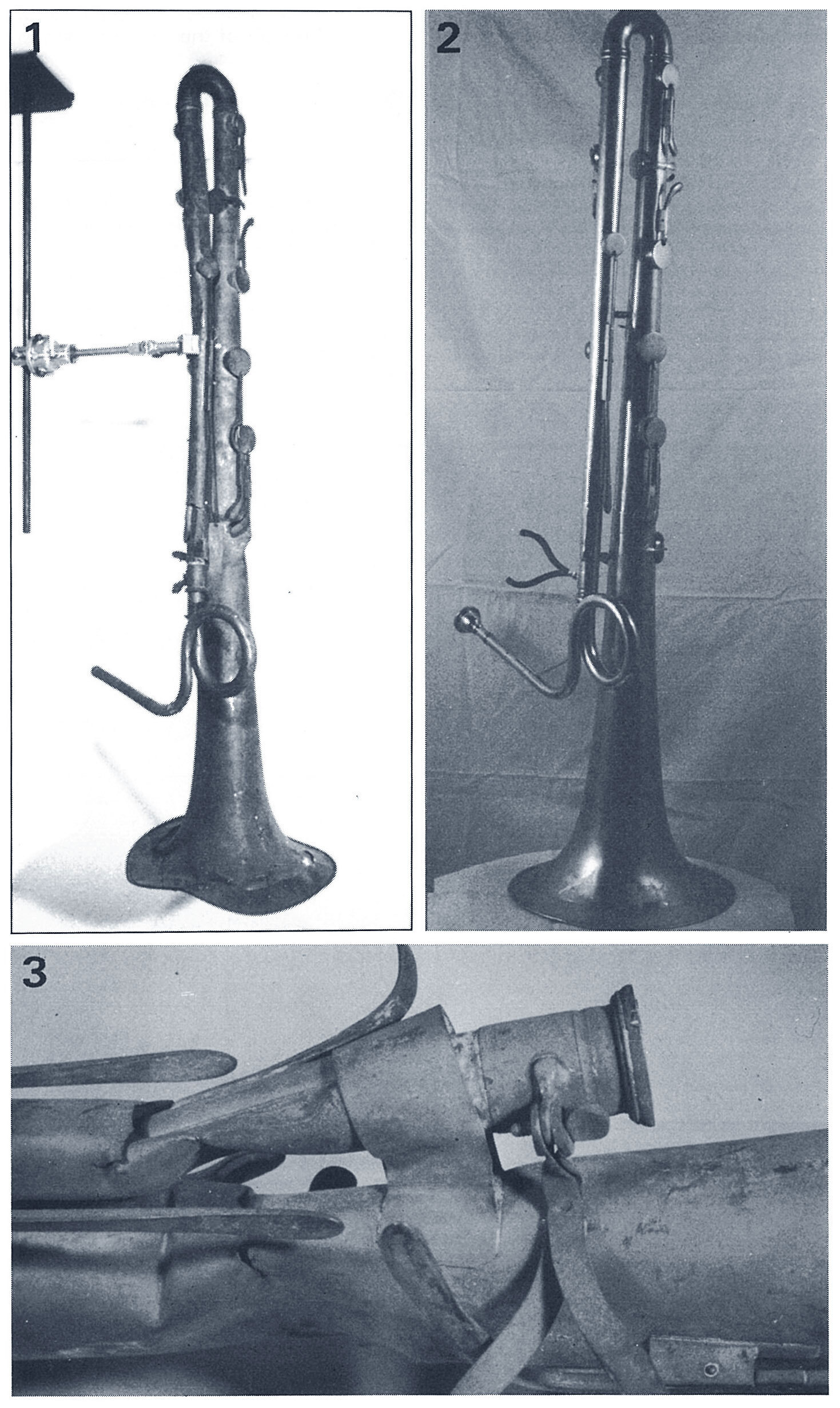
Ophicleide in C
2nd half of 19th century. From the collection of the Bayerisches Armeemuseum, Ingolstadt
- As received: Brass severely oxydised, dark brown and green. Severe deformation. Body of the instrument broken almost completely through in three places (see detail, fig. 3). Material cracked in many places. Various parts of keywork missing. No mouthpiece. Unplayable.
- After restoration: Brass chemically cleaned and double preserved inside and out. All components reshaped. Construction of body of instrument stabilised. Cracks sealed. Missing parts made up on model of originals or similar instruments (designated as reconstruction). The instrument can be played and speaks well.
- Detail of fig. 1
She then moved to north Germany for personal reasons and, now in a workshop of her own for the first time, once again devoted herself with great relish, initiative and serious conviction to the multifaceted job of restoration.
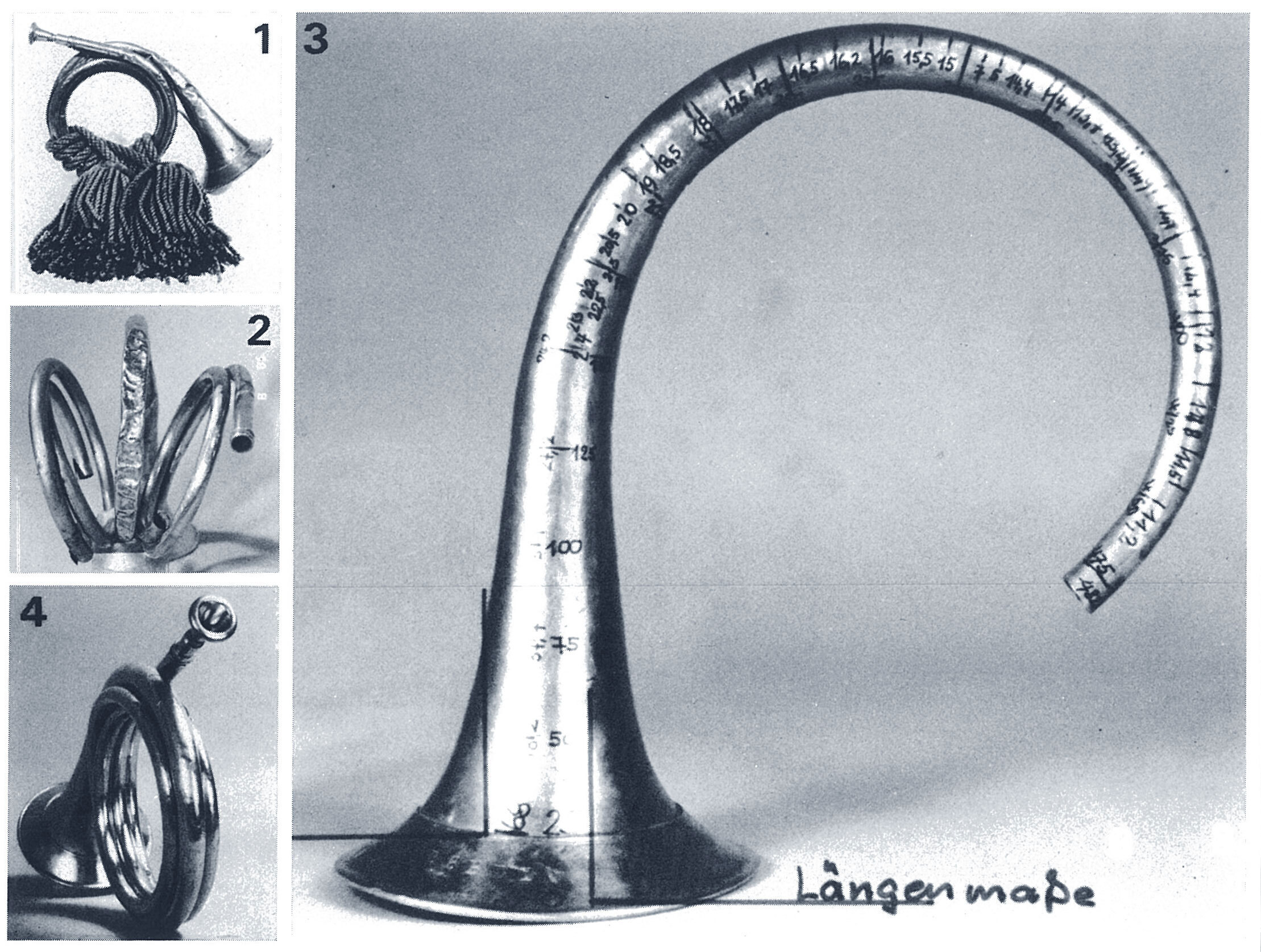
Post horn in Eb
made by J. F. Glass in Berlin, 1873–1886 from the Nienburg collection
- As received: Severe deformation. Parts of the tubing flattened to 1–2 mm. Brass oxydised, material cracked, inexpertly repaired.
- Dismantled
- Bell section after time-consuming re-shaping, with scale of tube checked and maintained. In view of the ageing of the material, removal of dents was done 1/10 mm at a time.
- After restoration: Chemically cleaned, preserved, appearance corrected, sealed. It speaks particularly well and is to be heard in the museum in performance of contemporary works.
Since the contact with musical instrument collections and their scientific staff, with research institutes, musicians, instrument makers, experts in the trade and many others — contact so necessary in this business — is easier to find in a centre of culture such as Munich, Mrs. Menzel is now particularly looking forward to being able to resume, and pursue intensively, her restoration of early brass instruments here in her new expanded workshop.
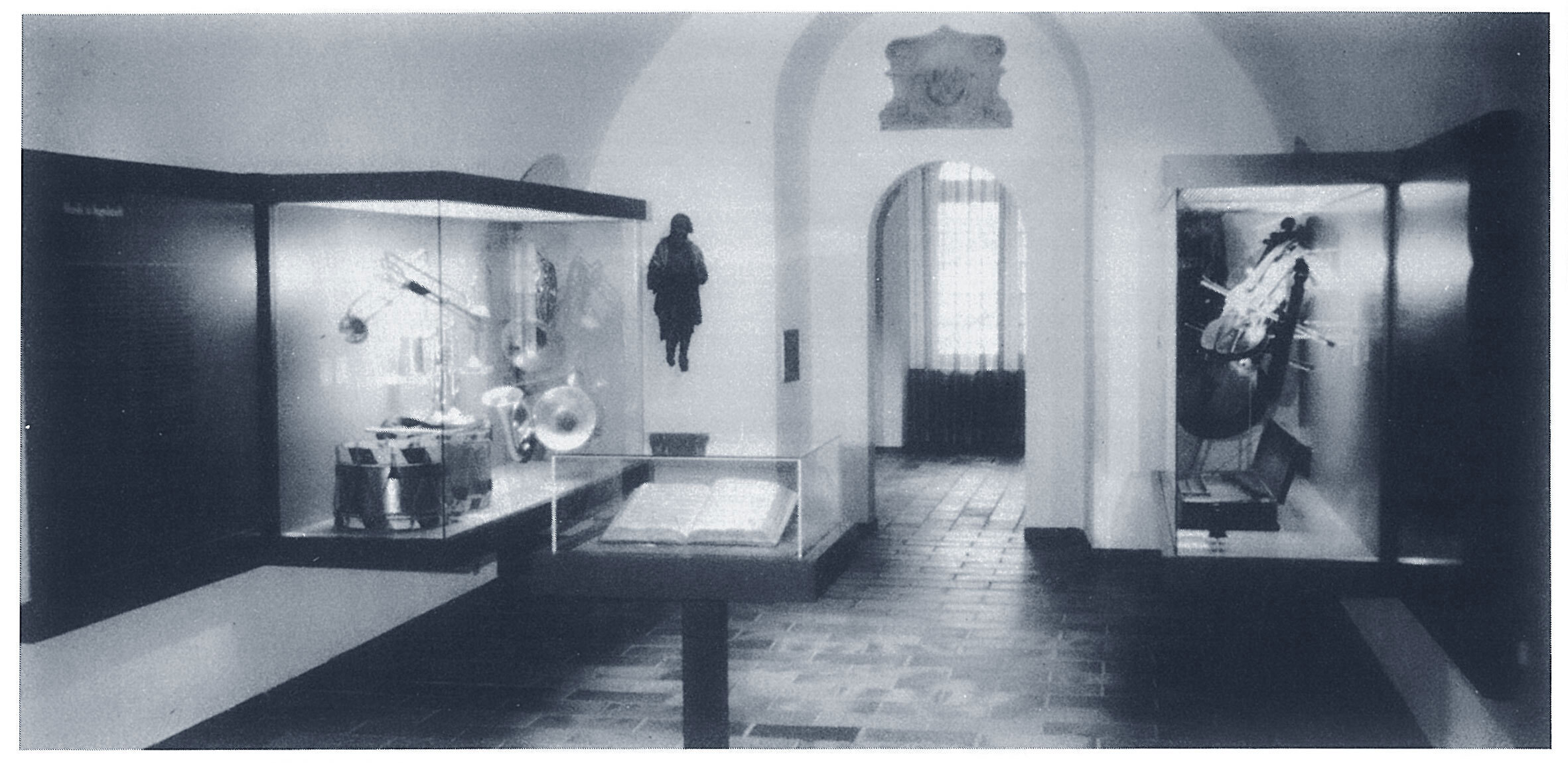
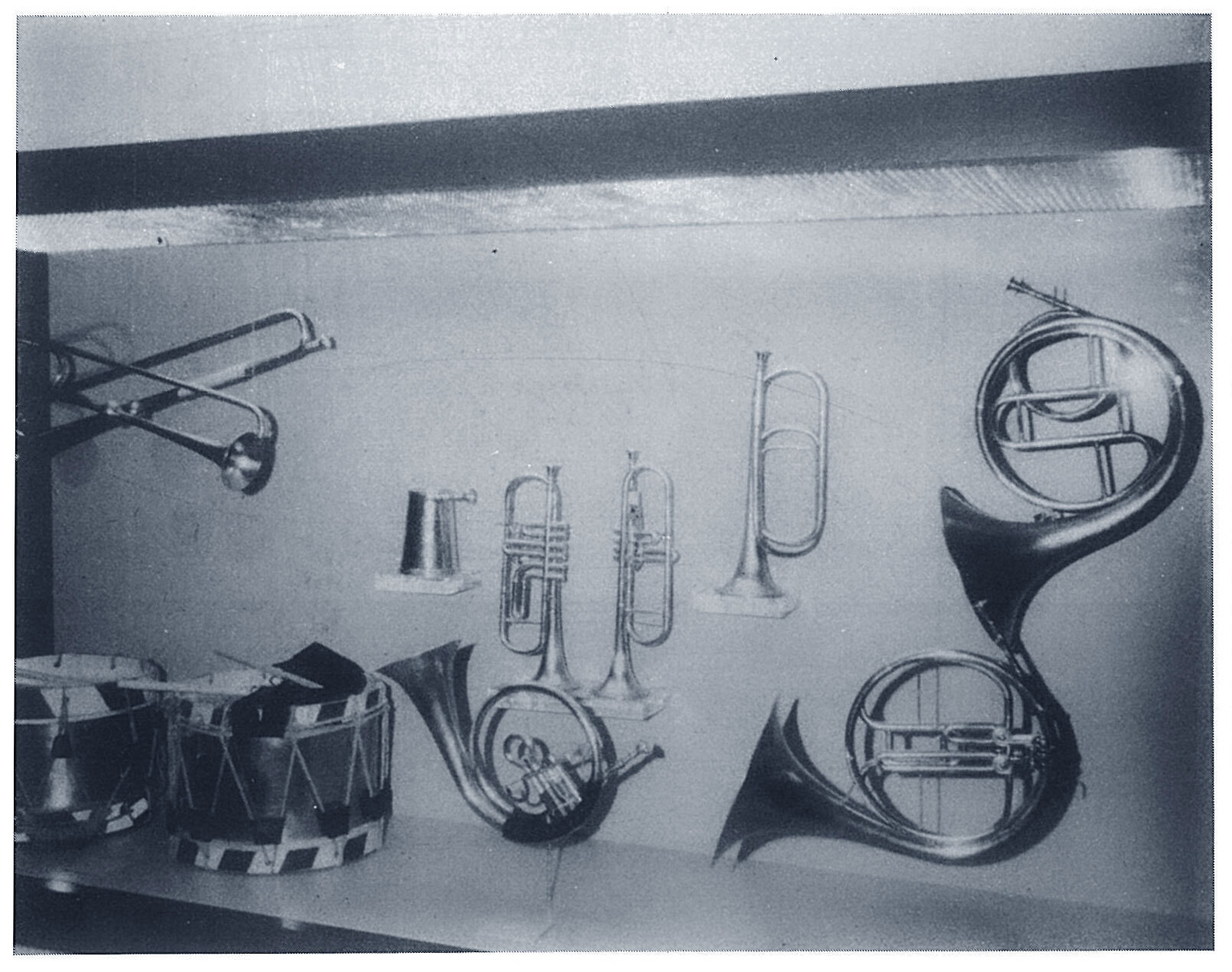
Restored musical instruments
to be heard played at a small celebration concert on the occasion of the opening of the Ingolstadt city museum in Kavalier Hepp, 1981.
This collection of brass instruments and side drums is interesting from the point of view of the history both of instruments and of the city.
All the instruments are playable once again after having been restored. At the same time the earliest known example of the curious Büchsentrompete by Adam Buchswinder (1730) was put on show to the public for the first time.