Explore institutional access Explore institutional access

4 min. read

The tuba, Benjamin of the brass family

Where does the tuba come from? From serpent to ophicleide to saxhorns, this article traces a lesser-known path to the modern instrument.
The tuba, Benjamin of the brass family

The article “The Tuba in France” by Lelong and Coutet in Brass Bulletin No. 13 - 1976 inspired us to further research on the subject. This led to the following lines that are to be read as “fioriture” to the afore-mentioned article.

Practically no knowledge of brass instruments has come down to us from the time of the migration of peoples (4th till end of 6th c.). Even the Middle Ages were well on their way (9th c.) before pictures show us such instruments. The Roman tuba, buccina and cornu had disappeared in the course of the dark centuries. The wind instruments we find in the pictures of the 9th/10th century are of two families: the horn family (different kinds of bugles) and the trumpet family (first buzines, later straight and 8-shaped trumpets).

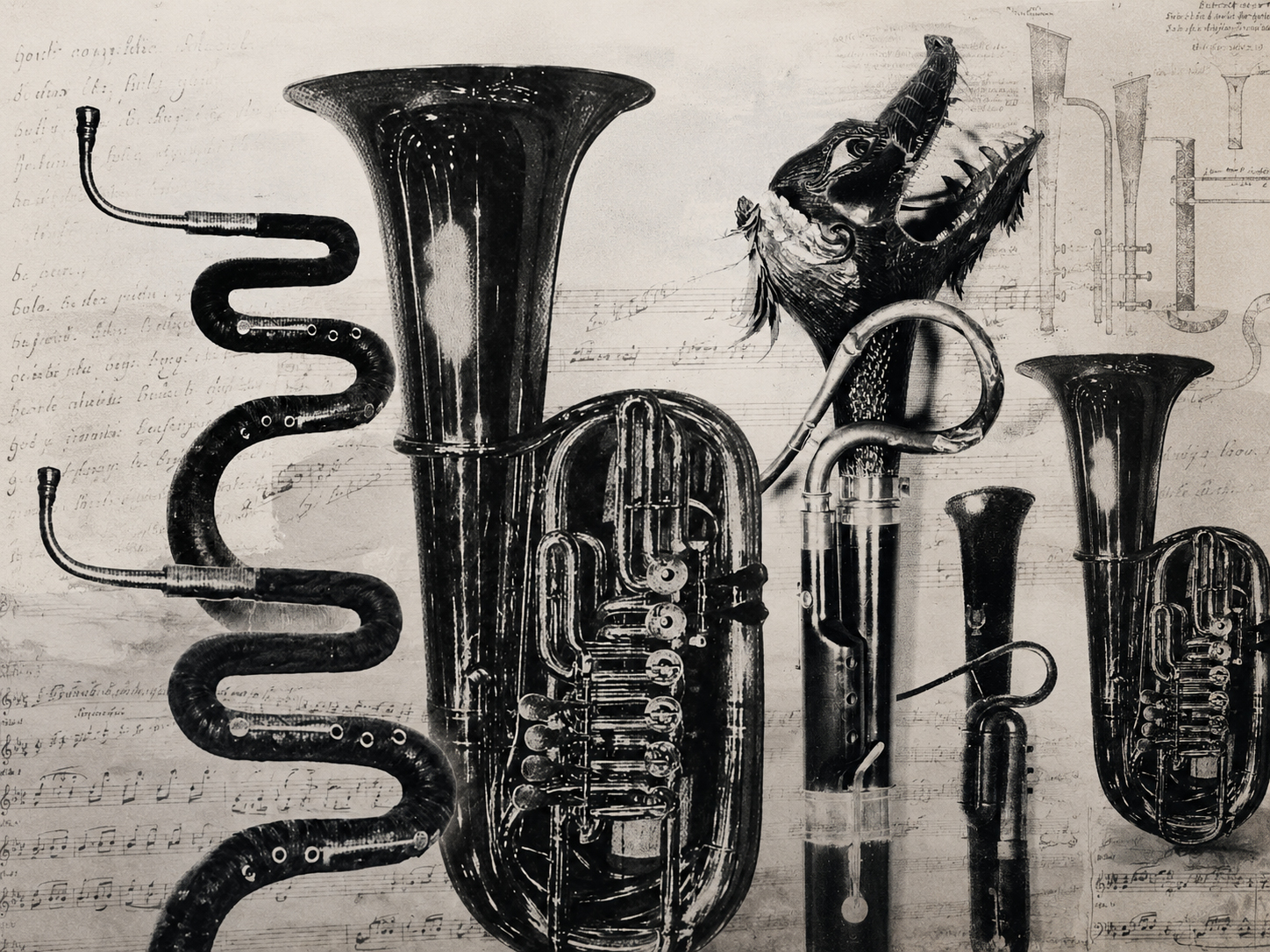
In the 14th century a new type of instrument joined the group, the cornett, which was going to be of great importance. We have now come to the time where wind instruments were no longer mere signal instruments, they had become musical art instruments. For the first time the shrill descant instruments did not suffice and one had to look for deeper tones. Thus the invention of the serpent was made in the 16th century: a bass of the cornett, bent like a serpent so as to facilitate reaching the fingerholes (Image 1).

Continue reading

Access the full Digital Edition.

Brass Bulletin 17, I / 1977 pages 11–14

All content is protected by copyright © Brass Bulletin 1977–2026

Share this article

Facebook LinkedIn
Loading…

Questions & Answers

How the Digital Edition works

What does the Digital Edition include?

The Digital Edition brings together the articles already digitized as searchable online texts—not simply as scans or PDF files—along with their original illustrations, notes, authorship, issue information, and available translations. Related-article suggestions currently include only this digitized material.

Are the digital articles identical to the originals?

We preserve the original text, language, illustrations, captions, footnotes, and editorial context as faithfully as possible. The presentation is adapted for comfortable online reading, and obvious transcription or scanning errors may be corrected. The substance and character of the published article remain unchanged.

Which languages are available?

Brass Bulletin was published in English, French, and German throughout its history. Italian and Spanish translations were added from issue No. 60 onward.

On the Italian and Spanish sites, articles from issues 1–59 are therefore shown in English by default.

How often are new articles added?

New articles are added almost daily, with approximately one complete issue digitized each week. The pace may vary depending on the preparation, image work, and editorial checking required.

Why aren’t all articles available digitally?

The complete Brass Bulletin collection contains 1,246 articles published between 1971 and 2003. The full index is already available online, allowing readers to discover every article in the collection, including those whose complete text has not yet been digitized.

Digitization began in February 2026. Each article is carefully prepared for online reading, checked, and connected to its issue, authors, subjects, and illustrations. At the current pace of digitization, the complete collection is expected to be available online by February 2028.

Why do some references mention articles that are not available yet?

References in the original articles are preserved even when the material they point to has not yet been digitized. This keeps the historical and editorial record intact. As more issues are added to the Digital Edition, an increasing number of these references will lead to articles that can be read online.

Can I suggest an article or report a transcription error?

Yes. If there is an article you would particularly like to see digitized, or if you notice a possible transcription error or missing detail, please contact us. Reader feedback helps us improve the Digital Edition and prioritize useful connections within the archive.

How can I support Brass Bulletin?

Your support helps fund the preparation, verification, and online publication of the complete collection.

Subscribe to the Digital Edition

Prefer to support us without subscribing?

Make a donation

Search Brass Bulletin.