Explore institutional access Explore institutional access

8 min. read

James Stamp, subtle teaching
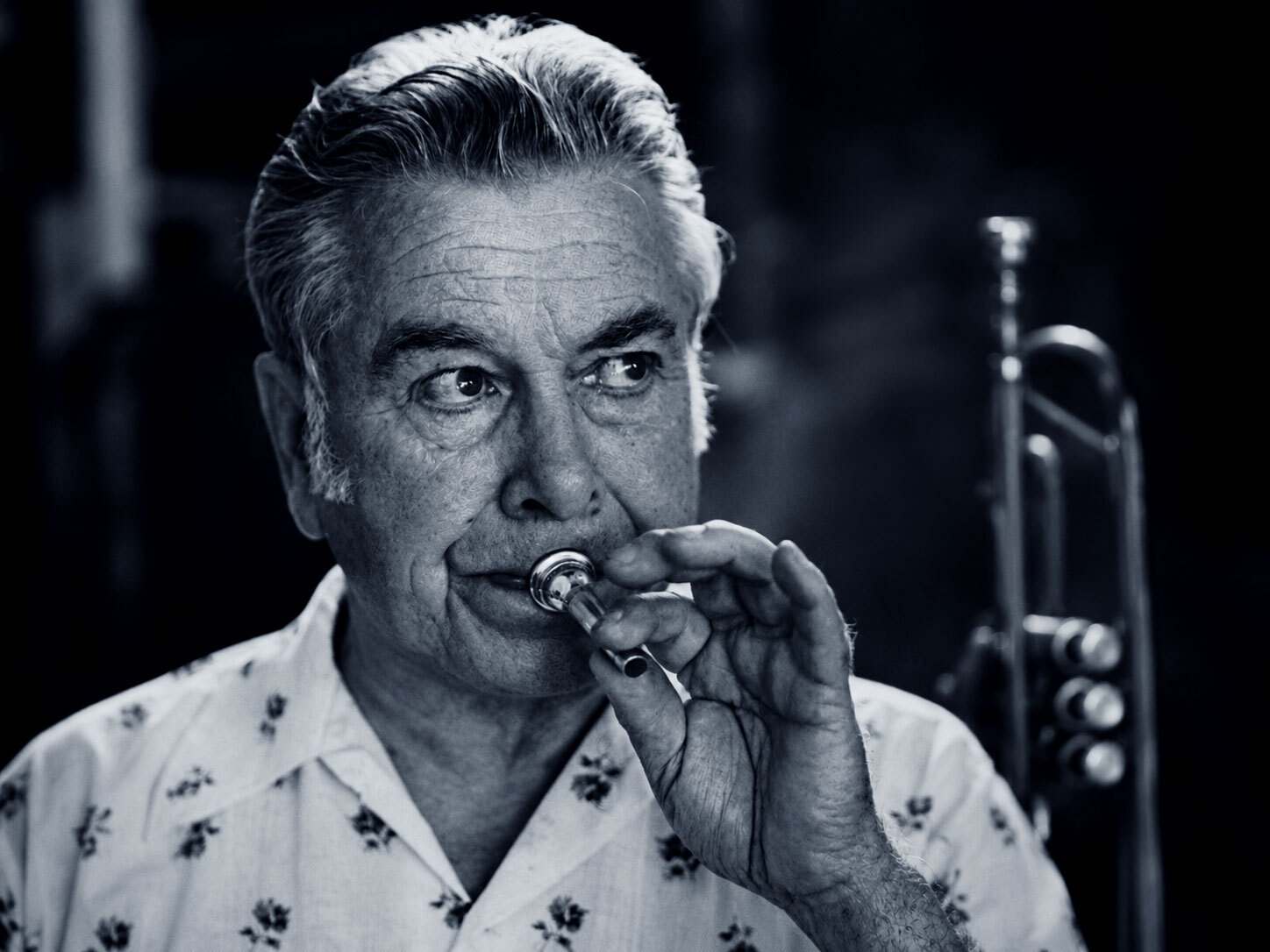
Intonation, held notes and mouthpiece work shape James Stamp's subtle approach to trumpet playing, where listening and physical economy guide technique.
James Stamp, subtle teaching

It is now more than ten years since I happened to hear of Jean-Pierre Mathez's campaign, then passing through Paris, with its concert tour entitled "The Demilitarisation of the Trumpet". This campaign was pursued in various ways, notably by the publication of an anti-authoritarian teaching method conceived in an entirely new spirit (see J.-P. Mathez, Trompetenschule, Universal Edition, Vienna) and by various attempts to promulgate the teachings of James Stamp (by organising courses, publishing warm-ups and passing on advice in Brass Bulletin).

There is no doubt that the martial and triumphal aspects of the trumpet continue to hold the centre of the stage; drills, the violent muscular development programmes, the race for loud and high notes etc. — all these are still taught. There is a counter-current, however, and Brass Bulletin is working to support it. James Stamp is a key figure in this movement. He is aiming at artistic trumpet playing by practising the art of the teacher.

Stamp is a clinician, adapts his teaching for each new pupil and is reluctant to commit himself to writing. Many users of his warm-ups have only fragmentary knowledge of his playing strategies. The following notes, all too brief, try to fill some of these gaps. They are drawn from observations I made during Stamp's course (Moudon 1977) and from a conversation I had with him.

When did you begin to teach?

I was teaching even before I was in the Symphony. And it seems I always got results, even though I had only part of the things I have now; there was always a similar sound. Later on, when I got some pupils that were not so talented as others, I found out that the things that work very well for most people just didn't register.

I got into teaching in Los Angeles during the G.I. bill (which offered higher education to ex-servicemen) and the music schools were loaded. And it wasn't long before I had a very heavy load of teaching. And it was the kind of the success I had in teaching that established me. It was all in private although I had some brass classes in school where all beginners come in.

Continue reading

Access the full Digital Edition.

Brass Bulletin 39, III / 1982 pages 14–21

All content is protected by copyright © Brass Bulletin 1982–2026

Share this article

Facebook LinkedIn
Loading…

Questions & Answers

How the Digital Edition works

What does the Digital Edition include?

The Digital Edition brings together the articles already digitized as searchable online texts—not simply as scans or PDF files—along with their original illustrations, notes, authorship, issue information, and available translations. Related-article suggestions currently include only this digitized material.

Are the digital articles identical to the originals?

We preserve the original text, language, illustrations, captions, footnotes, and editorial context as faithfully as possible. The presentation is adapted for comfortable online reading, and obvious transcription or scanning errors may be corrected. The substance and character of the published article remain unchanged.

Which languages are available?

Brass Bulletin was published in English, French, and German throughout its history. Italian and Spanish translations were added from issue No. 60 onward.

On the Italian and Spanish sites, articles from issues 1–59 are therefore shown in English by default.

How often are new articles added?

New articles are added almost daily, with approximately one complete issue digitized each week. The pace may vary depending on the preparation, image work, and editorial checking required.

Why aren’t all articles available digitally?

The complete Brass Bulletin collection contains 1,246 articles published between 1971 and 2003. The full index is already available online, allowing readers to discover every article in the collection, including those whose complete text has not yet been digitized.

Digitization began in February 2026. Each article is carefully prepared for online reading, checked, and connected to its issue, authors, subjects, and illustrations. At the current pace of digitization, the complete collection is expected to be available online by February 2028.

Why do some references mention articles that are not available yet?

References in the original articles are preserved even when the material they point to has not yet been digitized. This keeps the historical and editorial record intact. As more issues are added to the Digital Edition, an increasing number of these references will lead to articles that can be read online.

Can I suggest an article or report a transcription error?

Yes. If there is an article you would particularly like to see digitized, or if you notice a possible transcription error or missing detail, please contact us. Reader feedback helps us improve the Digital Edition and prioritize useful connections within the archive.

How can I support Brass Bulletin?

Your support helps fund the preparation, verification, and online publication of the complete collection.

Subscribe to the Digital Edition

Prefer to support us without subscribing?

Make a donation

Search Brass Bulletin.