Rendete Brass Bulletin disponibile nella vostra università, nel vostro conservatorio o nella vostra biblioteca Scoprite l’accesso istituzionale

2 min di lettura

Early Brass Instruments and Restoration

Early Brass Instruments and Restoration

A quick look at the restoration of early brass instruments shows that this is both difficult and fascinating. In addition to a sympathetic artistic sense it requires a high level of craftsmanship and a knowledge of the various technologies and methods of construction of the individual instruments and of their function in their own age.

This aim must be accompanied by a correct appraisal, and sometimes a careful removal, of any intermediate, inappropriate or even falsified repair work, the reconstruction where possible of missing parts after thorough research has been done, and the preparation of scrupulous documentation in photographs and drawings and in print.

Equally important are knowledge and application of scientific methods of investigation (X-ray, endoscopy and materials analysis, for example) and the use of modern techniques and materials for care and maintenance. The work of a good restorer must be combined with a keen sense of responsibility for the artistic and cultural material entrusted to him.

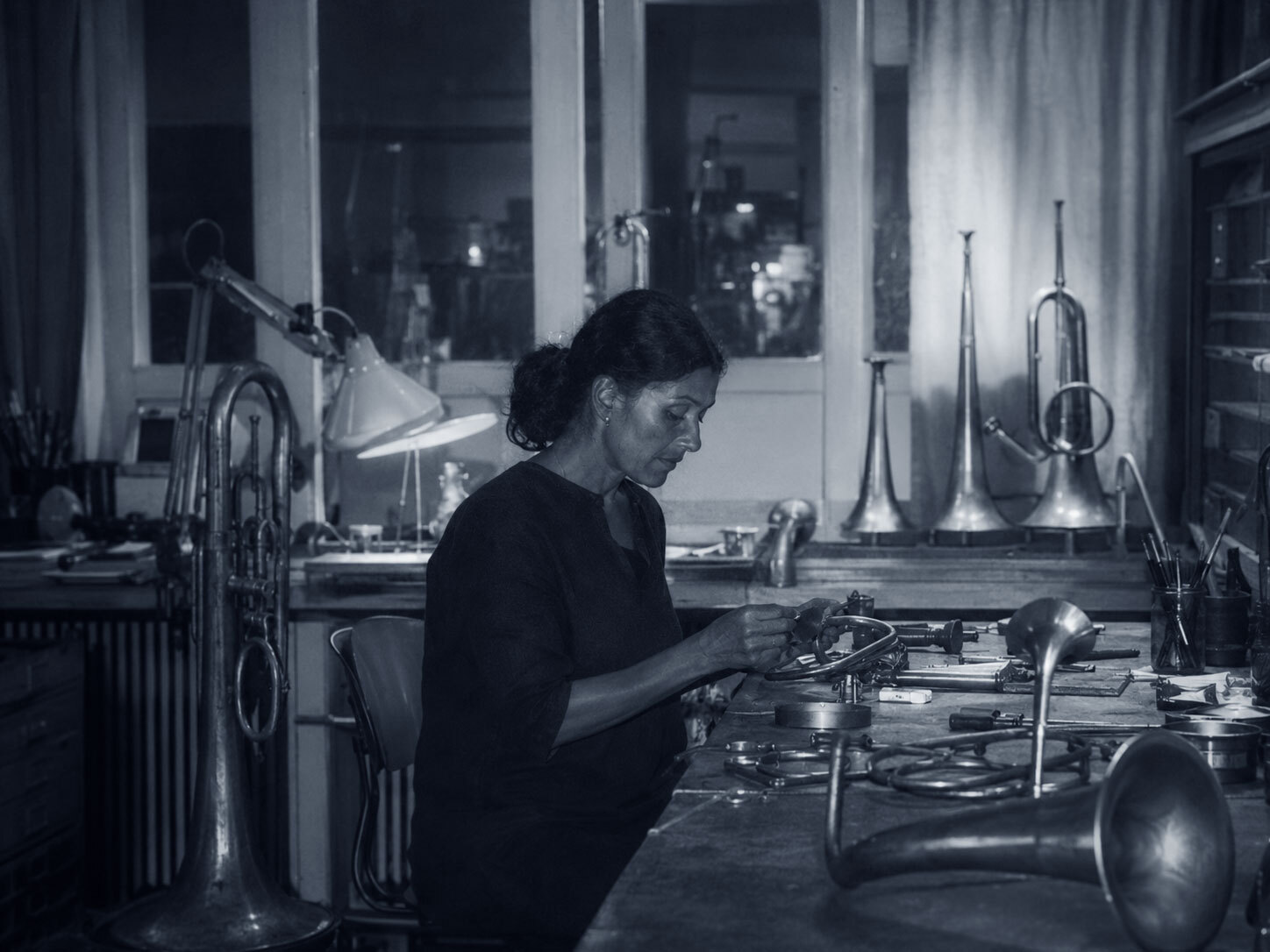
A workshop for the restoration of early brass instruments has now been opened in Munich, in West Germany, by Mrs. Ursula Menzel, thanks to the city museum and the culture department there. Mrs. Menzel specialised in this work ten years ago in the Deutsches Museum in Munich and has now spent several successful years working as an independent restorer.

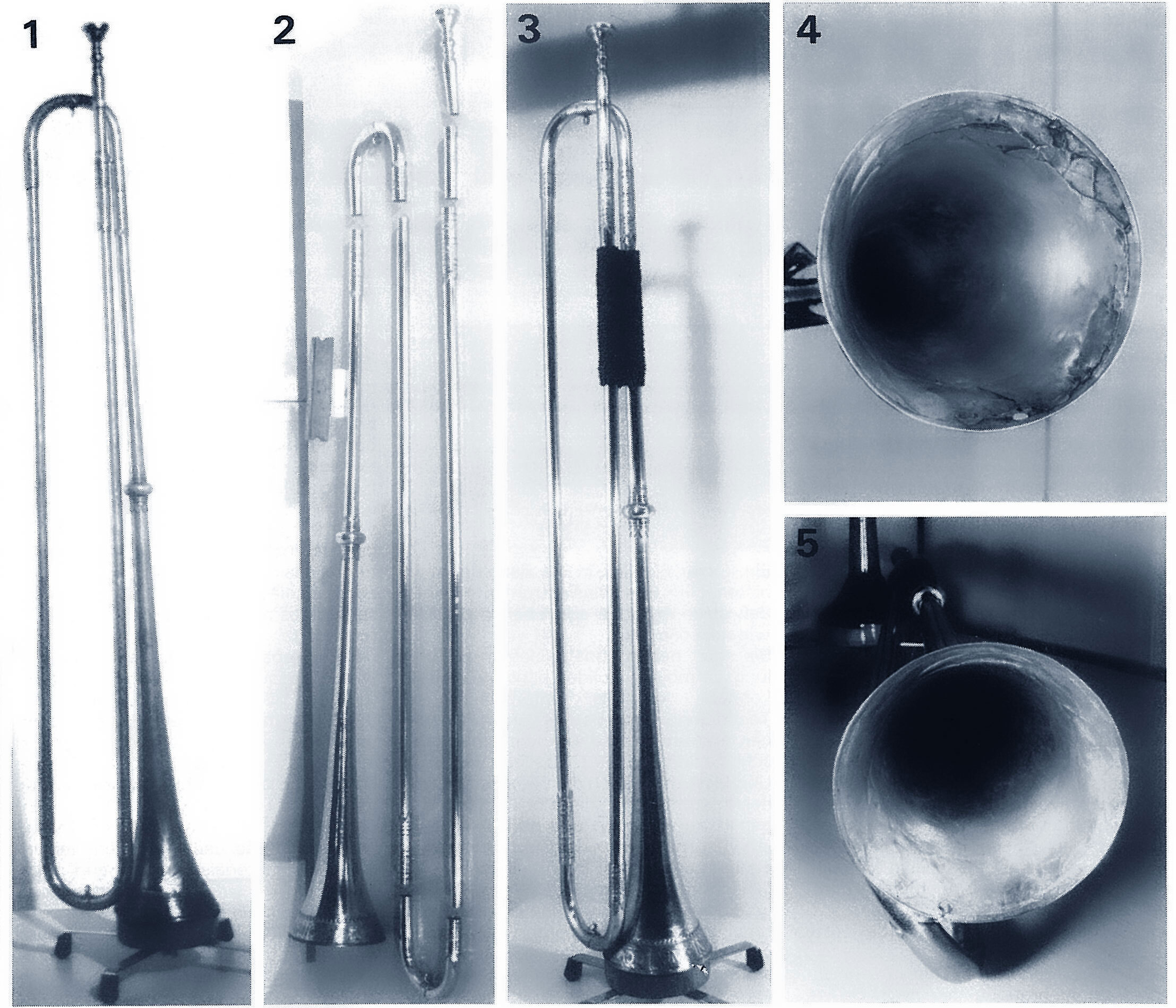
Trumpet in Cby Hans Hainlein, Nürnberg, 1632, from the collection of the museum of musical instruments in the Münchner S...

Trumpet in C

by Hans Hainlein, Nürnberg, 1632, from the collection of the museum of musical instruments in the Münchner Stadtmuseum

  1. Oxydised material at risk. Inexpertly repaired. Tubing sections wrongly re-assembled.
  2. Completely dismantled and chemically cleaned.
  3. Damage due to repair work largely made good. Original construction restored. Wooden block and binding restored.
  4. Inside bell after removal of tin used in repair.
  5. Appearance corrected and stabilised with reversible adhesive coloured to match.

Museums throughout West Germany have sent her many irreplaceable instruments for restoration. The pictures printed here give some idea of her work.
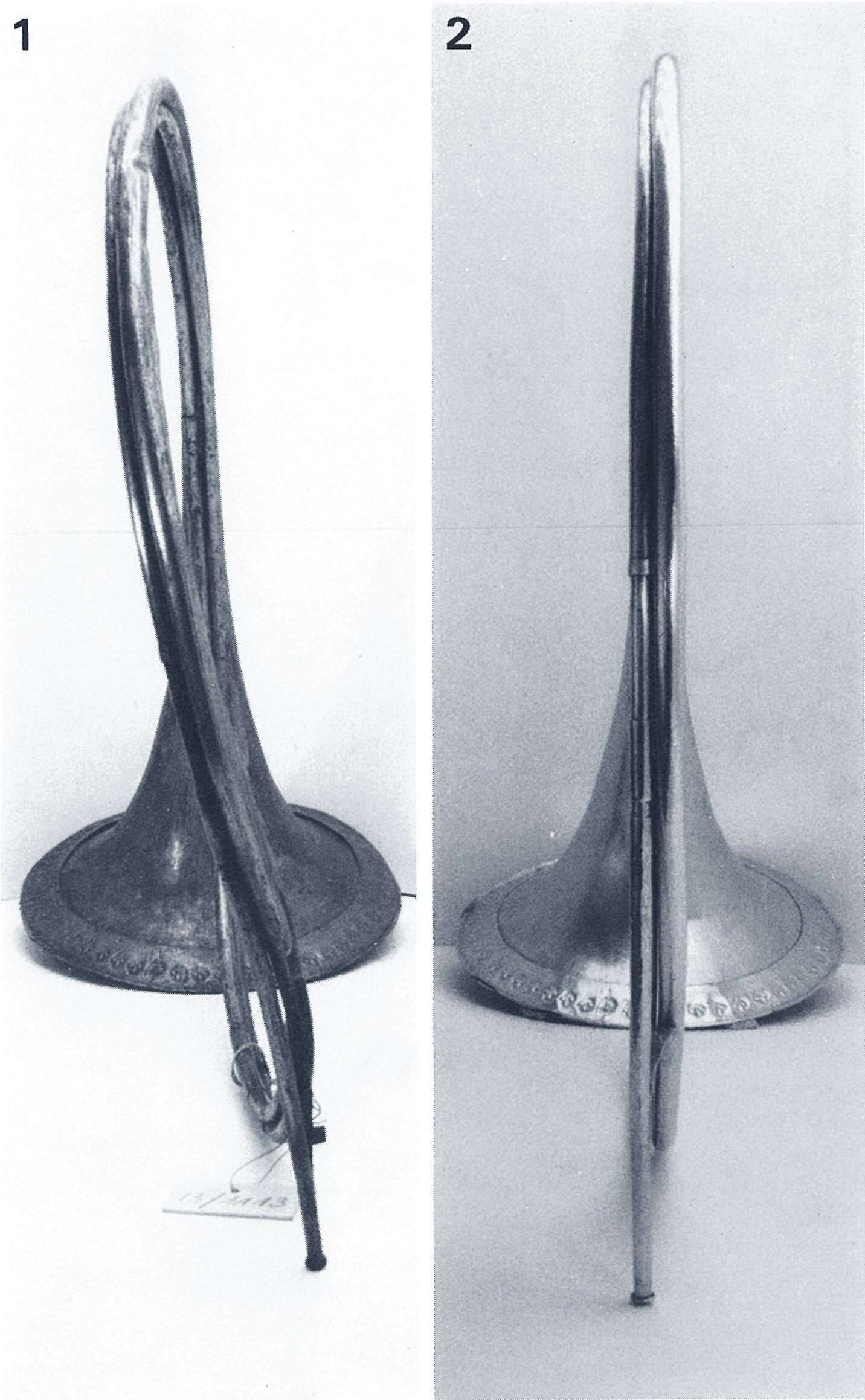
Parforce horn in Cmade by Cretien in Paris, 2nd half of the 17th century. From the collection of the Bayerisches Nationa...

Parforce horn in C

made by Cretien in Paris, 2nd half of the 17th century. From the collection of the Bayerisches Nationalmuseum, Munich

  1. As received: Brass partly covered with a layer of polymerised grease. Dark-coloured brass under this, remains of the outer surface dark brown through oxydation. Kinks and gaping cracks. Circular profile distorted into an octagon. Parts of the tubing flattened to half its original diameter. No original soldering, inexpert repairs. Unplayable.
  2. After restoration: Layer removed, instrument thoroughly cleaned and preserved chemically. Tubing dismantled, original shape restored carefully by various appropriate methods. Instrument reassembled with tin solder. Necessary supplementary tubing made up to replace broken sections. Cracks largely sealed and retouched.

In accordance with German craftsmen's regulations even Mrs. Menzel the restorer had to take her master craftsman's examination when she became independent. She built a Wagner tuba, one which was missing from the display collection in the Deutsches Museum; she was the first woman to sit the examination in this trade and, for producing the best work of the year, received distinctions from the Upper Bavarian Chamber of Craftsmen in Munich and the Foundation for Support of the Gifted in Bonn.
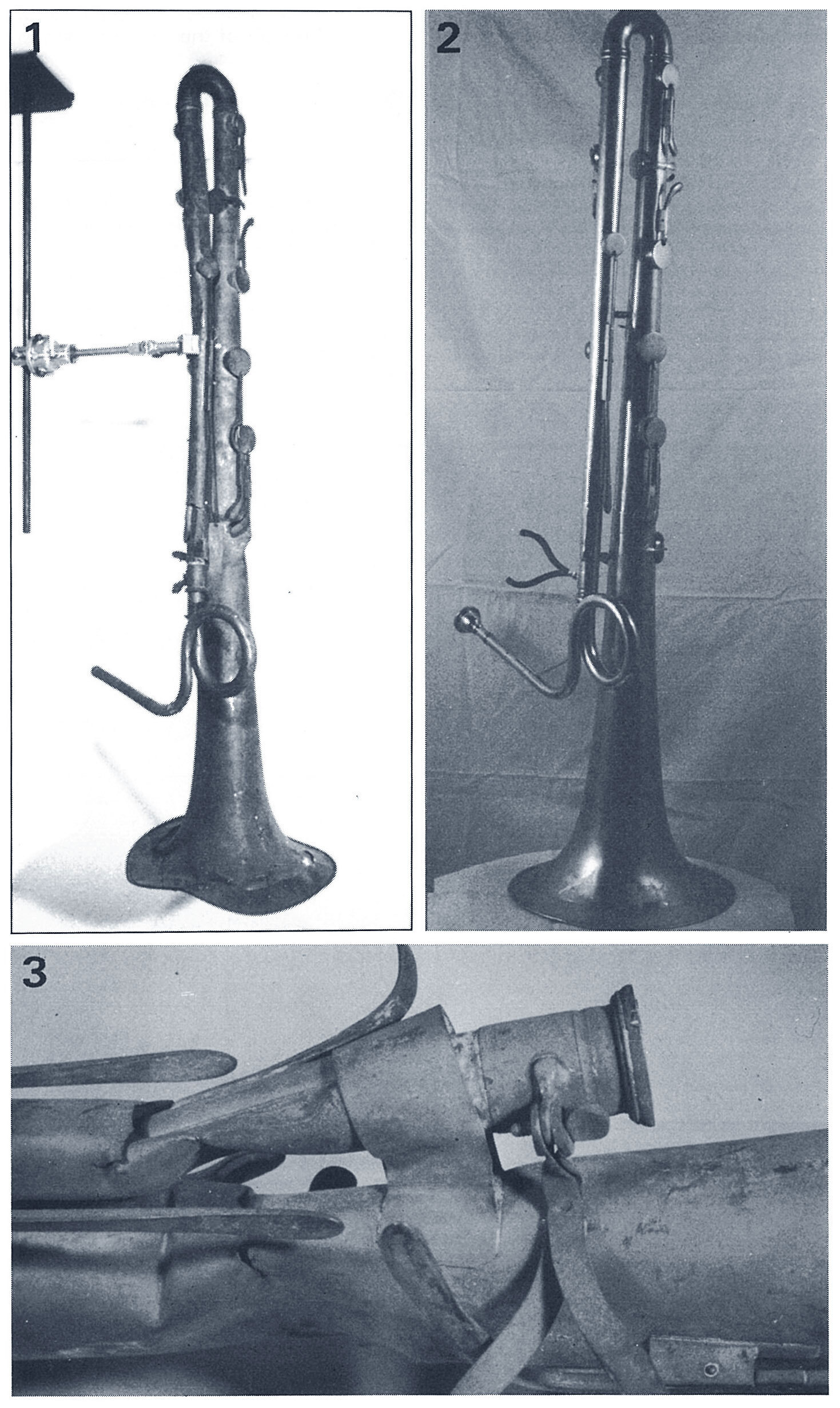
Ophicleide in C2nd half of 19th century. From the collection of the Bayerisches Armeemuseum, IngolstadtAs received: Bras...

Ophicleide in C

2nd half of 19th century. From the collection of the Bayerisches Armeemuseum, Ingolstadt

  1. As received: Brass severely oxydised, dark brown and green. Severe deformation. Body of the instrument broken almost completely through in three places (see detail, fig. 3). Material cracked in many places. Various parts of keywork missing. No mouthpiece. Unplayable.
  2. After restoration: Brass chemically cleaned and double preserved inside and out. All components reshaped. Construction of body of instrument stabilised. Cracks sealed. Missing parts made up on model of originals or similar instruments (designated as reconstruction). The instrument can be played and speaks well.
  3. Detail of fig. 1

She then moved to north Germany for personal reasons and, now in a workshop of her own for the first time, once again devoted herself with great relish, initiative and serious conviction to the multifaceted job of restoration.
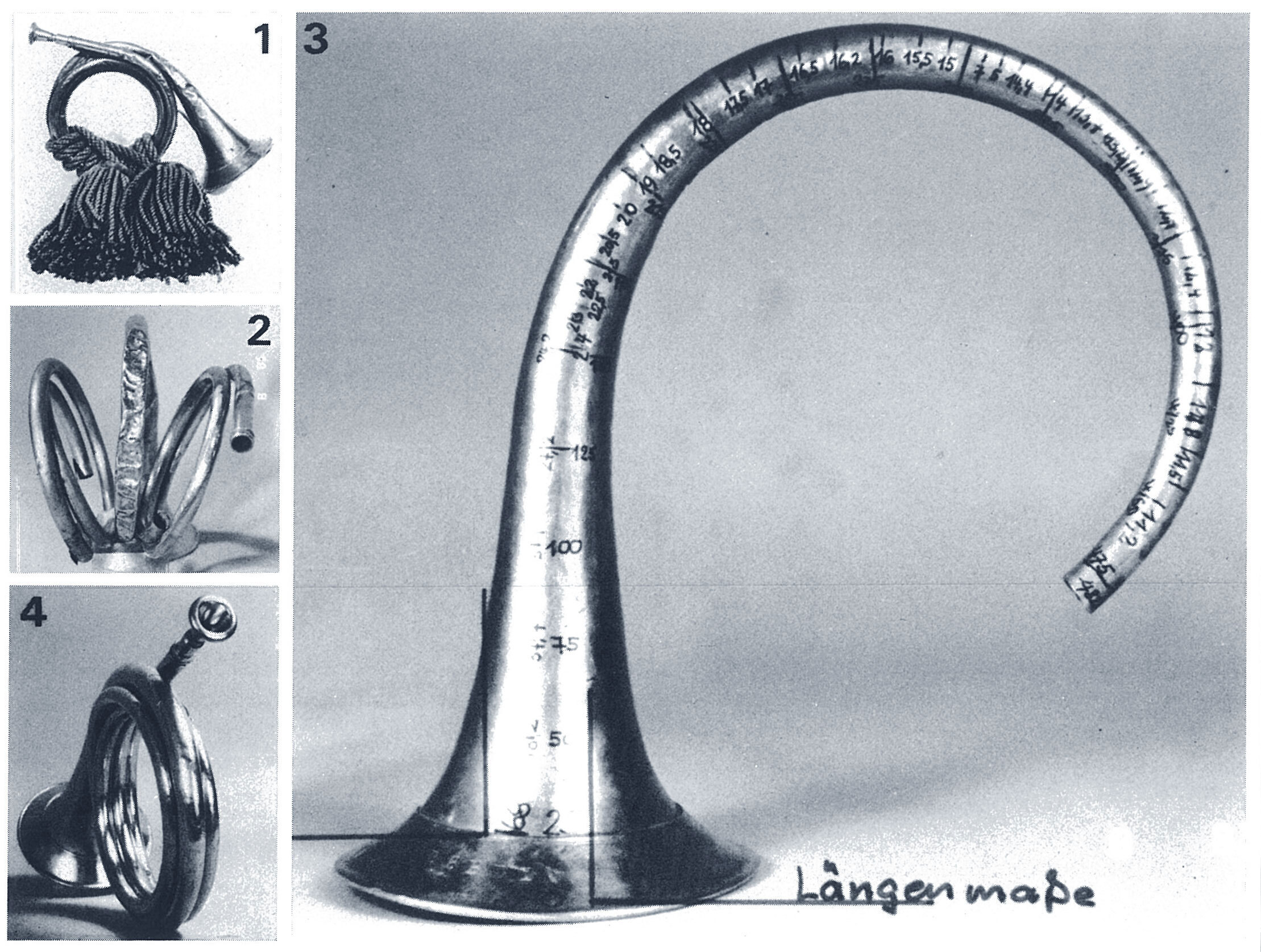
Post horn in Ebmade by J. F. Glass in Berlin, 1873–1886 from the Nienburg collectionAs received: Severe deformation. Par...

Post horn in Eb

made by J. F. Glass in Berlin, 1873–1886 from the Nienburg collection

  1. As received: Severe deformation. Parts of the tubing flattened to 1–2 mm. Brass oxydised, material cracked, inexpertly repaired.
  2. Dismantled
  3. Bell section after time-consuming re-shaping, with scale of tube checked and maintained. In view of the ageing of the material, removal of dents was done 1/10 mm at a time.
  4. After restoration: Chemically cleaned, preserved, appearance corrected, sealed. It speaks particularly well and is to be heard in the museum in performance of contemporary works.

Since the contact with musical instrument collections and their scientific staff, with research institutes, musicians, instrument makers, experts in the trade and many others — contact so necessary in this business — is easier to find in a centre of culture such as Munich, Mrs. Menzel is now particularly looking forward to being able to resume, and pursue intensively, her restoration of early brass instruments here in her new expanded workshop.
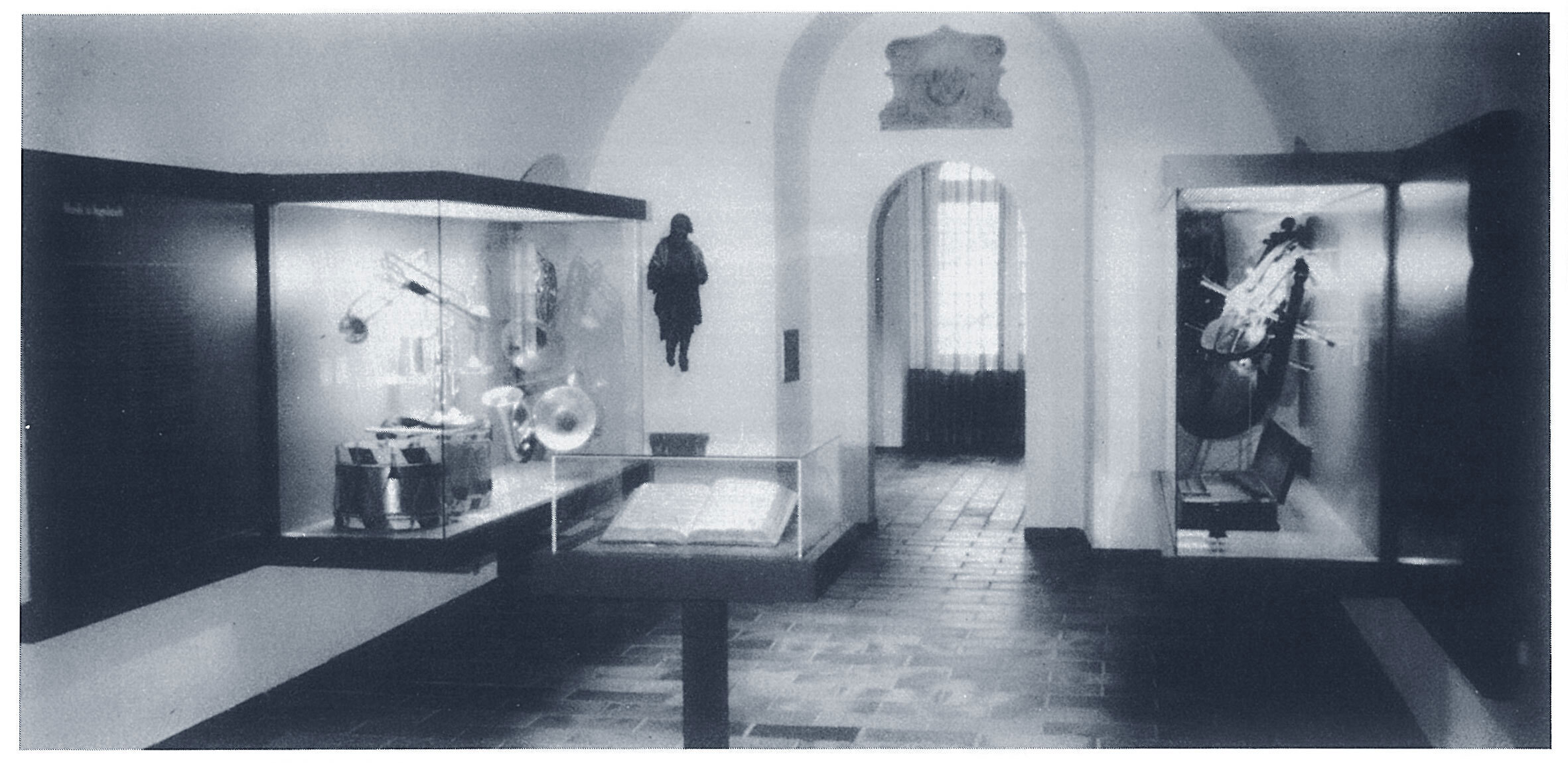
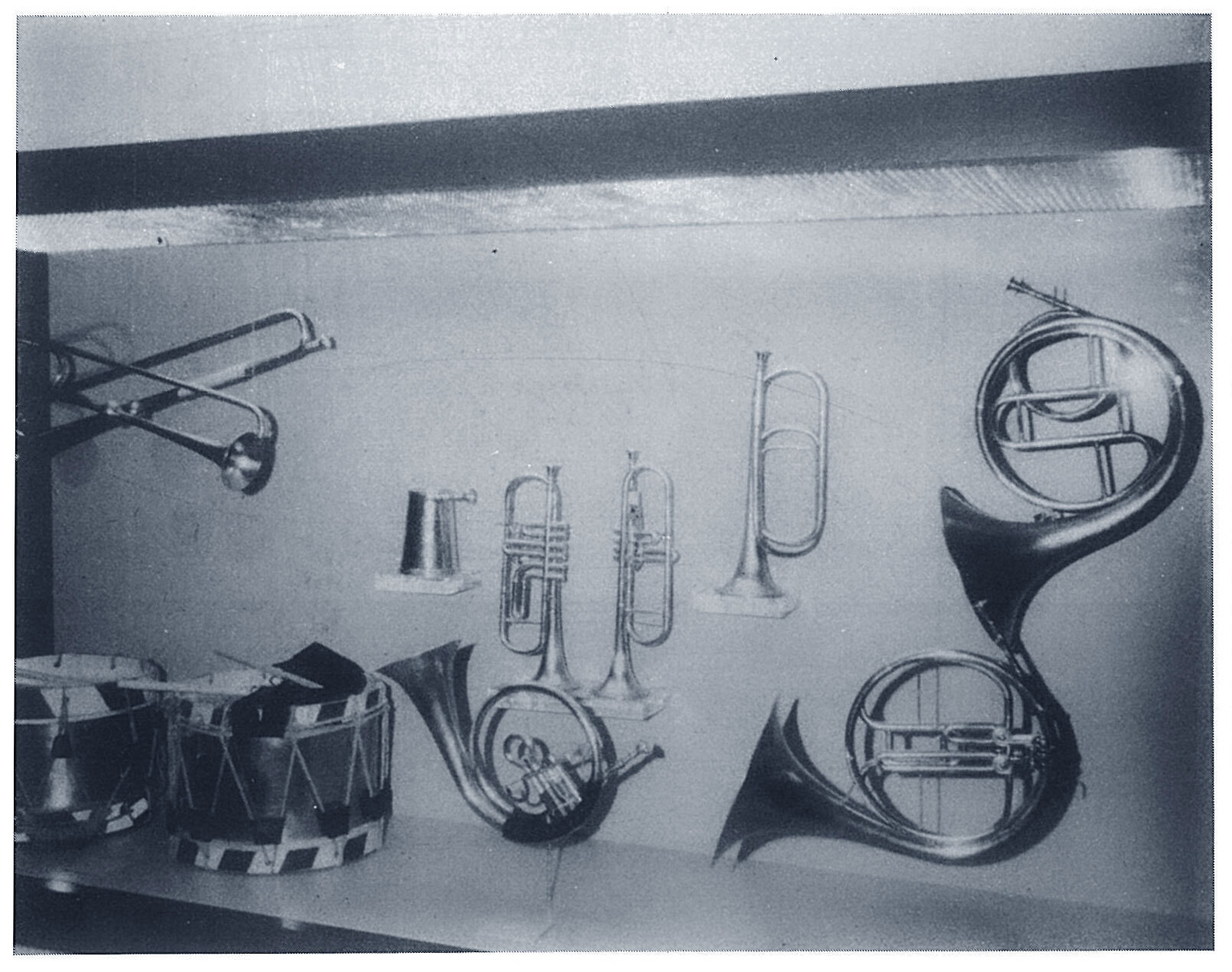
Restored musical instrumentsto be heard played at a small celebration concert on the occasion of the opening of the Ingolstadt city museum in Kavalier Hepp, 1981.This collection of brass instruments and side drums is interesting from the point of view of the history both of instruments and of the city.All the instruments are playable once again after having been restored. At the same time the earliest known example of the curious Büchsentrompete by Adam Buchswinder (1730) was put on show to the public for the first time.

Restored musical instruments

to be heard played at a small celebration concert on the occasion of the opening of the Ingolstadt city museum in Kavalier Hepp, 1981.

This collection of brass instruments and side drums is interesting from the point of view of the history both of instruments and of the city.

All the instruments are playable once again after having been restored. At the same time the earliest known example of the curious Büchsentrompete by Adam Buchswinder (1730) was put on show to the public for the first time.

Brass Bulletin 39, III / 1982 pagine 6–12

Tutti i contenuti sono protetti dal diritto d’autore © Brass Bulletin 1982–2026

Condividi questo articolo

Facebook LinkedIn
Loading…

Domande e risposte

Come funziona l’edizione digitale

Che cosa comprende l’edizione digitale?

L’edizione digitale riunisce gli articoli già digitalizzati sotto forma di testi leggibili e ricercabili online — non semplicemente come scansioni o file PDF — insieme alle illustrazioni originali, alle note, agli autori, alle informazioni sul numero della rivista e alle traduzioni disponibili. I suggerimenti di articoli correlati comprendono attualmente solo questo materiale digitalizzato.

Gli articoli digitali sono identici agli originali?

Conserviamo il più fedelmente possibile il testo originale, la lingua, le illustrazioni, le didascalie, le note e il contesto editoriale. La presentazione viene adattata per una lettura confortevole online e gli evidenti errori di trascrizione o scansione possono essere corretti. Il contenuto e il carattere dell’articolo pubblicato rimangono invariati.

Quali lingue sono disponibili?

Brass Bulletin è stato pubblicato in inglese, francese e tedesco nel corso di tutta la sua storia. Le traduzioni italiane e spagnole sono state aggiunte a partire dal numero 60. Sui siti italiano e spagnolo, gli articoli dei numeri da 1 a 59 vengono quindi mostrati in inglese per impostazione predefinita.

Con quale frequenza vengono aggiunti nuovi articoli?

Nuovi articoli vengono aggiunti quasi ogni giorno, con circa un numero completo digitalizzato ogni settimana. Il ritmo può variare in base al lavoro di preparazione, elaborazione delle immagini e verifica editoriale necessario.

Perché non tutti gli articoli sono disponibili in formato digitale?

La collezione completa di Brass Bulletin comprende 1.246 articoli pubblicati tra il 1971 e il 2003. L’indice completo è già disponibile online e consente di scoprire tutti gli articoli della collezione, compresi quelli il cui testo integrale non è ancora stato digitalizzato.

La digitalizzazione è iniziata nel febbraio 2026. Ogni articolo viene accuratamente preparato per la lettura online, verificato e collegato al relativo numero, agli autori, agli argomenti e alle illustrazioni. Al ritmo attuale di digitalizzazione, la collezione completa dovrebbe essere disponibile online entro febbraio 2028.

Perché alcuni riferimenti citano articoli che non sono ancora disponibili?

I riferimenti presenti negli articoli originali vengono conservati anche quando il materiale a cui rimandano non è ancora stato digitalizzato. In questo modo si preserva l’integrità storica ed editoriale della rivista. Man mano che nuovi numeri vengono aggiunti all’edizione digitale, un numero crescente di questi riferimenti condurrà ad articoli leggibili online.

Posso suggerire un articolo o segnalare un errore di trascrizione?

Sì. Se desiderate che un determinato articolo venga digitalizzato, oppure se notate un possibile errore di trascrizione o un’informazione mancante, contattateci. I riscontri dei lettori ci aiutano a migliorare l’edizione digitale e a stabilire priorità utili all’interno dell’archivio.

Come posso sostenere Brass Bulletin?

Il vostro sostegno contribuisce a finanziare la preparazione, la verifica e la pubblicazione online dell’intera collezione.

Abbonati all’Edizione digitale

Preferite sostenerci senza abbonarvi?

Fate una donazione

Come procede la digitalizzazione?

Stiamo rendendo Brass Bulletin disponibile online gradualmente, articolo per articolo. Potete leggere gli articoli appena digitalizzati non appena sono pronti, anche prima che un intero numero sia completato.

Consultate il nostro calendario di digitalizzazione per scoprire le ultime aggiunte e le date di disponibilità stimate dei prossimi numeri. Le stime si basano sul nostro ritmo recente e possono cambiare.

Cerca in Brass Bulletin.