12 min. read
The Haydn Trumpet Concerto
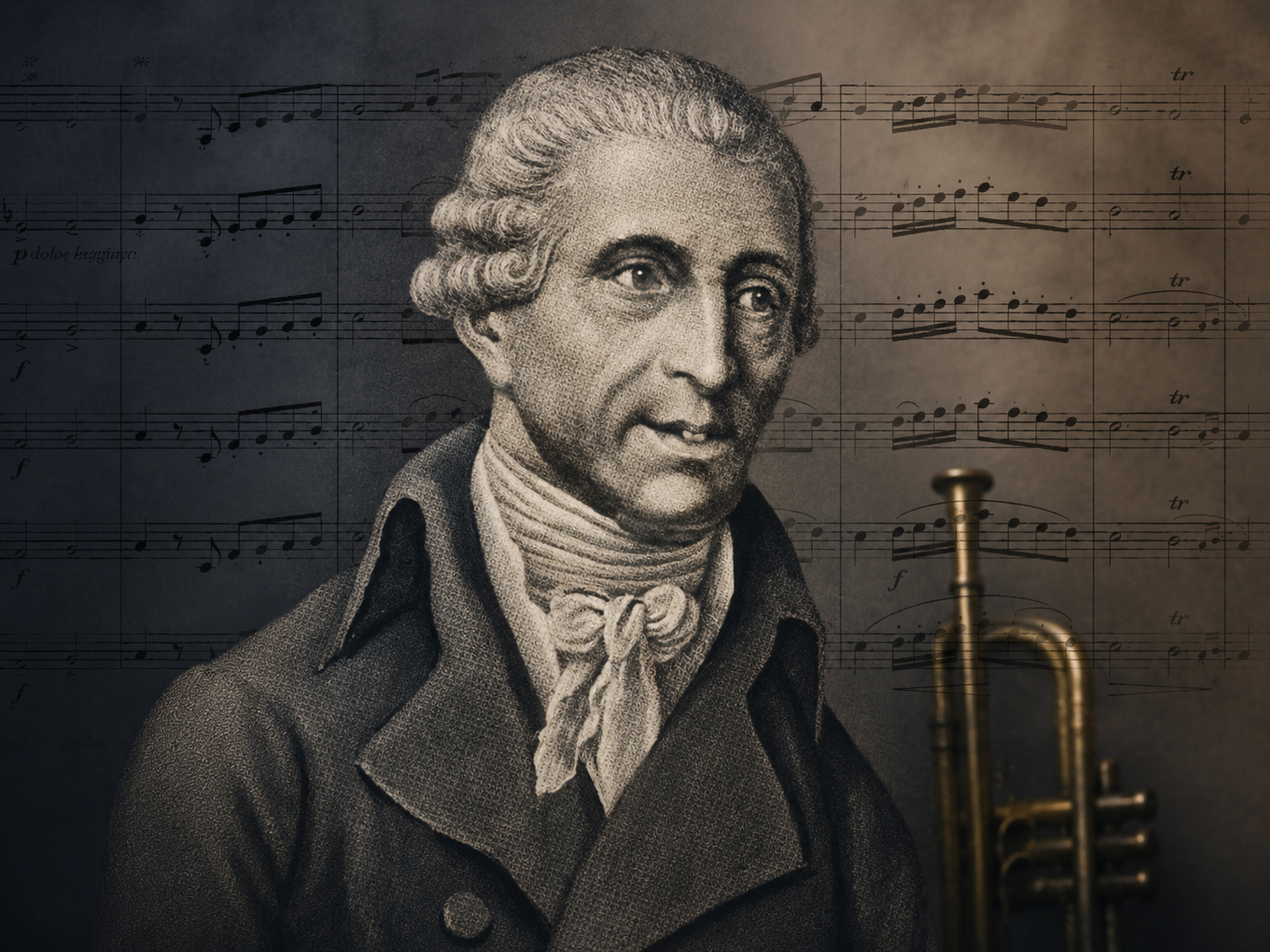
Before going on to part III of this article, I would like to return briefly to the question of the score. I have meanwhile received the microfilm of Haydn's manuscript. What an exciting experience that is! Seeing the living hand appear before me on the screen of the microfilm reader I have the impression of coming into direct contact with the composer. This is a mistake, of course, because one still has the job of deciphering the national conventions of the period and the subtleties of someone's handwriting. One is nonetheless closer to the intentions of the man whose mind produced the work. Another difficulty is that the manuscript was written quickly; the composer included some indications to the performer but probably not all since at the time this was not necessary (the style being familiar) or through oversight. All in all, I find the discrepancies between the score and the best editions not very great.
Here are some observations:
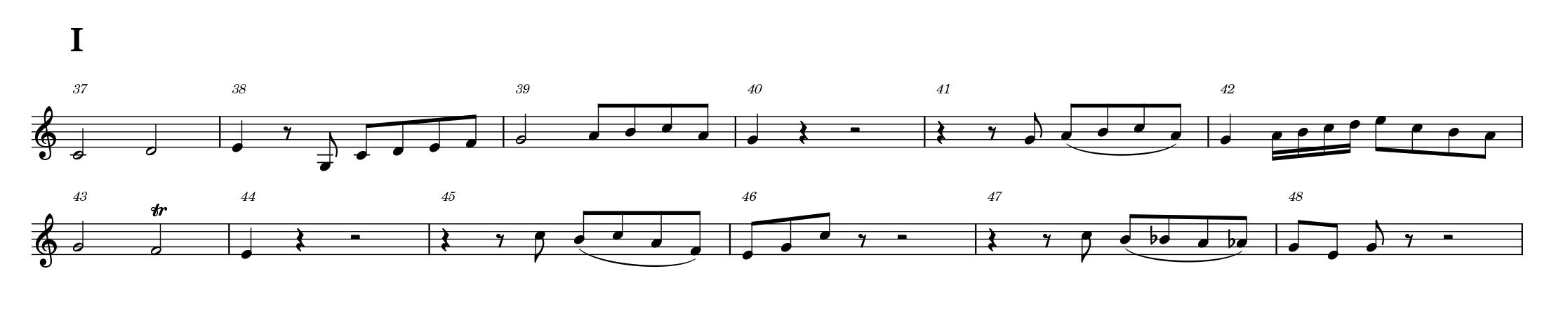
1. The solo trumpet (bar 8) begins f but contrary to the indications of several editions the beginning of the exposition of the theme (bar 37) carries no composer's marking, neither p (the marking for the orchestra) nor f as many editions prescribe: Extract 1. No slurs in any of the bars which carry them in several editions, even the better ones (bars 38, 39, 42, 46, 48). And, since slurs are marked elsewhere, the composer cannot be said to have left these distinctions to the performer's discretion.
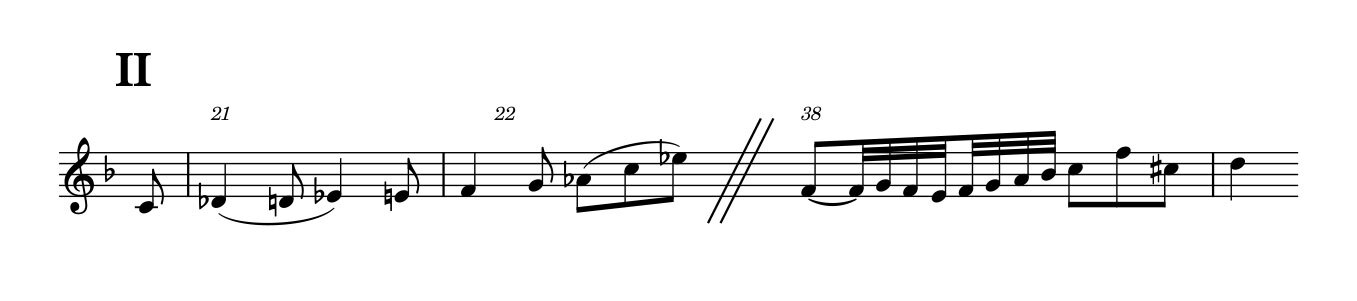
2. In the Andante the solo trumpet is in fact marked p. I will deal with the following passages for the sake of details which I consider and which are not dealt with in the published versions: Extracts 2. Bar 21 is almost always presented legato in groups of two notes or else legato throughout the bar; does the original not suggest a better reading? As for the three crucial notes in bar 38, perhaps the most controversial in the whole work (to judge from the performances), many editions mark them legato; according to my reading the original does not carry this marking (I shall verify this point when I see the original document in Vienna).
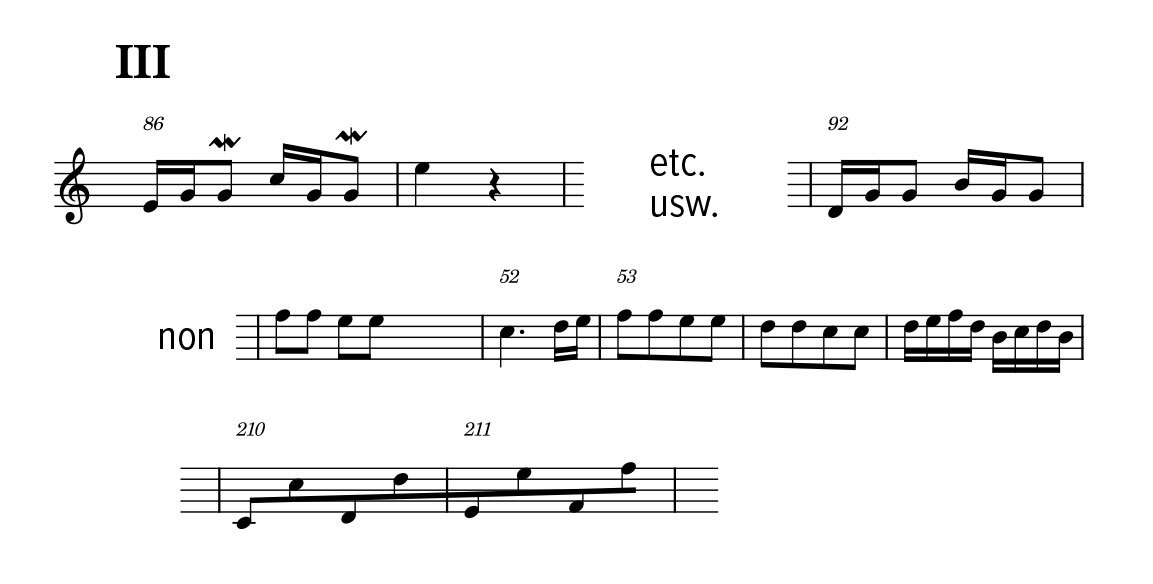
3. Finally, two details which are less important but perhaps should not be overlooked. The original vindicates the Redlich edition (bar 86). Thus this ornament starts with the lower note and the impression it makes when played like this is quite different: it stays "down", and does not express the idea of "going up". Now we all know that the performer is often something he should not be — the prisoner of notational conventions (an example is bar 53). Of course this text, not recopied by the author himself, bears the characteristics of an authentic first manuscript copy. It has been "thrown down on to the paper". The appearance of a whole, a structure, comes out of it (the groups of notes are well connected graphically and stand out as little living units). On the other hand the text also contains omissions and errors of detail. The way in which the octave jumps are written (bars 210, 211) might make one think: is this for something more than just ease of writing? An indication that the upper and lower notes are of equal importance?
III. The Reception
For a decade now the technological means of disseminating music — from the media to private recordings from discs — have been feeding music every day to such a number of people that one is apt to forget completely the limitations there are on access to the works. And if, for once, someone were to think, for example, about the dissemination of this concerto, he would be greatly tempted to say everyone has access to it, they only have to buy the record etc. In fact close examination of the problem reveals many obstacles, many more than one would imagine at first.
Brass Bulletin 37, I / 1982 pages 30–38
All content is protected by copyright © Brass Bulletin 1982–2026