Ofrezca Brass Bulletin en su universidad, conservatorio o biblioteca Descubra el acceso institucional

12 min de lectura

The Haydn Trumpet Concerto

Parte 3 – Fin

Por Alfred Willener

Haydn’s trumpet concerto becomes a study of manuscript detail, performance choices, and the fragile ways listeners receive a familiar work.
The Haydn Trumpet Concerto

Before going on to part III of this article, I would like to return briefly to the question of the score. I have meanwhile received the microfilm of Haydn's manuscript. What an exciting experience that is! Seeing the living hand appear before me on the screen of the microfilm reader I have the impression of coming into direct contact with the composer. This is a mistake, of course, because one still has the job of deciphering the national conventions of the period and the subtleties of someone's handwriting. One is nonetheless closer to the intentions of the man whose mind produced the work. Another difficulty is that the manuscript was written quickly; the composer included some indications to the performer but probably not all since at the time this was not necessary (the style being familiar) or through oversight. All in all, I find the discrepancies between the score and the best editions not very great.

Here are some observations:

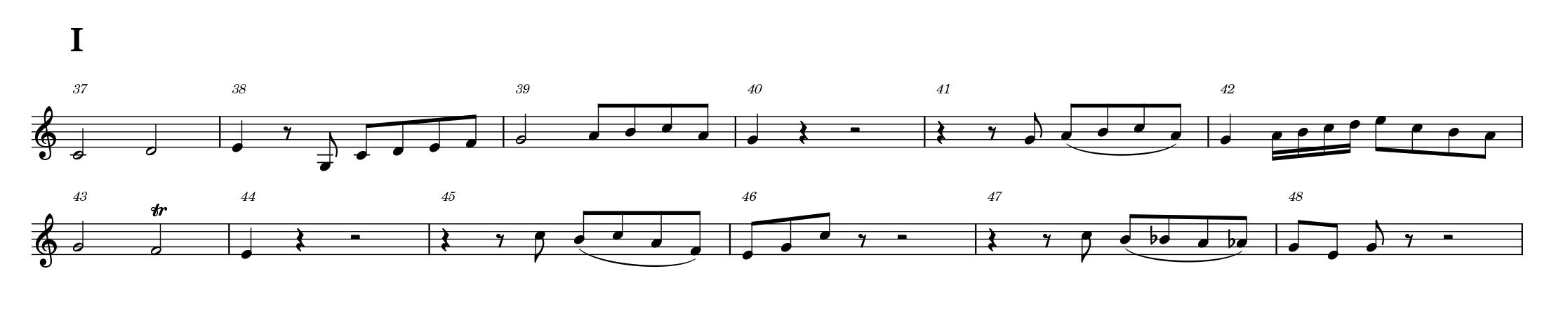
1. The solo trumpet (bar 8) begins f but contrary to the indications of several editions the beginning of the exposition of the theme (bar 37) carries no composer's marking, neither p (the marking for the orchestra) nor f as many editions prescribe: Extract 1. No slurs in any of the bars which carry them in several editions, even the better ones (bars 38, 39, 42, 46, 48). And, since slurs are marked elsewhere, the composer cannot be said to have left these distinctions to the performer's discretion.
Brass Bulletin image

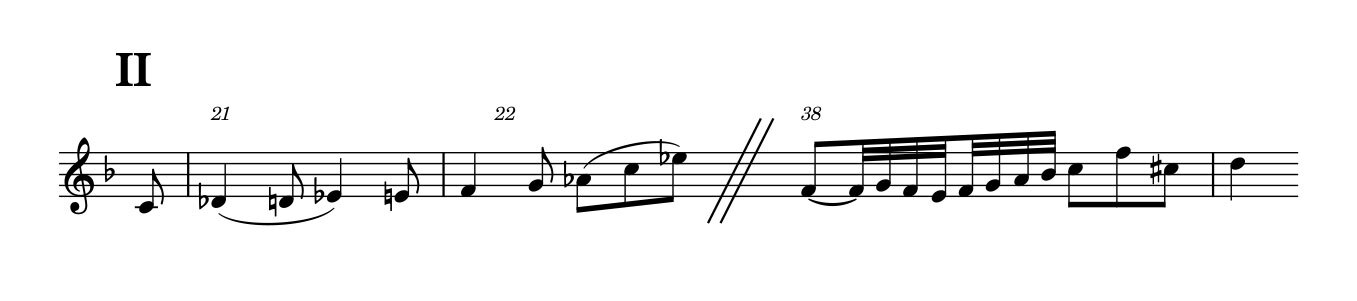
2. In the Andante the solo trumpet is in fact marked p. I will deal with the following passages for the sake of details which I consider and which are not dealt with in the published versions: Extracts 2. Bar 21 is almost always presented legato in groups of two notes or else legato throughout the bar; does the original not suggest a better reading? As for the three crucial notes in bar 38, perhaps the most controversial in the whole work (to judge from the performances), many editions mark them legato; according to my reading the original does not carry this marking (I shall verify this point when I see the original document in Vienna).
Brass Bulletin image

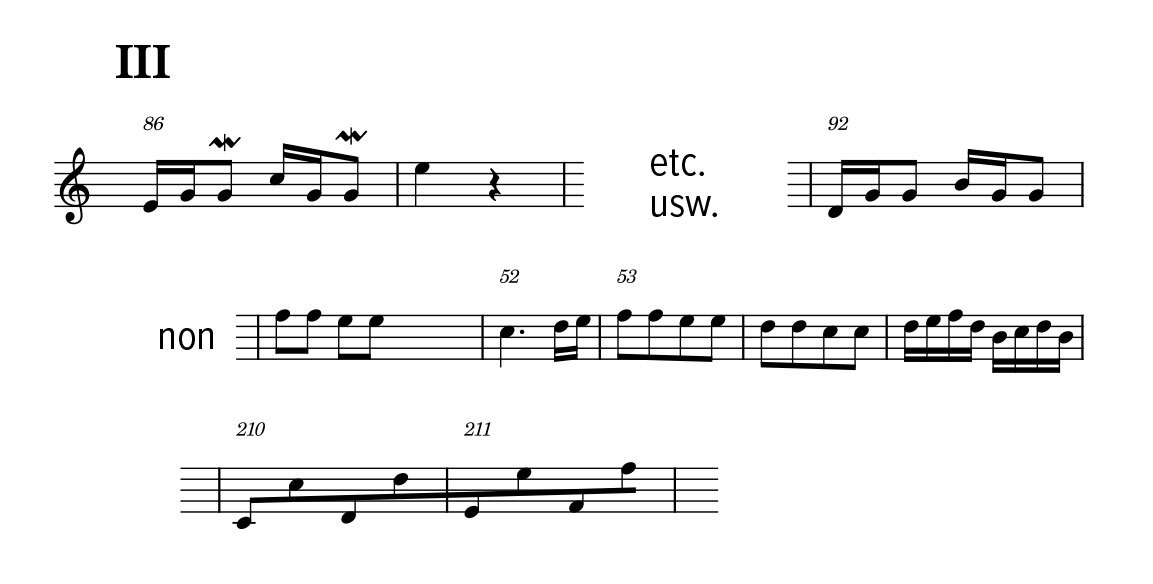
3. Finally, two details which are less important but perhaps should not be overlooked. The original vindicates the Redlich edition (bar 86). Thus this ornament starts with the lower note and the impression it makes when played like this is quite different: it stays "down", and does not express the idea of "going up". Now we all know that the performer is often something he should not be — the prisoner of notational conventions (an example is bar 53). Of course this text, not recopied by the author himself, bears the characteristics of an authentic first manuscript copy. It has been "thrown down on to the paper". The appearance of a whole, a structure, comes out of it (the groups of notes are well connected graphically and stand out as little living units). On the other hand the text also contains omissions and errors of detail. The way in which the octave jumps are written (bars 210, 211) might make one think: is this for something more than just ease of writing? An indication that the upper and lower notes are of equal importance?
Brass Bulletin image

III. The Reception

For a decade now the technological means of disseminating music — from the media to private recordings from discs — have been feeding music every day to such a number of people that one is apt to forget completely the limitations there are on access to the works. And if, for once, someone were to think, for example, about the dissemination of this concerto, he would be greatly tempted to say everyone has access to it, they only have to buy the record etc. In fact close examination of the problem reveals many obstacles, many more than one would imagine at first.

Continue reading

Accede a la edición digital completa.

Brass Bulletin 37, I / 1982 páginas 30–38

Todo el contenido está protegido por derechos de autor © Brass Bulletin 1982–2026

Compartir este artículo

Facebook LinkedIn
Cargando…

Preguntas y respuestas

Cómo funciona la edición digital

¿Qué incluye la edición digital?

La edición digital reúne los artículos ya digitalizados como textos legibles y consultables en línea —no simplemente como escaneos o archivos PDF— junto con sus ilustraciones originales, notas, autoría, información del número y traducciones disponibles. Las sugerencias de artículos relacionados incluyen actualmente solo este material digitalizado.

¿Los artículos digitales son idénticos a los originales?

Conservamos con la mayor fidelidad posible el texto original, el idioma, las ilustraciones, los pies de imagen, las notas y el contexto editorial. La presentación se adapta para facilitar la lectura en línea y pueden corregirse errores evidentes de transcripción o escaneado. El contenido y el carácter del artículo publicado permanecen inalterados.

¿Qué idiomas están disponibles?

Brass Bulletin se publicó en inglés, francés y alemán a lo largo de toda su historia. Las traducciones al italiano y al español se añadieron a partir del número 60. Por este motivo, en los sitios italiano y español los artículos de los números 1 a 59 se muestran en inglés de forma predeterminada.

¿Con qué frecuencia se añaden nuevos artículos?

Se añaden nuevos artículos casi a diario, con aproximadamente un número completo digitalizado cada semana. El ritmo puede variar según el trabajo de preparación, tratamiento de imágenes y revisión editorial necesario.

¿Por qué no están disponibles todos los artículos en formato digital?

La colección completa de Brass Bulletin contiene 1.246 artículos publicados entre 1971 y 2003. El índice completo ya está disponible en línea y permite descubrir todos los artículos de la colección, incluidos aquellos cuyo texto íntegro todavía no ha sido digitalizado.

La digitalización comenzó en febrero de 2026. Cada artículo se prepara cuidadosamente para la lectura en línea, se revisa y se vincula con su número, sus autores, sus temas y sus ilustraciones. Al ritmo actual de digitalización, se prevé que la colección completa esté disponible en línea en febrero de 2028.

¿Por qué algunas referencias mencionan artículos que todavía no están disponibles?

Las referencias de los artículos originales se conservan aunque el material al que remiten aún no haya sido digitalizado. De este modo se mantiene intacto el contexto histórico y editorial. A medida que se incorporen más números a la edición digital, un número creciente de estas referencias conducirá a artículos que podrán leerse en línea.

¿Puedo sugerir un artículo o informar de un error de transcripción?

Sí. Si hay algún artículo que le gustaría especialmente ver digitalizado, o si detecta un posible error de transcripción o algún dato que falta, póngase en contacto con nosotros. Los comentarios de los lectores nos ayudan a mejorar la edición digital y a establecer prioridades útiles dentro del archivo.

¿Cómo puedo apoyar a Brass Bulletin?

Su apoyo ayuda a financiar la preparación, verificación y publicación en línea de la colección completa.

Suscríbase a la Edición Digital

¿Prefiere apoyarnos sin suscribirse?

Haga una donación

¿Cómo avanza la digitalización?

Estamos poniendo Brass Bulletin a disposición de los lectores en línea, artículo por artículo. Pueden leer los artículos recién digitalizados en cuanto estén listos, incluso antes de que se complete un número entero.

Consulten nuestro calendario de digitalización para descubrir las últimas novedades y las fechas estimadas de disponibilidad de los próximos números. Estas estimaciones se basan en nuestro ritmo reciente y pueden cambiar.

Busca en Brass Bulletin.