Explore institutional access Explore institutional access

3 min. read

The Trumpet

An exhibition at the Trumpeter's Castel in Bad Säckingen

The Trumpet

A vague recollection of Joseph Victor von Scheffel’s interminable verse epic "The Trumpeter of Säckingen" of 1854 takes us into the realm of history (or at least pseudo-history). The work ran to about 300 editions and seemed to be indestructible. Today "The Trumpeter" is to be found only in a gilt-edged luxury edition, or else as a very cheap Reclam paperback, amongst the forgotten belongings of our great-grandparents.

Rudolf Bunge made it into a libretto and Victor E. Nessler set it to music. The first performance took place in Leipzig in 1884, and the operatic "Trumpeter of Säckingen" was an unparalleled success. In 1888 it had over 900 performances in North Germany alone. Even the world-famous conductor Arthur Nikisch was so captivated by Nessler's sentimental "olde-worlde" Romanticism-with-trumpets that he composed an orchestral fantasy on his "Love and Trumpet Playing" and so enabled generations of trumpet soloists to move their audiences immediately to tears and to thunderous applause with the sentimental melody of "Behüt' dich Gott, es wär' so schön gewesen".

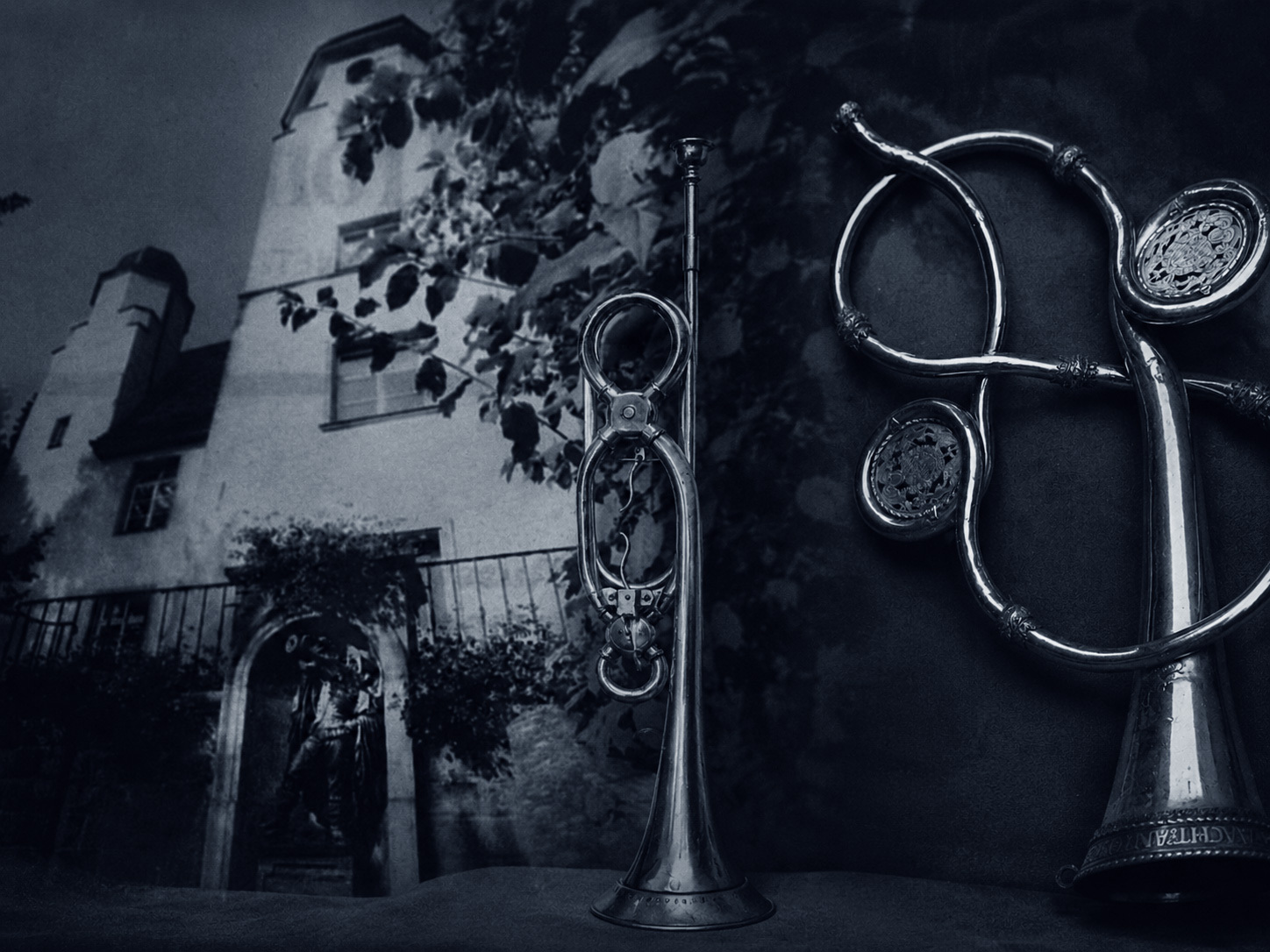
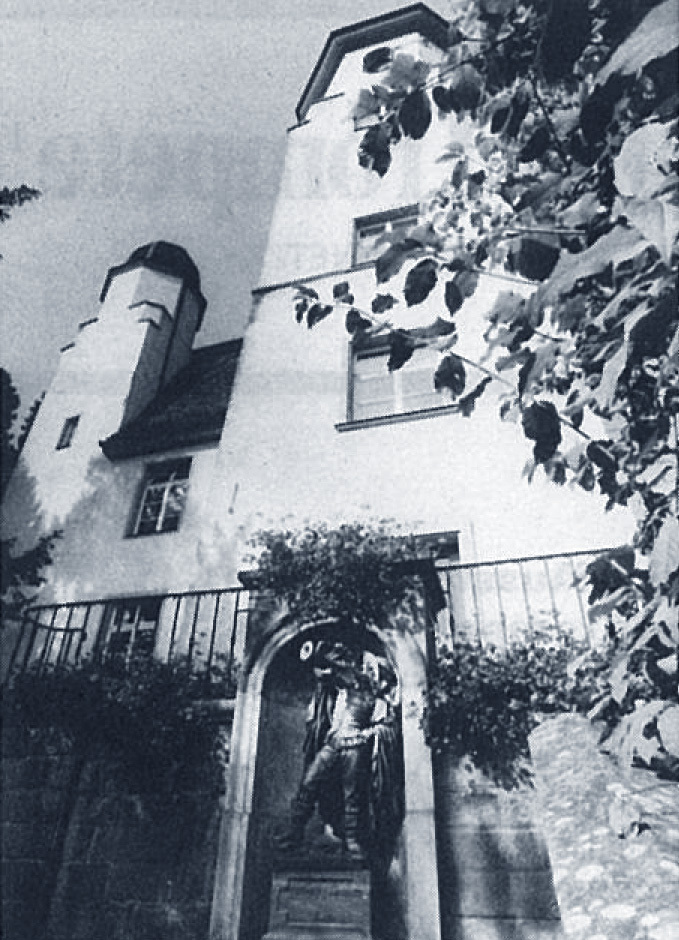
Their love of trumpet-playing, as well as the full weight of their specialised knowledge of instruments, led Edward H. Tarr and Ernst W. Buser to assemble a small but highly concentrated and extremely instructive trumpet exhibition in the evocative "Trumpeter's Castle", displaying instruments and documents from the Baroque to the present day.

Säckingen. Trumpeter's Castle
Säckingen. Trumpeter's Castle

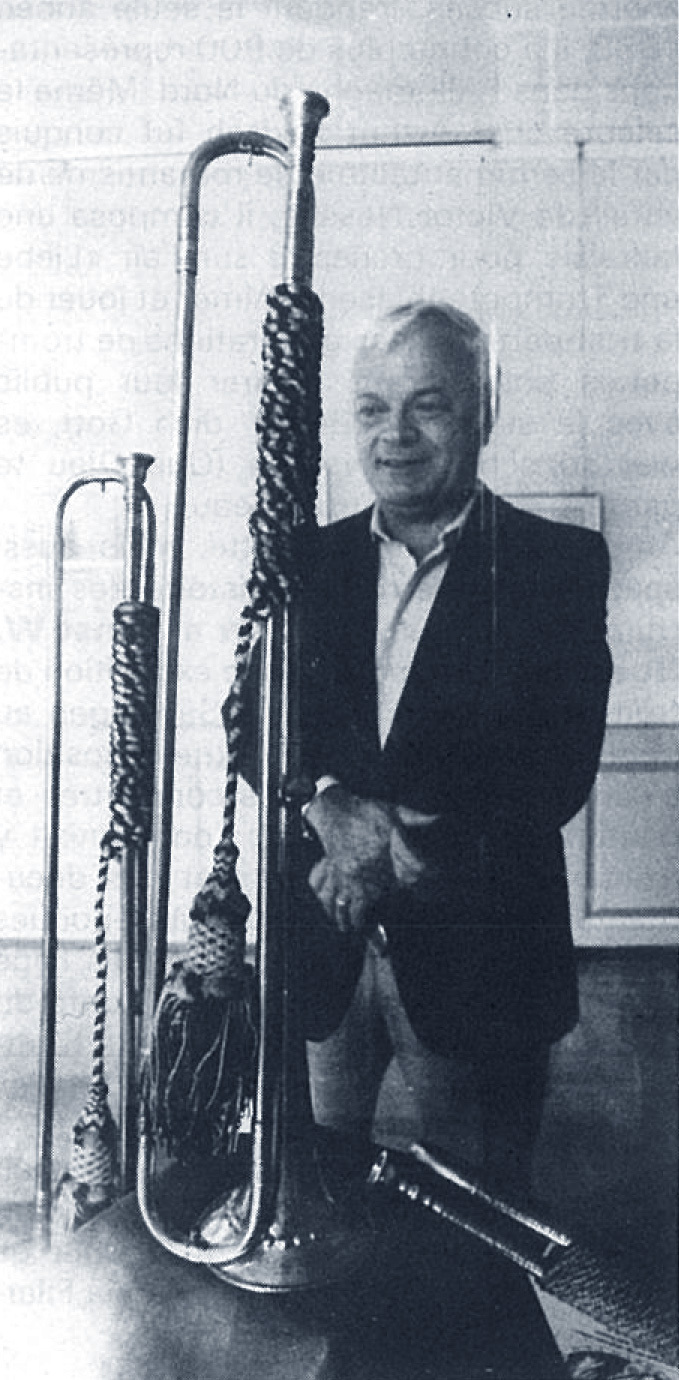
Ernst W. Buser

Ernst W. Buser

The showpiece of the collection was undoubtedly the pretzel-shaped natural trumpet in E, made by Anton Schnitzer in Nürnberg in 1585.¹ This is the instrument which Cesare Bendinelli (c. 1542-1617), as "Obrister Trompeter" ("Colonel-Trumpeter"), played at the Bavarian court in Munich. He left this splendid trumpet together with the manuscript of his trumpet method "Tutta l'arte della Trombetta" of 1614 to the "Accademia Filarmonica" in his home town of Verona. Both exhibits are still in the possession of the Verona Accademia Filarmonica today and were only lent to Säckingen.

Edward H. Tarr has also been given permission to publish this, the earliest known trumpet tutor, in facsimile. The majority of the exhibits from the golden age of the natural trumpet (1600-1750) — including a natural trumpet by Johann Leonhard Ehe (Nürnberg 1700), a pair of D trumpets by the Kerner brothers (Vienna 1793), a splendid example of an Eb trumpet by Johann Siegmund Graf Breitenbach (1746) and a coiled hunting instrument by Johann Wilhelm Haas (Nürnberg 1688) — are very rare pieces belonging to the two exhibitors and testify to their very considerable skill, as well as their good luck, as collectors.
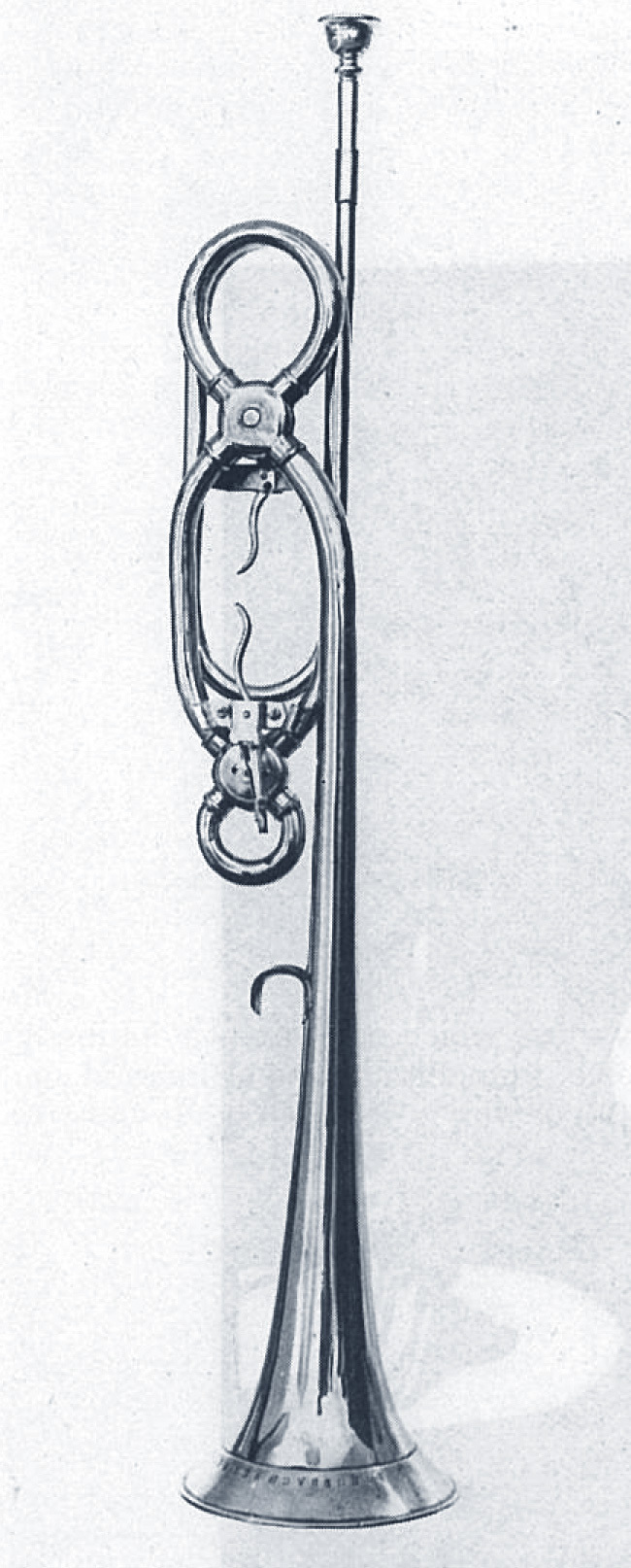
Rotary valve trumpet in D «Schupach et Guichard» Yverdon ca. 1830).(Sammlung Ernst W. B user)

Rotary valve trumpet in D «Schupach et Guichard» Yverdon ca. 1830).
(Sammlung Ernst W. B user)

Even greater variety was displayed by the numerous instruments from the crisis period of the trumpet (1750-1815) and by those which point the way to the first valve trumpets of the 19th and early 20th centuries. A comprehensive section was devoted to the threat from the cornet (1875-1900) and further space to trumpets remarkable on account of their unusual shape and strange materials.

The modern trumpets and the very latest trumpets of our own age, of course, formed the conclusion.

It is to be hoped that very many friends of the trumpet visited this very worthwhile exhibition. It gave a suitable indication of the high values of the historically evolved knightly art of the trumpeter, which is also so extremely important artistically.

The exhibition, and the associated "First International Trumpet Week", opened on 2nd September 1979 with the trumpet ensemble of the Schola Cantorum Basiliensis. On 9th September, to conclude the trumpet seminar directed by Edward H. Tarr, there was a concert which gave an impressive indication of the achievements of all the participants:

— Edward H. Tarr, Basle, and his assistant tutor, Vincent Cichowicz, Chicago, played Antonio Vivaldi’s Concerto in C for two trumpets, accompanied by a chamber orchestra conducted by Heinz G. Linke;

— many seminar participants proved themselves in a series of works ranging from Samuel Scheidt to Karl-Heinz Köper;

— and in conclusion all the participants played some magnificent sonatas from the "Charamela real" by the Lisbon court trumpeter, an anonymous writer of around 1760.

Brass Bulletin 29, I / 1980 pages 103–105

All content is protected by copyright © Brass Bulletin 1980–2026

Share this article

Facebook LinkedIn
Loading…

Questions & Answers

How the Digital Edition works

What does the Digital Edition include?

The Digital Edition brings together the articles already digitized as searchable online texts—not simply as scans or PDF files—along with their original illustrations, notes, authorship, issue information, and available translations. Related-article suggestions currently include only this digitized material.

Are the digital articles identical to the originals?

We preserve the original text, language, illustrations, captions, footnotes, and editorial context as faithfully as possible. The presentation is adapted for comfortable online reading, and obvious transcription or scanning errors may be corrected. The substance and character of the published article remain unchanged.

Which languages are available?

Brass Bulletin was published in English, French, and German throughout its history. Italian and Spanish translations were added from issue No. 60 onward.

On the Italian and Spanish sites, articles from issues 1–59 are therefore shown in English by default.

How often are new articles added?

New articles are added almost daily, with approximately one complete issue digitized each week. The pace may vary depending on the preparation, image work, and editorial checking required.

Why aren’t all articles available digitally?

The complete Brass Bulletin collection contains 1,246 articles published between 1971 and 2003. The full index is already available online, allowing readers to discover every article in the collection, including those whose complete text has not yet been digitized.

Digitization began in February 2026. Each article is carefully prepared for online reading, checked, and connected to its issue, authors, subjects, and illustrations. At the current pace of digitization, the complete collection is expected to be available online by February 2028.

Why do some references mention articles that are not available yet?

References in the original articles are preserved even when the material they point to has not yet been digitized. This keeps the historical and editorial record intact. As more issues are added to the Digital Edition, an increasing number of these references will lead to articles that can be read online.

Can I suggest an article or report a transcription error?

Yes. If there is an article you would particularly like to see digitized, or if you notice a possible transcription error or missing detail, please contact us. Reader feedback helps us improve the Digital Edition and prioritize useful connections within the archive.

How can I support Brass Bulletin?

Your support helps fund the preparation, verification, and online publication of the complete collection.

Subscribe to the Digital Edition

Prefer to support us without subscribing?

Make a donation

Search Brass Bulletin.