Explore institutional access Explore institutional access

12 min. read

Anton Hansen (1877-1947)

Father of trombone playing in Scandinavia

Part 3 – End

By Per Gade

From Sibelius to Paris, Anton Hansen’s later career links Scandinavian trombone playing with French repertoire, teaching, and orchestral reform.
Anton Hansen (1877-1947)

Résumé: In the first article on Anton Hansen, the founder of the Scandinavian school of trombone playing (Brass Bulletin n° 27) we heard about his childhood, his youth and his first years as an orchestral musician. In part 2 (Brass Bulletin n° 28) Hansen went to Berlin to study with the famous trombone virtuoso Paul Weschke of the Berlin Opera. He gives us a lifelike picture of this musician and also of the musical life of Berlin around 1911. Hansen travelled on to Leipzig where we met Chamber Musician Bamberg of the Gewandhaus Orchestra. We then learnt of his journey to Paris and of his meeting with the tuba player Hellberg. The second part ended with Hansen's experiences of the conducting of the composer Carl Nielsen in the Royal Orchestra in Copenhagen.
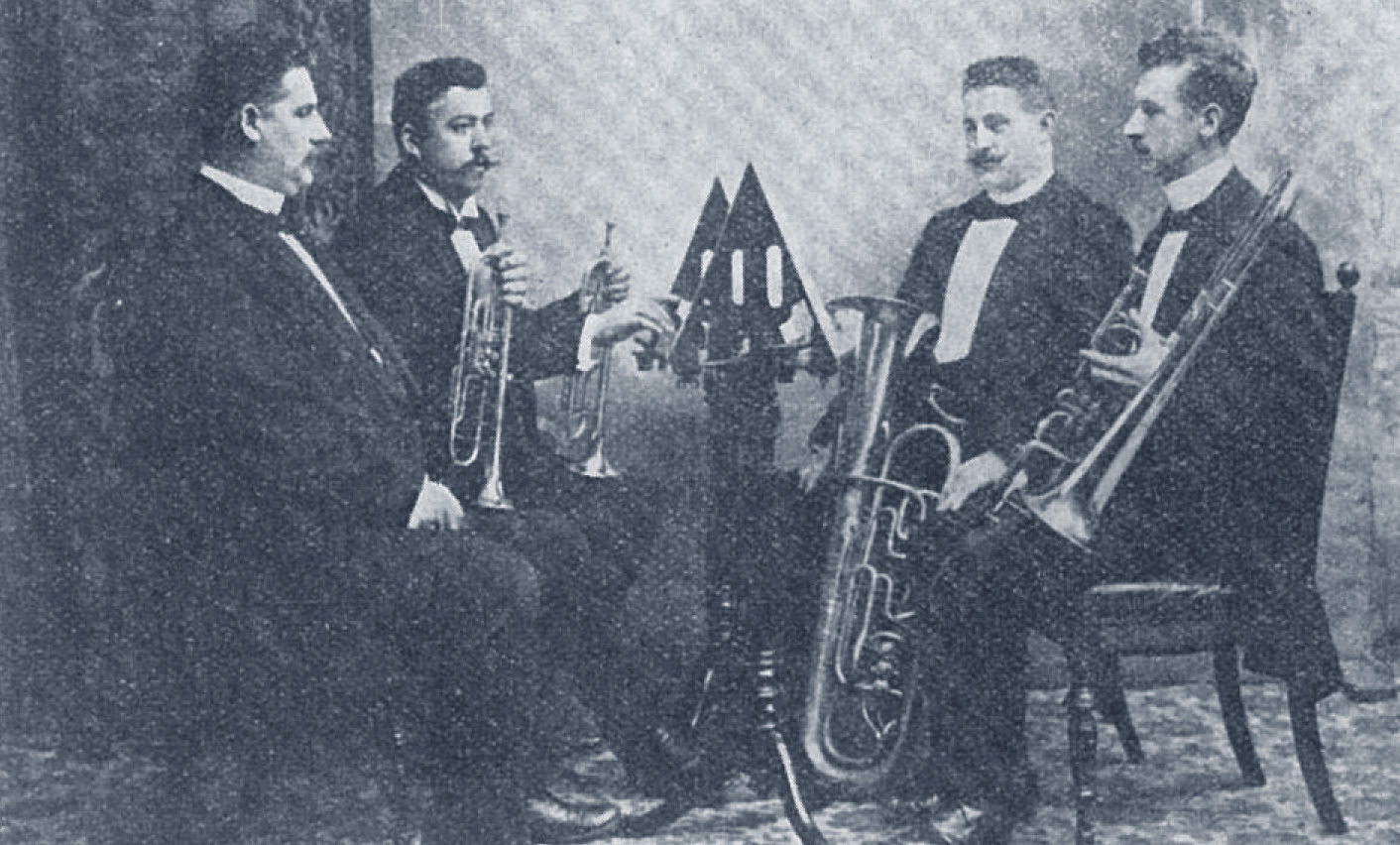
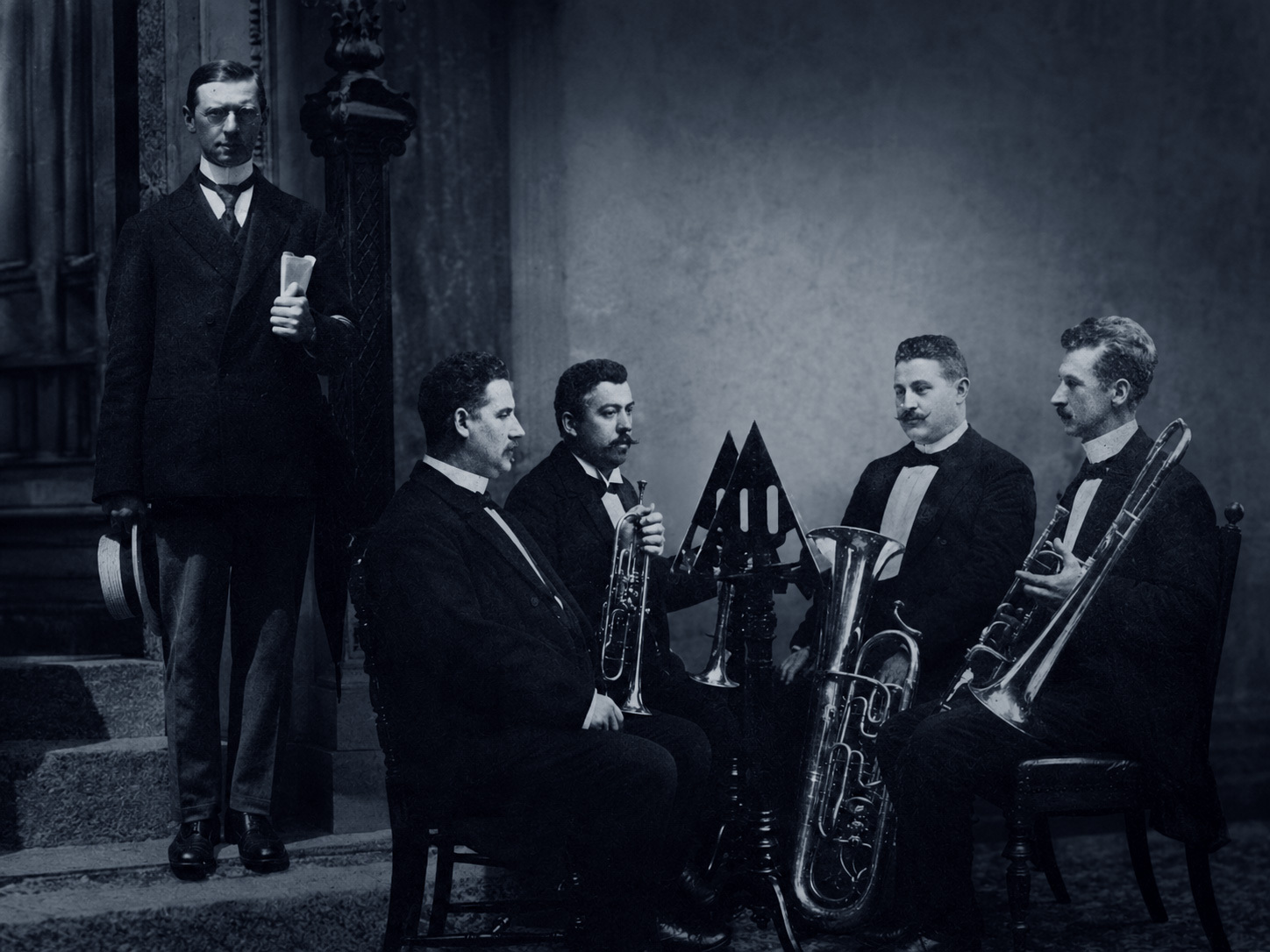
ca 1909. Anton Hansen in quartet, playing Wilhelm Ramsoe's pieces. Wilhelm. Suhr, Lauritz Sorensen (tps), Jensen Jorgens...

ca 1909. Anton Hansen in quartet, playing Wilhelm Ramsoe's pieces. Wilhelm. Suhr, Lauritz Sorensen (tps), Jensen Jorgensen (tuba), Anton Hansen (valve trombone).

Jean Sibelius

Around the turn of the century Anton Hansen heard the name Jean Sibelius for the first time. It was at the rehearsal of his first or second symphony at the original Tivoli Gardens Concert Hall (later there were several). Hansen writes of it in his memoirs:

Before we started, Joakim Andersen [the world-famous Danish flautist and conductor, cf. Brass Bulletin n° 27] said, "Now we are going to rehearse the piece you have been given parts for. It is by a talented young Finnish composer.

Unfortunately he is a brandy drinker!" Yes, that is what he said and I can remember it so clearly for it engrained itself deeper in my memory the more understanding I gained of Sibelius' pioneering works.

Many years later Hansen got to know Sibelius well, as a composer and as a man. Over the years Sibelius often gave concerts in Copenhagen, both in the Tivoli Gardens Concert Hall and in the "Odd Fellows Palais" Concert Hall where Hansen played many of Sibelius' works under his own direction.

Many years later Hansen got to know Sibelius well, as a composer and as a man. Over the years Sibelius often gave concerts in Copenhagen, both in the Tivoli Gardens Concert Hall and in the "Odd Fellows Palais" Concert Hall where Hansen played many of Sibelius' works under his own direction.

Hansen writes of it:

As a conductor he was spellbinding. His conducting had a nervous excitement, corresponding to the content of the work. Sibelius' conducting was not capricious. "Finlandia", for example, which I played under his direction several times, was always played at the same tempo. The allegro assai in the work was played at (M.M. 𝅗𝅥 = 124). Sibelius' hand trembled violently while he was conducting and sometimes, when there was a pause in the work, he had to hold the baton in his left hand before he could continue. The time flew past in rehearsals for he was anything but boring.

Continue reading

Access the full Digital Edition.

Brass Bulletin 29, I / 1980 pages 81–94

All content is protected by copyright © Brass Bulletin 1980–2026

Share this article

Facebook LinkedIn
Loading…

Questions & Answers

How the Digital Edition works

What does the Digital Edition include?

The Digital Edition brings together the articles already digitized as searchable online texts—not simply as scans or PDF files—along with their original illustrations, notes, authorship, issue information, and available translations. Related-article suggestions currently include only this digitized material.

Are the digital articles identical to the originals?

We preserve the original text, language, illustrations, captions, footnotes, and editorial context as faithfully as possible. The presentation is adapted for comfortable online reading, and obvious transcription or scanning errors may be corrected. The substance and character of the published article remain unchanged.

Which languages are available?

Brass Bulletin was published in English, French, and German throughout its history. Italian and Spanish translations were added from issue No. 60 onward.

On the Italian and Spanish sites, articles from issues 1–59 are therefore shown in English by default.

How often are new articles added?

New articles are added almost daily, with approximately one complete issue digitized each week. The pace may vary depending on the preparation, image work, and editorial checking required.

Why aren’t all articles available digitally?

The complete Brass Bulletin collection contains 1,246 articles published between 1971 and 2003. The full index is already available online, allowing readers to discover every article in the collection, including those whose complete text has not yet been digitized.

Digitization began in February 2026. Each article is carefully prepared for online reading, checked, and connected to its issue, authors, subjects, and illustrations. At the current pace of digitization, the complete collection is expected to be available online by February 2028.

Why do some references mention articles that are not available yet?

References in the original articles are preserved even when the material they point to has not yet been digitized. This keeps the historical and editorial record intact. As more issues are added to the Digital Edition, an increasing number of these references will lead to articles that can be read online.

Can I suggest an article or report a transcription error?

Yes. If there is an article you would particularly like to see digitized, or if you notice a possible transcription error or missing detail, please contact us. Reader feedback helps us improve the Digital Edition and prioritize useful connections within the archive.

How can I support Brass Bulletin?

Your support helps fund the preparation, verification, and online publication of the complete collection.

Subscribe to the Digital Edition

Prefer to support us without subscribing?

Make a donation

Search Brass Bulletin.