Streiweiser Foundation Historic Trumpet Musieum
The Museum itself
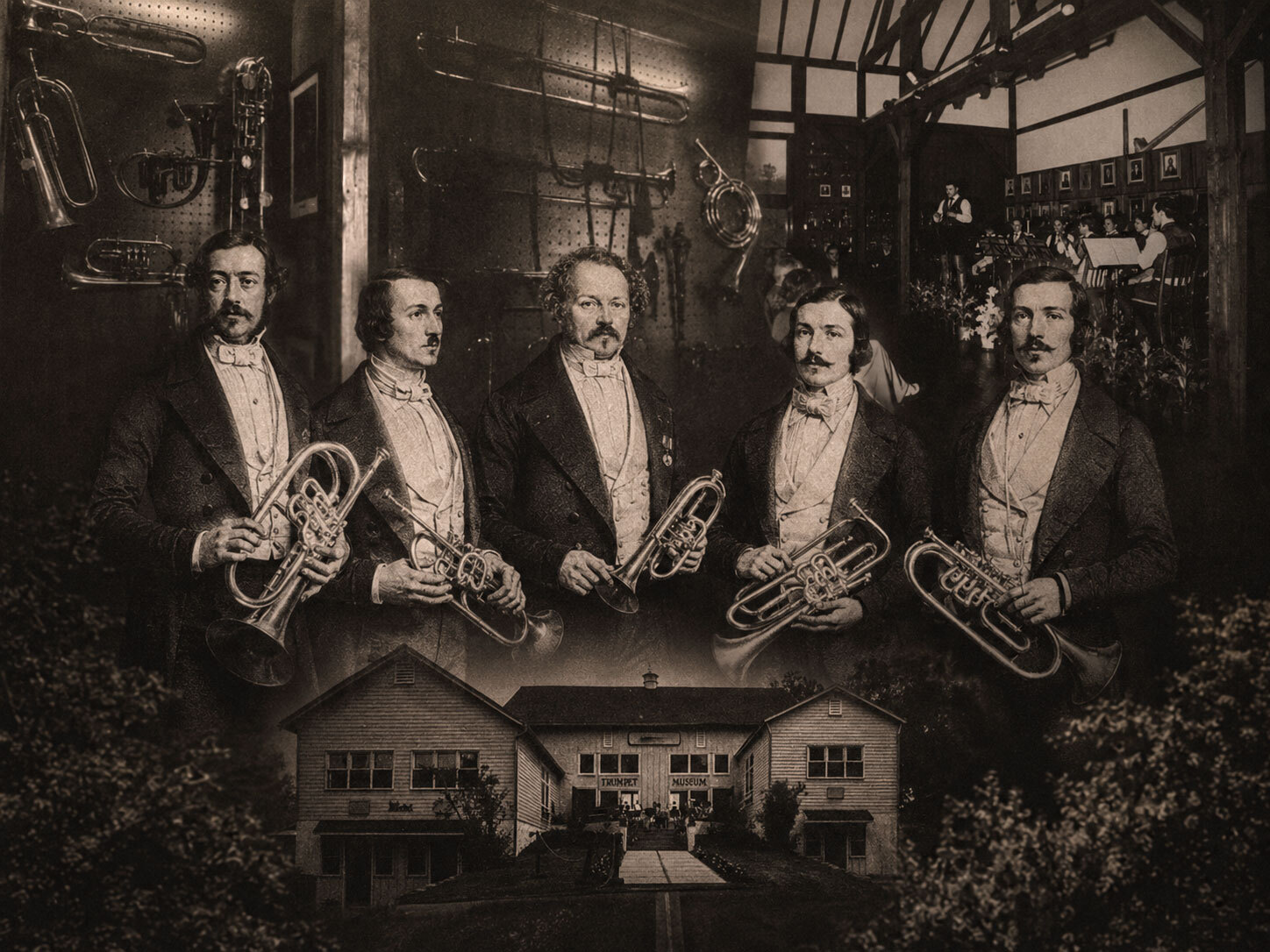
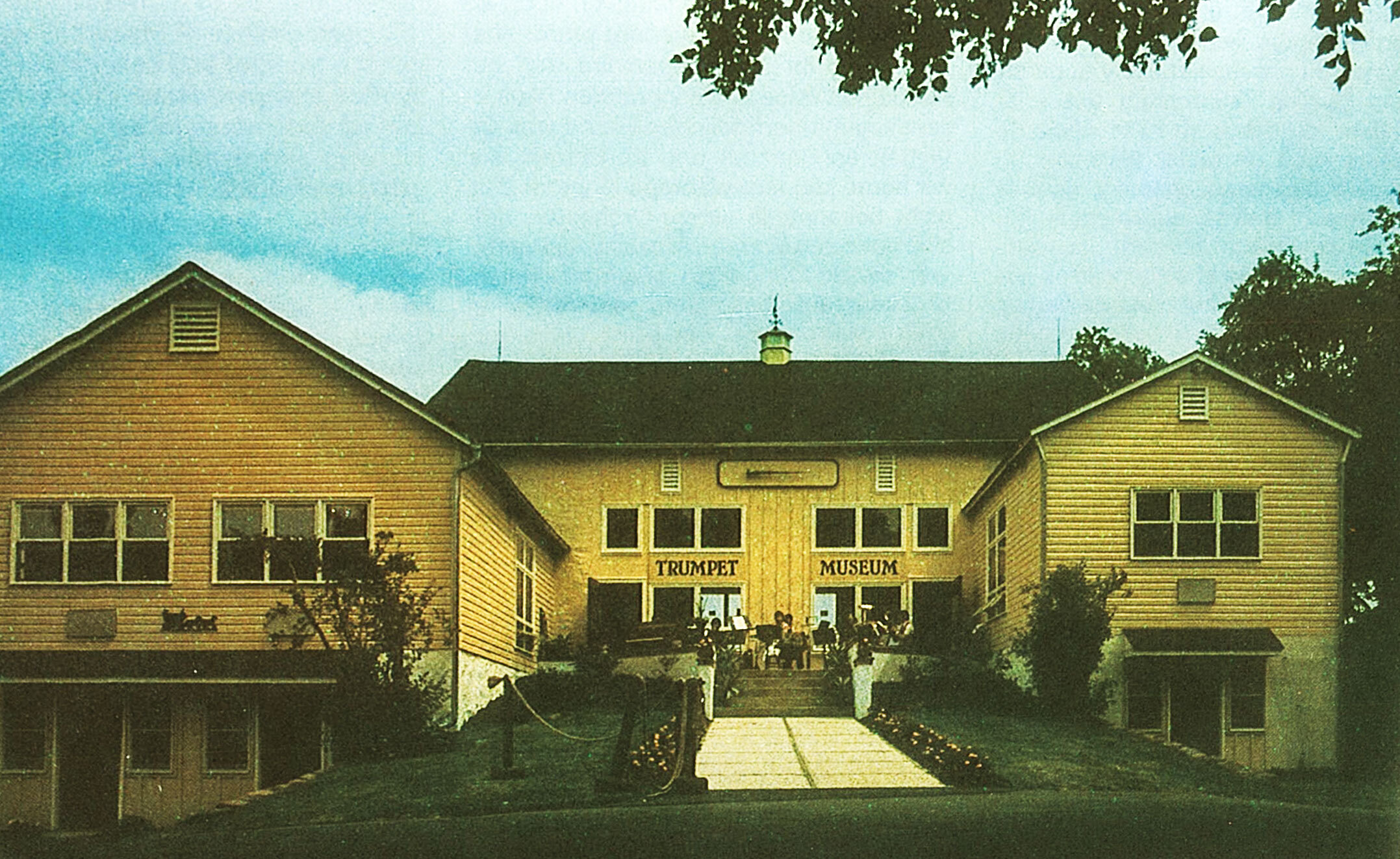
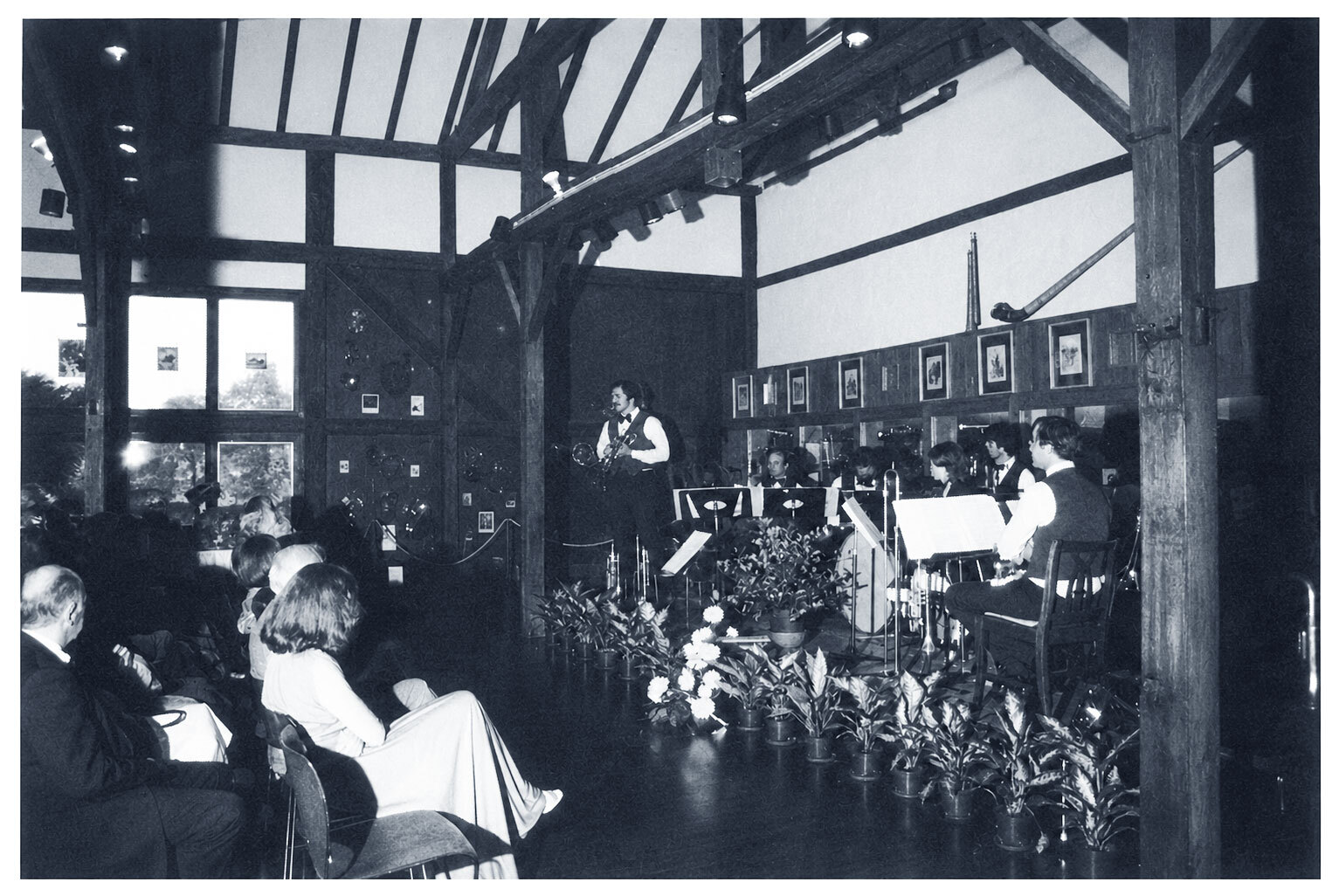
The museum sits on a beautifully landscaped estate where several buildings lie surrounded by century-old shag hickory trees. The main house, where the Streitwiesers live with their four children, was built in 1734. Adjacent to this a secluded summer dwelling, built in 1820, a spring house overlooking a large pond and the museum itself, a handsomely renovated 1860 barn, having an almost castle-like appearance. The barn took one full year to renovate, gutting the original structure and rebuilding again from the ground up. It contains 500 square feet of show cases housing over 300 brass instruments of every size and shape. This large rectangular room doubles as a concert hall with a seating capacity of app. 200. Also included in the building is an instrument repair shop, an office, a research library that it also used as a "green room" for concert performers, a lecture room frequently used for lecture-demonstrations and a caretakers apartment.
The museum hosts a chamber music series that has become very popular in the surrounding communities. The barn that houses the museum is supported by the original 120 year old wooden beams and the planked floors add to the rustic flavor that the museum provides. On the far side of the barn there is a spacious picture window overlooking a reflecting pool which is the future site of a gazebo for outdoor concerts. The scenery is breathtaking and it is worth a visit there, if only to revel in the lush surroundings that are so much a part of the total experience.
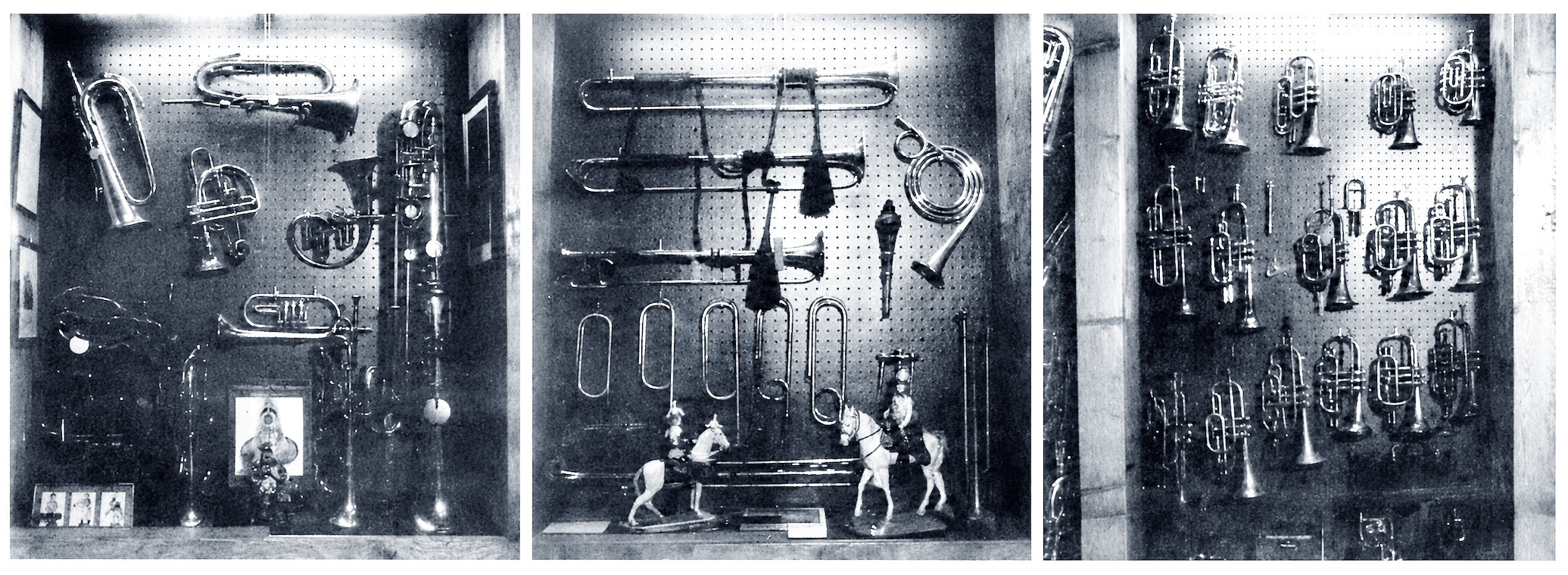
As indicated before, the collection is one that could delight musician and non-musician alike. It contains many one of a kind instruments as well as very old pieces from every part of the world. Included are coach horns, glass trumpets, baroque trumpets of every type, trumpets from Tibet used to frighten away evil spirits, experimental horns with unique bell and valve configurations as well as scores of other related brass and drum relics, hundreds of paintings, prints, and figurines depicting lives of trumpeters of the past.
Operations
The museum is operated solely by the Streitwiesers. Since it is a private collection and the personal brainchild of the Streitwiesers, they see it as their responsibility to take on all of the staff functions. Visits to the museum are by appointment only, which, with the demands of four children and a large estate, is the only viable way that they can see to run a visitor program. School groups are also encouraged to come and all visitors are taken around personally by Franz and Catherine. Part of the reason for this is that the exhibits are not marked in any way. Although Franz knows the story behind every instrument, his narrative is needed to truly appreciate the collection. Visitors are invited to hear the instruments and often to try them. A large part of the Streitwieser's time is devoted to expanding the collection and the reputation Franz and the museum have gained has brought owners of old instruments to the Streitwiesers.
The controlling council of the museum is the Streitwieser Foundation which is registered with the I.R.S. as a non-profit organization; tax deductable and educational. Donations from individuals can be made to the foundation and are tax deductible on their income tax. The Streitwieser's themselves buy instruments at their own expense and donate them to the museum. A six member board of directors, made up of local trumpeters and brass enthusiasts, oversee the operation although the Streitwieser's, for the most part, determine the goals and policies for the organization.
In the museum, the instruments are all displayed in a large rectangular room with display cases and instruments lining the four walls. Only the perimeter of the room is used for display and the center of the room is left open for concerts. Display cases line the far two walls and instruments hang without cases on the long walls and high above the cases on the short walls. The cases are filled with instruments and, though grouped by type, are not labeled in any way. As a visitor I was overwhelmed by the number of instruments I encountered everywhere I looked.
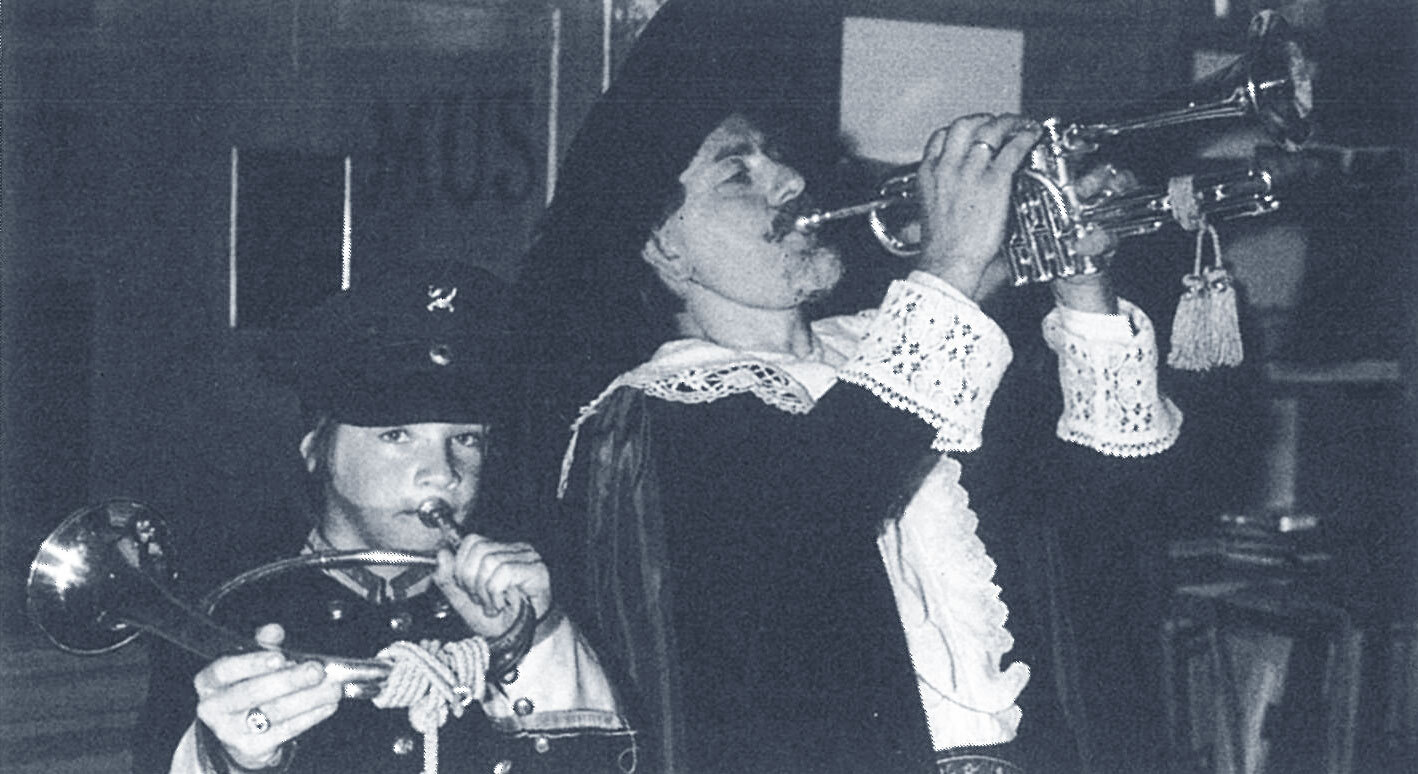
In my dealing with the Streitwieser Museum, I have been struck by several things. The first is the sincere desire of Franz and Catherine to share their collection and the vast trumpet knowledge they have gained with others. They do, indeed, have something unique to share with the visitor.
When asked about the future, the Streitwiesers think in terms of making their small museum into a center for brass music. One of their future plans include building another lake and a gazebo for summer concerts. As their reputation grows, trumpeters, can come, share their knowledge and learn more about the brass music heritage.