Explore institutional access Explore institutional access

14 min. read

Cesare Bendinelli (1542-1617)

Biography
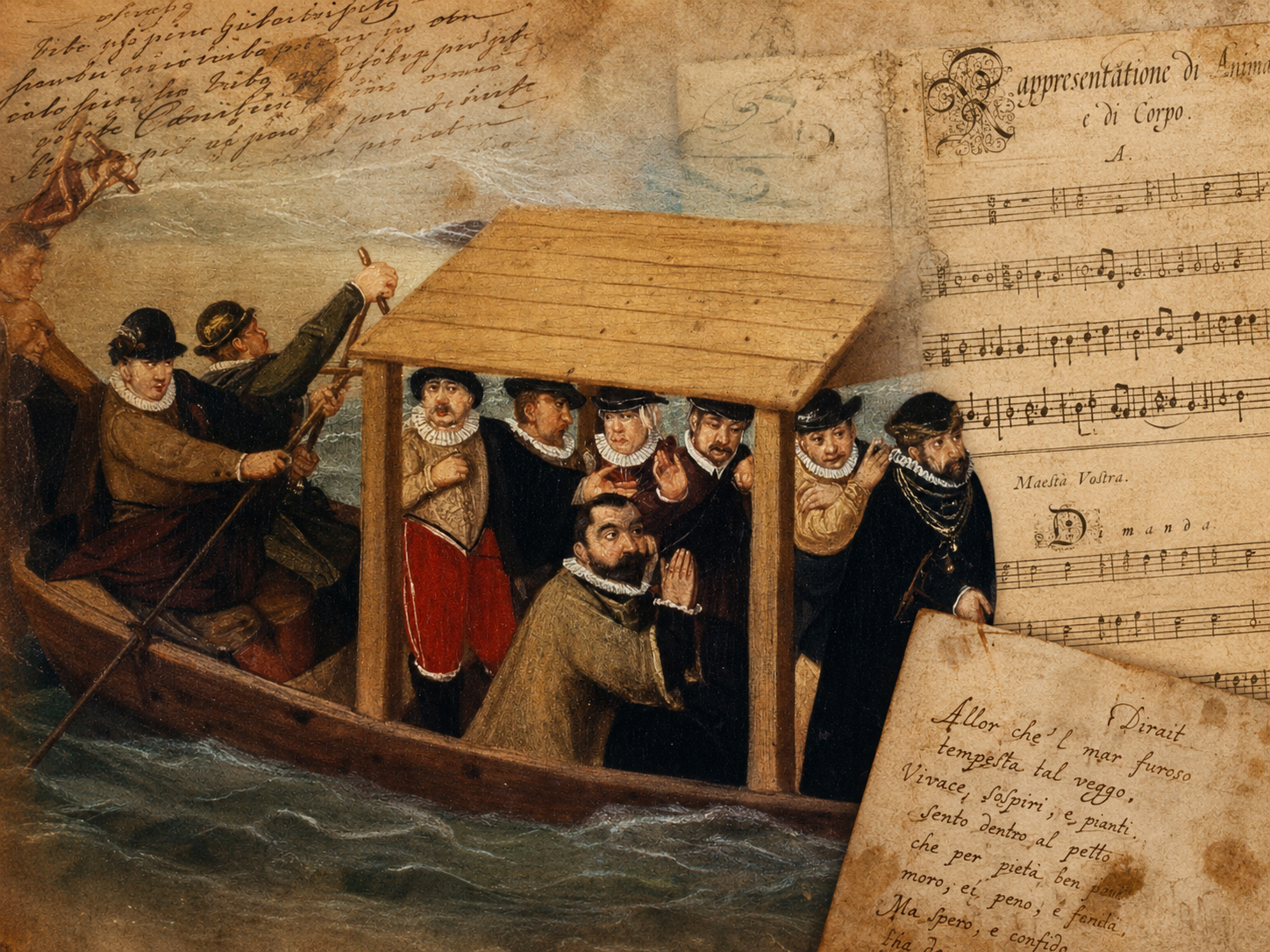
Cesare Bendinelli (1542–1617), imperial trumpeter and teacher, shaped a tradition and wrote the first trumpet method — a key document of Renaissance brass playing.
Cesare Bendinelli (1542-1617)

Biography

Cesare Bendinelli was from Verona.¹ If we assume him to be identical to the Cäsar Bendinello who was a trombonist at the court of Schwerin from 1562 to 1565², and if we postulate a two-year period of apprenticeship and another four years as a journeyman, further assuming that this was his first full-time position, we arrive at a date of birth around 1542. During the late 16th century it was not at all unusual for trumpeters to play other instruments, cornetto being the most frequent second instrument. (Two centuries later, trumpeters were often expected to play the violin.) The combination of trumpet and trombone was certainly possible as well, especially in the case of trumpeters specializing in the low register of their instrument. However, we must confess a certain uneasiness at seeing Bendinelli, who soon after was known as a high trumpet player, listed as a trombonist.

Between 1567 and 1577, probably into 1580, Bendinelli served as a court trumpeter at the Imperial court of Vienna. He was taken into service there on August 1, 1567, at a salary of 15 guilders monthly and a new uniform each year.⁹ Before 1571 he married, for in that year he received a gratification of 20 guilders for his wife, who had been seriously ill.⁴ In 1573 his salary was raised to 17 guilders a month.⁶ The last we learn of him in Vienna is that his salary was paid through the end of 1576; unfortunately the archival volumes for 1577–1580 are missing.⁶

In 1580 Bendinelli was taken on as the chief trumpeter at the court of Munich.⁸ He retained this position until his death.⁷ The music at this court was of the highest order, under Orlando di Lasso (1532–1594), who had served as music director there from 1568. At the time of Bendinelli’s arrival, the number of trumpeters in the courtly trumpet ensemble had dwindled from the 15 who had been employed at the beginning of Lasso's tenure to six (plus a kettledrummer).⁸ The duties of the court trumpeters — who, in the archival documents, are always listed separately from the other instrumentalists and singers — were to give solemnity to the acts of the Duke and his family by playing at table, in church (on high feast days such as Christmas), at courtly weddings, and at the Duke's comings and goings.

During Bendinelli’s tenure, the strength and quality of the courtly trumpet ensemble was improved, in particular by the acquisition of large numbers of new trumpets, generally in Nuremberg. The first such purchase was made in 1586, when the cornettist Vileno Cornazzano was sent there to bring back two new trumpets.⁹ One of these was probably the trumpet in pretzel shape made by Anton Schnitzer in 1585, an instrument donated by Bendinelli in 1614 to the Accademia Filarmonica in Verona. (See Illustration 1.) 

Continue reading

Access the full Digital Edition.

Brass Bulletin 17, I / 1977 pages 31–45

All content is protected by copyright © Brass Bulletin 1977–2026

Share this article

Facebook LinkedIn
Loading…

Questions & Answers

How the Digital Edition works

What does the Digital Edition include?

The Digital Edition brings together the articles already digitized as searchable online texts—not simply as scans or PDF files—along with their original illustrations, notes, authorship, issue information, and available translations. Related-article suggestions currently include only this digitized material.

Are the digital articles identical to the originals?

We preserve the original text, language, illustrations, captions, footnotes, and editorial context as faithfully as possible. The presentation is adapted for comfortable online reading, and obvious transcription or scanning errors may be corrected. The substance and character of the published article remain unchanged.

Which languages are available?

Brass Bulletin was published in English, French, and German throughout its history. Italian and Spanish translations were added from issue No. 60 onward.

On the Italian and Spanish sites, articles from issues 1–59 are therefore shown in English by default.

How often are new articles added?

New articles are added almost daily, with approximately one complete issue digitized each week. The pace may vary depending on the preparation, image work, and editorial checking required.

Why aren’t all articles available digitally?

The complete Brass Bulletin collection contains 1,246 articles published between 1971 and 2003. The full index is already available online, allowing readers to discover every article in the collection, including those whose complete text has not yet been digitized.

Digitization began in February 2026. Each article is carefully prepared for online reading, checked, and connected to its issue, authors, subjects, and illustrations. At the current pace of digitization, the complete collection is expected to be available online by February 2028.

Why do some references mention articles that are not available yet?

References in the original articles are preserved even when the material they point to has not yet been digitized. This keeps the historical and editorial record intact. As more issues are added to the Digital Edition, an increasing number of these references will lead to articles that can be read online.

Can I suggest an article or report a transcription error?

Yes. If there is an article you would particularly like to see digitized, or if you notice a possible transcription error or missing detail, please contact us. Reader feedback helps us improve the Digital Edition and prioritize useful connections within the archive.

How can I support Brass Bulletin?

Your support helps fund the preparation, verification, and online publication of the complete collection.

Subscribe to the Digital Edition

Prefer to support us without subscribing?

Make a donation

Search Brass Bulletin.