Las traducciones originales al español de Brass Bulletin comienzan con el n.º 60.

4 min de lectura

On hunting horns and other similar instruments

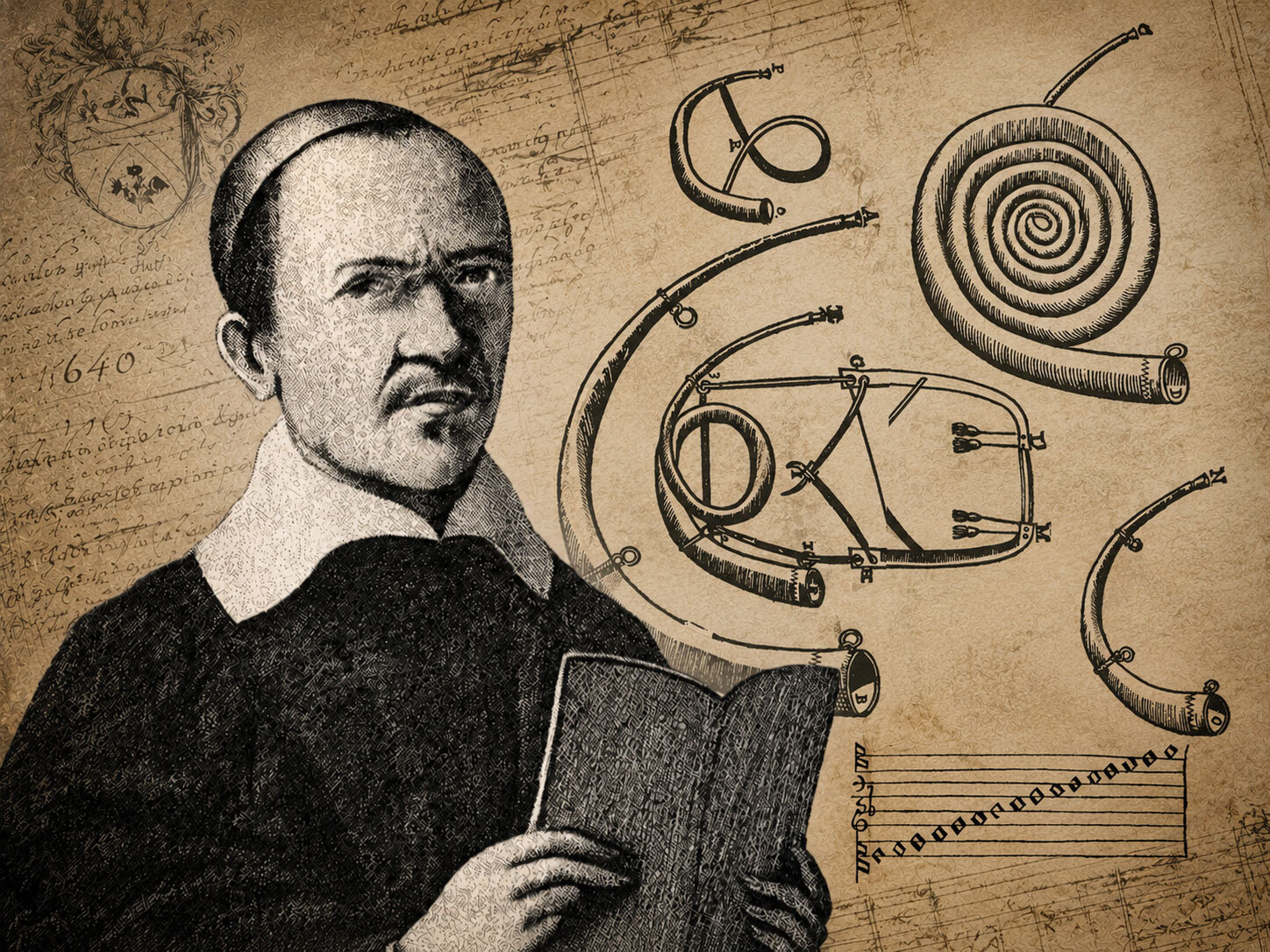
Aus Pierre Trichets Traité des Instruments de Musique (um 1640)

Hunting horns, buccinae and cornets blur into one another as Trichet links ancient signals, shepherds, hunters and myth to the instruments of his own age.
On hunting horns and other similar instruments

Pierre Trichet (1586/1587 - 1644)

I admit that hunting horns, horns, buccines, trumpets and bugles have no holes in their outline, no more than do trumpets and sackbuts. This does not prevent them from being polyphonic, however, and changing the sounds. Yet some consider that all these names are synonymous and mean almost the same thing among Frenchmen, as did cornu, lituus and buccina among the Romans, as some have thought. It is true that Festus believed the lituus to be a kind of small buccina and that Lipsius¹ (de mil. Ro., book 4) said that people did not at first distinguish between buccina and cornett, but that later they did so distinguish, as larger and more curved brass cornett were made. The buccina, according to the same author, was at first nothing other than an ox horn: et a bene nomen sumpsit, ut instrumentum quod bubus canit. Isidore draws the etymology from buccina a voce quasi vocinam dicas. Varro, however, believes it is so called because, when sounded, it sings “booboo”. Panciroll, explaining the shape of the buccina, also mentions the reason for its name in these words: usurpabant buccinas circa orificium, per quod vox immittebatur, angustas: in ima vero parte, ex qua sonus egreditur latas: erantque oblongae ad similitudinem buccini, quod purpurae genus est, unde et causa nomini.

One of our French writers says that the huntsmen’s horn is not that which is used today but one of ivory or of horn; for the huntsmen of antiquity used only horns while the modern instruments are all of bronze. I readily grant that horns were formerly made but of horn and ivory, yet there is no doubt but that today they are made of other materials. Julio della Scala² (l. l. poët. c. 20 p. 78) gives evidence of it and says the Germans make them from boxwood but they are different from those used in the hunt: Nunc cornua germani e busco efficta multis foraminibus inflant magno spiritu non sine gratia et decore, praesertim in nocturnis festivitatibus. Vocem namque humanam imprimis imitantur, eamque vehementer contentam. Varro says that cornu a curvore dictum fuit. But Fungerus derives this word from the Greek kéras, or from the Hebrew, which is written almost the same.

The first origin of the hunting horn lies in the fact that shepherds used to call their flocks by means of its sound; in this connection Columella wrote that the beasts must be accustomed to return to their pen at the sound of the buccina. Huntsmen then used it to call their dogs and their falcons, from whence it is called huchet [from the French hucher, “to call” — Ed.] as well as cornet. La Boderie gives us a charming description of the use of this in his poem:

The more his horn the huntsman sounds,
The more do run and call his hounds;
It imitates the trumpet shrill,
Sounds now the quarry, now the kill.

Sometimes one finds huntsmen so skilful that they can play on their horns as many different sounds as on a trumpet; Le Fouilloux has discussed this so fully in his book on hunting that there is no need to speak further of it.

Continue reading

Accede a la edición digital completa.

Brass Bulletin 47, III / 1984 páginas 51–54

Todo el contenido está protegido por derechos de autor © Brass Bulletin 1984–2026

Compartir este artículo

Facebook LinkedIn
Cargando…

Preguntas y respuestas

Cómo funciona la edición digital

¿Qué incluye la edición digital?

La edición digital reúne los artículos ya digitalizados como textos legibles y consultables en línea —no simplemente como escaneos o archivos PDF— junto con sus ilustraciones originales, notas, autoría, información del número y traducciones disponibles. Las sugerencias de artículos relacionados incluyen actualmente solo este material digitalizado.

¿Los artículos digitales son idénticos a los originales?

Conservamos con la mayor fidelidad posible el texto original, el idioma, las ilustraciones, los pies de imagen, las notas y el contexto editorial. La presentación se adapta para facilitar la lectura en línea y pueden corregirse errores evidentes de transcripción o escaneado. El contenido y el carácter del artículo publicado permanecen inalterados.

¿Qué idiomas están disponibles?

Brass Bulletin se publicó en inglés, francés y alemán a lo largo de toda su historia. Las traducciones al italiano y al español se añadieron a partir del número 60. Por este motivo, en los sitios italiano y español los artículos de los números 1 a 59 se muestran en inglés de forma predeterminada.

¿Con qué frecuencia se añaden nuevos artículos?

Se añaden nuevos artículos casi a diario, con aproximadamente un número completo digitalizado cada semana. El ritmo puede variar según el trabajo de preparación, tratamiento de imágenes y revisión editorial necesario.

¿Por qué no están disponibles todos los artículos en formato digital?

La colección completa de Brass Bulletin contiene 1.246 artículos publicados entre 1971 y 2003. El índice completo ya está disponible en línea y permite descubrir todos los artículos de la colección, incluidos aquellos cuyo texto íntegro todavía no ha sido digitalizado.

La digitalización comenzó en febrero de 2026. Cada artículo se prepara cuidadosamente para la lectura en línea, se revisa y se vincula con su número, sus autores, sus temas y sus ilustraciones. Al ritmo actual de digitalización, se prevé que la colección completa esté disponible en línea en febrero de 2028.

¿Por qué algunas referencias mencionan artículos que todavía no están disponibles?

Las referencias de los artículos originales se conservan aunque el material al que remiten aún no haya sido digitalizado. De este modo se mantiene intacto el contexto histórico y editorial. A medida que se incorporen más números a la edición digital, un número creciente de estas referencias conducirá a artículos que podrán leerse en línea.

¿Puedo sugerir un artículo o informar de un error de transcripción?

Sí. Si hay algún artículo que le gustaría especialmente ver digitalizado, o si detecta un posible error de transcripción o algún dato que falta, póngase en contacto con nosotros. Los comentarios de los lectores nos ayudan a mejorar la edición digital y a establecer prioridades útiles dentro del archivo.

¿Cómo puedo apoyar a Brass Bulletin?

Su apoyo ayuda a financiar la preparación, verificación y publicación en línea de la colección completa.

Suscríbase a la Edición Digital

¿Prefiere apoyarnos sin suscribirse?

Haga una donación

Busca en Brass Bulletin.