Ofrezca Brass Bulletin en su universidad, conservatorio o biblioteca Descubra el acceso institucional

10 min de lectura

The Haydn Trumpet Concerto

Parte 2

Por Alfred Willener

André, Wobisch, Dokshitzer, Stringer and others reveal how tempo, phrasing, ornamentation and cadenzas reshape Haydn's trumpet concerto.
The Haydn Trumpet Concerto

Extracts from scores in part I of this article illustrated the written differences which one meets. The space available for this series of three articles (II – interpretation, III – reception) is very restricted. In a later publication I shall develop the analysis which has at present only begun (I shall for example check the score against a microfilm of the original and I shall reproduce interviews and letters from performers).

II. The Interpretation

Most of us know that it is possible to translate from one language into another in two ways: superficially (word for word); or in essence (in relation to the spirit and content of what is to be said). Now translating the spoken language is called interpreting, and this use of the word puts us on the track of our problem.

In music it is not enough to play the notes (the words) — everyone knows that. It is much more a question of distinguishing between the essential (the key words) and the incidental, of using the correct punctuation (commas, full stops, paragraphs) without either departing from the intended style (the type of expression intended by the original text) or losing the content (the intention of the person telling the story), the overall aim of the interpreter of a piece (like the translator of a text) being to render the spirit of the movements (chapters) and of the work (book).

The spirit and content of the work

How can we define these? How can we find them?

Little seems to have been written about this concerto. I have not yet examined all the literature. It might be interesting to make a few points about the composer's personality, his social position and his period.

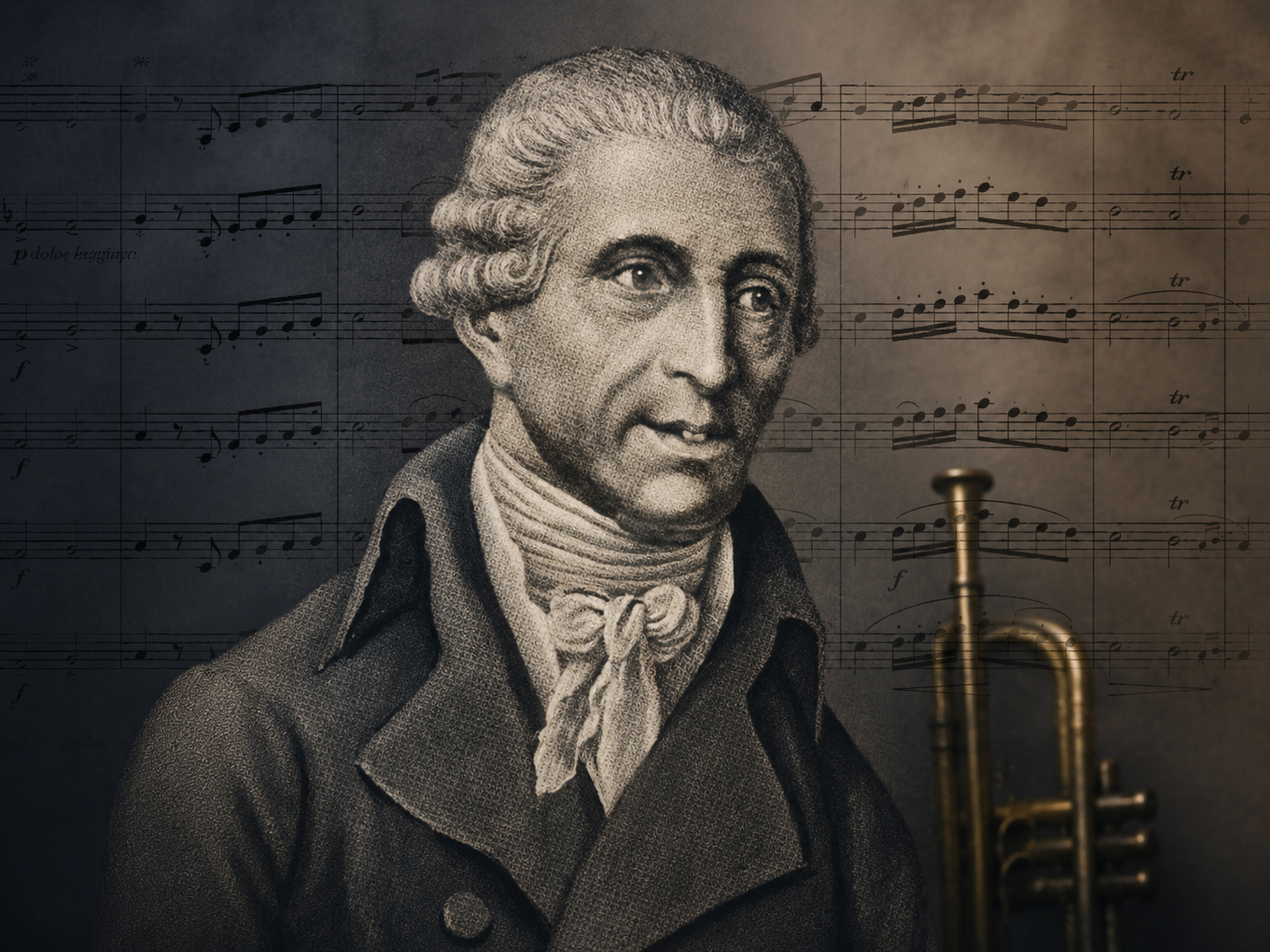
Haydn is said to have been one of the five geniuses in the history of the world to enjoy perfect physical and mental health. Of robust health, an Austrian, our composer was known for his sense of humour. His personal position at court (1761–1790) involved many sacrifices — a great deal of work and solitude — while at the same time offering him some advantages. He was able to carry out experiments and had a motive for doing so — writing different versions of works for orchestra and recasting them, for example, according to the degree of success achieved in certain cases, or introducing new instruments or new ways of playing them (Karajan, p. 9).

He thought of composing by the throw of a dice. Suffering from overwork by day, for six months he worked late into the night to learn to play the baryton himself in order to impress his master who was a poor performer on this instrument and to prove to him how much further one could go (Hughes, p. 39). One of Haydn's cantatas (Die Erwählung eines Kapellmeisters) contains an ironic account of the choosing of a conductor (Kobald, p. 224).

If this composer wrote a concerto for a new trumpet, it was probably not just because a court trumpeter was a friend of his but it was probably with a view (perhaps this was his whole intention) to throwing down a challenge. The instrument built by Weidinger was imperfect and difficult to play (it had notes of uneven power and quality). Tenschert (p. 213) writes that this trumpet was not yet “fully developed” at the time the work was written. Writing for this trumpet was adventurous.

Written in 1796 for “solo trumpet, 2 violins, 2 violas, bass, 2 flutes, 2 oboes, 2 bassoons, 2 horns, 2 trumpets and 2 drums” (Hoboken, H. 22, no. 1), the work was not played until 1800, in the Vienna Burgtheater (Robbins, p. 35).

Continue reading

Accede a la edición digital completa.

Brass Bulletin 36, IV / 1981 páginas 34–41

Todo el contenido está protegido por derechos de autor © Brass Bulletin 1981–2026

Compartir este artículo

Facebook LinkedIn
Cargando…

Preguntas y respuestas

Cómo funciona la edición digital

¿Qué incluye la edición digital?

La edición digital reúne los artículos ya digitalizados como textos legibles y consultables en línea —no simplemente como escaneos o archivos PDF— junto con sus ilustraciones originales, notas, autoría, información del número y traducciones disponibles. Las sugerencias de artículos relacionados incluyen actualmente solo este material digitalizado.

¿Los artículos digitales son idénticos a los originales?

Conservamos con la mayor fidelidad posible el texto original, el idioma, las ilustraciones, los pies de imagen, las notas y el contexto editorial. La presentación se adapta para facilitar la lectura en línea y pueden corregirse errores evidentes de transcripción o escaneado. El contenido y el carácter del artículo publicado permanecen inalterados.

¿Qué idiomas están disponibles?

Brass Bulletin se publicó en inglés, francés y alemán a lo largo de toda su historia. Las traducciones al italiano y al español se añadieron a partir del número 60. Por este motivo, en los sitios italiano y español los artículos de los números 1 a 59 se muestran en inglés de forma predeterminada.

¿Con qué frecuencia se añaden nuevos artículos?

Se añaden nuevos artículos casi a diario, con aproximadamente un número completo digitalizado cada semana. El ritmo puede variar según el trabajo de preparación, tratamiento de imágenes y revisión editorial necesario.

¿Por qué no están disponibles todos los artículos en formato digital?

La colección completa de Brass Bulletin contiene 1.246 artículos publicados entre 1971 y 2003. El índice completo ya está disponible en línea y permite descubrir todos los artículos de la colección, incluidos aquellos cuyo texto íntegro todavía no ha sido digitalizado.

La digitalización comenzó en febrero de 2026. Cada artículo se prepara cuidadosamente para la lectura en línea, se revisa y se vincula con su número, sus autores, sus temas y sus ilustraciones. Al ritmo actual de digitalización, se prevé que la colección completa esté disponible en línea en febrero de 2028.

¿Por qué algunas referencias mencionan artículos que todavía no están disponibles?

Las referencias de los artículos originales se conservan aunque el material al que remiten aún no haya sido digitalizado. De este modo se mantiene intacto el contexto histórico y editorial. A medida que se incorporen más números a la edición digital, un número creciente de estas referencias conducirá a artículos que podrán leerse en línea.

¿Puedo sugerir un artículo o informar de un error de transcripción?

Sí. Si hay algún artículo que le gustaría especialmente ver digitalizado, o si detecta un posible error de transcripción o algún dato que falta, póngase en contacto con nosotros. Los comentarios de los lectores nos ayudan a mejorar la edición digital y a establecer prioridades útiles dentro del archivo.

¿Cómo puedo apoyar a Brass Bulletin?

Su apoyo ayuda a financiar la preparación, verificación y publicación en línea de la colección completa.

Suscríbase a la Edición Digital

¿Prefiere apoyarnos sin suscribirse?

Haga una donación

¿Cómo avanza la digitalización?

Estamos poniendo Brass Bulletin a disposición de los lectores en línea, artículo por artículo. Pueden leer los artículos recién digitalizados en cuanto estén listos, incluso antes de que se complete un número entero.

Consulten nuestro calendario de digitalización para descubrir las últimas novedades y las fechas estimadas de disponibilidad de los próximos números. Estas estimaciones se basan en nuestro ritmo reciente y pueden cambiar.

Busca en Brass Bulletin.