Ofrezca Brass Bulletin en su universidad, conservatorio o biblioteca Descubra el acceso institucional

8 min de lectura

The Trumpet and the Cornet in Jazz and Popular Music

The pluralism of the so-called “modern” forms (1945 to the present)

Parte 3

Por Michel Laplace

Bebop, Miles Davis and the rise of the flugelhorn mark a postwar jazz landscape in which trumpet playing splintered into competing sounds and ideals.
The Trumpet and the Cornet in Jazz and Popular Music

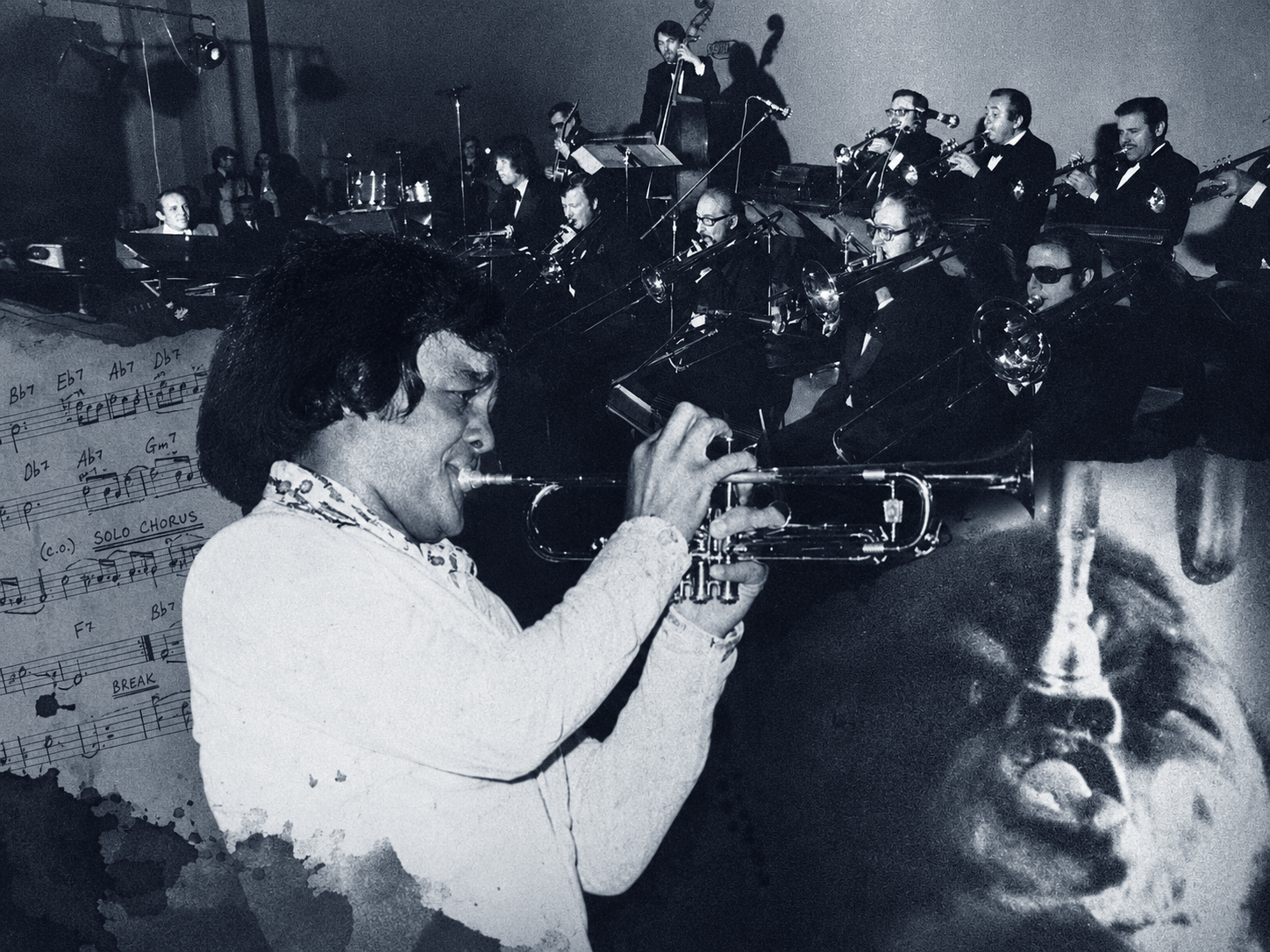
After 1945 jazz developed many different currents and was to become the object of polemic among critics. There were, notably, the small be-bop combos and, in reaction to this “modernism”, the usual resurgence of the past — the New Orleans revival. The Louis Armstrong of the third period, abandoning his virtuosity of the thirties and using a dashing refined style, was to remain until his death the most admirable hero of the traditional small group that could be imagined. The boppers kept the spotlight on the trumpet until the end of the forties. After 1948 Gillespie blended be-bop and “Latin” style, heading a large band, certain aspects of whose scoring remain current today.

In post-war France, alongside the most varied small jazz bands (New Orleans, be-bop) large dance bands like that of Jacques Hélian (which were like schools for many young trumpet players, just like music colleges), so-called “typical” orchestras, were very successful (mambos, etc.). Generally the same artists were to be found in all these areas and, in addition to Barelli, Fassin, van Haeke and Gérard, whom we have already mentioned, the early fifties produced a host of excellent section players like Maurice Thomas (*1928), Michel Decourrière (*1924) and Vincent Casino (*1923); good soloists like Fernand Verstraete (*around 1925) and Pierre Sellin (*1930); and two great chorusmen — Bernard Hulin (around 1931-1981) and especially Roger Guérin (*1926) of international class. The fifties produced two more good chorusmen and big-band arrangers: Jean-Claude Naude (*1933) and Ivan Jullien (*1934). And of course there were many others.

Unfortunately for the trumpet in the evolution of jazz, the greatness of the saxophonist Charlie Parker was quite exceptional and after him the sixties were plagued by John Coltrane. It is giants that motivate young people; there were to be many saxophone players and today they hold the centre of the stage in so-called “modern” jazz. Of course the trumpet was to have its leading light, who shines to this day — Miles Davis, who has continued to evolve like Armstrong, in four periods:¹³

  1. 1944-1955 A bopper who listened to Gillespie but adapted him to a more sedate and lyrical style (the first step for a genius is to know his own limitations; Miles never had Gillespie’s technical facility). He used bop harmonies with conventional rhythms and his repertoire contained nothing unusual: standards, blues, bop themes. He had a pure sound with no vibrato. Note the characteristic tone colours in his 1949 recording session with horn and tuba, a lesson learned by white West-coast jazzmen like Shorty Rogers (*1924), an excellent arranger.
  2. 1955-1959 A more chromatic period, refining the dramatic character of his phrasing (which became more open) and of his sound, using more moderate tempos in a still conventional repertoire. The Harmon mute was essential.
  3. 1960-1964 His musical language was more selective, he used modes, but he also enjoyed popular success thanks to his big-band collaboration with the arranger Gil Evans.
  4. since 1965 After the quintet he was influenced by rock and adopted an electronic environment. His musical language became more unrestricted, pantonal, often built of short phrases creating a climate. The last period influenced trumpet players less than the sound of groups with or without trumpets. The preceding periods were fundamental since all, or almost all trumpet players were to be formed by a combination of the influences of Gillespie and Davis or Brown and Davis.

Continue reading

Accede a la edición digital completa.

Brass Bulletin 44, IV / 1983 páginas 64–60

Todo el contenido está protegido por derechos de autor © Brass Bulletin 1983–2026

Compartir este artículo

Facebook LinkedIn
Cargando…

Preguntas y respuestas

Cómo funciona la edición digital

¿Qué incluye la edición digital?

La edición digital reúne los artículos ya digitalizados como textos legibles y consultables en línea —no simplemente como escaneos o archivos PDF— junto con sus ilustraciones originales, notas, autoría, información del número y traducciones disponibles. Las sugerencias de artículos relacionados incluyen actualmente solo este material digitalizado.

¿Los artículos digitales son idénticos a los originales?

Conservamos con la mayor fidelidad posible el texto original, el idioma, las ilustraciones, los pies de imagen, las notas y el contexto editorial. La presentación se adapta para facilitar la lectura en línea y pueden corregirse errores evidentes de transcripción o escaneado. El contenido y el carácter del artículo publicado permanecen inalterados.

¿Qué idiomas están disponibles?

Brass Bulletin se publicó en inglés, francés y alemán a lo largo de toda su historia. Las traducciones al italiano y al español se añadieron a partir del número 60. Por este motivo, en los sitios italiano y español los artículos de los números 1 a 59 se muestran en inglés de forma predeterminada.

¿Con qué frecuencia se añaden nuevos artículos?

Se añaden nuevos artículos casi a diario, con aproximadamente un número completo digitalizado cada semana. El ritmo puede variar según el trabajo de preparación, tratamiento de imágenes y revisión editorial necesario.

¿Por qué no están disponibles todos los artículos en formato digital?

La colección completa de Brass Bulletin contiene 1.246 artículos publicados entre 1971 y 2003. El índice completo ya está disponible en línea y permite descubrir todos los artículos de la colección, incluidos aquellos cuyo texto íntegro todavía no ha sido digitalizado.

La digitalización comenzó en febrero de 2026. Cada artículo se prepara cuidadosamente para la lectura en línea, se revisa y se vincula con su número, sus autores, sus temas y sus ilustraciones. Al ritmo actual de digitalización, se prevé que la colección completa esté disponible en línea en febrero de 2028.

¿Por qué algunas referencias mencionan artículos que todavía no están disponibles?

Las referencias de los artículos originales se conservan aunque el material al que remiten aún no haya sido digitalizado. De este modo se mantiene intacto el contexto histórico y editorial. A medida que se incorporen más números a la edición digital, un número creciente de estas referencias conducirá a artículos que podrán leerse en línea.

¿Puedo sugerir un artículo o informar de un error de transcripción?

Sí. Si hay algún artículo que le gustaría especialmente ver digitalizado, o si detecta un posible error de transcripción o algún dato que falta, póngase en contacto con nosotros. Los comentarios de los lectores nos ayudan a mejorar la edición digital y a establecer prioridades útiles dentro del archivo.

¿Cómo puedo apoyar a Brass Bulletin?

Su apoyo ayuda a financiar la preparación, verificación y publicación en línea de la colección completa.

Suscríbase a la Edición Digital

¿Prefiere apoyarnos sin suscribirse?

Haga una donación

¿Cómo avanza la digitalización?

Estamos poniendo Brass Bulletin a disposición de los lectores en línea, artículo por artículo. Pueden leer los artículos recién digitalizados en cuanto estén listos, incluso antes de que se complete un número entero.

Consulten nuestro calendario de digitalización para descubrir las últimas novedades y las fechas estimadas de disponibilidad de los próximos números. Estas estimaciones se basan en nuestro ritmo reciente y pueden cambiar.

Busca en Brass Bulletin.