Ofrezca Brass Bulletin en su universidad, conservatorio o biblioteca Descubra el acceso institucional

9 min de lectura

Parte 5

The Trumpet and the Cornet in Jazz and in Popular Music

Breathing

Breathing, Valsalva, mouthpiece position and daily practice collide with received wisdom as trumpet technique is reconsidered from the body outward.
The Trumpet and the Cornet in Jazz and in Popular Music

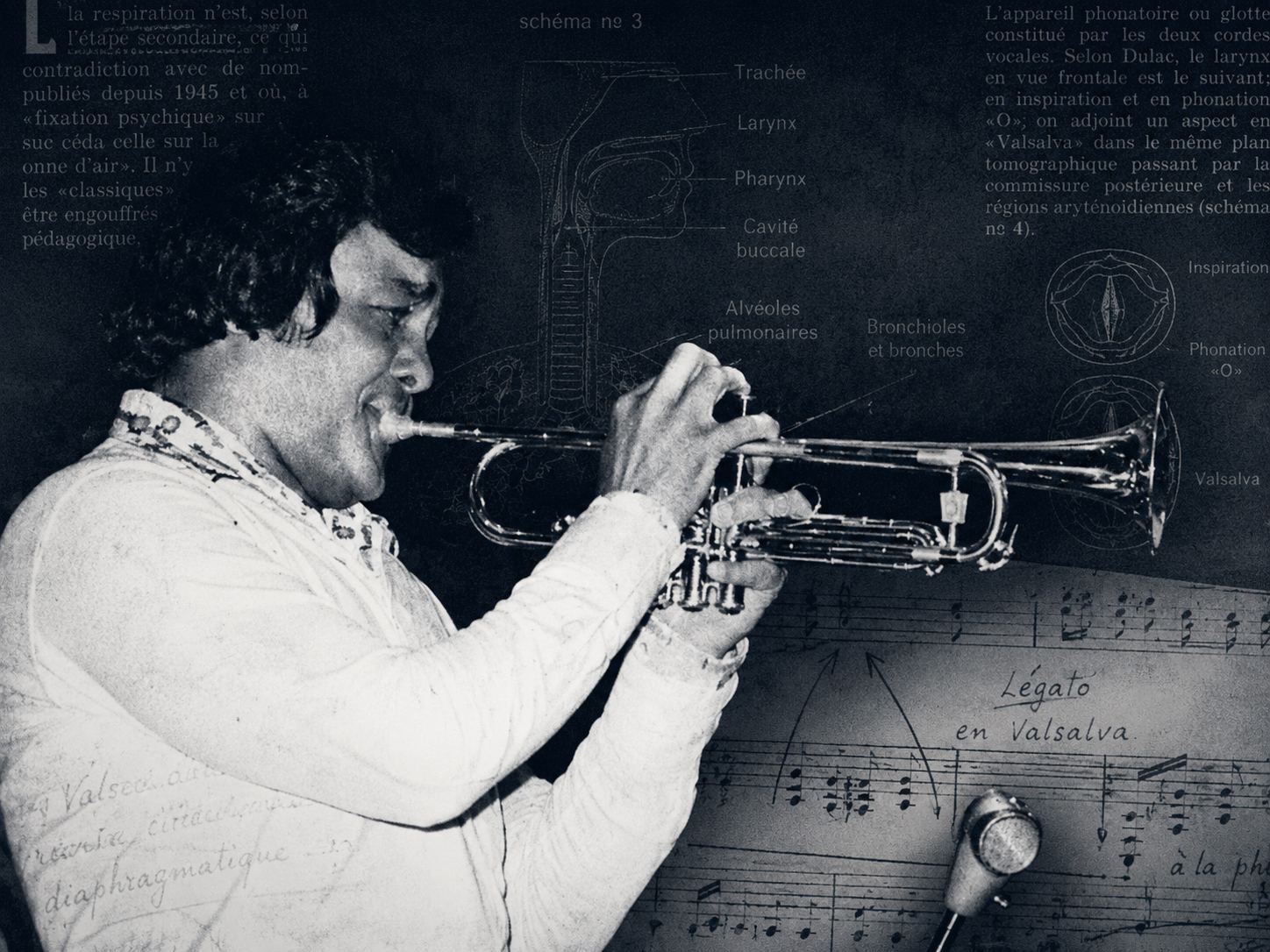
We regard this as the second stage, which puts us at odds with much writing published since 1945 in which one “psychic fixation” with tu is followed by another with the “air column”. It is not only “classicists” that have been marshalled into this methodological camp: jazzmen like Christian Bellest and, today, Tony Russo make breathing the fundamental principle, the basis of trumpet playing, relegating to an ancillary position all that we have seen so far.

It seems to us that good breathing is of little use in playing the trumpet if the connection between mouth and instrument is constricted for one reason or another. Nevertheless good breathing is healthy for each one of us in life and no-one doubts, when it comes to playing the trumpet, the importance of air pressure maintained by pulmonary expiration, the only known means of making the lips vibrate. The polemic is concerned only with the order of events. Fig. 3 shows us the path of the air from the pulmonary alveoli to the bronchioles and bronchi, coming together in the trachea and reaching the larynx before flowing into the pharynx and the mouth cavity to face the lips-mouthpiece system. This illustration shows the vital regulatory role of the larynx (Fig. 3 bis), which the Marseille team of René Périnelli and Jean-Jacques Greffin compare to the relief valve of a gas bottle (in their tutor to appear soon). Dr. Dulac’s description says: “The larynx is a membranous passage, largely muscular, which is held in shape by a shell of bone, fibre and cartilage; it joins the pharynx with the trachea. Its variable aperture helps to regulate the rate of respiration; it contains a phonatory device and a device to cover itself during swallowing.” (EMC)
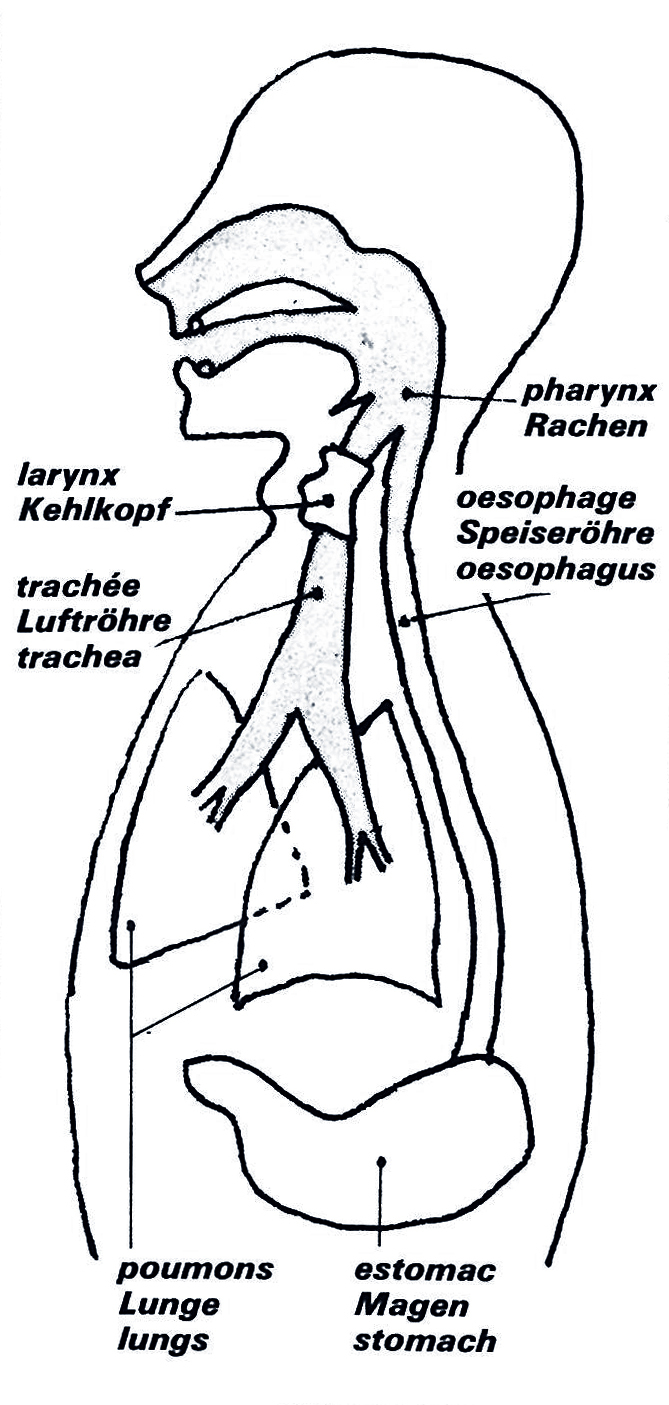
Figure 3
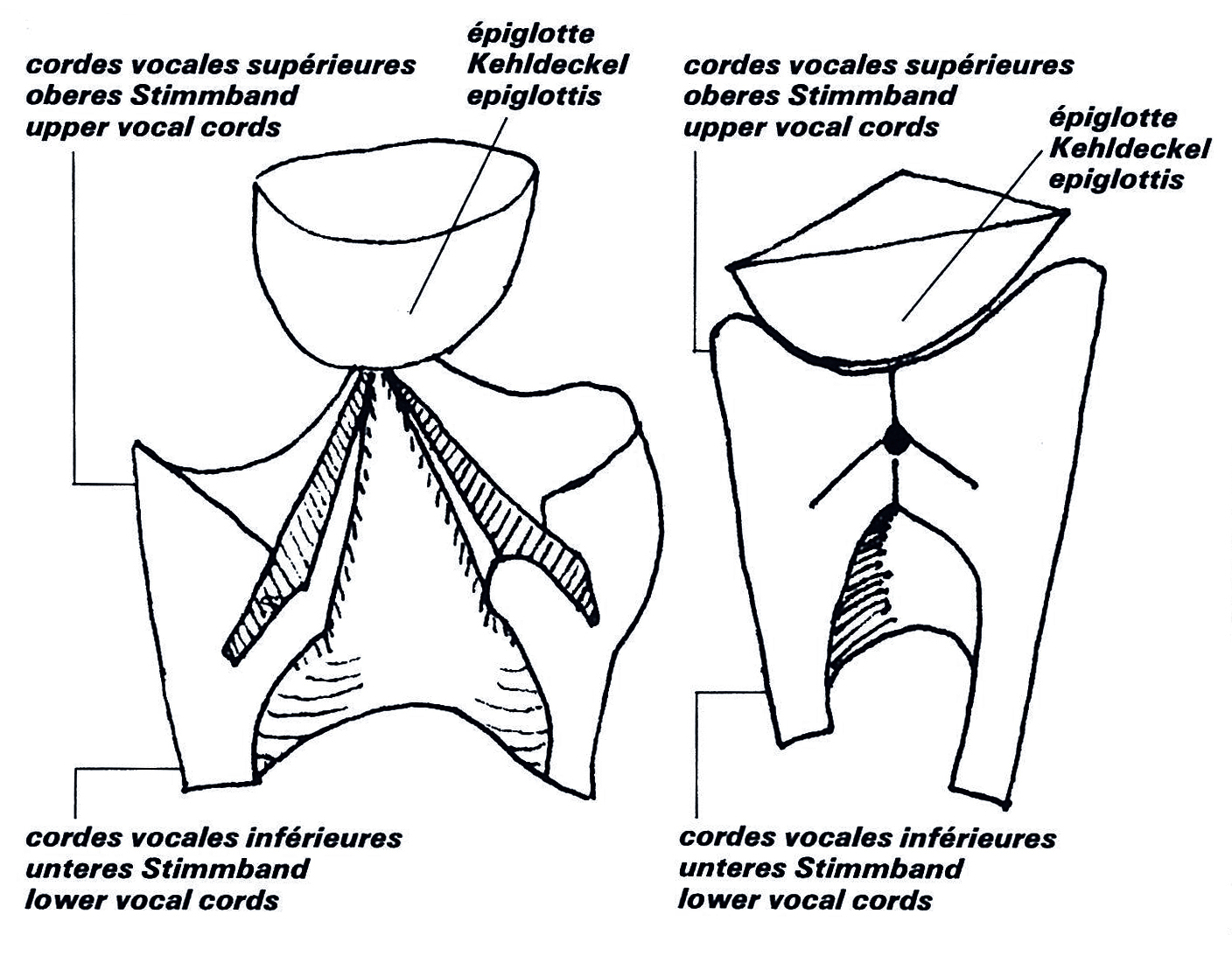
Figure 3

Figure 3bis

Figure 3bis

The phonatory device of glottis consists of the two vocal chords. According to Dulac the front view of the larynx in inhalation and phonation is O. There is also a “Valsalva view” in the same tomographic plane, passing through the posterior commissure and the arytenoid area. (Fig. 4)
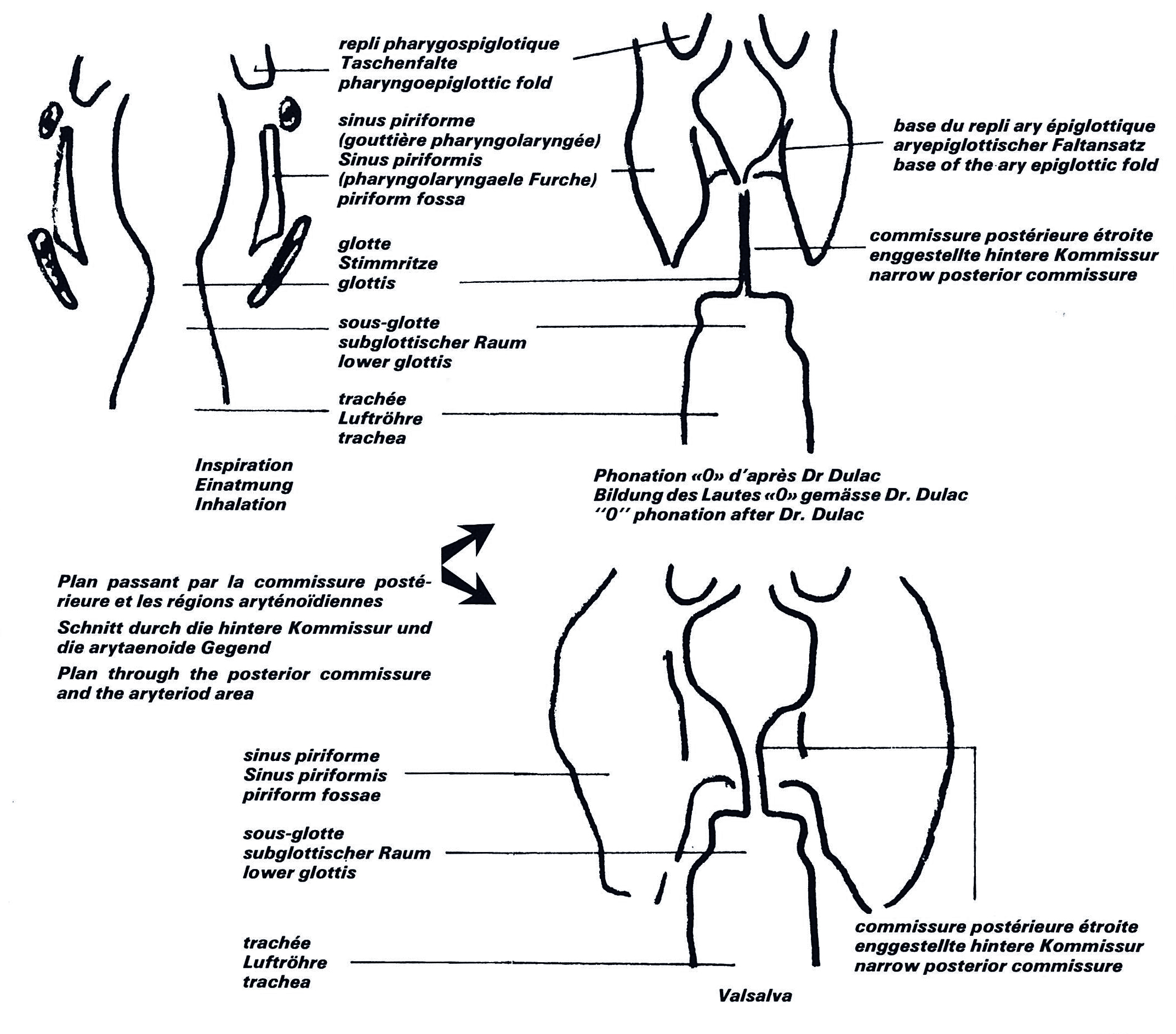
Figure 4

Figure 4

Faulkner showed in 1959 that trumpet playing is related to Valsalva’s manoeuvre (with side effects on the circulation of the blood, which can cause blackouts in lead trumpets). Studying the behaviour of the larynx during trumpet playing has to be carried out using Valsalva’s manoeuvre (blowing into the cap of a pen with a pinhole in its end). The amplitude of this manoeuvre is greater among professional trumpet players than it is with most people, whom we have illustrated here. During inhalation the glottal area is wide, creating the effect of an hourglass in combination with the areas above and below (with the sub-glottal “shoulders” lowered). In phonation and Valsalva the glottal area is narrow (more so in phonation) and the sub-glottal “shoulders” are horizontal. These aspects are not identical, however, and should put an end to parallels between singing and trumpet playing on the physio-technical level. In Valsalva the glottis is narrow enough to create a resistance to the air pressure and the piriform fossae are much more open, filled with air, than in phonation (which gives some trumpet players the appearance of having an inflated neck).

How should the player breathe in?

Continue reading

Accede a la edición digital completa.

Brass Bulletin 46, II / 1984 páginas 23–30

Todo el contenido está protegido por derechos de autor © Brass Bulletin 1984–2026

Compartir este artículo

Facebook LinkedIn
Cargando…

Preguntas y respuestas

Cómo funciona la edición digital

¿Qué incluye la edición digital?

La edición digital reúne los artículos ya digitalizados como textos legibles y consultables en línea —no simplemente como escaneos o archivos PDF— junto con sus ilustraciones originales, notas, autoría, información del número y traducciones disponibles. Las sugerencias de artículos relacionados incluyen actualmente solo este material digitalizado.

¿Los artículos digitales son idénticos a los originales?

Conservamos con la mayor fidelidad posible el texto original, el idioma, las ilustraciones, los pies de imagen, las notas y el contexto editorial. La presentación se adapta para facilitar la lectura en línea y pueden corregirse errores evidentes de transcripción o escaneado. El contenido y el carácter del artículo publicado permanecen inalterados.

¿Qué idiomas están disponibles?

Brass Bulletin se publicó en inglés, francés y alemán a lo largo de toda su historia. Las traducciones al italiano y al español se añadieron a partir del número 60. Por este motivo, en los sitios italiano y español los artículos de los números 1 a 59 se muestran en inglés de forma predeterminada.

¿Con qué frecuencia se añaden nuevos artículos?

Se añaden nuevos artículos casi a diario, con aproximadamente un número completo digitalizado cada semana. El ritmo puede variar según el trabajo de preparación, tratamiento de imágenes y revisión editorial necesario.

¿Por qué no están disponibles todos los artículos en formato digital?

La colección completa de Brass Bulletin contiene 1.246 artículos publicados entre 1971 y 2003. El índice completo ya está disponible en línea y permite descubrir todos los artículos de la colección, incluidos aquellos cuyo texto íntegro todavía no ha sido digitalizado.

La digitalización comenzó en febrero de 2026. Cada artículo se prepara cuidadosamente para la lectura en línea, se revisa y se vincula con su número, sus autores, sus temas y sus ilustraciones. Al ritmo actual de digitalización, se prevé que la colección completa esté disponible en línea en febrero de 2028.

¿Por qué algunas referencias mencionan artículos que todavía no están disponibles?

Las referencias de los artículos originales se conservan aunque el material al que remiten aún no haya sido digitalizado. De este modo se mantiene intacto el contexto histórico y editorial. A medida que se incorporen más números a la edición digital, un número creciente de estas referencias conducirá a artículos que podrán leerse en línea.

¿Puedo sugerir un artículo o informar de un error de transcripción?

Sí. Si hay algún artículo que le gustaría especialmente ver digitalizado, o si detecta un posible error de transcripción o algún dato que falta, póngase en contacto con nosotros. Los comentarios de los lectores nos ayudan a mejorar la edición digital y a establecer prioridades útiles dentro del archivo.

¿Cómo puedo apoyar a Brass Bulletin?

Su apoyo ayuda a financiar la preparación, verificación y publicación en línea de la colección completa.

Suscríbase a la Edición Digital

¿Prefiere apoyarnos sin suscribirse?

Haga una donación

¿Cómo avanza la digitalización?

Estamos poniendo Brass Bulletin a disposición de los lectores en línea, artículo por artículo. Pueden leer los artículos recién digitalizados en cuanto estén listos, incluso antes de que se complete un número entero.

Consulten nuestro calendario de digitalización para descubrir las últimas novedades y las fechas estimadas de disponibilidad de los próximos números. Estas estimaciones se basan en nuestro ritmo reciente y pueden cambiar.

Busca en Brass Bulletin.