4 min de lectura
Maurice Ravel and the new trombone
Por Michel Laplace
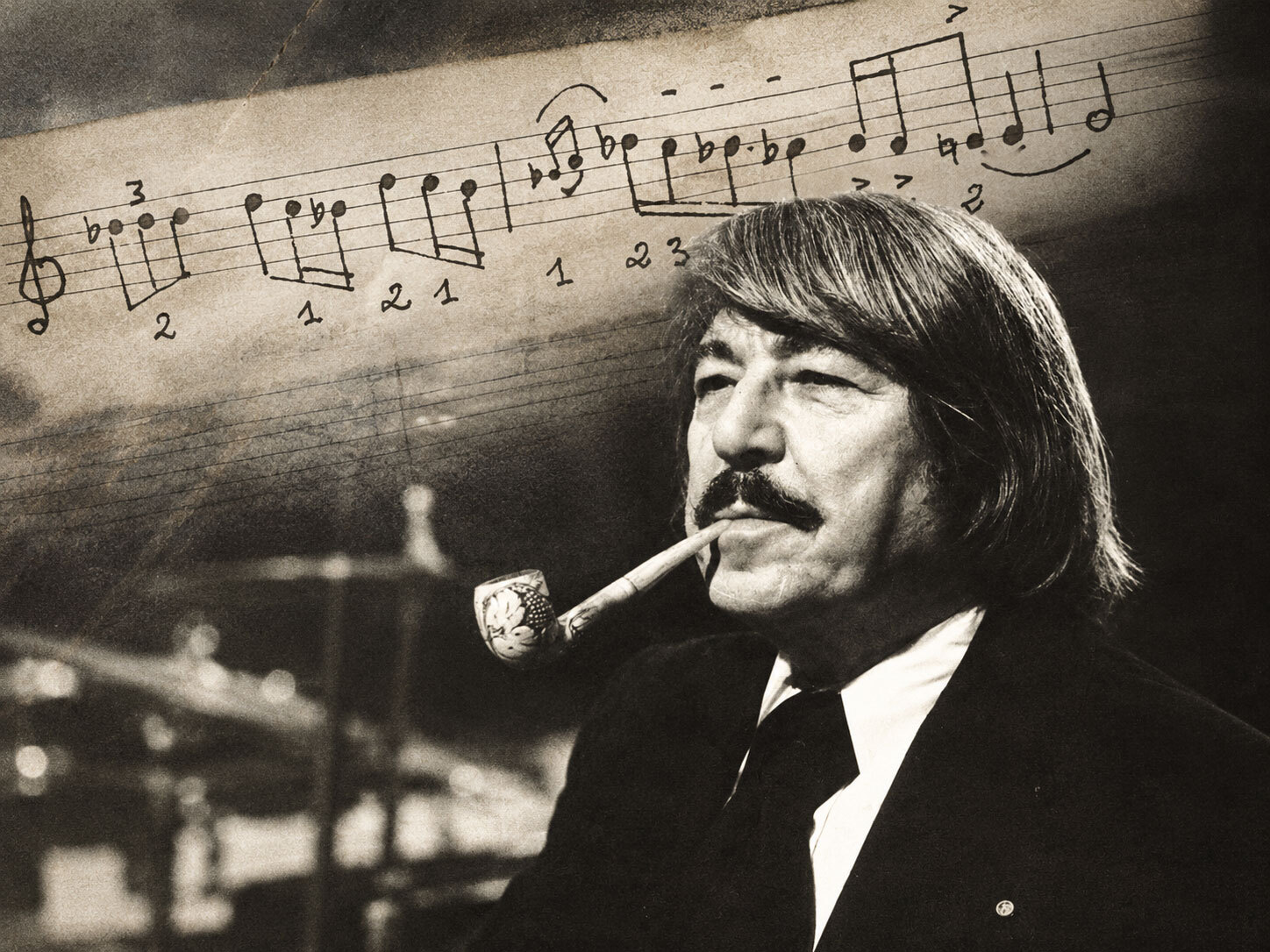
Leo Arnaud-Vauchant
No matter how avant-garde the concepts of Gardell Simons and other virtuosos of the great wind bands (Pryor, Zimmermann, etc.) it was the dance-band trombone players of the twenties and thirties — who had developed similar technical principles — who were to be the most influential. According to Gordon Pulis this new style originates in the fact that in symphonic music solos are few and far between, while in the dance band the trombone can take the centre stage and so developed a solo style. This legato playing, with pure, warm sound (these were the first “crooners”) was to influence George Gershwin, Aaron Copland and Maurice Ravel among others.
Ravel had heard Léo Arnaud-Vauchant and was surprised by the way he played trombone and percussion. He invited him to his house at Montfort-Lamaury. “I played the trombone solo from L’enfant et les sortilèges (1924) and the one from Boléro (1927) before any other trombone player. I played the Boléro without glissando, using only the 1st and 2nd positions for the first half of the solo, then adding the 3rd, 4th, 5th and finally the 6th. When I pointed out to him that he had not written anything for the 7th, he laughed and said, ‘Don’t tell anyone’. The glissandos were probably added by the trombone professor at the Conservatoire in the belief that that made it more jazzy” (letter to the author, 4th February 1974). Léo used two little grace notes without glissando (Ex. 1). The positions he gives have to be corrected for the sake of intonation; C in the 1st position, for example, being the ninth harmonic of the fundamental B♭, is sharp and must be flattened.
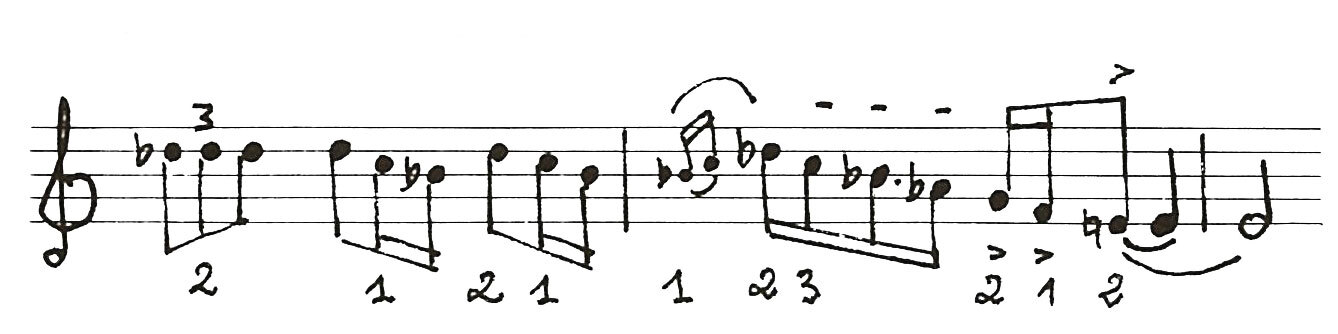
Example 1
Boléro (1927) — Maurice Ravel
According to Leo Arnaud (1975)
In fact Ravel seemed to derive his inspiration less from jazz than from the great dance-band soloists. This produced panic among the “classical” players of the time when the Boléro was on the programme. The situation was the same in the United States.
One of the fascinating stories about Miff was told by Phil Napoleon, who played alongside of Miff with the Original Memphis Five. Arturo Toscanini was rehearsing the NBC Symphony. They were going to give the American première of Maurice Ravel’s ‘Boléro’. There is a very difficult passage for solo trombone and none of the members of the trombone section could play it right. Phil was playing with the symphony at the time. He went down to Nick’s in the village where Miff was playing. Miff came to the next rehearsal and played the part perfectly and immediately showed the first trombonist how to play it. After he did so, he packed up his horn and went back to the village. The story goes that from then on Maestro Toscanini developed a great respect for the jazz musician.
(Peter Spargo, Dixieland Chicago, Mainstream S 6010).
However much of this may be legend, there is certainly a grain of truth common to all these stories. Technically, judging from his 1922 records, Miff Mole was undeniably one of the fist masters of the legato trombone. On the other hand I have to agree with my late friend Glenn Bridges (letter to the author, 5th November 1975) in dating the American premiere of the Boléro around 1928, played by the New York Philharmonic with Mario Falcone as solo trombone. This orchestra, by the way, also conducted by Toscanini, was said to have played the Boléro too slowly (concert at the Paris Opéra, April 1930), which was not to Ravel’s liking¹. The NBC episode took place later (probably in the forties) and is corroborated by the following recollection: “At NBC, whenever we played Ravel’s Boléro, Maestro Toscanini would always say, ‘I want Tommy Dorsey to play the trombone solo in the Boléro’ (Paul Lavalle, interview with Dr. Charles Colin, NYBC for Scholarships, 1975). This does not prove that Dorsey played the work; it does prove Toscanini’s admiration for Dorsey and for a certain conception of the trombone. It is certainly well known that Dorsey played top D beautifully and without apparent effort.
Continue reading
Accede a la edición digital completa.
Brass Bulletin 47, III / 1984 páginas 34–38
Todo el contenido está protegido por derechos de autor © Brass Bulletin 1984–2026