Explore institutional access →

Repertoire

145 articles

No. 76 • 1991 Awaiting digitization

The trombone and chamber music in France

By Raymond Lapie

History Repertoire
Free
No. 20 • 1977 Digitized

General brass catalogue

A special issue format begins: Brass Bulletin 20 introduces the General Brass Catalogue—offering direct access to instruments, makers, and international brass news.
Repertoire
Jean-Baptiste Prin (1669-1742) Member
No. 39 • 1982 Digitized

Jean-Baptiste Prin (1669-1742)

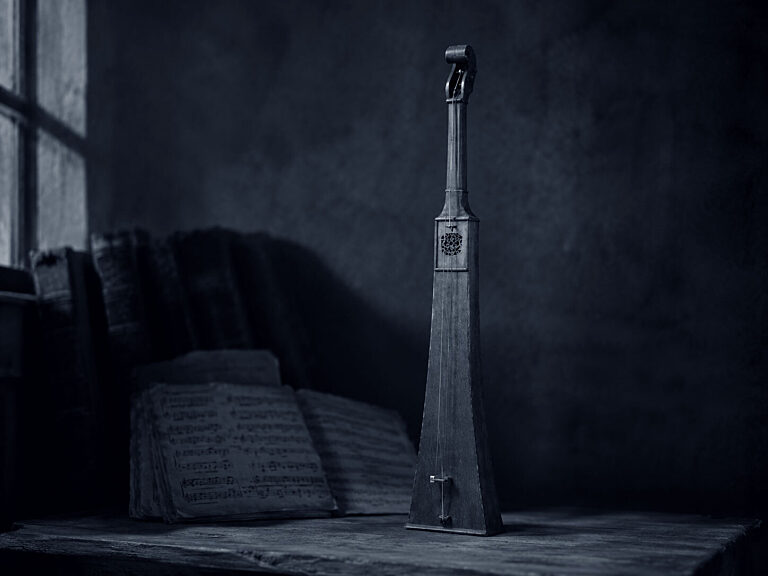
A tromba marine virtuoso

A forgotten string instrument leads to an unexpected treasury of Baroque trumpet music, challenging long-held assumptions about repertoire and performance.

By Albert Hiller

History Repertoire Historical instruments
No. 97 • 1997 Awaiting digitization

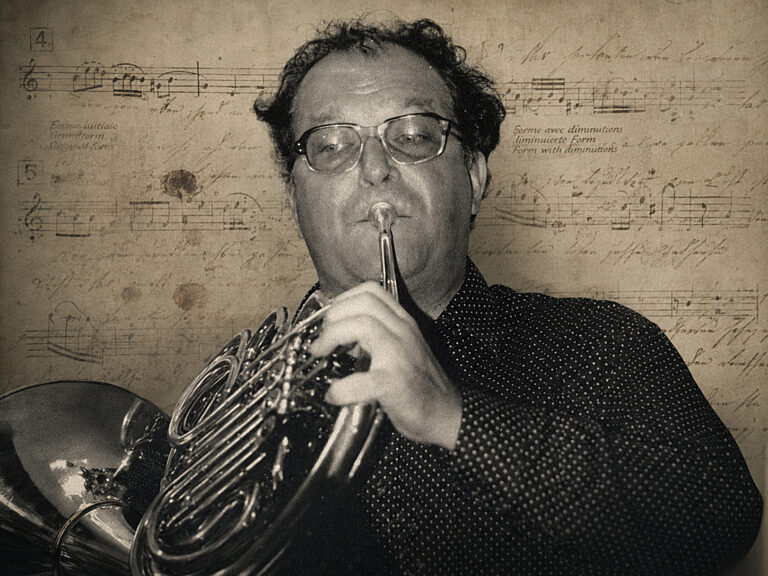
The Art of the Third Horn Player

The unsung hero

By Kerry Turner
Repertoire Ideas
Ornaments in 18th-century Horn Concertos? Member
No. 44 • 1983 Digitized

Part 3

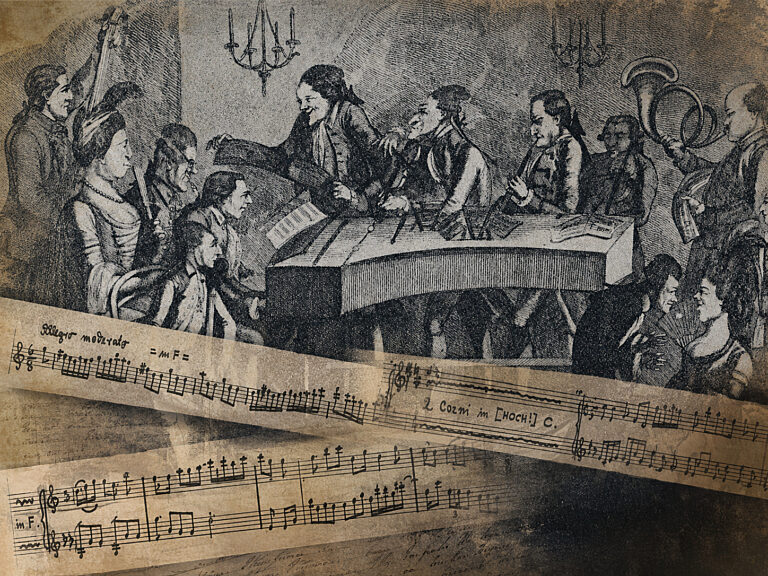
Ornaments in 18th-century Horn Concertos?

Deliberate divisions

Improvisation, articulation and ornament were once inseparable: Peter Damm recovers an 18th-century horn practice later narrowed by increasingly precise notation.

By Peter Damm

History Repertoire Ornaments Improvisation Articulation
No. 67 • 1989 Awaiting digitization

Alexander Arutiunian

Interview

By Jean-Pierre Mathez

Report Encounters Repertoire
No. 76 • 1991 Awaiting digitization

Sir Peter Maxwell Davies

Fire in the music

By Jean-Pierre Mathez

Repertoire Encounters
No. 81 • 1993 Awaiting digitization

Georges Delerue (1925-1992)

One of the most famous French composers

By Jean Douay

Encounters Repertoire
Free
No. 25 • 1979 Digitized

Dreams and wishes

Things I would like to see happen concerning the horn and horn playing

A set of proposals for the future of the horn: Jeffrey Agrell addresses editions, pedagogy, instruments, and repertoire—from Mozart to contemporary practice.

By Jeffrey Agrell

Equipment Repertoire Ideas Contemporary Music Orchestral playing
No. 94 • 1996 Awaiting digitization

Evolution of the trumpet ensembles

By Jean-Pierre Mathez

Repertoire
No. 70 • 1990 Awaiting digitization

Part 4

The influence of Berlioz

on contemporary 19th Century use of brass instruments

By Ernest H. Gross
History Repertoire
The Polyphonic Trombone Free
No. 45 • 1984 Digitized

The Polyphonic Trombone

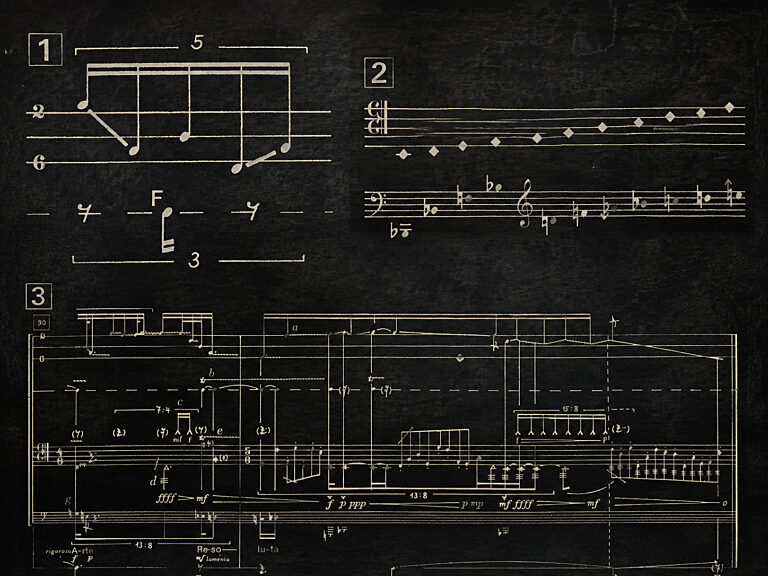
A suggested notation system

When trombone slide, overtones, breath and valves become independent musical voices, conventional notation reaches its limits and a new system becomes necessary.

By Klaus-K. Hübler
Repertoire Technique Contemporary Music
Impossible? Member
No. 10 • 1975 Digitized

Impossible?

Kurt Janetzky challenges the notion of the “impossible” in brass playing, arguing that technical limits evolve and that demanding repertoire—past or present—should never be dismissed as unplayable.

By Kurt Janetzky

Repertoire Technique Interpretation Ideas
No. 74 • 1991 Awaiting digitization

Part 3

The Alto trombone

In the 18th Century Sacred Chamber Music from the Abbeys of Göttweig and Melk, Austria

By J. Richard Raum

History Repertoire
No. 114 • 2001 Awaiting digitization

Part 2

The art of chamber music

By Jean-Pierre Mathez

Technique Repertoire
No. 88 • 1994 Awaiting digitization

The trombone of Gustav Holst (1874-1934)

By Jeremy Dibb, Simon Hogg

History Repertoire
No. 93 • 1996 Awaiting digitization

Discovery of the 'Turmsonaten' written in 1803

By Michael Kircheis
History Repertoire
The trombone in Maurice Ravel's Boléro Free
No. 19 • 1977 Digitized

Part 2

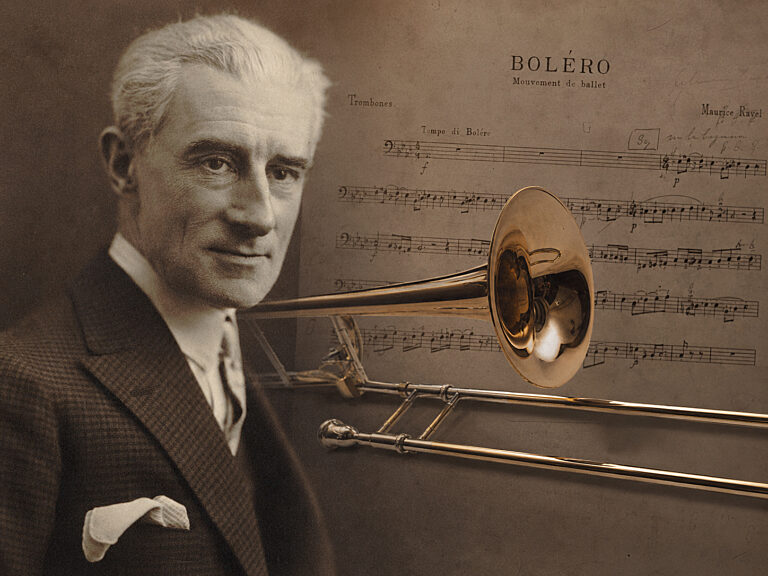
The trombone in Maurice Ravel's Boléro

Boléro as ordeal: Jean Douay reveals stage fright, pressure, and the weight of the final solo—where one moment can elevate or undermine the entire orchestra.

By Jean Douay

Repertoire Orchestral playing Interpretation
I chose to address myself to new music rather than new trumpet Free
No. 5 • 1973 Digitized

I chose to address myself to new music rather than new trumpet

Thomas Stevens argues that progress in trumpet playing depends on better training, repertoire and musical thinking rather than on equipment.

By Thomas Stevens

Repertoire Contemporary Music
Member
No. 9 • 1974 Digitized

Reflections on the horn

Francis Orval reflects on horn playing, discussing tone production, breathing and the influence of French and German traditions on sound and style.

By Francis Orval

Technique Equipment Repertoire Sound Instrument making
Conversation by the fireside Free
No. 7 • 1974 Digitized

Conversation by the fireside

A fireside conversation with Philip Jones, Elgar Howarth and Michael Laird—an intimate exchange on brass playing, ensemble culture and musical thinking.

By Jean-Pierre Mathez

Encounters Repertoire Brass Ensemble Contemporary Music
No. 75 • 1991 Awaiting digitization

1796-1908: the long sleep of the Haydn trumpet concerto...

By Hans-Joachim Krumpfer
History Repertoire
The hunting horn Free
No. 39 • 1982 Digitized

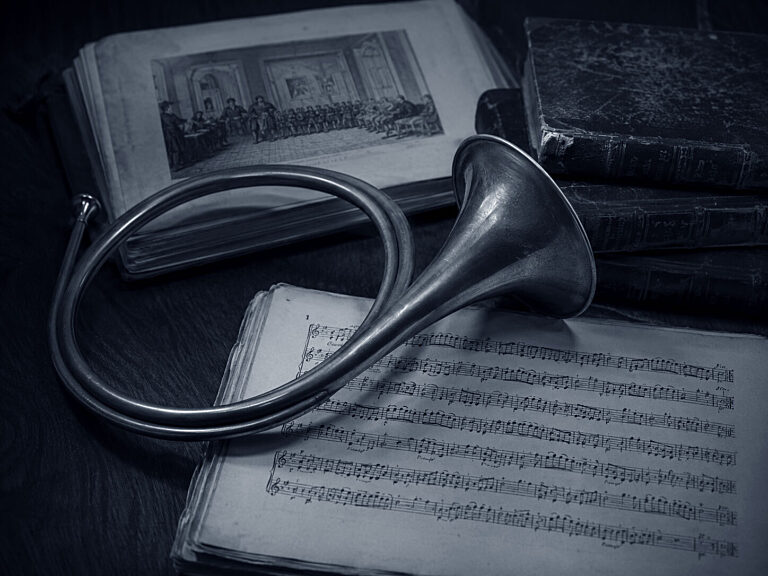
The hunting horn

Long-held beliefs about the French hunting horn are challenged as forgotten playing practices and Baroque traditions reshape its early history and repertoire.

By Jacques Poncet
History Repertoire French school Historical instruments Interpretation
On the question of articulation in the horn concertos by W. A. Mozart Free
No. 22 • 1978 Digitized

On the question of articulation in the horn concertos by W. A. Mozart

How should Mozart really sound? Peter Damm questions traditional editions and reveals how articulation—often missing—must be rebuilt through style, listening, and musical judgment.

By Peter Damm

Repertoire Technique Articulation Interpretation
Loading…

Questions & Answers

How the Digital Edition works

What does the Digital Edition include?

The Digital Edition brings together the articles already digitized as searchable online texts—not simply as scans or PDF files—along with their original illustrations, notes, authorship, issue information, and available translations. Related-article suggestions currently include only this digitized material.

Are the digital articles identical to the originals?

We preserve the original text, language, illustrations, captions, footnotes, and editorial context as faithfully as possible. The presentation is adapted for comfortable online reading, and obvious transcription or scanning errors may be corrected. The substance and character of the published article remain unchanged.

Which languages are available?

Brass Bulletin was published in English, French, and German throughout its history. Italian and Spanish translations were added from issue No. 60 onward.

On the Italian and Spanish sites, articles from issues 1–59 are therefore shown in English by default.

How often are new articles added?

New articles are added almost daily, with approximately one complete issue digitized each week. The pace may vary depending on the preparation, image work, and editorial checking required.

Why aren’t all articles available digitally?

The complete Brass Bulletin collection contains 1,246 articles published between 1971 and 2003. The full index is already available online, allowing readers to discover every article in the collection, including those whose complete text has not yet been digitized.

Digitization began in February 2026. Each article is carefully prepared for online reading, checked, and connected to its issue, authors, subjects, and illustrations. At the current pace of digitization, the complete collection is expected to be available online by February 2028.

Why do some references mention articles that are not available yet?

References in the original articles are preserved even when the material they point to has not yet been digitized. This keeps the historical and editorial record intact. As more issues are added to the Digital Edition, an increasing number of these references will lead to articles that can be read online.

Can I suggest an article or report a transcription error?

Yes. If there is an article you would particularly like to see digitized, or if you notice a possible transcription error or missing detail, please contact us. Reader feedback helps us improve the Digital Edition and prioritize useful connections within the archive.

How can I support Brass Bulletin?

Your support helps fund the preparation, verification, and online publication of the complete collection.

Subscribe to the Digital Edition

Prefer to support us without subscribing?

Make a donation

How is the digitization progressing?

We’re gradually making the Brass Bulletin available online, article by article. You can read newly digitized articles as soon as they’re ready, even before an entire issue is complete.

Visit our Digitization Roadmap to browse recent additions and see estimated availability for upcoming issues. These estimates follow our recent pace and may change.

Search Brass Bulletin.