3 min. read
This article is for subscribers.
Hakan Hardenberger
The conquest of the future
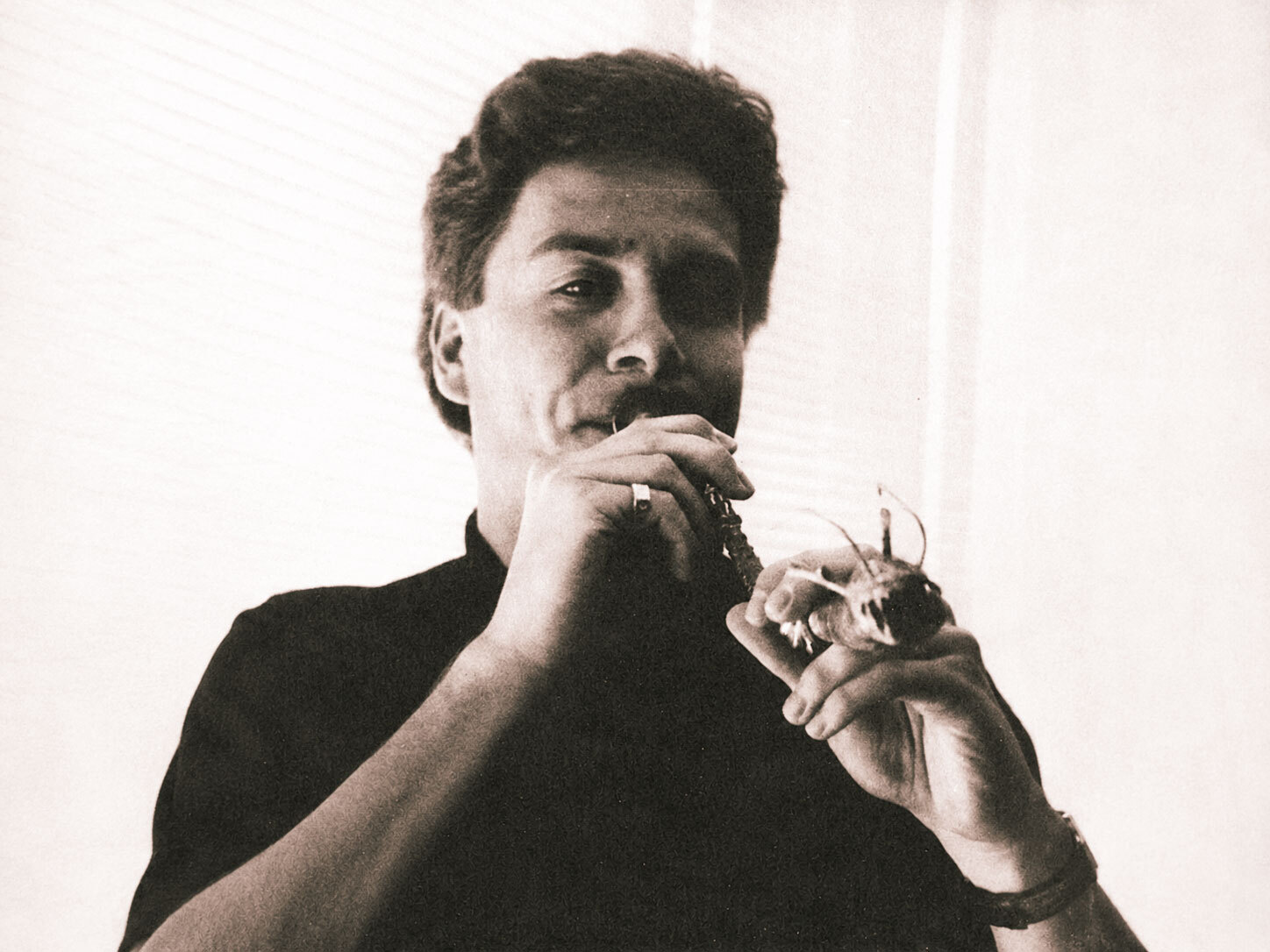
Hakan Hardenberger
On 1st May 1987 the Swedish trumpeter Hakan Hardenberger gave the first performance of a major work by the British composer Harrison Birtwhistle². Written for solo trumpet, strings and vibraphone and commissioned by the famous patron of the arts Paul Sacher³ (who conducted the Collegium Musicum in the first performance), the work is written in a new kind of language and may well figure among the significant solo works for brass written this century.
History of a first performance
There are not many important and interesting contemporary works for trumpet and orchestra. It is cheering, therefore, to announce and welcome the (successful) triple creative initiative of a patron of the arts, a composer and a soloist.
BRASS BULLETIN: Hakan Hardenberger, how did this initiative come to be?
Hakan Hardenberger: Paul Sacher wanted to commission a work from Harrison Birtwhistle, the British composer whose reputation grows with every new work. I didn’t know the composer personally but we had in Elgar Howarth a mutual friend who was to be the catalyst, playing my last record to Birtwhistle and suggesting he should write something for me. Birtwhistle was enchanted by the suggestion and spoke to Paul Sacher about it. Sacher was not keen. ‘There will be a solo trumpet in my piece, or you won’t have a piece at all,’ insisted the composer.
B.B: What can you tell us about the piece?
H.H.: It is a single-movement work in which the trumpet plays almost throughout. The whole score is extremely physical. I think he was more interested in displaying the deep character and the acoustic reality of the instrument rather than its historico-military heritage. Rather like Jolivet, he develops a desire to bring out the character of the instrument. The composer himself says his score would make no sense if it could be played by a flute! There are obvious influences, of course - Stravinsky, Messiaen etc.
The orchestral part is very important, far more than a mere accompaniment.
B.B.: How must a new work of this importance be prepared so that its first performance takes place in ideal circumstances?
This article is for subscribers.
CHF 5.00 per month · Cancel auto-renewal anytime.
Enjoy unlimited access to all digitized Brass Bulletin articles.
Brass Bulletin 61, I / 1988 pages 76–79
All content is protected by copyright © Brass Bulletin 1988–2026