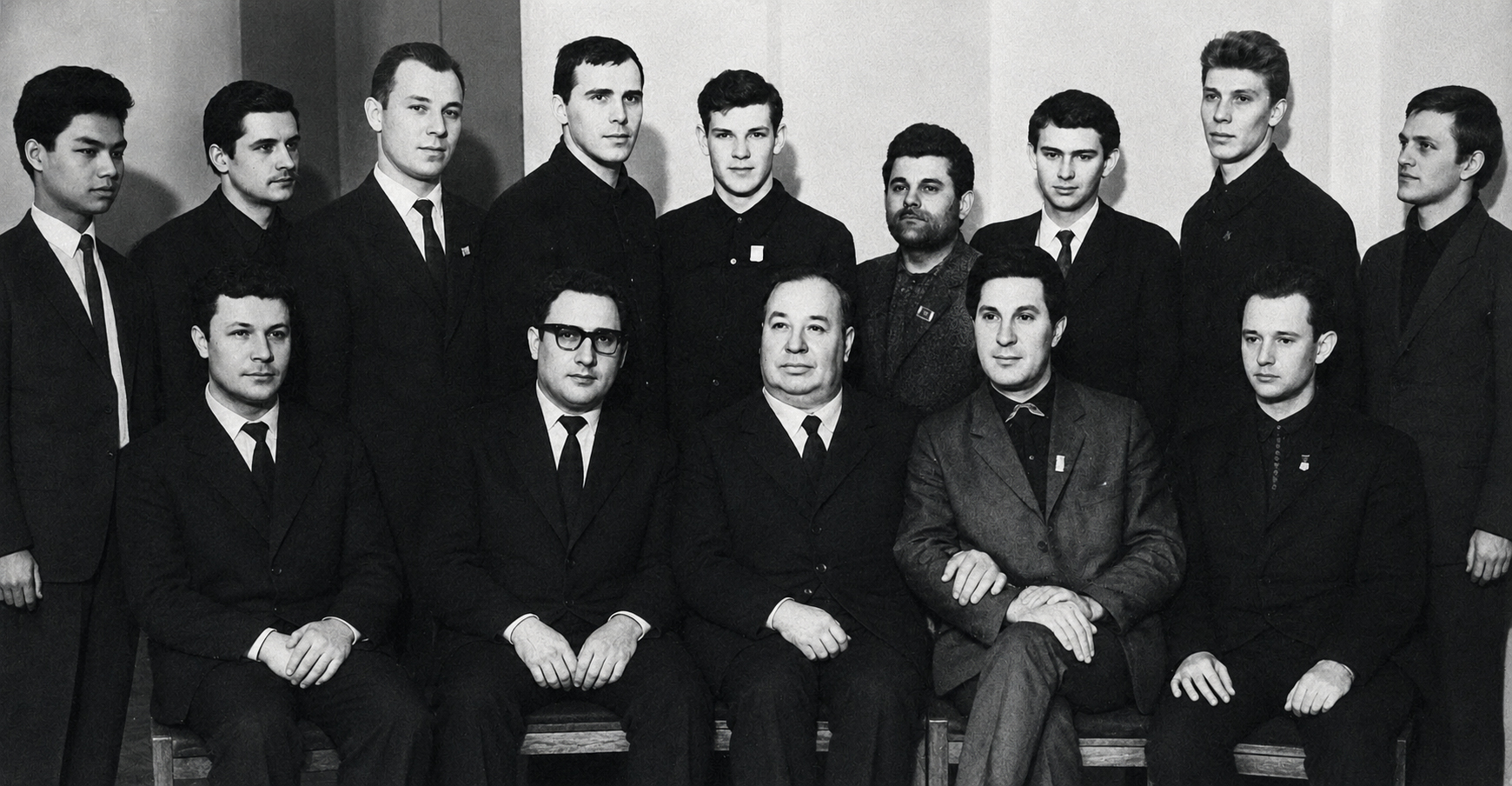
Yeryomin, Pavlov, Usov and members of their class at the Moscow Conservatoire
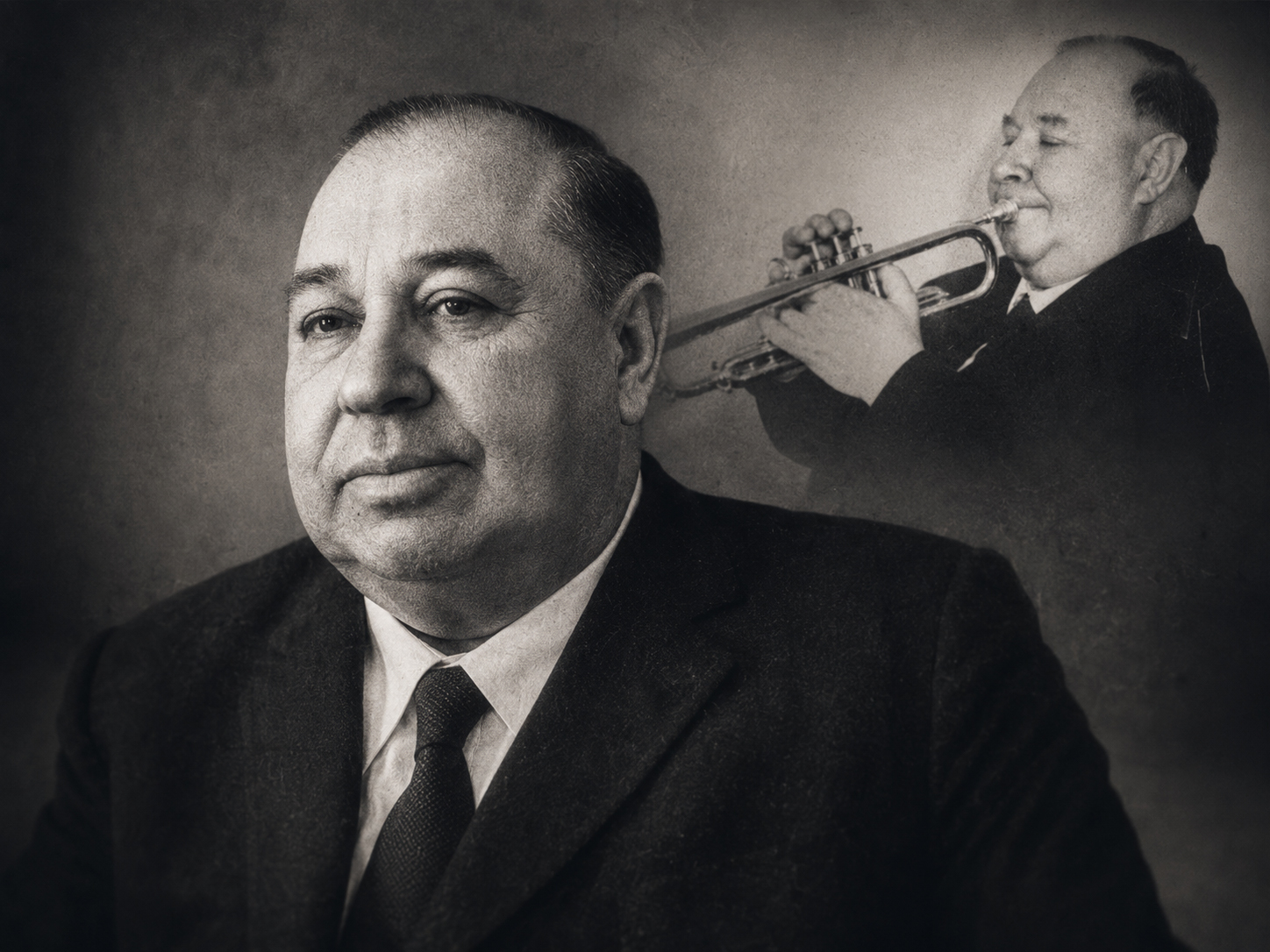
Sergey Nikolaevich’s artistic gifts were used to their full effect in the orchestra. We find him playing in Persimfans (the First Symphony Orchestra, which played without a conductor). He was the permanent first trumpet of the student orchestra whose young members formed the basis for Sofil (the Soviet Philharmonic) in 1928; he stayed here until 1936. In 1929 he became first trumpet at the Bolshoi Theatre Orchestra, where he remained until 1937.
Yeryomin has shown his great artistry and inspiration in performances of the most difficult trumpet and cornet parts in classical and contemporary works. When Otto Klemperer was conducting the Sofil orchestra, for example, his trumpet playing in Petrushka and Salomé was particularly outstanding. Yeryomin played his favourite work, the “Poem of Ecstasy” by Scriabin, many times under the direction of Golovanov, A. Melik-Pashaev, V. Nebol’sin, L. Steinberg and Albert Coates.
Sergey Nikolaevich could always find the expressive meaning, even in the shortest trumpet entry, not to mention the big solos, which were always distinguished by the completeness and originality of their interpretation. The “cock-crow” at the very beginning of the “Golden Cockerel” by Rimsky-Korsakov sounded so impressive when played by Yeryomin that his friends used jokingly to call him “our golden cockerel”.
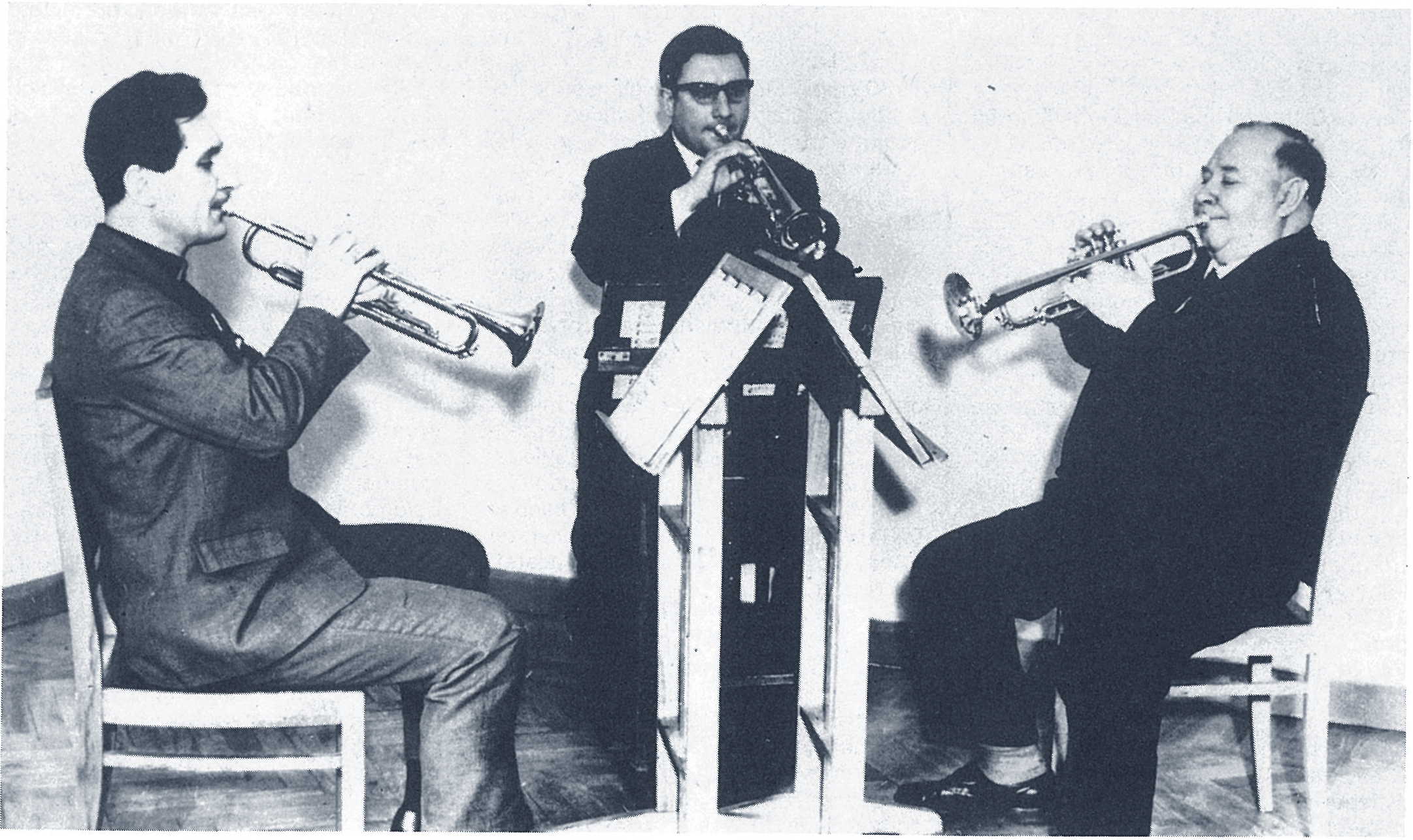
Trio: S. Yeryomin, I. Pavlov (1st trumpet, Bolshoi Theatre), Y. Usov (professor, Moscow Conservatoire)
A deep sensitivity for the style of the work, a frank and truthful communication of the composer’s intention and a complete avoidance of mannerism and over-sweetness — there are the distinguishing characteristics of Yeryomin’s creative personality.
Despite his heavy workload in the orchestra Sergey Nikolaevich often appeared as a soloist. An important point in his musical career was the Second All-Union Musician’s Competition held in Leningrad in 1935, the first in which wind players participated. Yeryomin presented a varied and interesting programme and was elected the winner. Newspaper and magazine critics have repeatedly remarked on the wide stylistic range of his interpretations: “He understands the monumental style of the forms of Beethoven and Handel, the delicate, Romantically coloured landscape of the Chopin preludes and the brilliant fireworks of Gödicke’s study.”
Yeryomin started teaching at the Conservatoire in 1930, becoming dotsent in 1935 and professor in 1939. His success as a performer formed the basis of his teaching method which was extremely successful in both its content and its progressive form and played an important part in the development of the Soviet trumpet school. It is no disparagement of the creative individuality of his many students to say that he tried to inculcate into them the best features of his own performing style. He had the students develop a rich, clear, powerful sound, developed technique and a fluent mastery of the various methods of sound production and of slurring between natural harmonics and payed special attention to scales and studies, but all this was used in the attainment of musical goals. Besides the classical and Soviet compositions which formed the basis of his teaching method Yeryomin tried as far as possible to use the best modern foreign works for trumpet.
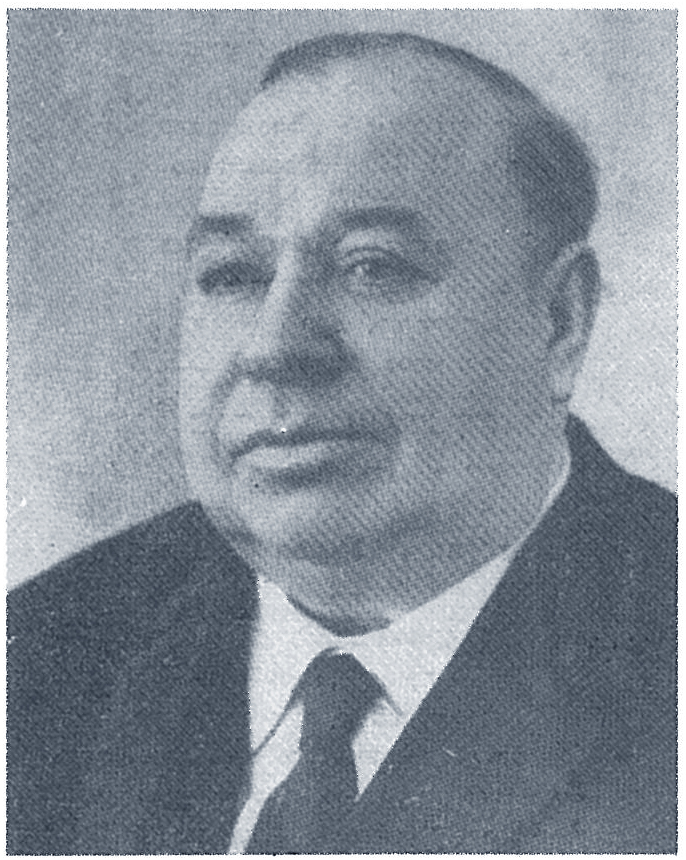
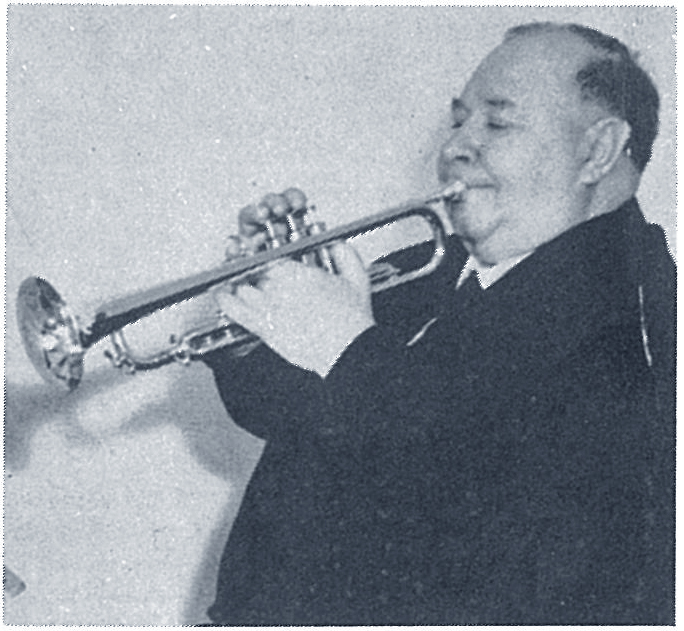
Professor Sergey Nikolaevich Yeryomin
Yeryomin compiled some collections — now out of print — of pieces from the teaching repertoire, four volumes of “Orchestral Excerpts for Trumpet and Cornet” and two volumes of “Selected Studies for Trumpet”, as well as producing many transcriptions and arrangements.
Of his well known pupils the following should be mentioned: L. Volodin, I. Pavlov, A. Maksimenko, V. Goncharov, Y. Usov, N. Volkov, S. Kirokosyan and others.
Professor Georgiy Orvid has written, “The name Yeryomin opens a remarkable page in the story of the foundation and development of the Soviet trumpet school, founded by his teacher Tabakov. It was Sergey Nikolaevich who, as the star pupil, took from his teacher’s hands the banner of first trumpeter and teacher of the Moscow Conservatoire, the cradle of the Soviet trumpet school.”