Explore institutional access Explore institutional access

9 min. read

Maurice André

Biography
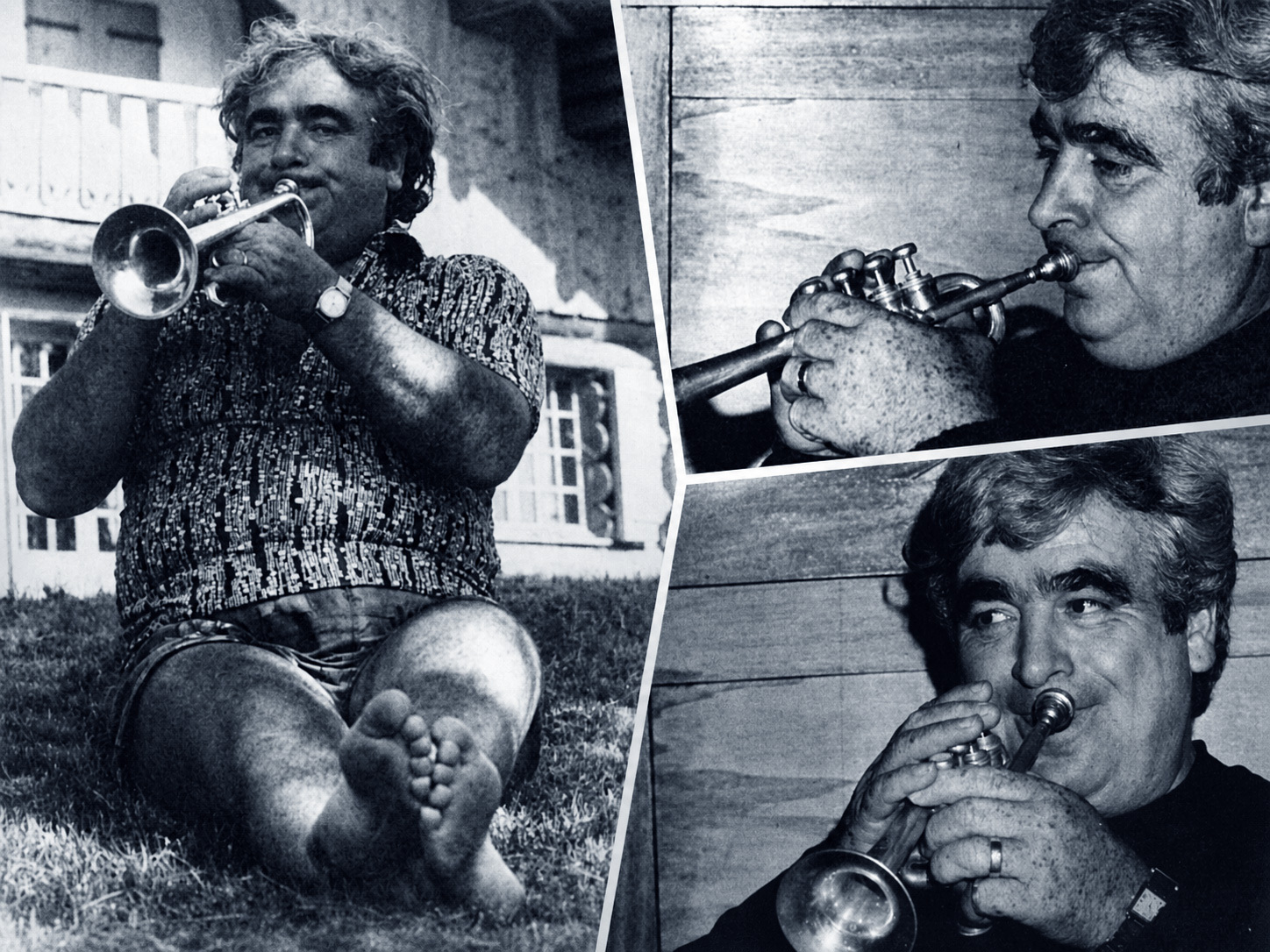
Part 3 – End

By Jean-Pierre Mathez

Maurice André reflects on maturity—balancing performance, recordings and teaching, refining his approach to instruments and audience, and preparing for the limits of a virtuoso career.
Maurice André

J.-P. M.: You spoke of the importance of having a balanced private life.
M. A.: Oh yes, I think my private life has turned out well too. I am lucky enough to have a wife who looks after all my business (because I am a terrible businessman) which is very handy, and then our kids are healthy. For example I've been doing wood sculpture for some time and I don't really know why I'm doing it. Perhaps I get that from my Cévennes family. Do you know the Cévennes? It's in the south of France, the people there are thoughtful, just the opposite of the Côte d'Azur people, who prefer to enjoy themselves! [laughs] I know I won't always go on blowing like I am now. I quite expect to go downhill — that can happen pretty quickly with the trumpet — but I'm getting ready for it. I'm giving more and more time to my pupils, to sculpture and painting. That's certainly inherited from the famous Cévennes thoughtfulness.

J.-P. M.: Are you getting ready to make a success of the second half of your life?
M. A.: One day I met a pal from the south who had studied with my uncle Jean and who admired him a lot because of his kindness. (All his students, who loved him, called him "Papa André" [sic]). He said, "How’s your uncle Jean?" "Very well", I said. "Is he enjoying his old age?" I said, "He loves it [laughs]. He's got his garden, his fishing, the lot. His job, his teaching is all in the past." Well, I'd like to enjoy my old age too.

J.-P. M.: Let's look at some figures. Have you any idea how many concerts you have given to date?

He continues with reflections on ageing, workload and recording activity, then discusses instrumental adaptation, audience contact and touring anecdotes that further define his approach to playing.

Continue reading

Access the full Digital Edition.

Brass Bulletin 26, II / 1979 pages 35–44

All content is protected by copyright © Brass Bulletin 1979–2026

Share this article

Facebook LinkedIn
Loading…

Questions & Answers

How the Digital Edition works

What does the Digital Edition include?

The Digital Edition brings together the articles already digitized as searchable online texts—not simply as scans or PDF files—along with their original illustrations, notes, authorship, issue information, and available translations. Related-article suggestions currently include only this digitized material.

Are the digital articles identical to the originals?

We preserve the original text, language, illustrations, captions, footnotes, and editorial context as faithfully as possible. The presentation is adapted for comfortable online reading, and obvious transcription or scanning errors may be corrected. The substance and character of the published article remain unchanged.

Which languages are available?

Brass Bulletin was published in English, French, and German throughout its history. Italian and Spanish translations were added from issue No. 60 onward.

On the Italian and Spanish sites, articles from issues 1–59 are therefore shown in English by default.

How often are new articles added?

New articles are added almost daily, with approximately one complete issue digitized each week. The pace may vary depending on the preparation, image work, and editorial checking required.

Why aren’t all articles available digitally?

The complete Brass Bulletin collection contains 1,246 articles published between 1971 and 2003. The full index is already available online, allowing readers to discover every article in the collection, including those whose complete text has not yet been digitized.

Digitization began in February 2026. Each article is carefully prepared for online reading, checked, and connected to its issue, authors, subjects, and illustrations. At the current pace of digitization, the complete collection is expected to be available online by February 2028.

Why do some references mention articles that are not available yet?

References in the original articles are preserved even when the material they point to has not yet been digitized. This keeps the historical and editorial record intact. As more issues are added to the Digital Edition, an increasing number of these references will lead to articles that can be read online.

Can I suggest an article or report a transcription error?

Yes. If there is an article you would particularly like to see digitized, or if you notice a possible transcription error or missing detail, please contact us. Reader feedback helps us improve the Digital Edition and prioritize useful connections within the archive.

How can I support Brass Bulletin?

Your support helps fund the preparation, verification, and online publication of the complete collection.

Subscribe to the Digital Edition

Prefer to support us without subscribing?

Make a donation

Search Brass Bulletin.