Explore institutional access Explore institutional access

2 min. read

Mario Guarneri

Portrait in brief

Mario Guarneri

Mario Guarneri

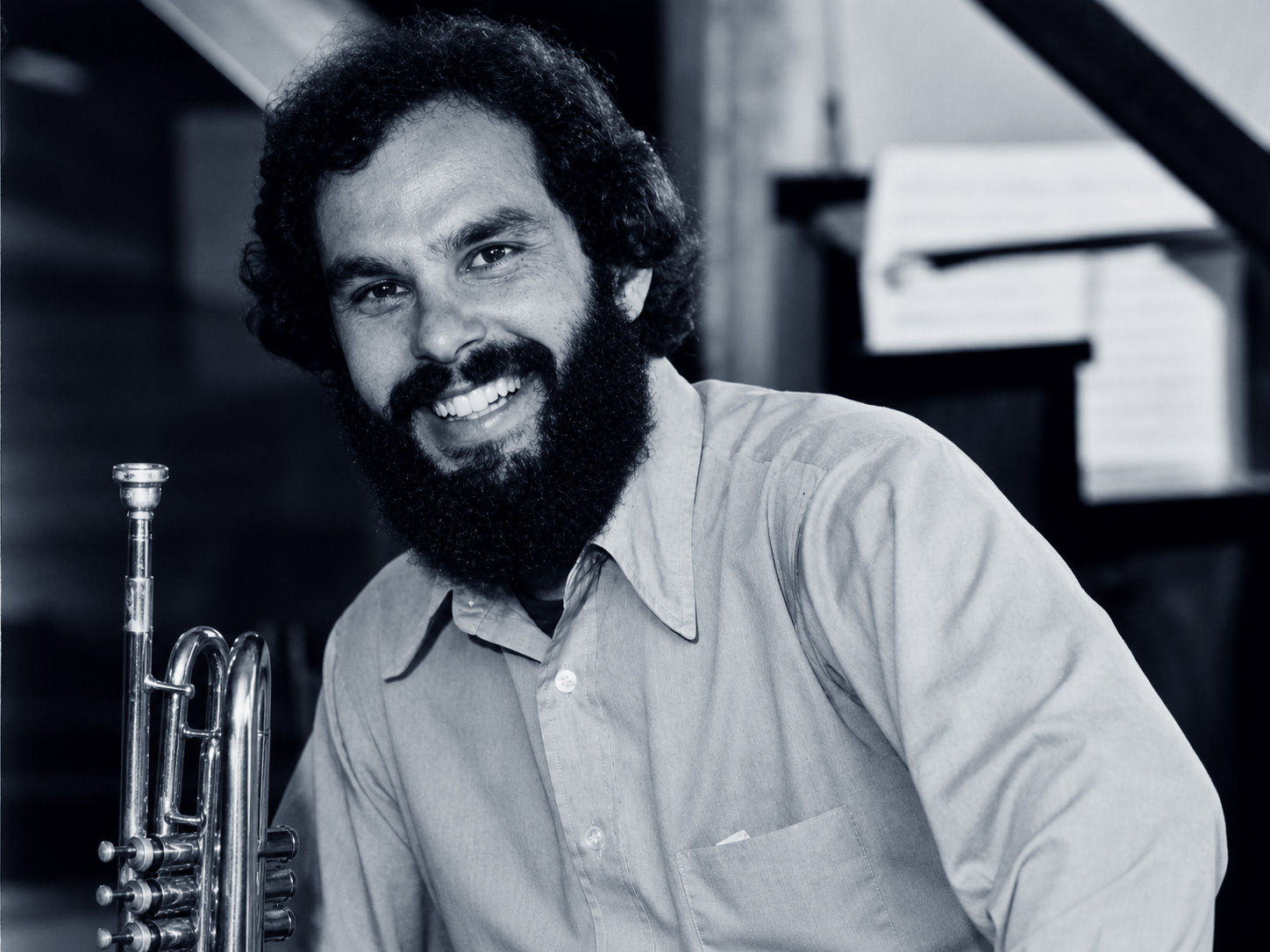
Mario Guarneri was born and raised in the San Francisco Bay area. He studied trumpet from the age of eight with Eddie Smith, Hans Adelman and Charles Budd. Musical experience included work with the San Francisco Opera, the San Francisco Symphony, Barnum and Bailey Circus and "two unforgettable nights" with Louis Armstrong and his Band.

Mario Guarneri attended the University of Southern California where he studied with Lester Remsen and earned a B. M. degree and Teaching Credential. He then went to New York, studied with William Vacchiano and received a Master's Degree from the Juilliard School of Music. While in New York, he worked with the New York Philharmonic, the American Ballet Theatre, and the Radio City Music Hall Orchestra.

... and I will play jazz, as soon as I find the time!

He has been with the Los Angeles Philharmonic Orchestra since 1967, and has worked as trumpet instructor and brass coordinator at the California Institute of the Arts since 1970. Other activities while in Los Angeles have included performances and recordings with the Los Angeles Brass Quintet (Crystal Records S 102, S 602 and S 821) and co-founder of the Los Angeles Group for Contemporary Music. He has also studied in Los Angeles with James Stamp, Vincent DeRosa and Roy Poper.

Concerto for trumpet, bassoon and strings by Paul Hindemith (Crystal S 352): This is a very recent record which has just appeared and is a very good interpretation of the piece. Mario Guarneri is nowadays one of the most interesting American trumpeters on the one hand due to the diversity of his talent and on the other due to his interest in the present situation of musicians. He is engaged for example actively in a free social instruction centre, enabling young musicians coming from the poor minorities to have access to studies at a high level. Thomas Stevens says of him with pleasure that he has the quickest fingers he knows (let us be grateful that he puts this gift at the service of the trumpet and not to the trigger of a gun...).

Mario Guarneri is full of interesting projects. He is working on a new record amongst other things.

Brass Bulletin 26, II / 1979 page 104

All content is protected by copyright © Brass Bulletin 1979–2026

Share this article

Facebook LinkedIn
Loading…

Questions & Answers

How the Digital Edition works

What does the Digital Edition include?

The Digital Edition brings together the articles already digitized as searchable online texts—not simply as scans or PDF files—along with their original illustrations, notes, authorship, issue information, and available translations. Related-article suggestions currently include only this digitized material.

Are the digital articles identical to the originals?

We preserve the original text, language, illustrations, captions, footnotes, and editorial context as faithfully as possible. The presentation is adapted for comfortable online reading, and obvious transcription or scanning errors may be corrected. The substance and character of the published article remain unchanged.

Which languages are available?

Brass Bulletin was published in English, French, and German throughout its history. Italian and Spanish translations were added from issue No. 60 onward.

On the Italian and Spanish sites, articles from issues 1–59 are therefore shown in English by default.

How often are new articles added?

New articles are added almost daily, with approximately one complete issue digitized each week. The pace may vary depending on the preparation, image work, and editorial checking required.

Why aren’t all articles available digitally?

The complete Brass Bulletin collection contains 1,246 articles published between 1971 and 2003. The full index is already available online, allowing readers to discover every article in the collection, including those whose complete text has not yet been digitized.

Digitization began in February 2026. Each article is carefully prepared for online reading, checked, and connected to its issue, authors, subjects, and illustrations. At the current pace of digitization, the complete collection is expected to be available online by February 2028.

Why do some references mention articles that are not available yet?

References in the original articles are preserved even when the material they point to has not yet been digitized. This keeps the historical and editorial record intact. As more issues are added to the Digital Edition, an increasing number of these references will lead to articles that can be read online.

Can I suggest an article or report a transcription error?

Yes. If there is an article you would particularly like to see digitized, or if you notice a possible transcription error or missing detail, please contact us. Reader feedback helps us improve the Digital Edition and prioritize useful connections within the archive.

How can I support Brass Bulletin?

Your support helps fund the preparation, verification, and online publication of the complete collection.

Subscribe to the Digital Edition

Prefer to support us without subscribing?

Make a donation

Search Brass Bulletin.