Explore institutional access →

2 min. read

The Newcomer

The Newcomer

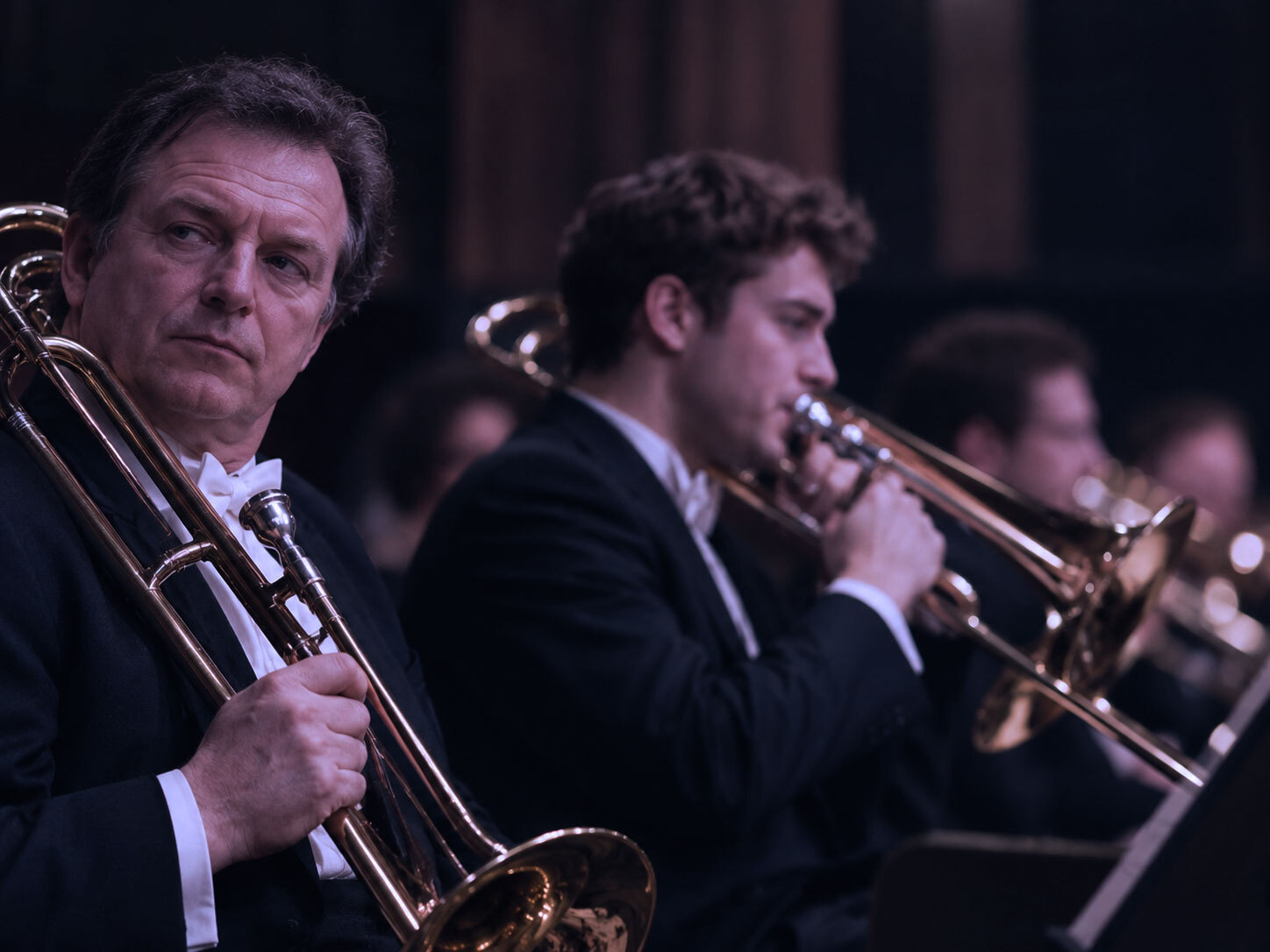
Over a period of 25 years Herbert had made his position in the orchestra and in the music college secure. Where the trombone was concerned he was the unchallenged expert in the large German-speaking city whose symphony orchestra was one of the country's cultural treasures.

But things had not been easy for Herbert. The war had interrupted his studies and it was not until 1949 that he was able to perfect his technique at music college. The post-war period was hard. People had to learn to get by. Having lost his best years, he had to work hard to acquire a solid technique. He did paid work wherever he could get it. Germany was trying to recover her cultural appetite and orchestras were being formed without any social or financial foundations. The German musicians were few, the foreigners not yet drawn to what was to become the German economic and cultural miracle. It was easy for Herbert to get a job in the renowned symphony orchestra which was then being reconstituted. His section-mates were mostly old musicians who had returned to the work or others less shrewd and less gifted than he. He was the unchallenged solo trombone in his section, respected by the other members of the orchestra, by the permanent conductor (who was a pain in the neck to many of the other principals) and by guest conductors. He had been offered the job in the music college — that went without saying — and in 25 years he had probably trained a hundred or more students.

Apart from the Ravel "Boléro" and two or three other repertoire pieces with perilous passages he approached his work with serenity and calmness and with a pride which many of his colleagues envied him.

In 1983 Walter, his faithful second trombone, retired. This departure troubled Herbert deeply. His other three colleagues were nice but crazy, settled in their beery and musico-bourgeois ways. They did not play very well but that did not worry them. Walter made up for all that; he was faithful, devoted and reliable.

As for Herbert, he calculated that he had six years to go before retirement and he wondered anxiously who would be sitting beside him during these last years.

The auditions were held in June. There were 58 applicants from 17 countries (in 1951, when he had auditioned, there had been four!). He was struck by these young players' skill, virtuosity and amazing standard.

To decide between the two short-listed candidates (both impeccable!) the organisers asked Herbert to give them some orchestral excerpts to sight-read. He walked uneasily on to the platform and put the first part on the music stand. It was read voraciously, straight through, without difficulty.

Not bad for a second's job, he thought. What are these two doing here? They're too good. They would only have to apply for a first job, somewhere else.

Well, in the "Boléro" the Englishman missed two notes and the American none — he was selected.

Herbert went home more tired than if he had been playing. He observed his daily route and his town's familiar buildings with an undefinable uneasiness in the back of his mind.

At 9.30 on 15th September he went to the first rehearsal with his new second. He felt old, and plagued by an unaccustomed attack of nervousness. When he arrived, his colleagues watched him in a way that looked defiant.

"He's in his place already", Karl tipped him off.

Herbert arrived at his seat and, gripping his instrument tightly in one hand, offered the other to Ronald.

"Guten Tag, Kollege. Na wie geht's?"

"Hi, Herb!"

They shook hands but Herbert's eyes were riveted on the new second's stand: his first part was on it. Herbert took it and put it on his own stand. He thought of Walter, his friend.

Notes

¹ I have written a series of "Little stories from brass life" with the aim of conveying, through an anecdote, those intense moments which every brass player experiences at one time or another. I have drawn liberally on the views and confidences of many friends and colleagues as well as on my own experiences. Clearly, however, the accounts are fictitious.

Brass Bulletin 55, III / 1986 pages 23–24

All content is protected by copyright © Brass Bulletin 1986–2026

Share this article

Facebook LinkedIn
Loading…

Questions & Answers

How the Digital Edition works

What does the Digital Edition include?

The Digital Edition brings together the articles already digitized as searchable online texts—not simply as scans or PDF files—along with their original illustrations, notes, authorship, issue information, and available translations. Related-article suggestions currently include only this digitized material.

Are the digital articles identical to the originals?

We preserve the original text, language, illustrations, captions, footnotes, and editorial context as faithfully as possible. The presentation is adapted for comfortable online reading, and obvious transcription or scanning errors may be corrected. The substance and character of the published article remain unchanged.

Which languages are available?

Brass Bulletin was published in English, French, and German throughout its history. Italian and Spanish translations were added from issue No. 60 onward.

On the Italian and Spanish sites, articles from issues 1–59 are therefore shown in English by default.

How often are new articles added?

New articles are added almost daily, with approximately one complete issue digitized each week. The pace may vary depending on the preparation, image work, and editorial checking required.

Why aren’t all articles available digitally?

The complete Brass Bulletin collection contains 1,246 articles published between 1971 and 2003. The full index is already available online, allowing readers to discover every article in the collection, including those whose complete text has not yet been digitized.

Digitization began in February 2026. Each article is carefully prepared for online reading, checked, and connected to its issue, authors, subjects, and illustrations. At the current pace of digitization, the complete collection is expected to be available online by February 2028.

Why do some references mention articles that are not available yet?

References in the original articles are preserved even when the material they point to has not yet been digitized. This keeps the historical and editorial record intact. As more issues are added to the Digital Edition, an increasing number of these references will lead to articles that can be read online.

Can I suggest an article or report a transcription error?

Yes. If there is an article you would particularly like to see digitized, or if you notice a possible transcription error or missing detail, please contact us. Reader feedback helps us improve the Digital Edition and prioritize useful connections within the archive.

How can I support Brass Bulletin?

Your support helps fund the preparation, verification, and online publication of the complete collection.

Subscribe to the Digital Edition

Prefer to support us without subscribing?

Make a donation

How is the digitization progressing?

We’re gradually making the Brass Bulletin available online, article by article. You can read newly digitized articles as soon as they’re ready, even before an entire issue is complete.

Visit our Digitization Roadmap to browse recent additions and see estimated availability for upcoming issues. These estimates follow our recent pace and may change.

Search Brass Bulletin.