Ofrezca Brass Bulletin en su universidad, conservatorio o biblioteca Descubra el acceso institucional

2 min de lectura

The Newcomer

The Newcomer

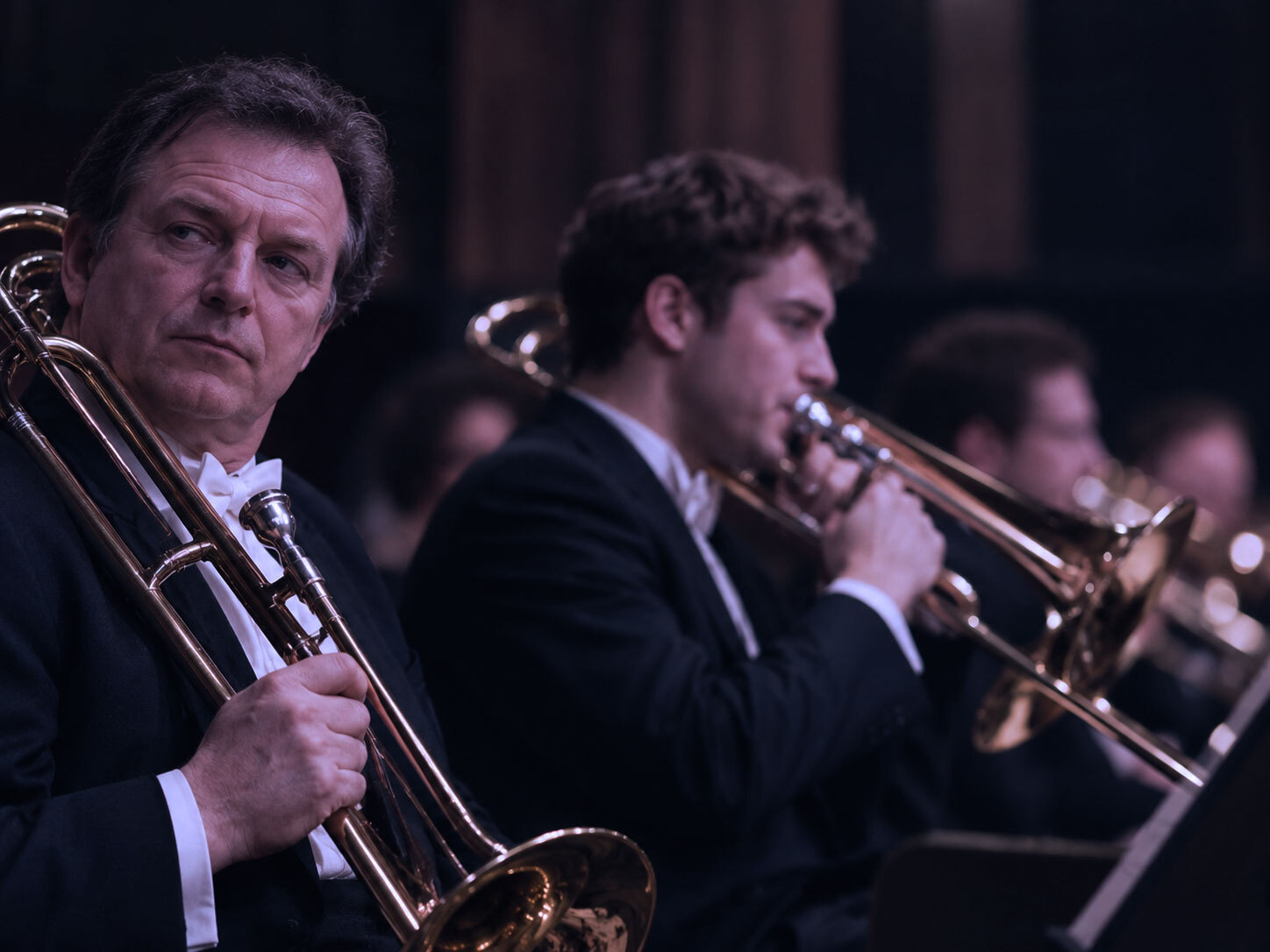
Over a period of 25 years Herbert had made his position in the orchestra and in the music college secure. Where the trombone was concerned he was the unchallenged expert in the large German-speaking city whose symphony orchestra was one of the country's cultural treasures.

But things had not been easy for Herbert. The war had interrupted his studies and it was not until 1949 that he was able to perfect his technique at music college. The post-war period was hard. People had to learn to get by. Having lost his best years, he had to work hard to acquire a solid technique. He did paid work wherever he could get it. Germany was trying to recover her cultural appetite and orchestras were being formed without any social or financial foundations. The German musicians were few, the foreigners not yet drawn to what was to become the German economic and cultural miracle. It was easy for Herbert to get a job in the renowned symphony orchestra which was then being reconstituted. His section-mates were mostly old musicians who had returned to the work or others less shrewd and less gifted than he. He was the unchallenged solo trombone in his section, respected by the other members of the orchestra, by the permanent conductor (who was a pain in the neck to many of the other principals) and by guest conductors. He had been offered the job in the music college — that went without saying — and in 25 years he had probably trained a hundred or more students.

Apart from the Ravel "Boléro" and two or three other repertoire pieces with perilous passages he approached his work with serenity and calmness and with a pride which many of his colleagues envied him.

In 1983 Walter, his faithful second trombone, retired. This departure troubled Herbert deeply. His other three colleagues were nice but crazy, settled in their beery and musico-bourgeois ways. They did not play very well but that did not worry them. Walter made up for all that; he was faithful, devoted and reliable.

As for Herbert, he calculated that he had six years to go before retirement and he wondered anxiously who would be sitting beside him during these last years.

The auditions were held in June. There were 58 applicants from 17 countries (in 1951, when he had auditioned, there had been four!). He was struck by these young players' skill, virtuosity and amazing standard.

To decide between the two short-listed candidates (both impeccable!) the organisers asked Herbert to give them some orchestral excerpts to sight-read. He walked uneasily on to the platform and put the first part on the music stand. It was read voraciously, straight through, without difficulty.

Not bad for a second's job, he thought. What are these two doing here? They're too good. They would only have to apply for a first job, somewhere else.

Well, in the "Boléro" the Englishman missed two notes and the American none — he was selected.

Herbert went home more tired than if he had been playing. He observed his daily route and his town's familiar buildings with an undefinable uneasiness in the back of his mind.

At 9.30 on 15th September he went to the first rehearsal with his new second. He felt old, and plagued by an unaccustomed attack of nervousness. When he arrived, his colleagues watched him in a way that looked defiant.

"He's in his place already", Karl tipped him off.

Herbert arrived at his seat and, gripping his instrument tightly in one hand, offered the other to Ronald.

"Guten Tag, Kollege. Na wie geht's?"

"Hi, Herb!"

They shook hands but Herbert's eyes were riveted on the new second's stand: his first part was on it. Herbert took it and put it on his own stand. He thought of Walter, his friend.

Notes

¹ I have written a series of "Little stories from brass life" with the aim of conveying, through an anecdote, those intense moments which every brass player experiences at one time or another. I have drawn liberally on the views and confidences of many friends and colleagues as well as on my own experiences. Clearly, however, the accounts are fictitious.

Brass Bulletin 55, III / 1986 páginas 23–24

Todo el contenido está protegido por derechos de autor © Brass Bulletin 1986–2026

Compartir este artículo

Facebook LinkedIn
Cargando…

Preguntas y respuestas

Cómo funciona la edición digital

¿Qué incluye la edición digital?

La edición digital reúne los artículos ya digitalizados como textos legibles y consultables en línea —no simplemente como escaneos o archivos PDF— junto con sus ilustraciones originales, notas, autoría, información del número y traducciones disponibles. Las sugerencias de artículos relacionados incluyen actualmente solo este material digitalizado.

¿Los artículos digitales son idénticos a los originales?

Conservamos con la mayor fidelidad posible el texto original, el idioma, las ilustraciones, los pies de imagen, las notas y el contexto editorial. La presentación se adapta para facilitar la lectura en línea y pueden corregirse errores evidentes de transcripción o escaneado. El contenido y el carácter del artículo publicado permanecen inalterados.

¿Qué idiomas están disponibles?

Brass Bulletin se publicó en inglés, francés y alemán a lo largo de toda su historia. Las traducciones al italiano y al español se añadieron a partir del número 60. Por este motivo, en los sitios italiano y español los artículos de los números 1 a 59 se muestran en inglés de forma predeterminada.

¿Con qué frecuencia se añaden nuevos artículos?

Se añaden nuevos artículos casi a diario, con aproximadamente un número completo digitalizado cada semana. El ritmo puede variar según el trabajo de preparación, tratamiento de imágenes y revisión editorial necesario.

¿Por qué no están disponibles todos los artículos en formato digital?

La colección completa de Brass Bulletin contiene 1.246 artículos publicados entre 1971 y 2003. El índice completo ya está disponible en línea y permite descubrir todos los artículos de la colección, incluidos aquellos cuyo texto íntegro todavía no ha sido digitalizado.

La digitalización comenzó en febrero de 2026. Cada artículo se prepara cuidadosamente para la lectura en línea, se revisa y se vincula con su número, sus autores, sus temas y sus ilustraciones. Al ritmo actual de digitalización, se prevé que la colección completa esté disponible en línea en febrero de 2028.

¿Por qué algunas referencias mencionan artículos que todavía no están disponibles?

Las referencias de los artículos originales se conservan aunque el material al que remiten aún no haya sido digitalizado. De este modo se mantiene intacto el contexto histórico y editorial. A medida que se incorporen más números a la edición digital, un número creciente de estas referencias conducirá a artículos que podrán leerse en línea.

¿Puedo sugerir un artículo o informar de un error de transcripción?

Sí. Si hay algún artículo que le gustaría especialmente ver digitalizado, o si detecta un posible error de transcripción o algún dato que falta, póngase en contacto con nosotros. Los comentarios de los lectores nos ayudan a mejorar la edición digital y a establecer prioridades útiles dentro del archivo.

¿Cómo puedo apoyar a Brass Bulletin?

Su apoyo ayuda a financiar la preparación, verificación y publicación en línea de la colección completa.

Suscríbase a la Edición Digital

¿Prefiere apoyarnos sin suscribirse?

Haga una donación

¿Cómo avanza la digitalización?

Estamos poniendo Brass Bulletin a disposición de los lectores en línea, artículo por artículo. Pueden leer los artículos recién digitalizados en cuanto estén listos, incluso antes de que se complete un número entero.

Consulten nuestro calendario de digitalización para descubrir las últimas novedades y las fechas estimadas de disponibilidad de los próximos números. Estas estimaciones se basan en nuestro ritmo reciente y pueden cambiar.

Busca en Brass Bulletin.