Explore institutional access Explore institutional access

2 min. read

A Little Trumpet Music

A Little Trumpet Music

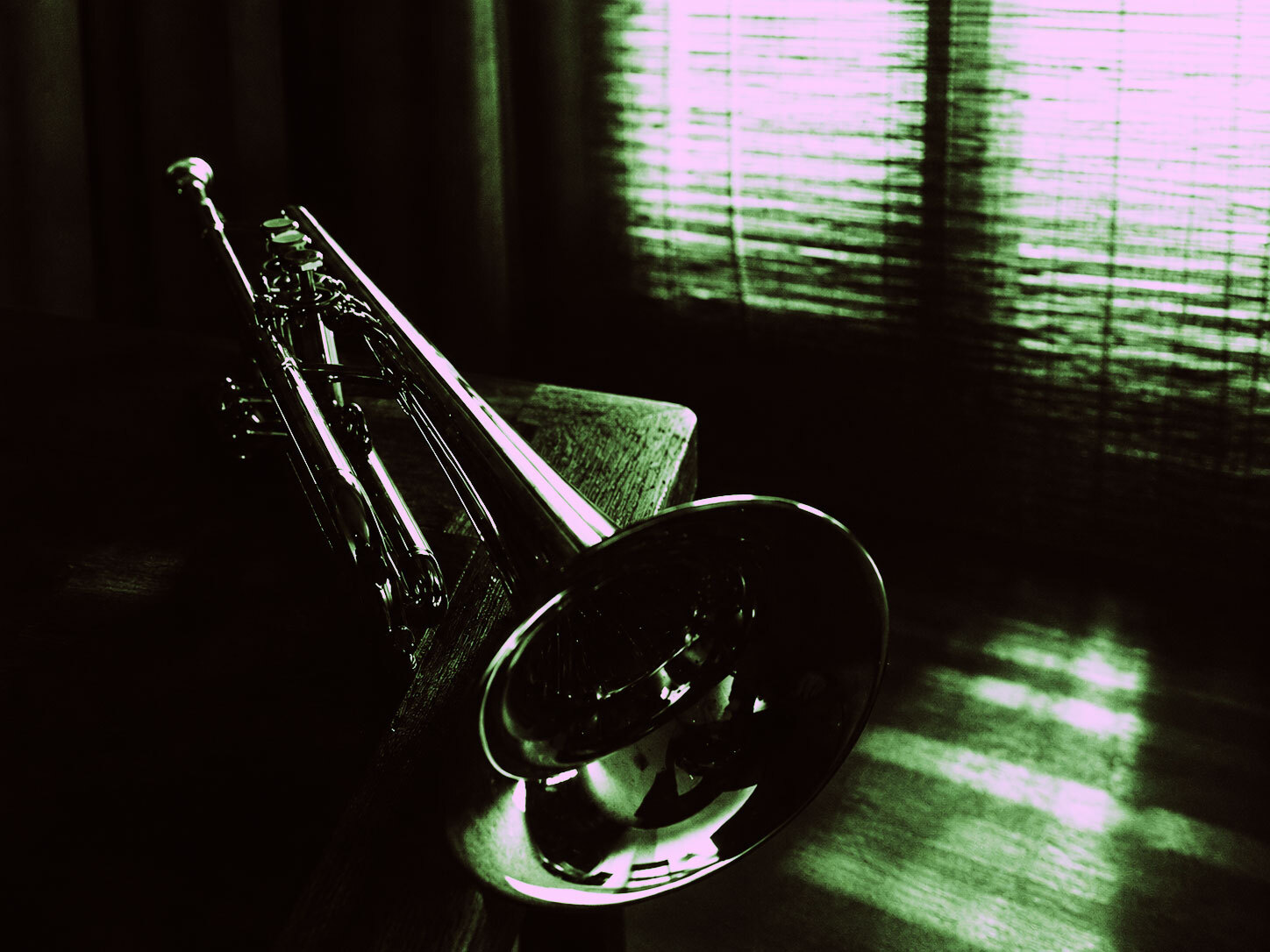
I had taken my D trumpet to the rehearsals for the high A’s. It’s not that they were so hard on the C but I didn’t want to take the risk. Relaxation, yoga, yin and yang, whisky, beta blockers — I had tried them all. All I had left was my courage.

As I put on my tails in the band-room, I felt the giddiness come over me. And yet I had prepared my lip carefully. At the rehearsals and at home the A’s (and even the higher notes which came later), always so difficult in isolation, were like blowing bubbles. My colleagues, happy, apparently relaxed, suddenly seemed distant and unreal.

We were greeted with applause from the audience as we took our seats. I settled myself in my chair with my trumpet on my knee. The conductor, playing to the gallery, made his way through the musicians and jumped on to the podium. I said to myself, almost aloud: “Watch it. This one starts right away, as soon as he’s bowed to the audience.”

Why did Mozart write these damned A’s? If you play them right, nobody notices; if you miss them, everybody notices. My chest is bursting. I’ve put up with that tam-tam for twenty years. Every time I tell myself, “Get out of this job. It’ll be the death of you.”

The first notes were OK. Now, 58 bars to count. Relaxation. I doze and count them in tens. There’s no problem in the next entry. Routine. My lip’s good tonight. The conductor’s ignoring me. Fine! My attention wanders from the stand and I examine the audience: anonymous, attentive, concentrating. The close contact between my lips and the mouthpiece rim comforts me a little. My lip seems flexible.

The music is nice. I suddenly realise I’m listening closely. The orchestra, my accomplices, are playing really well tonight. I have a strong desire to play, to take part. Time has stopped, the nerves have gone. I am part of the whole and the whole is carrying me along. I am no longer talking to myself; my thoughts are direct, free of words; they are not in two places at the same time. I measure every note, place it and regulate it, support it and hold it back, light it and extinguish it. The conductor no longer has a name, nor have my colleagues. The music no longer a title, nor a composer. Now there is only that silent concentration and that sounding cathedral which rises out of it, revealed by our vibrating instruments...

When the people stopped applauding, I slowly got ready to go, putting my good trumpet carefully into its velvet case. Before going home I went to the bar on the corner for a drink with the players I like best. It was a fine night; I was happy to be a musician and I understood once again why I had wanted to become one. The tam-tam had worked.

Notes

¹ I have written a series of “Little stories from brass life” with the aim of conveying, through an anecdote, those intense moments which every brass player experiences at one time or another. I have drawn liberally on the views and confidences of many friends and colleagues as well as on my own experiences. Clearly, however, the accounts are fictional.

Brass Bulletin 50, II / 1985 pages 81–83

All content is protected by copyright © Brass Bulletin 1985–2026

Share this article

Facebook LinkedIn
Loading…

Questions & Answers

How the Digital Edition works

What does the Digital Edition include?

The Digital Edition brings together the articles already digitized as searchable online texts—not simply as scans or PDF files—along with their original illustrations, notes, authorship, issue information, and available translations. Related-article suggestions currently include only this digitized material.

Are the digital articles identical to the originals?

We preserve the original text, language, illustrations, captions, footnotes, and editorial context as faithfully as possible. The presentation is adapted for comfortable online reading, and obvious transcription or scanning errors may be corrected. The substance and character of the published article remain unchanged.

Which languages are available?

Brass Bulletin was published in English, French, and German throughout its history. Italian and Spanish translations were added from issue No. 60 onward.

On the Italian and Spanish sites, articles from issues 1–59 are therefore shown in English by default.

How often are new articles added?

New articles are added almost daily, with approximately one complete issue digitized each week. The pace may vary depending on the preparation, image work, and editorial checking required.

Why aren’t all articles available digitally?

The complete Brass Bulletin collection contains 1,246 articles published between 1971 and 2003. The full index is already available online, allowing readers to discover every article in the collection, including those whose complete text has not yet been digitized.

Digitization began in February 2026. Each article is carefully prepared for online reading, checked, and connected to its issue, authors, subjects, and illustrations. At the current pace of digitization, the complete collection is expected to be available online by February 2028.

Why do some references mention articles that are not available yet?

References in the original articles are preserved even when the material they point to has not yet been digitized. This keeps the historical and editorial record intact. As more issues are added to the Digital Edition, an increasing number of these references will lead to articles that can be read online.

Can I suggest an article or report a transcription error?

Yes. If there is an article you would particularly like to see digitized, or if you notice a possible transcription error or missing detail, please contact us. Reader feedback helps us improve the Digital Edition and prioritize useful connections within the archive.

How can I support Brass Bulletin?

Your support helps fund the preparation, verification, and online publication of the complete collection.

Subscribe to the Digital Edition

Prefer to support us without subscribing?

Make a donation

Search Brass Bulletin.