6 min di lettura
Edna White
A Woman and a Life in the Service of the Trumpet
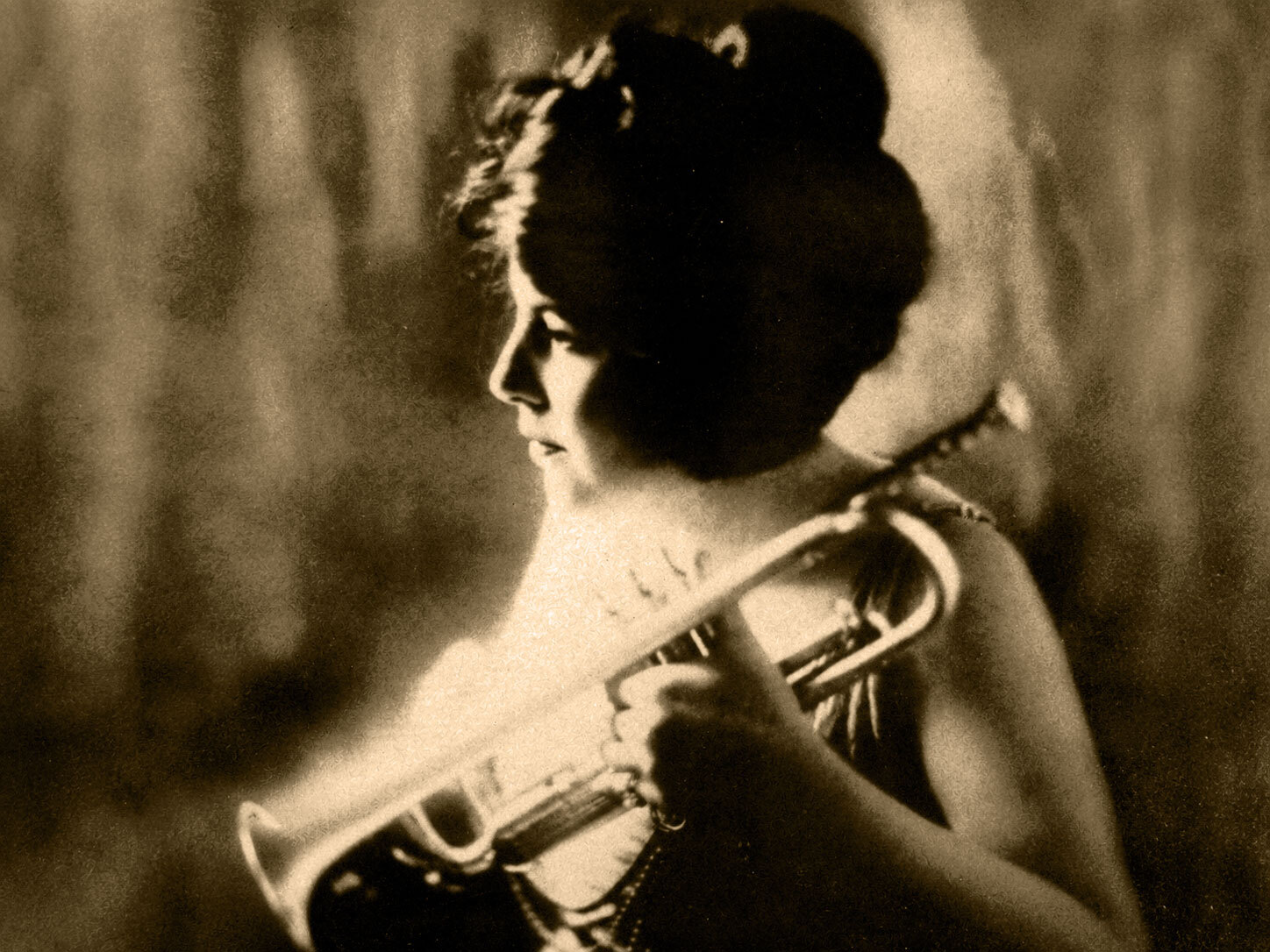
Edna White with her trumpet – 1922 (M. Laplace collection).
Edna White, First Lady of the trumpet, has decided to retire officially from the brass world on the occasion of the second International Congress in Bloomington in June 1984. I think it is time we did homage to her.
Flora Edna White was born in Stamford, Connecticut, on 23rd October 1892, the second of seven children. Her father, Herbert John White, an amateur cornet player born in England, had wanted a son who would be able to emulate his brother Harry’s skills on that instrument but fate decided that a daughter would do the job instead. At the age of seven Edna got her first cornet, and her first lesson, from her father. Six months later she gave her first public performance in a Massachusetts church. Next she took lessons from Ann Park and then from the Belgian Adolphe Dubois,¹ a professor at the Institute of Musical Art (later to become the Juilliard School). Indeed Dr. Frank Damrosch, founder of the Institute, waived a minimum-age requirement so that this “prodigy” could enroll. Bear in mind that by 1904 Edna had already played as a “guest soloist” for Arthur Pryor at Asbury Park! Nevertheless from her first year of study (1904-05) Mr. Dubois modified her embouchure and her style; he also made her change from cornet to trumpet. She was awarded a prize in May 1907 when still only fourteen. Later she studied singing with Morini in Paris (1926). In 1907 the singer Carl Dufft came to Ocean Grove, New Jersey, to sing Handel’s “Messiah” and he was more than a little surprised to find that a young woman was to play “The Trumpet shall sound”. After the performance, of course, he was so pleased that he asked for Edna at every performance of the aria (her fee was $ 25 a concert); they played the piece about five times together.
It is interesting to note that, as she became popular, Edna White was one of the very first soloists to focus attention on the trumpet at a time when the cornet was king. From 1907 to 1912 she appeared in an all-female brass quartet (1 trumpet and 3 cornets) which soon became known as the Aida Quartet. In November 1913 she married Myron Hall Chandler and stopped working until 1915 to please him. She started the Edna White Trumpet Quartet (another all-female group), leaving it in 1916 to be replaced by Kitty Rankin (wife of the famous Ernest Williams). Strangely the group continued to use her name until 1919 when she started a new all-female quartet (2 trumpets, 2 trombones) to become known as the Gloria Trumpeters.
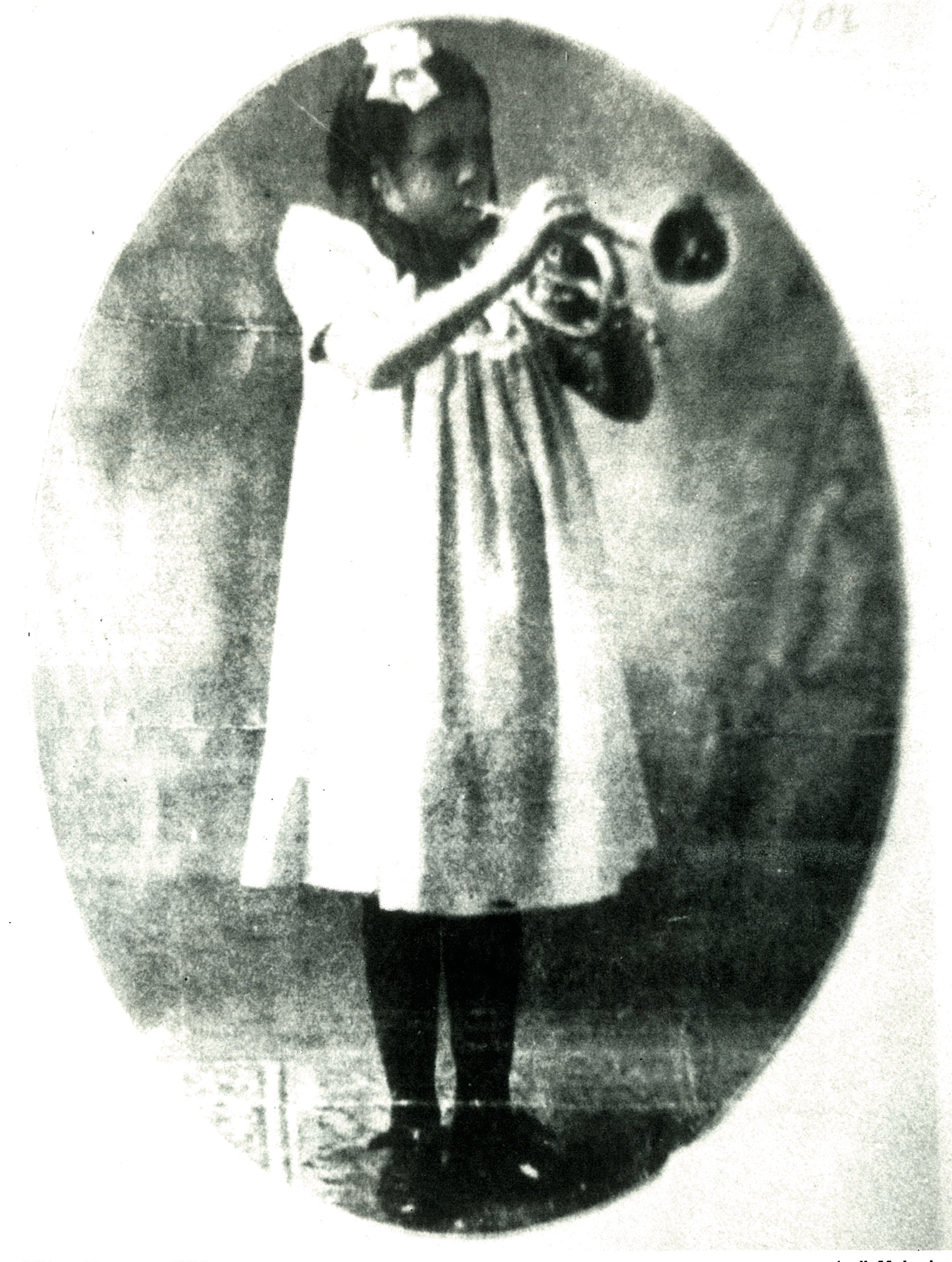
Edna White with cornet – 1902 (coll. M. Laplace).
Brass Bulletin 48, IV / 1984 pagine 10–16
Tutti i contenuti sono protetti dal diritto d’autore © Brass Bulletin 1984–2026