Explore institutional access Explore institutional access

2 min. read

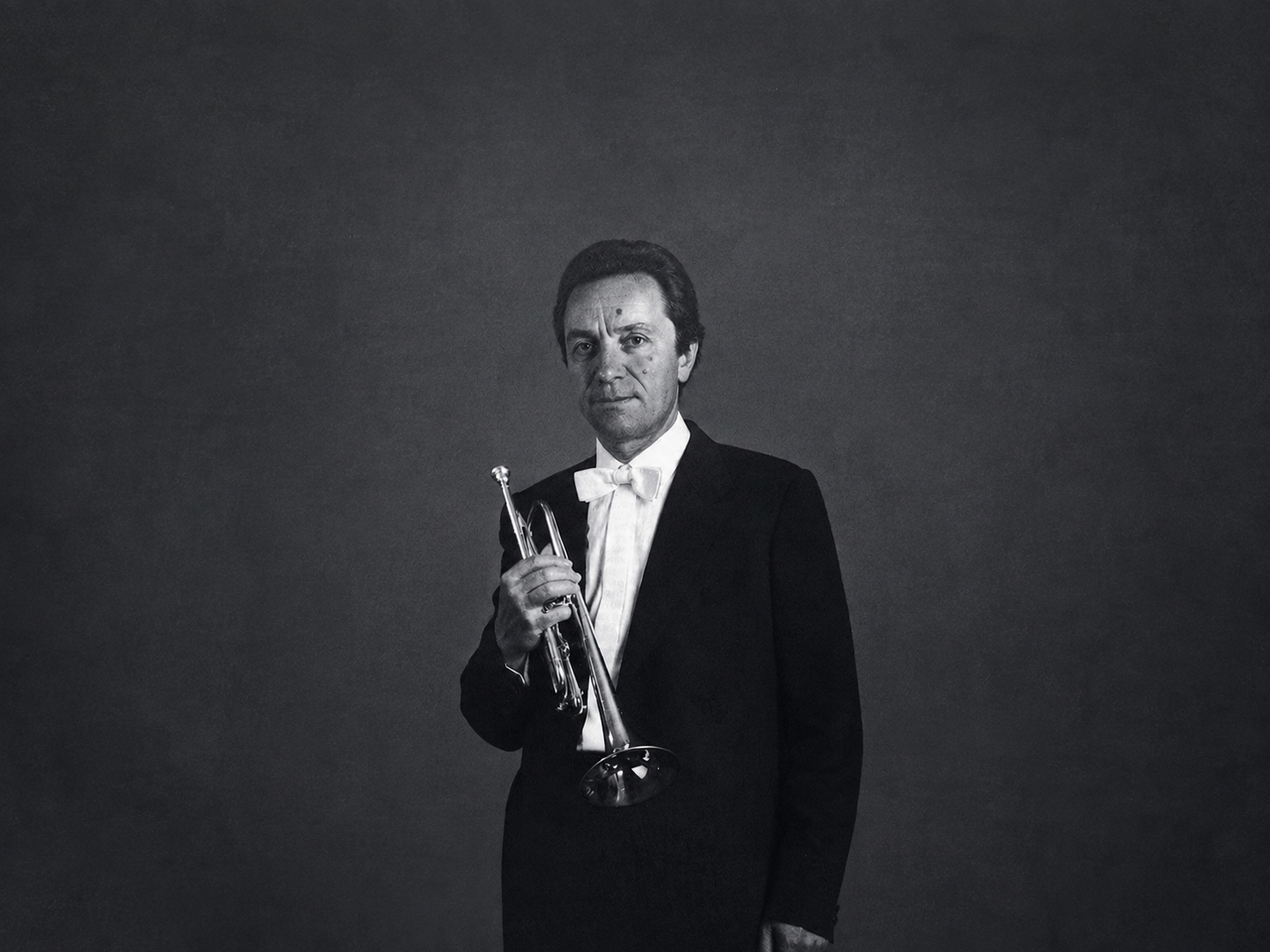
Albert Calvayrac

Portrait

Albert Calvayrac

Albert Calvayrac

Albert Calvayrac was born in 1934 in Conques sur Orbiel, a little village in the south of France near the well known town of Carcassonne. At the age of seven he was intrigued to find an old tuba in his parents’ attic and asked his father to let him hear what it sounded like. He was delighted by the result and immediately wanted to learn to play it himself. As all this took place in wartime, and there was no music in such an isolated spot, it was his father, an amateur musician, who taught him the rudiments of music. He began playing at the “Musical Circle of Conques”, a wind band formed by the village amateur musicians at the time of the liberation. Monsieur Izard taught him, as well as all the other instruments. At first he played an alto or tenor horn in E♭, that being the only instrument still available, and then his father gave him a cornet. Such was his passion for this instrument that his parents sent him “to town” to Monsieur Bocquet, a most talented teacher who gave him his first cornet lessons. He was soon able to play the well known cornet solos such as Fête militaire by Alexandre Petit, Bellos Mountagnos, the Carnaval de Venise etc.

At Monsieur Bocquet’s insistence he was sent by his parents at the age of fourteen to the Toulouse Conservatoire to study with Professor Dejean. Although he worked hard for three years, he still failed the entrance competition for the Paris Conservatoire. He went back to Toulouse to study with Yves Sirven, a brilliant young trumpeter and pupil of Foveau, and the following year (1952) he was accepted by the Paris Conservatoire to study with the great Raymond Sabarich, who helped him to win first prize for cornet in 1953.

“It was then that a strange thing happened. For me, changing from cornet to trumpet was a real disaster. I was accepted for the trumpet class in 1954 and there the example of other pupils playing high and loud drove me to do the same — one had to, in order to be first! I did not understand any of the teacher’s advice and the more I worked the worse it was and the unhappier I became, until the day when, after a dreadful failure at an end-of-year competition (1955), I decided to change career — immediately! No more trumpet, no more music; I would be a farm worker, and be happy.”

Not for long, however, for he missed the music (and the money!). He started to play again and got some jobs in dance bands.

“After three months’ complete break I found that it was not as bad as all that, and this made me work harder although without having any illusions — just “for fun”. In fact I had such fun and got such results that my friends encouraged me to go back to Paris, see the teacher and prepare for the competition for the job of professor at the Limoges school of music. I did, and I succeeded.”

From then on, without really realising it, he applied Franquin’s theory which says that “the most important study is the study of oneself”.

In 1957 he got a job at the ORTF orchestra in Toulouse. At this time he had the opportunity of playing with a wind ensemble which went by the name of Le Bal champêtre de Jean Bentaberry which played once a week on Radio Toulouse-Pyrénées. He replaced the solo cornet, Edouard Thau, who was the specialist par excellence in this kind of music and who introduced him to polkas, mazurkas, etc.

He gave his first important concerts in 1962, playing the Soldier’s Tale by Stravinsky, and Telemann and Vivaldi concertos with the Toulouse Chamber Orchestra. In the following year he became professor at the Toulouse Conservatoire and was appointed solo trumpet at the orchestra of the Théâtre du Capitole.

In addition to his career as a teacher Albert Calvayrac now belongs to a chamber wind ensemble, the Philharmoniste de Châteauroux (a group of twelve players including all the orchestral wind instruments) and continues to appear as a soloist with orchestra or at recitals.

DISCOGRAPHY:

Telemann
Concerto in D major, Toulouse Chamber Orchestra, Le Club Français du Disque 344

Concerto in D major for trumpet, 2 oboes and strings, EMI CCA 1060

Vivaldi
Concerto for 2 trumpets in C major, Toulouse Chamber Orchestra, A. Bernes, 2nd trumpet, EMI CVD 2212

J. Haydn
Concerto in E♭ major, Toulouse Chamber Orchestra, EMI C 069-12140

Brass Bulletin 45, I / 1984 pages 58–60

All content is protected by copyright © Brass Bulletin 1984–2026

Share this article

Facebook LinkedIn
Loading…

Questions & Answers

How the Digital Edition works

What does the Digital Edition include?

The Digital Edition brings together the articles already digitized as searchable online texts—not simply as scans or PDF files—along with their original illustrations, notes, authorship, issue information, and available translations. Related-article suggestions currently include only this digitized material.

Are the digital articles identical to the originals?

We preserve the original text, language, illustrations, captions, footnotes, and editorial context as faithfully as possible. The presentation is adapted for comfortable online reading, and obvious transcription or scanning errors may be corrected. The substance and character of the published article remain unchanged.

Which languages are available?

Brass Bulletin was published in English, French, and German throughout its history. Italian and Spanish translations were added from issue No. 60 onward.

On the Italian and Spanish sites, articles from issues 1–59 are therefore shown in English by default.

How often are new articles added?

New articles are added almost daily, with approximately one complete issue digitized each week. The pace may vary depending on the preparation, image work, and editorial checking required.

Why aren’t all articles available digitally?

The complete Brass Bulletin collection contains 1,246 articles published between 1971 and 2003. The full index is already available online, allowing readers to discover every article in the collection, including those whose complete text has not yet been digitized.

Digitization began in February 2026. Each article is carefully prepared for online reading, checked, and connected to its issue, authors, subjects, and illustrations. At the current pace of digitization, the complete collection is expected to be available online by February 2028.

Why do some references mention articles that are not available yet?

References in the original articles are preserved even when the material they point to has not yet been digitized. This keeps the historical and editorial record intact. As more issues are added to the Digital Edition, an increasing number of these references will lead to articles that can be read online.

Can I suggest an article or report a transcription error?

Yes. If there is an article you would particularly like to see digitized, or if you notice a possible transcription error or missing detail, please contact us. Reader feedback helps us improve the Digital Edition and prioritize useful connections within the archive.

How can I support Brass Bulletin?

Your support helps fund the preparation, verification, and online publication of the complete collection.

Subscribe to the Digital Edition

Prefer to support us without subscribing?

Make a donation

Search Brass Bulletin.