Rendete Brass Bulletin disponibile nella vostra università, nel vostro conservatorio o nella vostra biblioteca Scoprite l’accesso istituzionale

2 min di lettura

Albert Calvayrac

Portrait

Albert Calvayrac

Albert Calvayrac

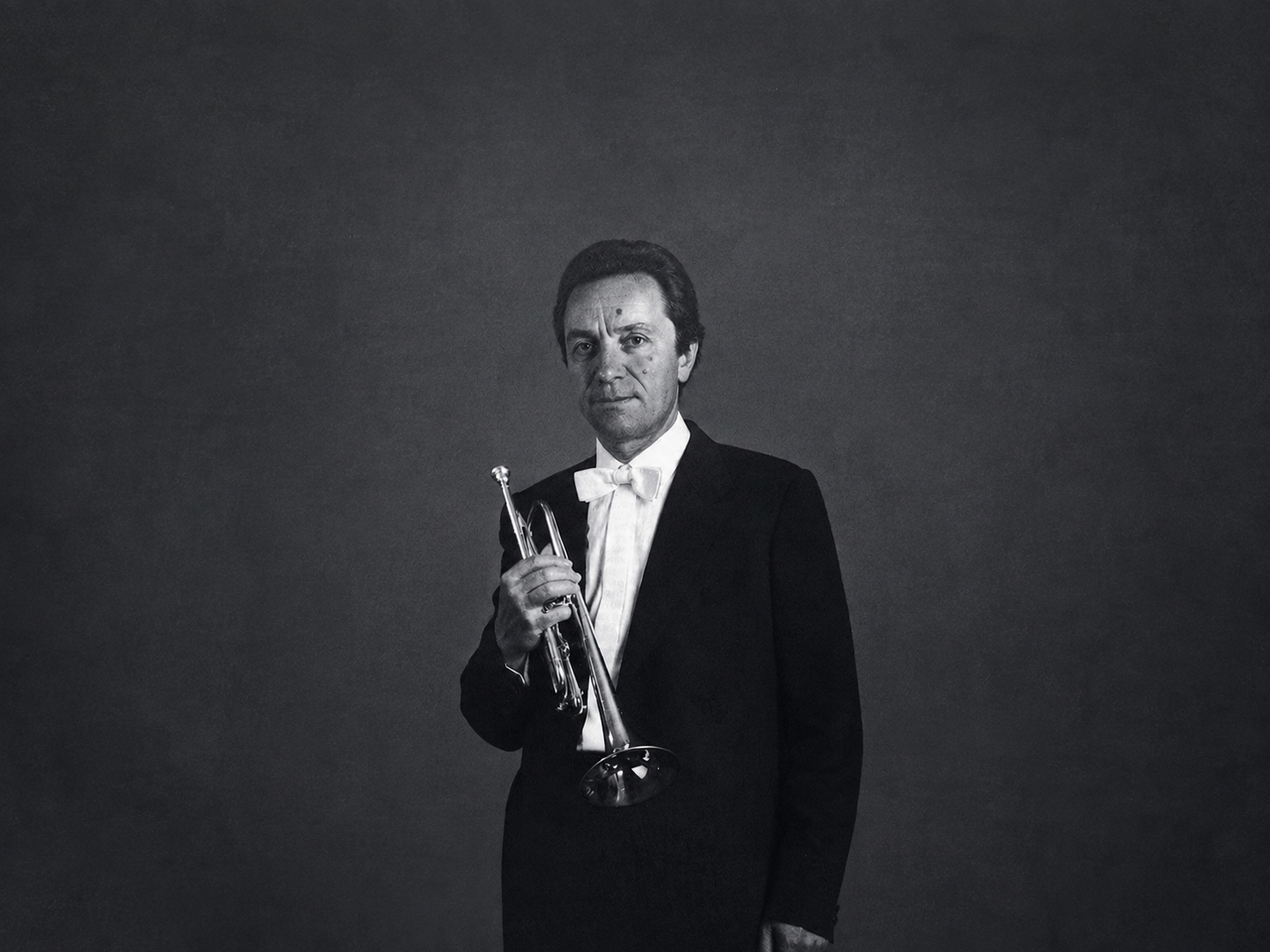
Albert Calvayrac was born in 1934 in Conques sur Orbiel, a little village in the south of France near the well known town of Carcassonne. At the age of seven he was intrigued to find an old tuba in his parents’ attic and asked his father to let him hear what it sounded like. He was delighted by the result and immediately wanted to learn to play it himself. As all this took place in wartime, and there was no music in such an isolated spot, it was his father, an amateur musician, who taught him the rudiments of music. He began playing at the “Musical Circle of Conques”, a wind band formed by the village amateur musicians at the time of the liberation. Monsieur Izard taught him, as well as all the other instruments. At first he played an alto or tenor horn in E♭, that being the only instrument still available, and then his father gave him a cornet. Such was his passion for this instrument that his parents sent him “to town” to Monsieur Bocquet, a most talented teacher who gave him his first cornet lessons. He was soon able to play the well known cornet solos such as Fête militaire by Alexandre Petit, Bellos Mountagnos, the Carnaval de Venise etc.

At Monsieur Bocquet’s insistence he was sent by his parents at the age of fourteen to the Toulouse Conservatoire to study with Professor Dejean. Although he worked hard for three years, he still failed the entrance competition for the Paris Conservatoire. He went back to Toulouse to study with Yves Sirven, a brilliant young trumpeter and pupil of Foveau, and the following year (1952) he was accepted by the Paris Conservatoire to study with the great Raymond Sabarich, who helped him to win first prize for cornet in 1953.

“It was then that a strange thing happened. For me, changing from cornet to trumpet was a real disaster. I was accepted for the trumpet class in 1954 and there the example of other pupils playing high and loud drove me to do the same — one had to, in order to be first! I did not understand any of the teacher’s advice and the more I worked the worse it was and the unhappier I became, until the day when, after a dreadful failure at an end-of-year competition (1955), I decided to change career — immediately! No more trumpet, no more music; I would be a farm worker, and be happy.”

Not for long, however, for he missed the music (and the money!). He started to play again and got some jobs in dance bands.

“After three months’ complete break I found that it was not as bad as all that, and this made me work harder although without having any illusions — just “for fun”. In fact I had such fun and got such results that my friends encouraged me to go back to Paris, see the teacher and prepare for the competition for the job of professor at the Limoges school of music. I did, and I succeeded.”

From then on, without really realising it, he applied Franquin’s theory which says that “the most important study is the study of oneself”.

In 1957 he got a job at the ORTF orchestra in Toulouse. At this time he had the opportunity of playing with a wind ensemble which went by the name of Le Bal champêtre de Jean Bentaberry which played once a week on Radio Toulouse-Pyrénées. He replaced the solo cornet, Edouard Thau, who was the specialist par excellence in this kind of music and who introduced him to polkas, mazurkas, etc.

He gave his first important concerts in 1962, playing the Soldier’s Tale by Stravinsky, and Telemann and Vivaldi concertos with the Toulouse Chamber Orchestra. In the following year he became professor at the Toulouse Conservatoire and was appointed solo trumpet at the orchestra of the Théâtre du Capitole.

In addition to his career as a teacher Albert Calvayrac now belongs to a chamber wind ensemble, the Philharmoniste de Châteauroux (a group of twelve players including all the orchestral wind instruments) and continues to appear as a soloist with orchestra or at recitals.

DISCOGRAPHY:

Telemann
Concerto in D major, Toulouse Chamber Orchestra, Le Club Français du Disque 344

Concerto in D major for trumpet, 2 oboes and strings, EMI CCA 1060

Vivaldi
Concerto for 2 trumpets in C major, Toulouse Chamber Orchestra, A. Bernes, 2nd trumpet, EMI CVD 2212

J. Haydn
Concerto in E♭ major, Toulouse Chamber Orchestra, EMI C 069-12140

Brass Bulletin 45, I / 1984 pagine 58–60

Tutti i contenuti sono protetti dal diritto d’autore © Brass Bulletin 1984–2026

Condividi questo articolo

Facebook LinkedIn
Loading…

Domande e risposte

Come funziona l’edizione digitale

Che cosa comprende l’edizione digitale?

L’edizione digitale riunisce gli articoli già digitalizzati sotto forma di testi leggibili e ricercabili online — non semplicemente come scansioni o file PDF — insieme alle illustrazioni originali, alle note, agli autori, alle informazioni sul numero della rivista e alle traduzioni disponibili. I suggerimenti di articoli correlati comprendono attualmente solo questo materiale digitalizzato.

Gli articoli digitali sono identici agli originali?

Conserviamo il più fedelmente possibile il testo originale, la lingua, le illustrazioni, le didascalie, le note e il contesto editoriale. La presentazione viene adattata per una lettura confortevole online e gli evidenti errori di trascrizione o scansione possono essere corretti. Il contenuto e il carattere dell’articolo pubblicato rimangono invariati.

Quali lingue sono disponibili?

Brass Bulletin è stato pubblicato in inglese, francese e tedesco nel corso di tutta la sua storia. Le traduzioni italiane e spagnole sono state aggiunte a partire dal numero 60. Sui siti italiano e spagnolo, gli articoli dei numeri da 1 a 59 vengono quindi mostrati in inglese per impostazione predefinita.

Con quale frequenza vengono aggiunti nuovi articoli?

Nuovi articoli vengono aggiunti quasi ogni giorno, con circa un numero completo digitalizzato ogni settimana. Il ritmo può variare in base al lavoro di preparazione, elaborazione delle immagini e verifica editoriale necessario.

Perché non tutti gli articoli sono disponibili in formato digitale?

La collezione completa di Brass Bulletin comprende 1.246 articoli pubblicati tra il 1971 e il 2003. L’indice completo è già disponibile online e consente di scoprire tutti gli articoli della collezione, compresi quelli il cui testo integrale non è ancora stato digitalizzato.

La digitalizzazione è iniziata nel febbraio 2026. Ogni articolo viene accuratamente preparato per la lettura online, verificato e collegato al relativo numero, agli autori, agli argomenti e alle illustrazioni. Al ritmo attuale di digitalizzazione, la collezione completa dovrebbe essere disponibile online entro febbraio 2028.

Perché alcuni riferimenti citano articoli che non sono ancora disponibili?

I riferimenti presenti negli articoli originali vengono conservati anche quando il materiale a cui rimandano non è ancora stato digitalizzato. In questo modo si preserva l’integrità storica ed editoriale della rivista. Man mano che nuovi numeri vengono aggiunti all’edizione digitale, un numero crescente di questi riferimenti condurrà ad articoli leggibili online.

Posso suggerire un articolo o segnalare un errore di trascrizione?

Sì. Se desiderate che un determinato articolo venga digitalizzato, oppure se notate un possibile errore di trascrizione o un’informazione mancante, contattateci. I riscontri dei lettori ci aiutano a migliorare l’edizione digitale e a stabilire priorità utili all’interno dell’archivio.

Come posso sostenere Brass Bulletin?

Il vostro sostegno contribuisce a finanziare la preparazione, la verifica e la pubblicazione online dell’intera collezione.

Abbonati all’Edizione digitale

Preferite sostenerci senza abbonarvi?

Fate una donazione

Come procede la digitalizzazione?

Stiamo rendendo Brass Bulletin disponibile online gradualmente, articolo per articolo. Potete leggere gli articoli appena digitalizzati non appena sono pronti, anche prima che un intero numero sia completato.

Consultate il nostro calendario di digitalizzazione per scoprire le ultime aggiunte e le date di disponibilità stimate dei prossimi numeri. Le stime si basano sul nostro ritmo recente e possono cambiare.

Cerca in Brass Bulletin.