Ofrezca Brass Bulletin en su universidad, conservatorio o biblioteca Descubra el acceso institucional

2 min de lectura

Albert Calvayrac

Portrait

Albert Calvayrac

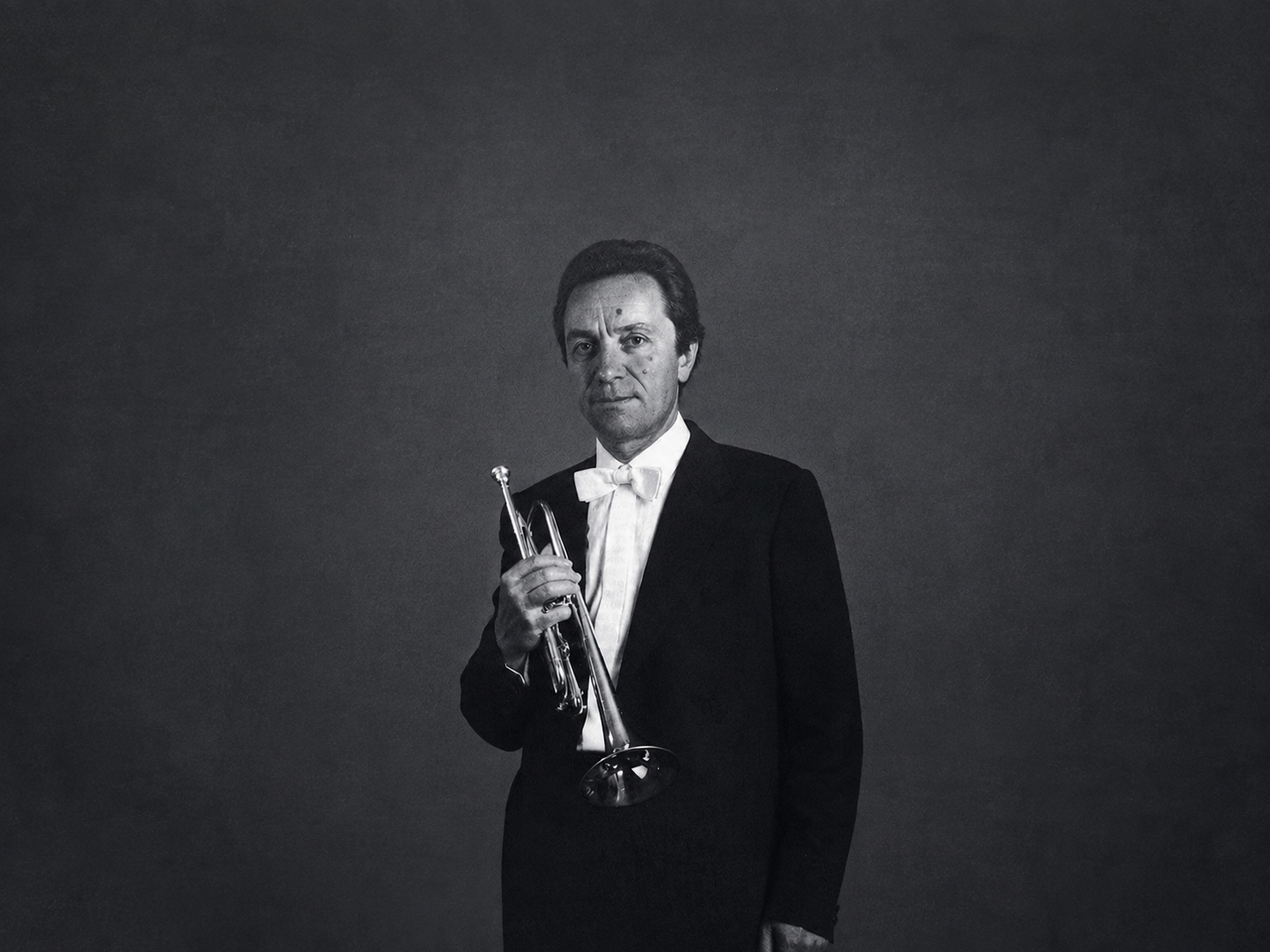
Albert Calvayrac was born in 1934 in Conques sur Orbiel, a little village in the south of France near the well known town of Carcassonne. At the age of seven he was intrigued to find an old tuba in his parents’ attic and asked his father to let him hear what it sounded like. He was delighted by the result and immediately wanted to learn to play it himself. As all this took place in wartime, and there was no music in such an isolated spot, it was his father, an amateur musician, who taught him the rudiments of music. He began playing at the “Musical Circle of Conques”, a wind band formed by the village amateur musicians at the time of the liberation. Monsieur Izard taught him, as well as all the other instruments. At first he played an alto or tenor horn in E♭, that being the only instrument still available, and then his father gave him a cornet. Such was his passion for this instrument that his parents sent him “to town” to Monsieur Bocquet, a most talented teacher who gave him his first cornet lessons. He was soon able to play the well known cornet solos such as Fête militaire by Alexandre Petit, Bellos Mountagnos, the Carnaval de Venise etc.

At Monsieur Bocquet’s insistence he was sent by his parents at the age of fourteen to the Toulouse Conservatoire to study with Professor Dejean. Although he worked hard for three years, he still failed the entrance competition for the Paris Conservatoire. He went back to Toulouse to study with Yves Sirven, a brilliant young trumpeter and pupil of Foveau, and the following year (1952) he was accepted by the Paris Conservatoire to study with the great Raymond Sabarich, who helped him to win first prize for cornet in 1953.

“It was then that a strange thing happened. For me, changing from cornet to trumpet was a real disaster. I was accepted for the trumpet class in 1954 and there the example of other pupils playing high and loud drove me to do the same — one had to, in order to be first! I did not understand any of the teacher’s advice and the more I worked the worse it was and the unhappier I became, until the day when, after a dreadful failure at an end-of-year competition (1955), I decided to change career — immediately! No more trumpet, no more music; I would be a farm worker, and be happy.”

Not for long, however, for he missed the music (and the money!). He started to play again and got some jobs in dance bands.

“After three months’ complete break I found that it was not as bad as all that, and this made me work harder although without having any illusions — just “for fun”. In fact I had such fun and got such results that my friends encouraged me to go back to Paris, see the teacher and prepare for the competition for the job of professor at the Limoges school of music. I did, and I succeeded.”

From then on, without really realising it, he applied Franquin’s theory which says that “the most important study is the study of oneself”.

In 1957 he got a job at the ORTF orchestra in Toulouse. At this time he had the opportunity of playing with a wind ensemble which went by the name of Le Bal champêtre de Jean Bentaberry which played once a week on Radio Toulouse-Pyrénées. He replaced the solo cornet, Edouard Thau, who was the specialist par excellence in this kind of music and who introduced him to polkas, mazurkas, etc.

He gave his first important concerts in 1962, playing the Soldier’s Tale by Stravinsky, and Telemann and Vivaldi concertos with the Toulouse Chamber Orchestra. In the following year he became professor at the Toulouse Conservatoire and was appointed solo trumpet at the orchestra of the Théâtre du Capitole.

In addition to his career as a teacher Albert Calvayrac now belongs to a chamber wind ensemble, the Philharmoniste de Châteauroux (a group of twelve players including all the orchestral wind instruments) and continues to appear as a soloist with orchestra or at recitals.

DISCOGRAPHY:

Telemann
Concerto in D major, Toulouse Chamber Orchestra, Le Club Français du Disque 344

Concerto in D major for trumpet, 2 oboes and strings, EMI CCA 1060

Vivaldi
Concerto for 2 trumpets in C major, Toulouse Chamber Orchestra, A. Bernes, 2nd trumpet, EMI CVD 2212

J. Haydn
Concerto in E♭ major, Toulouse Chamber Orchestra, EMI C 069-12140

Brass Bulletin 45, I / 1984 páginas 58–60

Todo el contenido está protegido por derechos de autor © Brass Bulletin 1984–2026

Compartir este artículo

Facebook LinkedIn
Cargando…

Preguntas y respuestas

Cómo funciona la edición digital

¿Qué incluye la edición digital?

La edición digital reúne los artículos ya digitalizados como textos legibles y consultables en línea —no simplemente como escaneos o archivos PDF— junto con sus ilustraciones originales, notas, autoría, información del número y traducciones disponibles. Las sugerencias de artículos relacionados incluyen actualmente solo este material digitalizado.

¿Los artículos digitales son idénticos a los originales?

Conservamos con la mayor fidelidad posible el texto original, el idioma, las ilustraciones, los pies de imagen, las notas y el contexto editorial. La presentación se adapta para facilitar la lectura en línea y pueden corregirse errores evidentes de transcripción o escaneado. El contenido y el carácter del artículo publicado permanecen inalterados.

¿Qué idiomas están disponibles?

Brass Bulletin se publicó en inglés, francés y alemán a lo largo de toda su historia. Las traducciones al italiano y al español se añadieron a partir del número 60. Por este motivo, en los sitios italiano y español los artículos de los números 1 a 59 se muestran en inglés de forma predeterminada.

¿Con qué frecuencia se añaden nuevos artículos?

Se añaden nuevos artículos casi a diario, con aproximadamente un número completo digitalizado cada semana. El ritmo puede variar según el trabajo de preparación, tratamiento de imágenes y revisión editorial necesario.

¿Por qué no están disponibles todos los artículos en formato digital?

La colección completa de Brass Bulletin contiene 1.246 artículos publicados entre 1971 y 2003. El índice completo ya está disponible en línea y permite descubrir todos los artículos de la colección, incluidos aquellos cuyo texto íntegro todavía no ha sido digitalizado.

La digitalización comenzó en febrero de 2026. Cada artículo se prepara cuidadosamente para la lectura en línea, se revisa y se vincula con su número, sus autores, sus temas y sus ilustraciones. Al ritmo actual de digitalización, se prevé que la colección completa esté disponible en línea en febrero de 2028.

¿Por qué algunas referencias mencionan artículos que todavía no están disponibles?

Las referencias de los artículos originales se conservan aunque el material al que remiten aún no haya sido digitalizado. De este modo se mantiene intacto el contexto histórico y editorial. A medida que se incorporen más números a la edición digital, un número creciente de estas referencias conducirá a artículos que podrán leerse en línea.

¿Puedo sugerir un artículo o informar de un error de transcripción?

Sí. Si hay algún artículo que le gustaría especialmente ver digitalizado, o si detecta un posible error de transcripción o algún dato que falta, póngase en contacto con nosotros. Los comentarios de los lectores nos ayudan a mejorar la edición digital y a establecer prioridades útiles dentro del archivo.

¿Cómo puedo apoyar a Brass Bulletin?

Su apoyo ayuda a financiar la preparación, verificación y publicación en línea de la colección completa.

Suscríbase a la Edición Digital

¿Prefiere apoyarnos sin suscribirse?

Haga una donación

¿Cómo avanza la digitalización?

Estamos poniendo Brass Bulletin a disposición de los lectores en línea, artículo por artículo. Pueden leer los artículos recién digitalizados en cuanto estén listos, incluso antes de que se complete un número entero.

Consulten nuestro calendario de digitalización para descubrir las últimas novedades y las fechas estimadas de disponibilidad de los próximos números. Estas estimaciones se basan en nuestro ritmo reciente y pueden cambiar.

Busca en Brass Bulletin.