Explore institutional access Explore institutional access

2 min. read

The Brass Sections of the New Zealand Symphony Orchestra

The Brass Sections of the New Zealand Symphony Orchestra

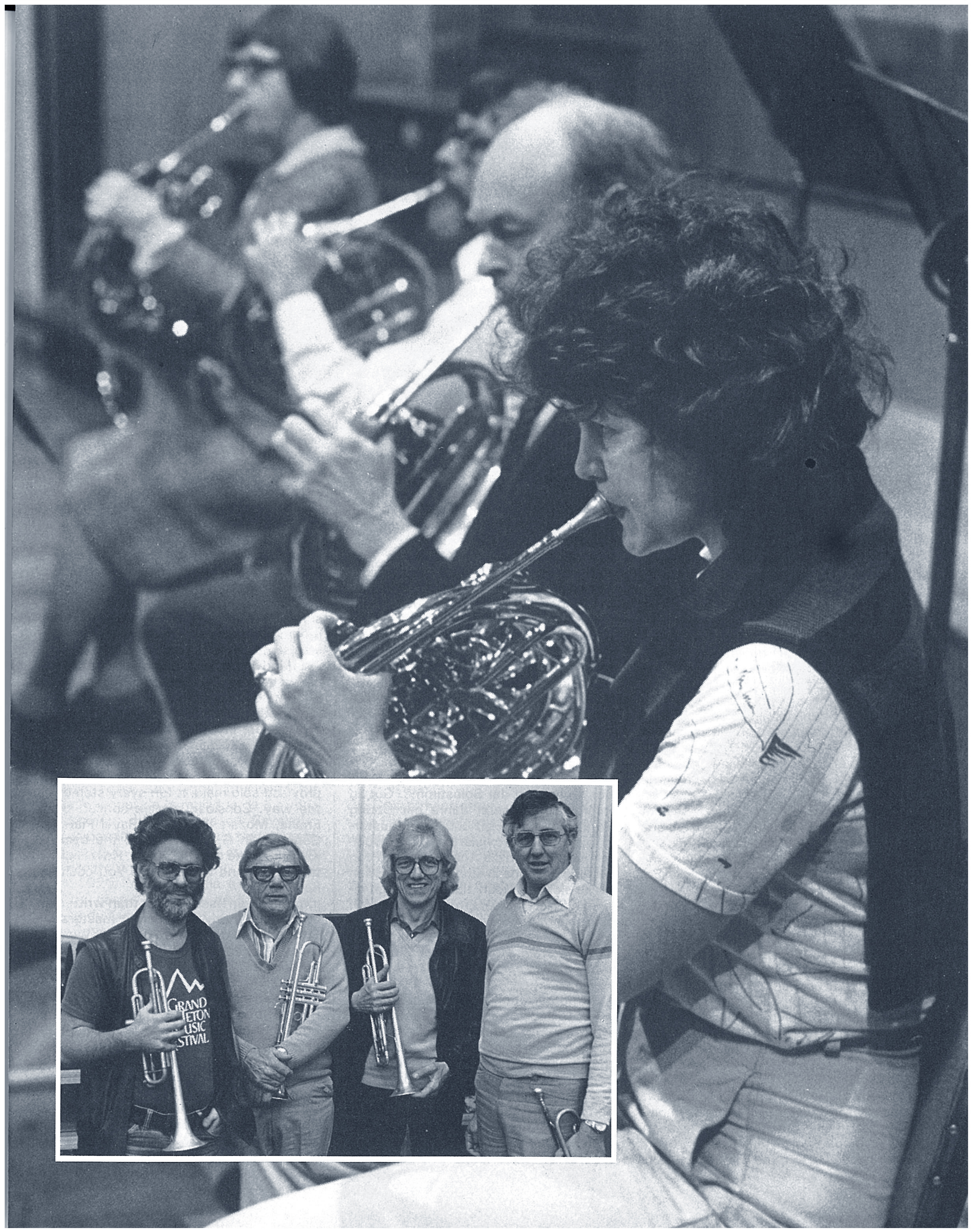
The brass section of the New Zealand Symphony Orchestra is an international group. Principal trumpet Albert (Fuzzy) MacKinnon comes from Pennsylvania and in the mid-sixties followed Gordon Webb into the job knowing little of New Zealand other than that “it was there”. Now he is a naturalised New Zealander. Co-principal Gilbert Evans, who joined at about the same time, was a member of the 1962 National Band of New Zealand and heard his first full orchestra at the Albert Hall Proms. Michael Gibbs (sub-principal) emigrated with his family from Gloucestershire in 1950 and joined the orchestra in 1953. George Duncombe, an Australian, found himself touring New Zealand so often with theatrical shows that he moved there permanently in 1965.

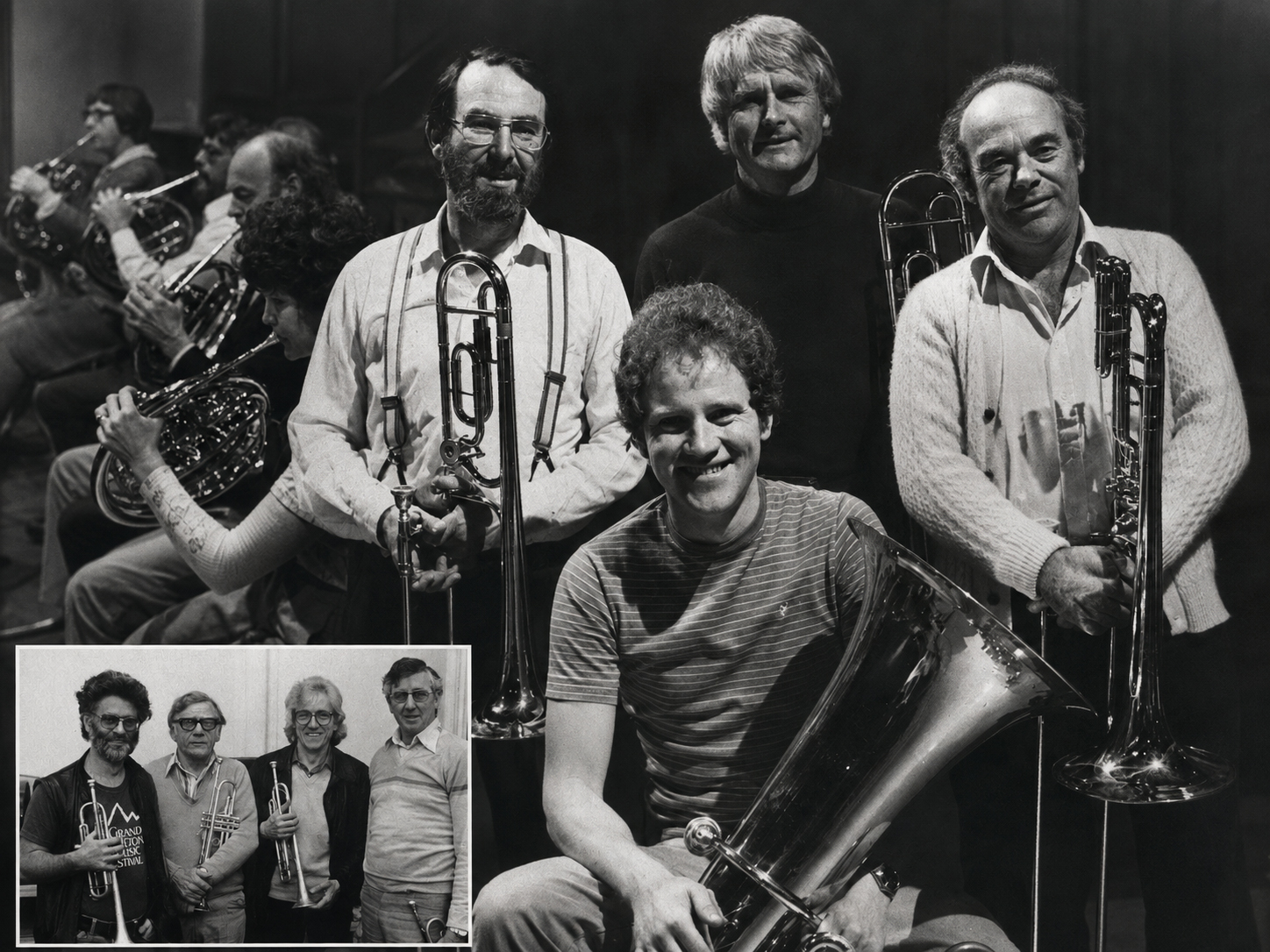
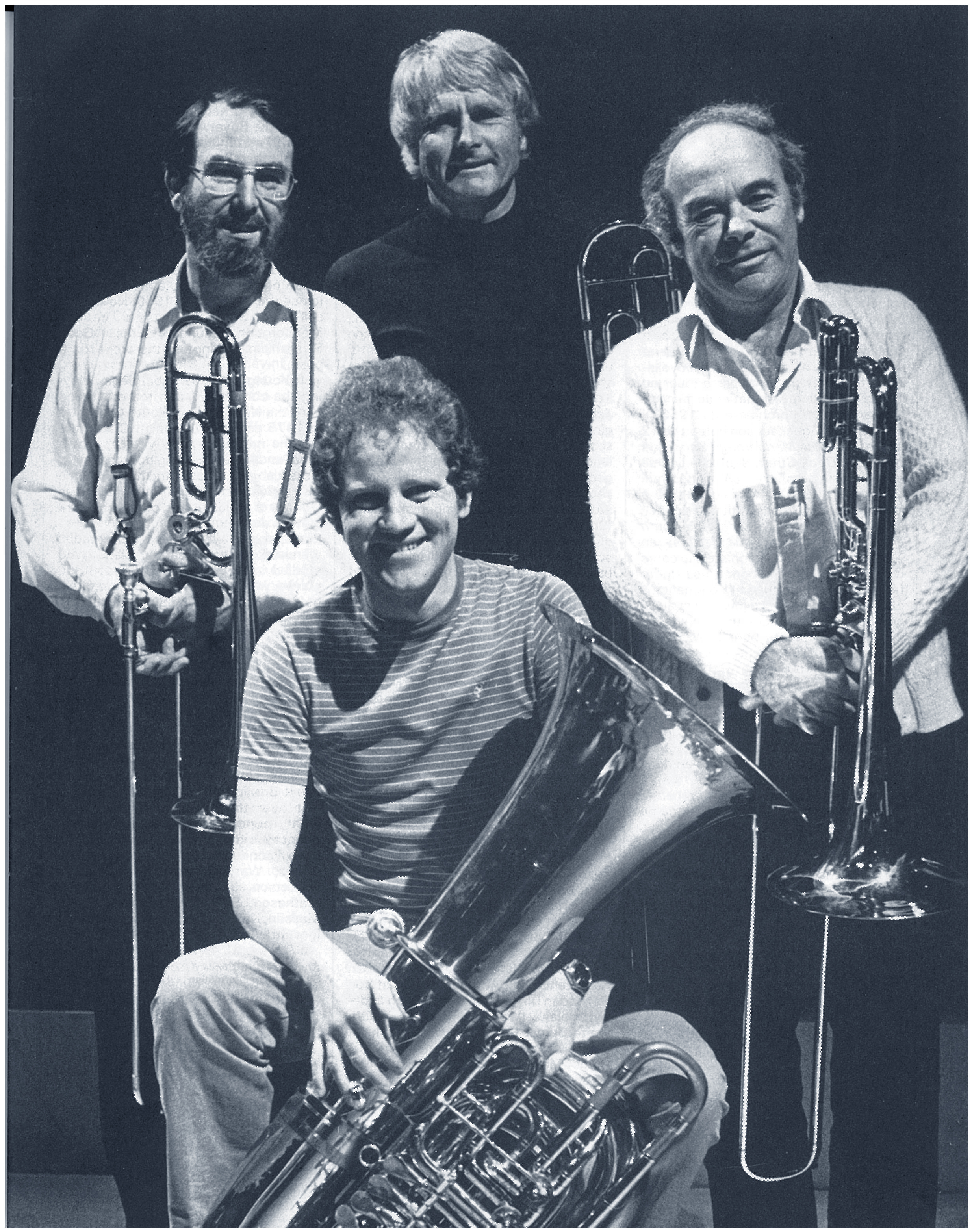
The three trombones have, between them, played with the orchestra for over 70 years! John McIvor (principal) joined in 1954 after doing 1 1/2 performances per day for 17 1/2 weeks with the National Band of New Zealand which toured England at the time of the Coronation in 1953. Tom Shanahan (sub-principal) began training as a teacher but joined the orchestra instead in 1951 and, apart from a break of four years has been there ever since. During that break he (among other things) studied part-time at the Royal Academy, was a truck driver’s mate, constructed (with the help of others) a radar defence line north of the Arctic Circle in Canada, was a seaman, and peeled potatoes on the Queen Elizabeth. He is a well known photographer. Neil Dixon (principal bass trombone) was also a member of the 1953 National Band. Back in New Zealand he wanted to keep playing instead of continuing as a mechanic and joined the orchestra in 1956. He likes to sail his 36 foot launch in the Marlborough Sounds, across Cook Strait from Wellington, the orchestra’s base.

(l. to r.) John McIvor (principal), Tom Shanahan (2nd), Neil Dixon (b-tb), Ken Young (tuba)
(l. to r.) John McIvor (principal), Tom Shanahan (2nd), Neil Dixon (b-tb), Ken Young (tuba)

Main photo (r. to l.): Heather Clark (principal), Bob Burch, Ed White, Zoe SchafferInline photo (l. to r.): Albert MacKinnon (principal), George Duncombe (3rd), Mike Gibbs (2nd), Gilbert Evans (co-principal)

Main photo (r. to l.): Heather Clark (principal), Bob Burch, Ed White, Zoe Schaffer

Inline photo (l. to r.): Albert MacKinnon (principal), George Duncombe (3rd), Mike Gibbs (2nd), Gilbert Evans (co-principal)

Ken Young (principal tuba) began playing the cornet at 7 and toured abroad with the New Zealand Youth Orchestra in 1975 as a percussionist. During the tour he met his future wife, bought a tuba, and began learning how to play it. He is also a composer and has written a four movement work for the NZ Brass Quintet of which he and other orchestra players are members.

Principal horn when these photographs were taken was Heather Clark, who studied in New York and London and played in the Liverpool Philharmonic before joining the NZSO in 1980. In February she left to be with her husband on their farm. Bob Burch, second horn, has been with the orchestra since 1954. The third and fourth horns, Ed White and Zoe Schaffer are both Americans and joined in 1967 and 1975 respectively. Zoe’s husband is leader of the orchestra.

The NZSO gave its first concert in 1947, when its critics said it would last twelve months. Now, in a country the size of Great Britain with a population of only just over three million, it gives over eighty concerts a year and does frequent recordings work. In its time it has been conducted by, among many others, Warwick Braithwaite, James Robertson, John Hopkins, John Matheson, Sir Charles Groves, Diego Masson, Kurt Sanderling, Ron Goodwin, Igor Stravinsky and Sir William Walton.

(Our thanks to Concert Pitch magazine and Tom Shanahan for information and to Tom Shanahan for the photographs.)

Brass Bulletin 42, II / 1983 pages 32–35

All content is protected by copyright © Brass Bulletin 1983–2026

Share this article

Facebook LinkedIn
Loading…

Questions & Answers

How the Digital Edition works

What does the Digital Edition include?

The Digital Edition brings together the articles already digitized as searchable online texts—not simply as scans or PDF files—along with their original illustrations, notes, authorship, issue information, and available translations. Related-article suggestions currently include only this digitized material.

Are the digital articles identical to the originals?

We preserve the original text, language, illustrations, captions, footnotes, and editorial context as faithfully as possible. The presentation is adapted for comfortable online reading, and obvious transcription or scanning errors may be corrected. The substance and character of the published article remain unchanged.

Which languages are available?

Brass Bulletin was published in English, French, and German throughout its history. Italian and Spanish translations were added from issue No. 60 onward.

On the Italian and Spanish sites, articles from issues 1–59 are therefore shown in English by default.

How often are new articles added?

New articles are added almost daily, with approximately one complete issue digitized each week. The pace may vary depending on the preparation, image work, and editorial checking required.

Why aren’t all articles available digitally?

The complete Brass Bulletin collection contains 1,246 articles published between 1971 and 2003. The full index is already available online, allowing readers to discover every article in the collection, including those whose complete text has not yet been digitized.

Digitization began in February 2026. Each article is carefully prepared for online reading, checked, and connected to its issue, authors, subjects, and illustrations. At the current pace of digitization, the complete collection is expected to be available online by February 2028.

Why do some references mention articles that are not available yet?

References in the original articles are preserved even when the material they point to has not yet been digitized. This keeps the historical and editorial record intact. As more issues are added to the Digital Edition, an increasing number of these references will lead to articles that can be read online.

Can I suggest an article or report a transcription error?

Yes. If there is an article you would particularly like to see digitized, or if you notice a possible transcription error or missing detail, please contact us. Reader feedback helps us improve the Digital Edition and prioritize useful connections within the archive.

How can I support Brass Bulletin?

Your support helps fund the preparation, verification, and online publication of the complete collection.

Subscribe to the Digital Edition

Prefer to support us without subscribing?

Make a donation

Search Brass Bulletin.