Ofrezca Brass Bulletin en su universidad, conservatorio o biblioteca Descubra el acceso institucional

2 min de lectura

The Brass Sections of the New Zealand Symphony Orchestra

The Brass Sections of the New Zealand Symphony Orchestra

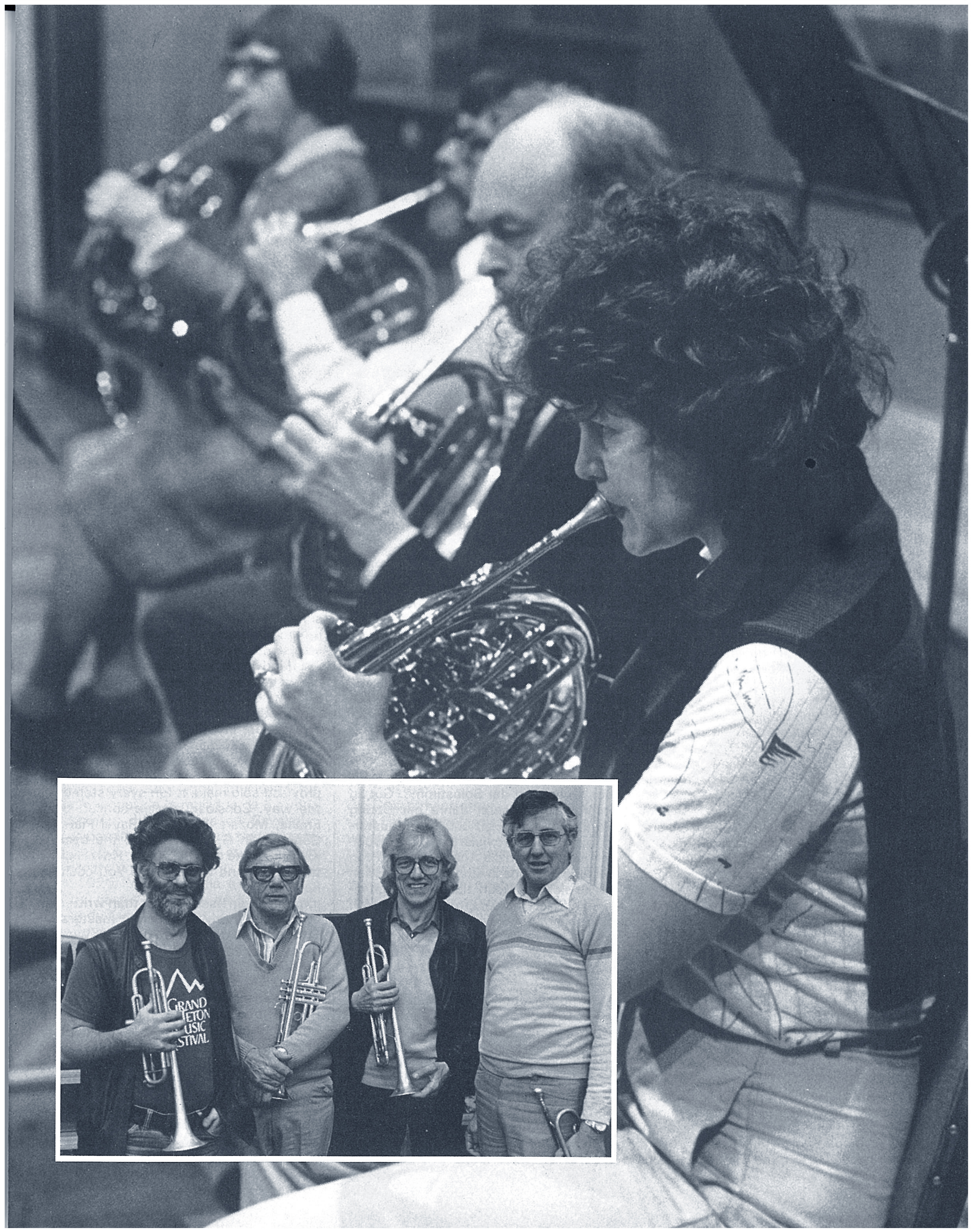
The brass section of the New Zealand Symphony Orchestra is an international group. Principal trumpet Albert (Fuzzy) MacKinnon comes from Pennsylvania and in the mid-sixties followed Gordon Webb into the job knowing little of New Zealand other than that “it was there”. Now he is a naturalised New Zealander. Co-principal Gilbert Evans, who joined at about the same time, was a member of the 1962 National Band of New Zealand and heard his first full orchestra at the Albert Hall Proms. Michael Gibbs (sub-principal) emigrated with his family from Gloucestershire in 1950 and joined the orchestra in 1953. George Duncombe, an Australian, found himself touring New Zealand so often with theatrical shows that he moved there permanently in 1965.

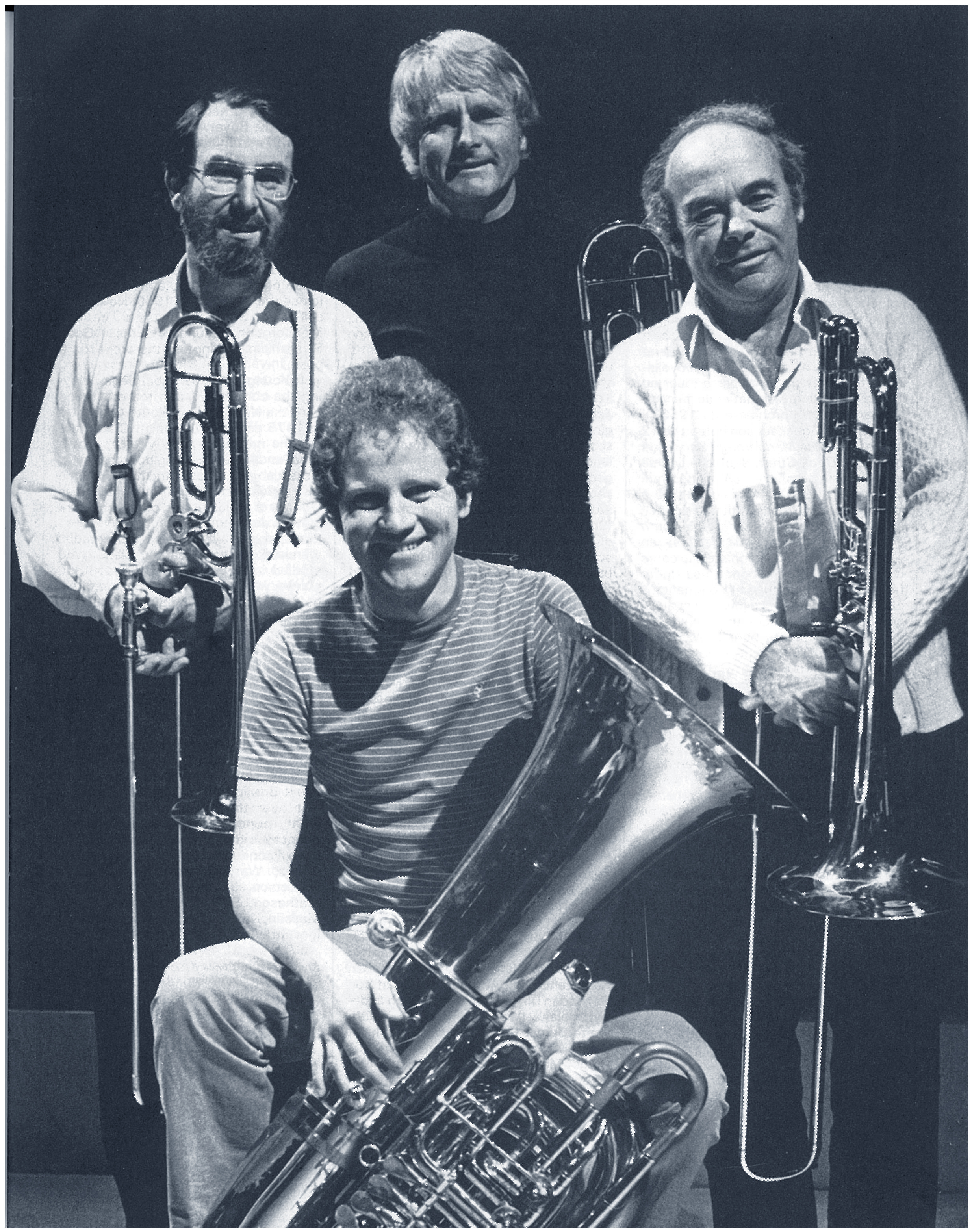
The three trombones have, between them, played with the orchestra for over 70 years! John McIvor (principal) joined in 1954 after doing 1 1/2 performances per day for 17 1/2 weeks with the National Band of New Zealand which toured England at the time of the Coronation in 1953. Tom Shanahan (sub-principal) began training as a teacher but joined the orchestra instead in 1951 and, apart from a break of four years has been there ever since. During that break he (among other things) studied part-time at the Royal Academy, was a truck driver’s mate, constructed (with the help of others) a radar defence line north of the Arctic Circle in Canada, was a seaman, and peeled potatoes on the Queen Elizabeth. He is a well known photographer. Neil Dixon (principal bass trombone) was also a member of the 1953 National Band. Back in New Zealand he wanted to keep playing instead of continuing as a mechanic and joined the orchestra in 1956. He likes to sail his 36 foot launch in the Marlborough Sounds, across Cook Strait from Wellington, the orchestra’s base.

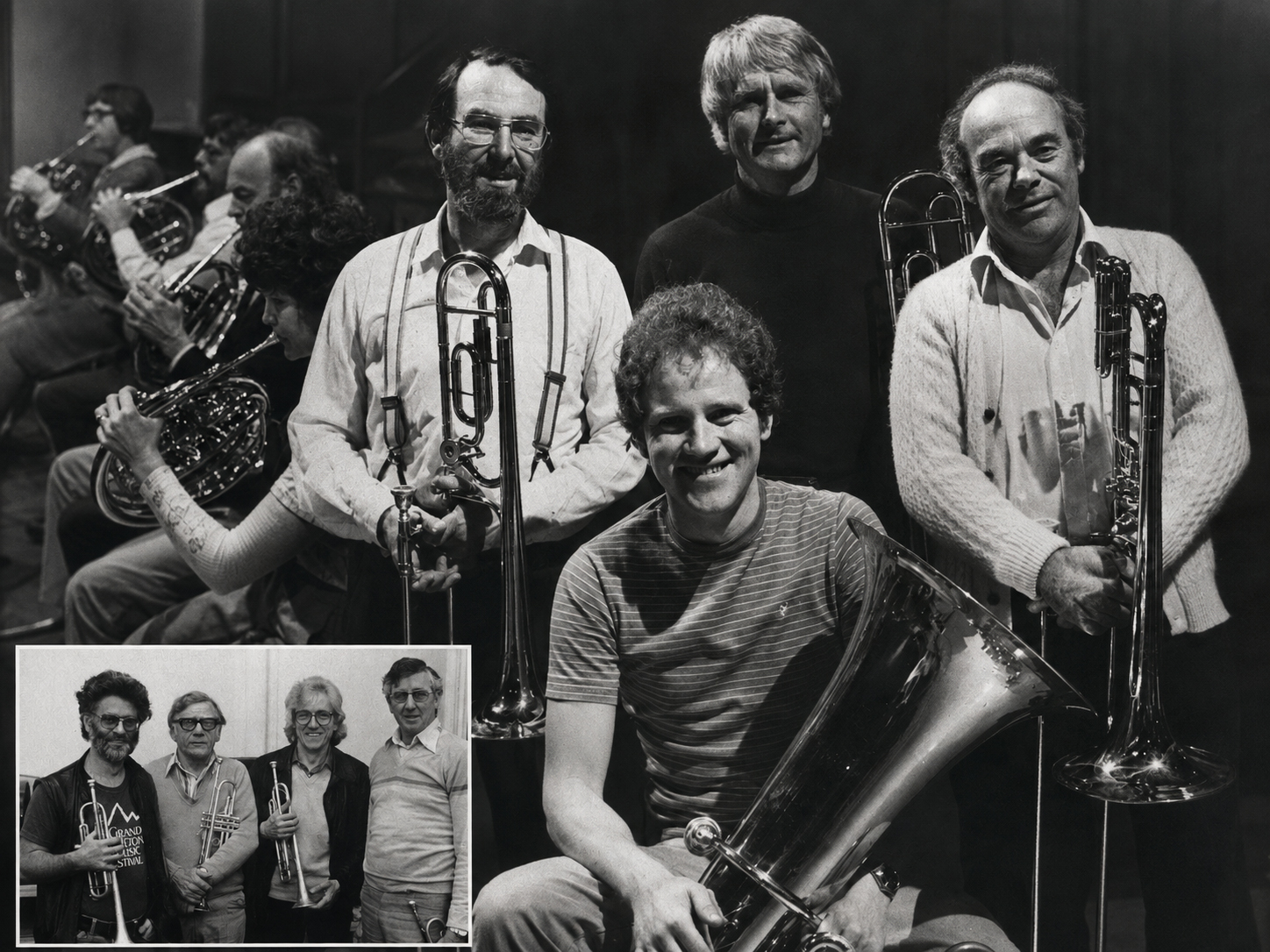
(l. to r.) John McIvor (principal), Tom Shanahan (2nd), Neil Dixon (b-tb), Ken Young (tuba)
(l. to r.) John McIvor (principal), Tom Shanahan (2nd), Neil Dixon (b-tb), Ken Young (tuba)

Main photo (r. to l.): Heather Clark (principal), Bob Burch, Ed White, Zoe SchafferInline photo (l. to r.): Albert MacKinnon (principal), George Duncombe (3rd), Mike Gibbs (2nd), Gilbert Evans (co-principal)

Main photo (r. to l.): Heather Clark (principal), Bob Burch, Ed White, Zoe Schaffer

Inline photo (l. to r.): Albert MacKinnon (principal), George Duncombe (3rd), Mike Gibbs (2nd), Gilbert Evans (co-principal)

Ken Young (principal tuba) began playing the cornet at 7 and toured abroad with the New Zealand Youth Orchestra in 1975 as a percussionist. During the tour he met his future wife, bought a tuba, and began learning how to play it. He is also a composer and has written a four movement work for the NZ Brass Quintet of which he and other orchestra players are members.

Principal horn when these photographs were taken was Heather Clark, who studied in New York and London and played in the Liverpool Philharmonic before joining the NZSO in 1980. In February she left to be with her husband on their farm. Bob Burch, second horn, has been with the orchestra since 1954. The third and fourth horns, Ed White and Zoe Schaffer are both Americans and joined in 1967 and 1975 respectively. Zoe’s husband is leader of the orchestra.

The NZSO gave its first concert in 1947, when its critics said it would last twelve months. Now, in a country the size of Great Britain with a population of only just over three million, it gives over eighty concerts a year and does frequent recordings work. In its time it has been conducted by, among many others, Warwick Braithwaite, James Robertson, John Hopkins, John Matheson, Sir Charles Groves, Diego Masson, Kurt Sanderling, Ron Goodwin, Igor Stravinsky and Sir William Walton.

(Our thanks to Concert Pitch magazine and Tom Shanahan for information and to Tom Shanahan for the photographs.)

Brass Bulletin 42, II / 1983 páginas 32–35

Todo el contenido está protegido por derechos de autor © Brass Bulletin 1983–2026

Compartir este artículo

Facebook LinkedIn
Cargando…

Preguntas y respuestas

Cómo funciona la edición digital

¿Qué incluye la edición digital?

La edición digital reúne los artículos ya digitalizados como textos legibles y consultables en línea —no simplemente como escaneos o archivos PDF— junto con sus ilustraciones originales, notas, autoría, información del número y traducciones disponibles. Las sugerencias de artículos relacionados incluyen actualmente solo este material digitalizado.

¿Los artículos digitales son idénticos a los originales?

Conservamos con la mayor fidelidad posible el texto original, el idioma, las ilustraciones, los pies de imagen, las notas y el contexto editorial. La presentación se adapta para facilitar la lectura en línea y pueden corregirse errores evidentes de transcripción o escaneado. El contenido y el carácter del artículo publicado permanecen inalterados.

¿Qué idiomas están disponibles?

Brass Bulletin se publicó en inglés, francés y alemán a lo largo de toda su historia. Las traducciones al italiano y al español se añadieron a partir del número 60. Por este motivo, en los sitios italiano y español los artículos de los números 1 a 59 se muestran en inglés de forma predeterminada.

¿Con qué frecuencia se añaden nuevos artículos?

Se añaden nuevos artículos casi a diario, con aproximadamente un número completo digitalizado cada semana. El ritmo puede variar según el trabajo de preparación, tratamiento de imágenes y revisión editorial necesario.

¿Por qué no están disponibles todos los artículos en formato digital?

La colección completa de Brass Bulletin contiene 1.246 artículos publicados entre 1971 y 2003. El índice completo ya está disponible en línea y permite descubrir todos los artículos de la colección, incluidos aquellos cuyo texto íntegro todavía no ha sido digitalizado.

La digitalización comenzó en febrero de 2026. Cada artículo se prepara cuidadosamente para la lectura en línea, se revisa y se vincula con su número, sus autores, sus temas y sus ilustraciones. Al ritmo actual de digitalización, se prevé que la colección completa esté disponible en línea en febrero de 2028.

¿Por qué algunas referencias mencionan artículos que todavía no están disponibles?

Las referencias de los artículos originales se conservan aunque el material al que remiten aún no haya sido digitalizado. De este modo se mantiene intacto el contexto histórico y editorial. A medida que se incorporen más números a la edición digital, un número creciente de estas referencias conducirá a artículos que podrán leerse en línea.

¿Puedo sugerir un artículo o informar de un error de transcripción?

Sí. Si hay algún artículo que le gustaría especialmente ver digitalizado, o si detecta un posible error de transcripción o algún dato que falta, póngase en contacto con nosotros. Los comentarios de los lectores nos ayudan a mejorar la edición digital y a establecer prioridades útiles dentro del archivo.

¿Cómo puedo apoyar a Brass Bulletin?

Su apoyo ayuda a financiar la preparación, verificación y publicación en línea de la colección completa.

Suscríbase a la Edición Digital

¿Prefiere apoyarnos sin suscribirse?

Haga una donación

¿Cómo avanza la digitalización?

Estamos poniendo Brass Bulletin a disposición de los lectores en línea, artículo por artículo. Pueden leer los artículos recién digitalizados en cuanto estén listos, incluso antes de que se complete un número entero.

Consulten nuestro calendario de digitalización para descubrir las últimas novedades y las fechas estimadas de disponibilidad de los próximos números. Estas estimaciones se basan en nuestro ritmo reciente y pueden cambiar.

Busca en Brass Bulletin.