Explore institutional access →

2 min. read

Kalison

Instrument makers in Europe

Kalison

Kalison (“kali=beautiful” in Greek) is unquestionably the most dynamic Italian firm in quality brass instrument production.

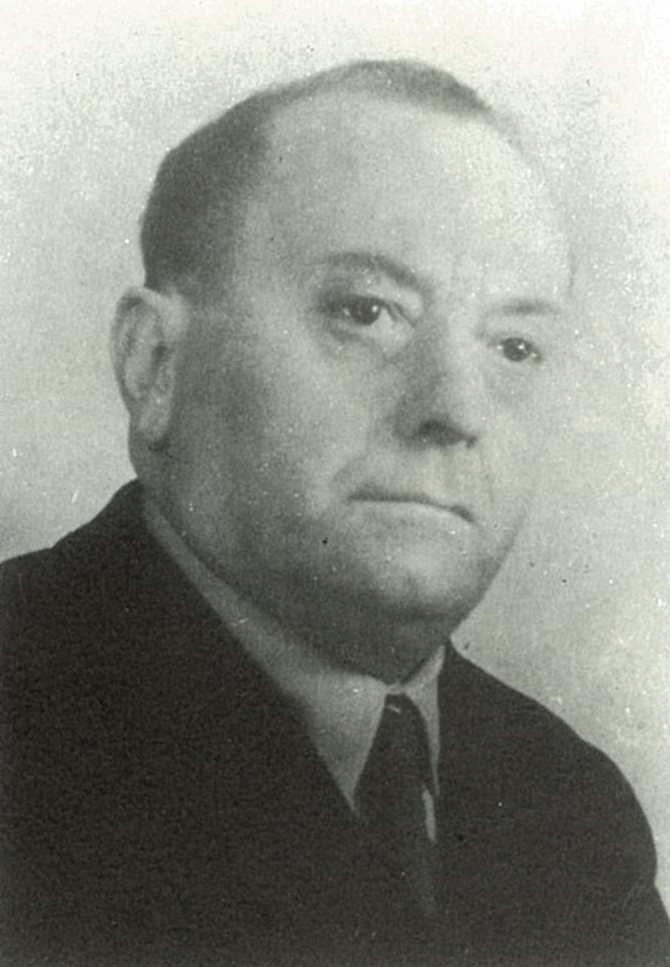
Battista Benicchio (1891-1953) started this friendly family firm in Milan in 1928¹, having entered the business in 1916 in the enormous Roth-Bottali² wind-instrument factory, which in its heyday employed no less than 1000 workers!

Benicchio’s workshop with its four or five people was more modest and his vocation was firmly for craftsmanship. Production reached around twenty instruments a month, covering all brass, and was mainly aimed at the famous town bands then flourishing throughout Italy.

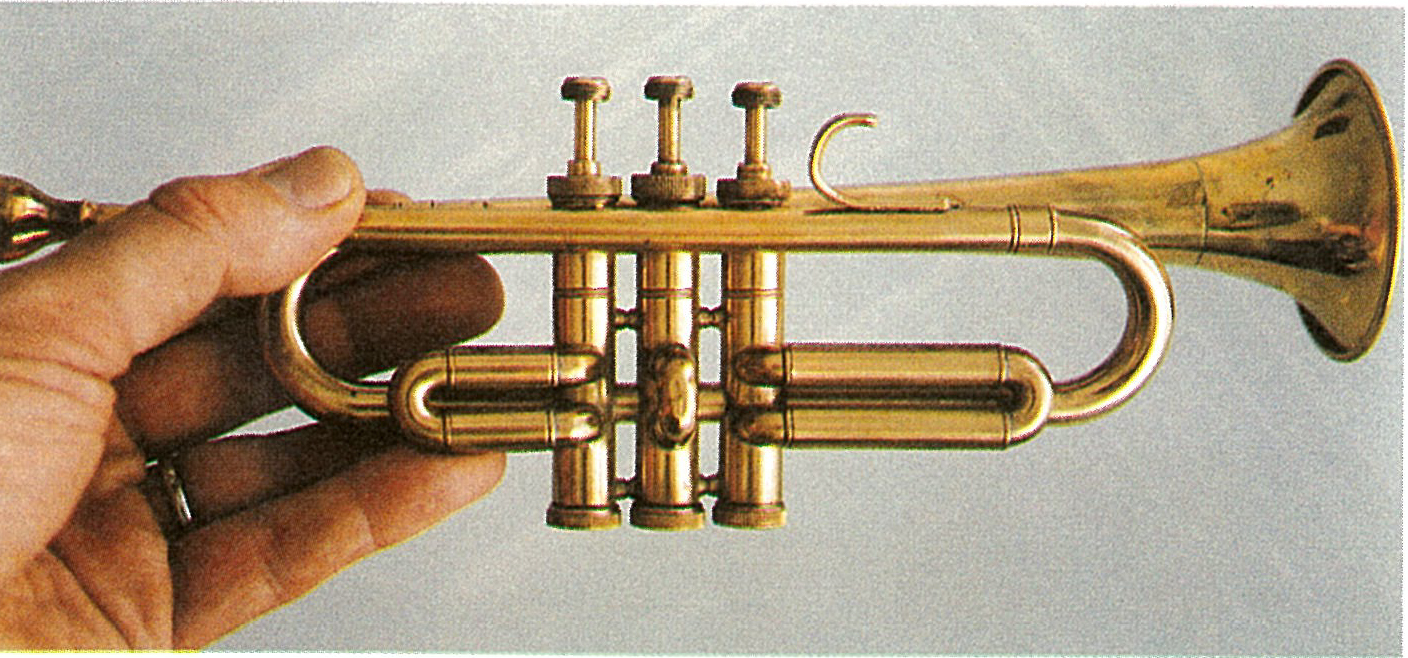
During the second world war there was not much work; this did not cramp Battista Benicchio’s style, however, for he made a series of miniature but playable wind instruments which he named “Kalison” to distinguish them from the usual models. These miniatures were very successful and kept the business afloat during this difficult period.

After his father’s death in 1953 Angelo Benicchio carried on the business, choosing the name Kalison as a brand name for all the models produced.

Battista Benicchio (1891-1953)

Battista Benicchio (1891-1953)

Piccolo Si♭ «Kalison» 1940-1946

Piccolo Si♭ «Kalison» 1940-1946

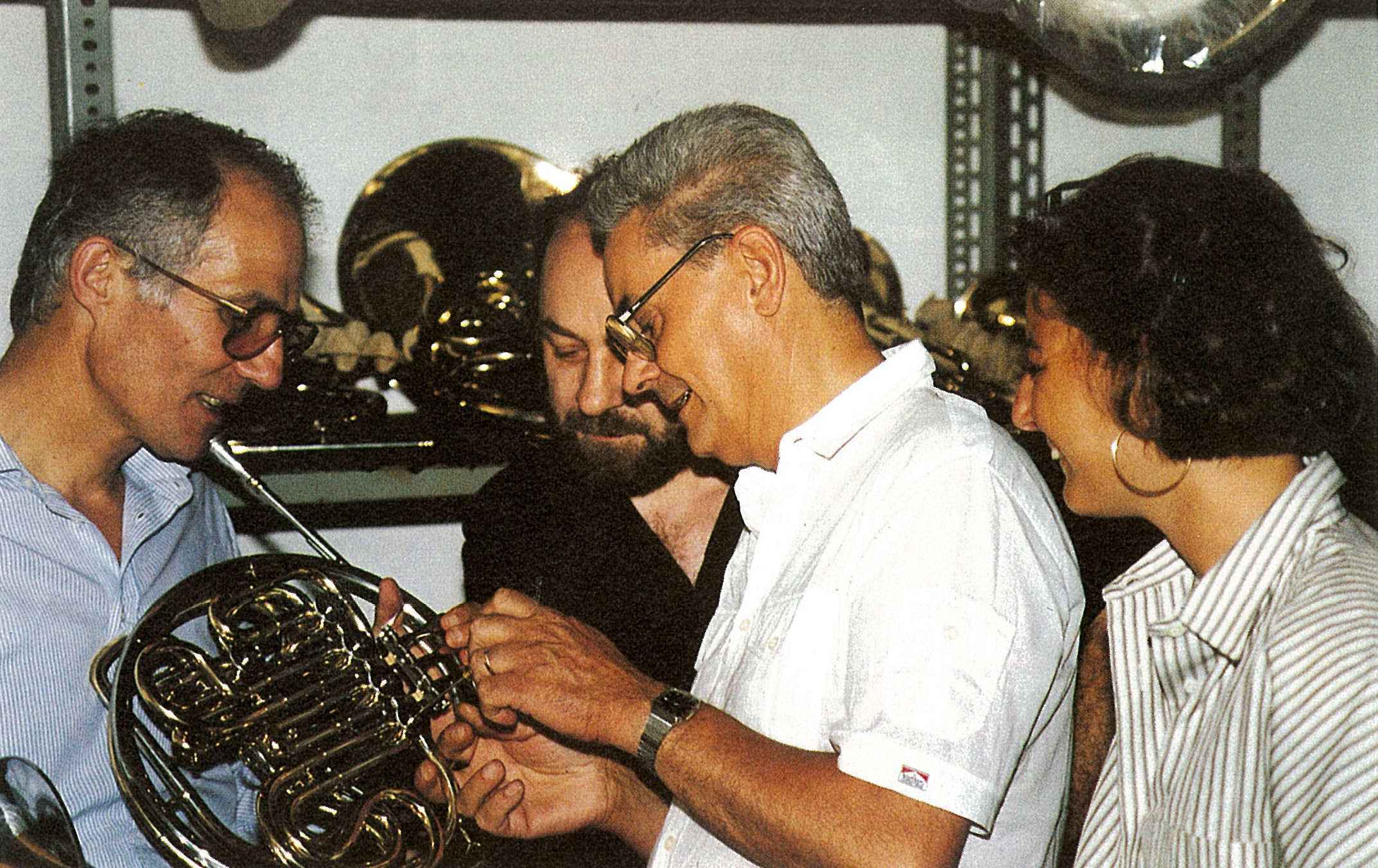
Prof. Crott, Walter Bellagamba, Angelo e Michele Benicchio

Prof. Crott, Walter Bellagamba, Angelo e Michele Benicchio

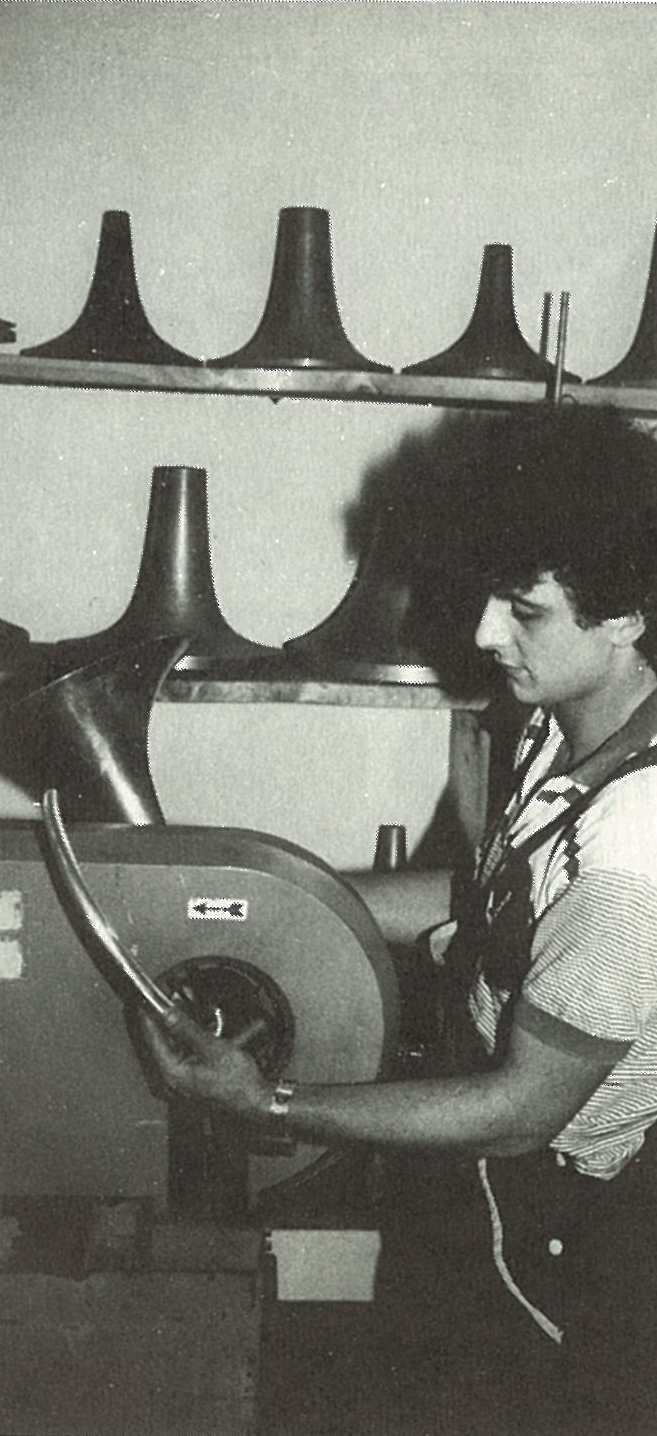
Michele Benicchio

Michele Benicchio

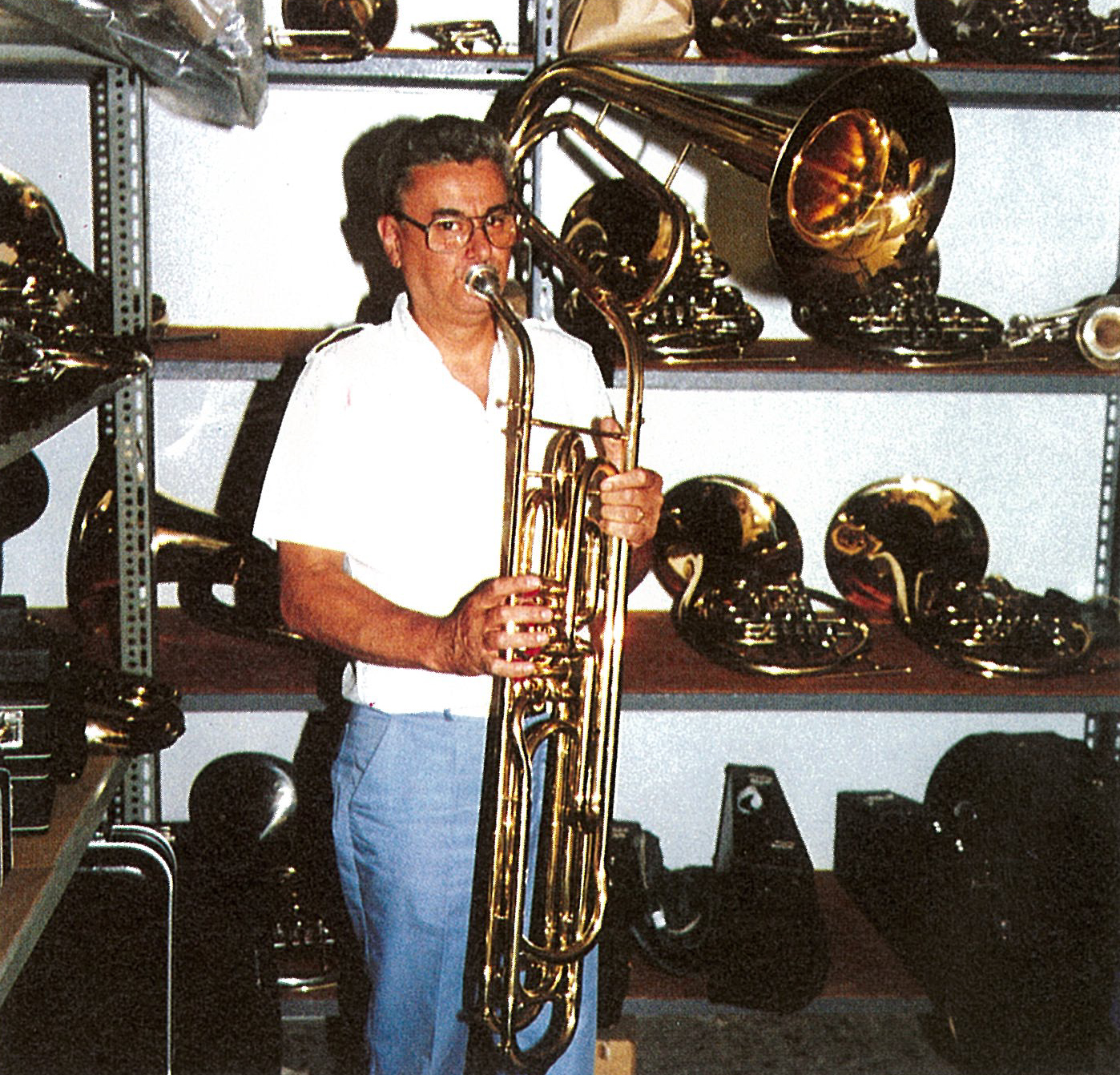
Angelo Benicchio (cimbasso Kalison)

Angelo Benicchio (cimbasso Kalison)

Angelo, more interested in contact with professional musicians than his father had been, surrounded himself with the most celebrated horn players in Italy and, as a new departure, produced various models of double horn in collaboration with the prestigious Allegri (1st horn at La Scala, Milan, from 1920 to 1950), then with Argeo Lusardi (1st horn in the same orchestra). Other renowned soloists gave encouragement to the dynamic Milan maker by playing his instruments: Domenico Ceccarossi, (a soloist acclaimed all over the world, former solo horn at the RAI Symphony Orchestra in Rome); Salvatore Accardi (1st horn at the Academy of Santa Cecilia in Rome); Luciano Giuliani (1st horn at the RAI Symphony); and many others.

In 1982 Angelo Benicchio followed the same path with the tuba as he had done with the horn. Daryl Smith, the American tuba player settled in Milan, was to guide this development to fruition.

While still producing the full range of brass — family tradition would allow nothing less! — Kalison has managed to gain a foothold in the modern professional world.

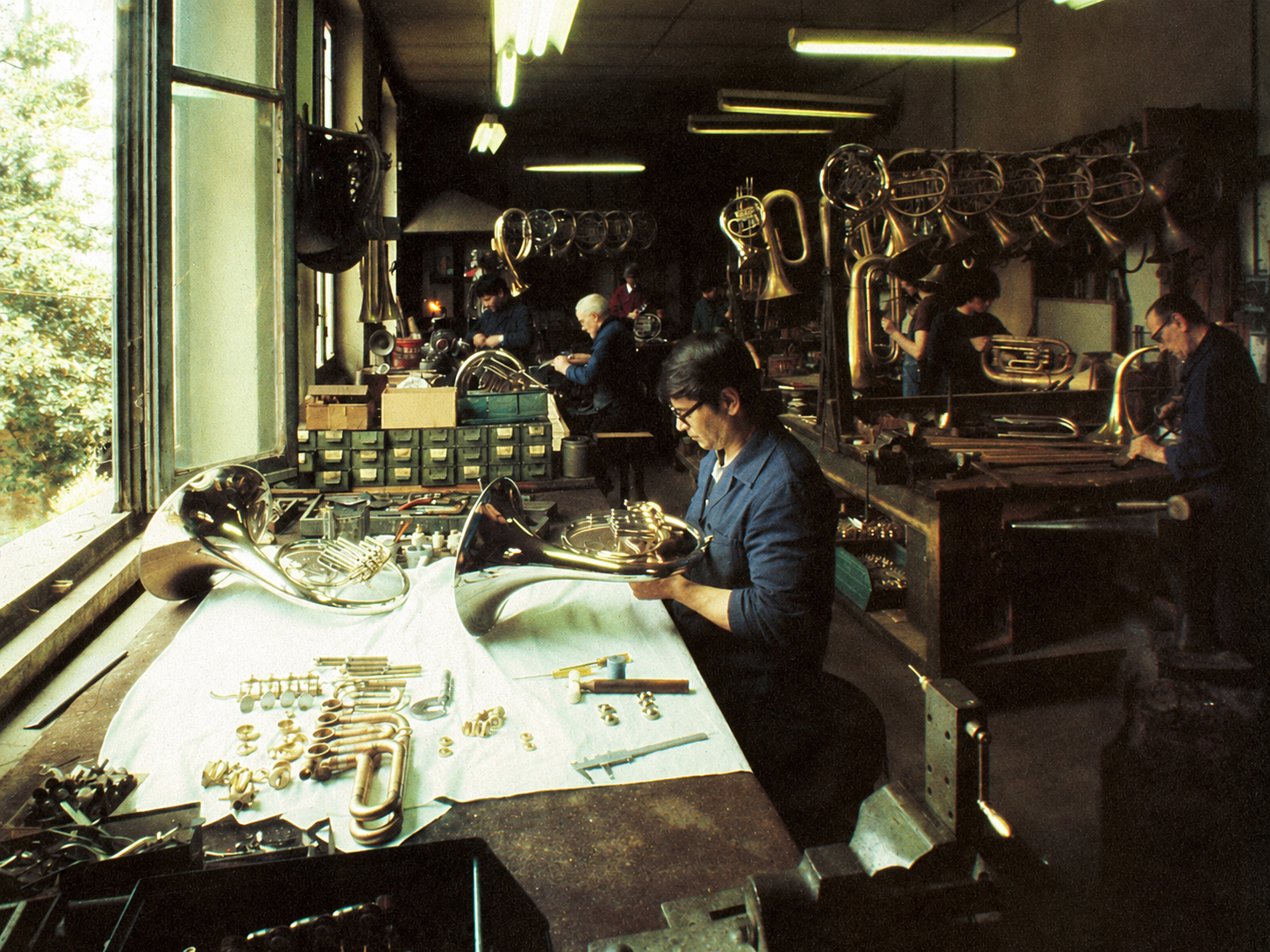
The firm moved into spacious new premises in 1987. Assisted by his wife and surrounded by a friendly team of a dozen people, Angelo Benicchio forges ahead with confidence and enthusiasm. Giuseppe Crott, the virtuoso solo horn at the RAI Symphony Orchestra in Milan (the tester and artistic adviser), and other professionals keep a watchful eye on how the work develops.

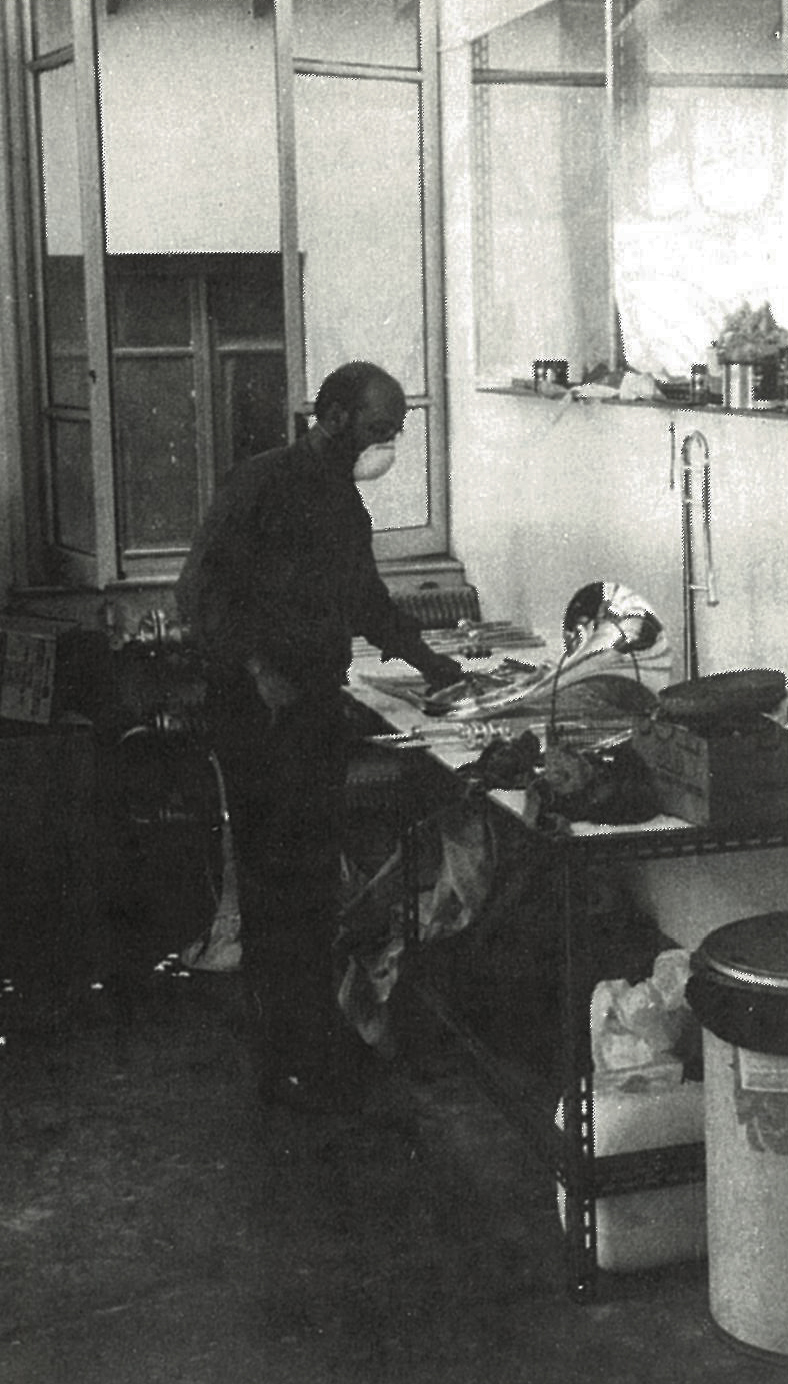
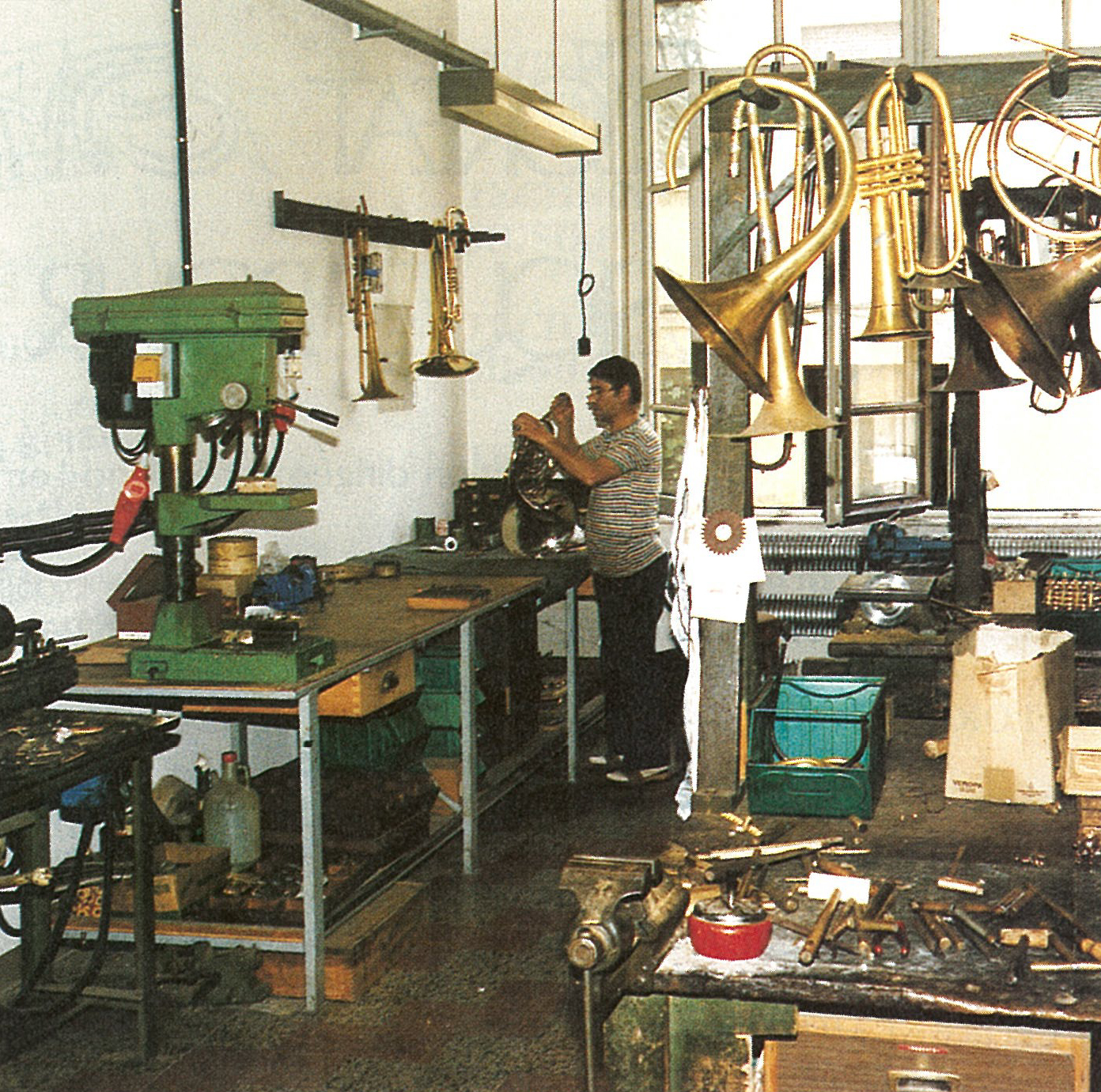
Kalison
Kalison
Kalison
Kalison

Kalison

Production is currently running at about 25 horns a month plus other brass and special orders (piccolo trumpets, pocket horns etc.)

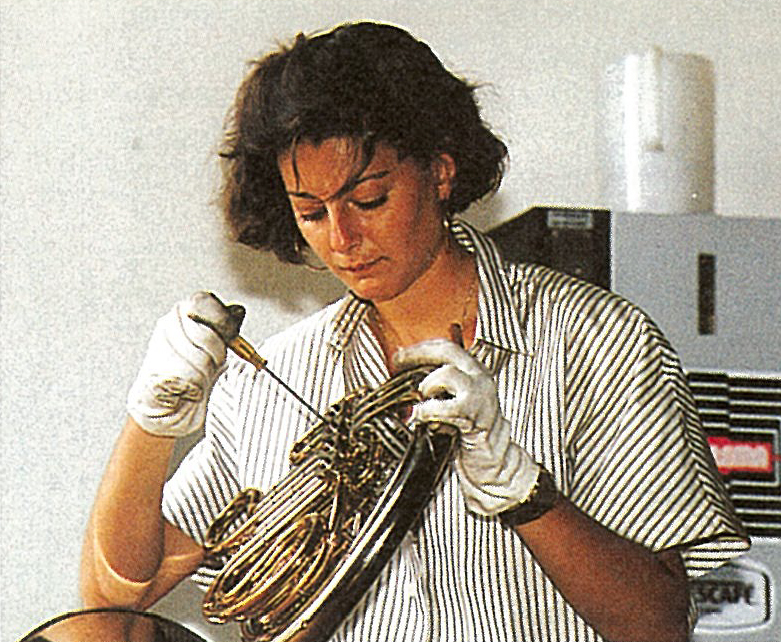
In 1984 Michela Benicchio, the instrument maker’s daughter, who had started out in veterinary medecine, realised that the future of Kalison depended on her. Exchanging her lab coat for a set of overalls and moving round all the phases of production, she applied herself to learning all about instrument making while her father passed on the necessary theoretical and technical knowledge to her. She learned to play the horn so as to have more insight into the subject. Now 25, she knows she will one day be able to carry on the work of her father and her grandfather.

A visit to number 96 via Pellegrino Rossi in Milan will provide not only an unusually warm welcome as well as the opportunity of trying various models of instruments and gauging the results of years of work by some splendidly single-minded people; you will also be delighted to find that Italy is awakening, discovering her identity — proper to her Latin genius — and making her own considerable creative contribution to the world!

Notes

¹ The Benicchio business (Kalison since 1953) has had the following addresses: from 1928 to 1955, via Lorenzo Bartolini; from 1955 to 1959, via Acerenza 6; since 1959, via Pellegrino Rossi 98 and, since 1987, via Pellegrino Rossi 96.

² Ferdinando Roth came from Graslitz in Bohemia (now Kraslice in Czechoslovakia), a great centre of brass instrument making from where many craftsmen emigrated.

Brass Bulletin 60, IV / 1987 pages 52–64

All content is protected by copyright © Brass Bulletin 1987–2026

Share this article

Facebook LinkedIn
Loading…

Questions & Answers

How the Digital Edition works

What does the Digital Edition include?

The Digital Edition brings together the articles already digitized as searchable online texts—not simply as scans or PDF files—along with their original illustrations, notes, authorship, issue information, and available translations. Related-article suggestions currently include only this digitized material.

Are the digital articles identical to the originals?

We preserve the original text, language, illustrations, captions, footnotes, and editorial context as faithfully as possible. The presentation is adapted for comfortable online reading, and obvious transcription or scanning errors may be corrected. The substance and character of the published article remain unchanged.

Which languages are available?

Brass Bulletin was published in English, French, and German throughout its history. Italian and Spanish translations were added from issue No. 60 onward.

On the Italian and Spanish sites, articles from issues 1–59 are therefore shown in English by default.

How often are new articles added?

New articles are added almost daily, with approximately one complete issue digitized each week. The pace may vary depending on the preparation, image work, and editorial checking required.

Why aren’t all articles available digitally?

The complete Brass Bulletin collection contains 1,246 articles published between 1971 and 2003. The full index is already available online, allowing readers to discover every article in the collection, including those whose complete text has not yet been digitized.

Digitization began in February 2026. Each article is carefully prepared for online reading, checked, and connected to its issue, authors, subjects, and illustrations. At the current pace of digitization, the complete collection is expected to be available online by February 2028.

Why do some references mention articles that are not available yet?

References in the original articles are preserved even when the material they point to has not yet been digitized. This keeps the historical and editorial record intact. As more issues are added to the Digital Edition, an increasing number of these references will lead to articles that can be read online.

Can I suggest an article or report a transcription error?

Yes. If there is an article you would particularly like to see digitized, or if you notice a possible transcription error or missing detail, please contact us. Reader feedback helps us improve the Digital Edition and prioritize useful connections within the archive.

How can I support Brass Bulletin?

Your support helps fund the preparation, verification, and online publication of the complete collection.

Subscribe to the Digital Edition

Prefer to support us without subscribing?

Make a donation

How is the digitization progressing?

We’re gradually making the Brass Bulletin available online, article by article. You can read newly digitized articles as soon as they’re ready, even before an entire issue is complete.

Visit our Digitization Roadmap to browse recent additions and see estimated availability for upcoming issues. These estimates follow our recent pace and may change.

Search Brass Bulletin.