Explore institutional access →

2 min. read

Special GDR

An interview with Ludwig Güttler

An interview with Ludwig Güttler

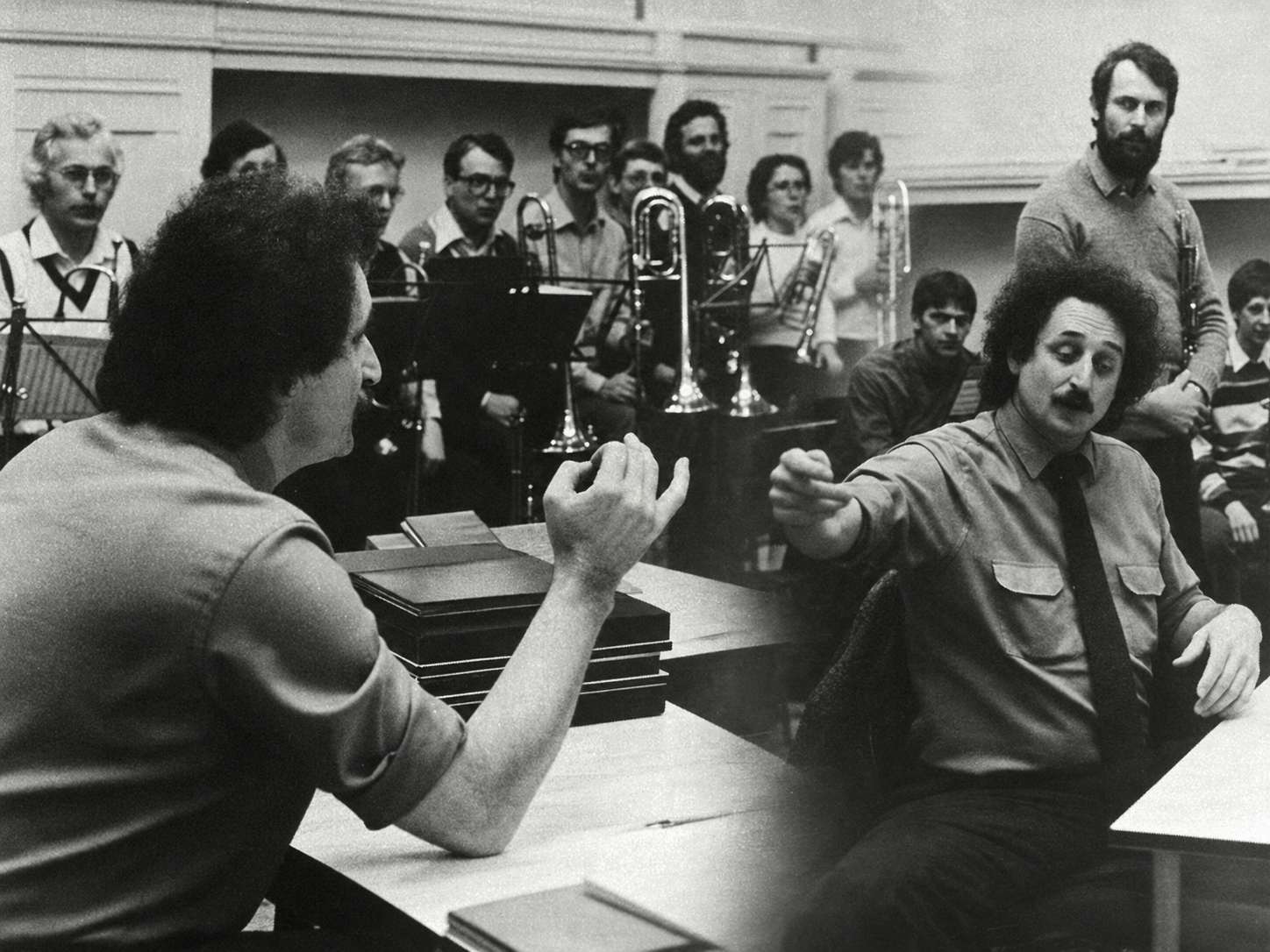
Ludwig Güttler

As part of our look at brass music in the G.D.R. we publish below extracts from an interview given by the eminent trumpeter Ludwig Güttler during the 27th G.D.R. International Music Seminar in Weimar in July 1987.

Question: What in general do you intend to pass on to your course participants and what are the main topics for discussion this year?

Ludwig Güttler: For many outstanding young players the only point in a course like this is what it can do for them. Others come because they have a problem or think they have a problem. Despite these varied expectations some generalisations are possible, especially as on previous courses I have been able to make the following observation.

Whether in practising, whether in setting themselves musical goals, whether in perceiving their performance at a competition or wherever, I always notice — with increasing regret, I must say — people basing their music on factors which are of secondary importance. In other words the challenge of performing a work is seen primarily — and in extreme cases only — from the point of view of feasibility. Questions of content, expression and style and also basic questions of musical communication from person to person, of emotion and excitement — these generally receive insufficient attention. So my task here is to act as a corrective, not by instruction but by example. With the brass players I meet here the problem is generally more acute than for example with woodwind or string players. The concentration on a certain repertoire in the orchestra gives many brass players the idea that the virtues required for performing the high Romantics constitute in themselves the whole spectrum of musical activity. It is this impoverishment and this basic error that I am trying to counter.

Question: What consequences does this have for young trumpeters, their standards and their training?

L. G.: There are plenty of musicians, thinking and working responsibly, who can be heard everywhere in the media. The unending flood of good educational material provides every opportunity for improving one’s playing. Many works not previously accessible are now available in practical editions. And young trumpeters can train in symposiums, courses and congresses in a way which provides an ideal basis for further improvement. In the narrower field of college training this means that the young players must be trained with these standards in mind. This entails widening the scope of musical training: study of the literature, physiological monitoring and training in basic functions, orchestral excerpts, solos, ensembles, chamber music, brass ensembles, natural trumpet, corno da caccia, ear-training specific to the instrument (which must be preceded by general ear-training), modern playing techniques and orchestral playing.

And the oft repeated question of how long to practise is not nearly as important as the question of what to practise and how to practise it correctly.

Question: You have started a new chamber group, the “Virtuosi Saxoniae”. This reveals a new facet yourself, because you are not only soloist and artistic director as we already know you, but also conductor. Will your previous activities now take second place, and what are your intentions and goals with this new chamber orchestra?

L. G.: If people make the mistake of thinking that my previous work was limited to solo performance, they may get the impression that there is some ulterior motive in this new development. The fact that I continue to play my trumpet and corno da caccia concertos with the Virtuosi is a rational coordination and optimisation of my previous work. Beyond that, the task which in recent years I have perceived as a pressing one and which I have now undertaken to carry out is that of performing a whole series of works, indeed a whole period. The treasures of the Dresden musical heritage play a particularly important role in this. I am very pleased with this new job and I regard it as a necessary progression from my previous activities.

Question: Pardon my asking yet again the question you have been asked so often before in view of your enormous workload: Where do you find the energy? How do you keep yourself in condition and recharge your batteries?

L. G.: This is the easiest question to answer. Experience has taught me that everything I am able to enjoy doing recharges my batteries. An extension of, and cross-fertilisation between, my various projects is therefore the means of investing the necessary energy in sensible, creative and pleasurable things while avoiding irritating, enervating and destructive things.

It sounds like an easy answer but it requires a great deal of decisiveness, an unpopular amount of saying No, and a quite unsociable refusal to spend time on anyone or anything which I consider pointless or futile. Since time and energy are finite elements in our lives, responsible and economical use of them constitutes the other half of the answer to this, the most important of the questions you have asked.

Brass Bulletin 60, IV / 1987 pages 41–43

All content is protected by copyright © Brass Bulletin 1987–2026

Share this article

Facebook LinkedIn
Loading…

Questions & Answers

How the Digital Edition works

What does the Digital Edition include?

The Digital Edition brings together the articles already digitized as searchable online texts—not simply as scans or PDF files—along with their original illustrations, notes, authorship, issue information, and available translations. Related-article suggestions currently include only this digitized material.

Are the digital articles identical to the originals?

We preserve the original text, language, illustrations, captions, footnotes, and editorial context as faithfully as possible. The presentation is adapted for comfortable online reading, and obvious transcription or scanning errors may be corrected. The substance and character of the published article remain unchanged.

Which languages are available?

Brass Bulletin was published in English, French, and German throughout its history. Italian and Spanish translations were added from issue No. 60 onward.

On the Italian and Spanish sites, articles from issues 1–59 are therefore shown in English by default.

How often are new articles added?

New articles are added almost daily, with approximately one complete issue digitized each week. The pace may vary depending on the preparation, image work, and editorial checking required.

Why aren’t all articles available digitally?

The complete Brass Bulletin collection contains 1,246 articles published between 1971 and 2003. The full index is already available online, allowing readers to discover every article in the collection, including those whose complete text has not yet been digitized.

Digitization began in February 2026. Each article is carefully prepared for online reading, checked, and connected to its issue, authors, subjects, and illustrations. At the current pace of digitization, the complete collection is expected to be available online by February 2028.

Why do some references mention articles that are not available yet?

References in the original articles are preserved even when the material they point to has not yet been digitized. This keeps the historical and editorial record intact. As more issues are added to the Digital Edition, an increasing number of these references will lead to articles that can be read online.

Can I suggest an article or report a transcription error?

Yes. If there is an article you would particularly like to see digitized, or if you notice a possible transcription error or missing detail, please contact us. Reader feedback helps us improve the Digital Edition and prioritize useful connections within the archive.

How can I support Brass Bulletin?

Your support helps fund the preparation, verification, and online publication of the complete collection.

Subscribe to the Digital Edition

Prefer to support us without subscribing?

Make a donation

How is the digitization progressing?

We’re gradually making the Brass Bulletin available online, article by article. You can read newly digitized articles as soon as they’re ready, even before an entire issue is complete.

Visit our Digitization Roadmap to browse recent additions and see estimated availability for upcoming issues. These estimates follow our recent pace and may change.

Search Brass Bulletin.