Rendete Brass Bulletin disponibile nella vostra università, nel vostro conservatorio o nella vostra biblioteca Scoprite l’accesso istituzionale

2 min di lettura

Georgiy Antonovich Orvid

Portrait of a distinguished Soviet trumpeter

Georgiy Antonovich Orvid

Georgiy Antonovich Orvid

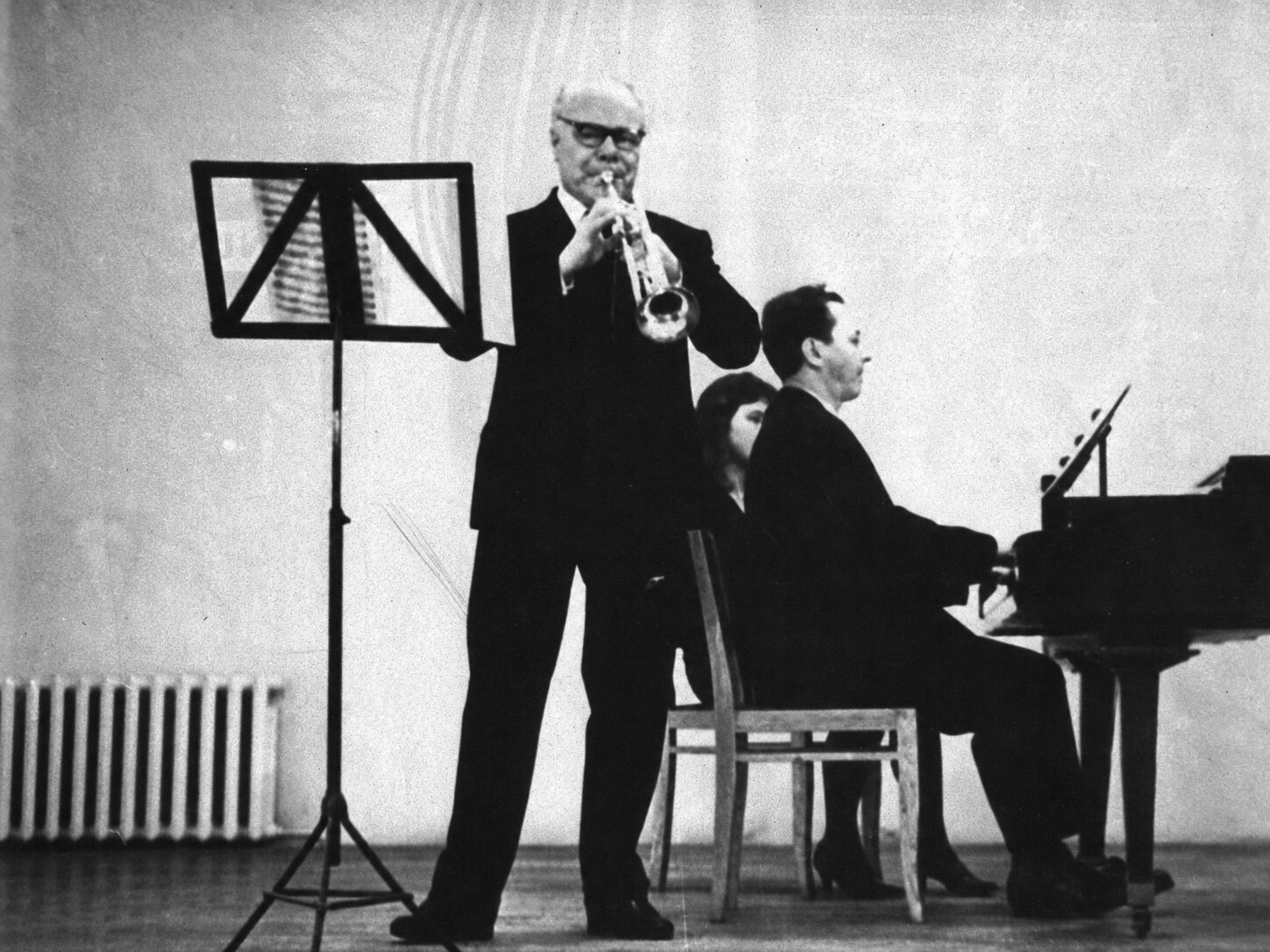
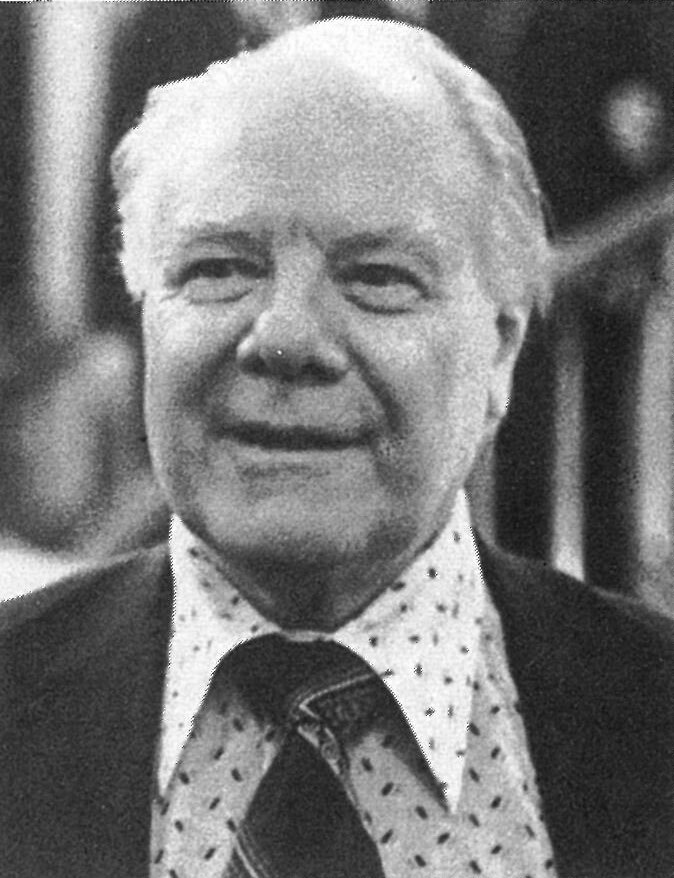
It is 82 years since the birth of Georgiy Antonovich Orvid (1904-1980) — the distinguished Soviet trumpeter, People’s artist of the Russian Federation and Professor at the Moscow State Conservatoire. A pupil of the outstanding Russian trumpeter M. I. Tabakov (1877-1956), Orvid became a renowned musician, teacher and public figure.

Orvid was born in the Ukraine, in the town of Voznesensk. His father was a bandmaster and it was he who aroused the boy’s interest in the trumpet and became his first teacher. From the first Orvid showed remarkable musical abilities and at the age of 13 he attracted the attention of many by his quick progress. During the Russian Civil War (1918-1926) Orvid was a bandsman in one of the regimental bands in the Red Army. After the war he became a student at the Kiev Conservatoire where along with mastering trumpet technique he studied military brass band instrumentation. He graduated in 1927 with a diploma in both subjects. The desire to perfect his playing technique led him to Moscow where he became a 3rd-year student at the Moscow State Conservatoire, studying with Tabakov. After he graduated in 1930 he was engaged in post-graduate studies for 2 years.

Orvid started teaching at the Moscow Conservatoire in the 1930s, later becoming Professor. At the same time he played in the Bolshoi Theatre Orchestra, Radio Symphony Orchestra, USSR State Symphony and Moscow Philharmonic. From 1939 to 1946 Orvid was engaged in training bandmasters for the Soviet Army. He spared no efforts to improve the performance of military bands. At the end of the 1940s and in the 1950s Orvid held important administrative posts: Pro-rector of the Moscow Conservatoire, director of the Bolshoi Theatre, USSR Deputy Minister of Culture. For a long time he held the chair of wind and percussion instruments at the Moscow Conservatoire.

Despite his versatile public activity Orvid never gave up the trumpet. A biography of his creative years falls into 2 periods — the 1930s and the 1960-1970s. Already in the 1930s his numerous concert performances revealed his bright and original creative personality. In 1941 Orvid won the All-Union Wind-Players’ Competition in Moscow. In the 1960s, after a break of almost 20 years, Orvid appeared on the concert platform again. His playing style was distinguished by fluent mastery of both the technical and the expressive resources of the trumpet, a wide compass with pure and steady sounds and evenness of timbre in every register. He had an excellent memory and played all the compositions by heart. He always played some new composition for the trumpet, which is why his every performance excited great interest among musicians and music lovers. In 1967 on the stage of the Little Hall of the Moscow Conservatoire he played 5 big sonatas for trumpet and piano by Soviet composers B. Asaf’ev, E. Golubyov, M. Mil’man, N. Platonov and Y. Aleksandrov. Orvid was often the first to play musical pieces hitherto unknown to Soviet trumpeters: “Legend” by Enescu, “Fairy-tales” by Absil, “Triptych” by Tomasi, “Intrada” by Honegger, “Triptych” by Desenclos etc. His performances stimulated musicians to bring new compositions into the repertoire.

Brass Bulletin image

Orvid’s brilliant performances in the Great Hall of Moscow Conservatoire were always a great success. There he played the Concerto for trumpet and orchestra by Haydn and the Symphony-concerto for trumpet and orchestra by a contemporary French composer, A. Barraud, conducted by Jean-Claude Casadesus. Orvid has made many recordings: the Sonata for two trumpets, string orchestra and organ by Vivaldi (with Orvid’s pupil V. Yudin), the Sonatina by Martinu, sonatas by Hindemith, Mil’man, Aleksandrov, the Concertino by Banshikov and the Andante and Scherzo by J. Barat are the most and remarkable of them. Orvid is the author of the first Soviet trumpet tutor, first published in 1933, republished in 1936 and 1940. Along with scales, exercises and studies the tutor contains diverse musico-artistic material with piano accompaniment. Orvid edited Arban’s trumpet and cornet tutor, revised and with exercises and studies by Maire, published in the USSR in 1964. The tutor familiarized Soviet trumpeters with the contemporary principles of trumpet teaching in France. Proceeding from his playing and teaching experience Orvid wrote some theoretical works on the trumpet. His scientific-methodical investigation “Some objective principles of sound production and the ‘art of trumpet playing’”, published in 1976, was written on the basis of tests conducted in the acoustic laboratory and of X-ray examinations of the player. Orvid analyses inner physiological processes and gives a lot of useful advice. He also wrote several articles dedicated to famous Soviet wind players.
Georgiy Antonovich Orvid

Georgiy Antonovich Orvid

For nearly 50 years Orvid was a teacher at the Moscow State Conservatoire. His pupils include many winners at international and All-Union musical competitions, soloists in major symphony and opera orchestras and famous teachers: V. Yudin, S. Gevorkyan, L. Golovin, V. Traibman, O. Usach, L. Chumov, E. Fomin, M. Usach, N. Chobanu and others.

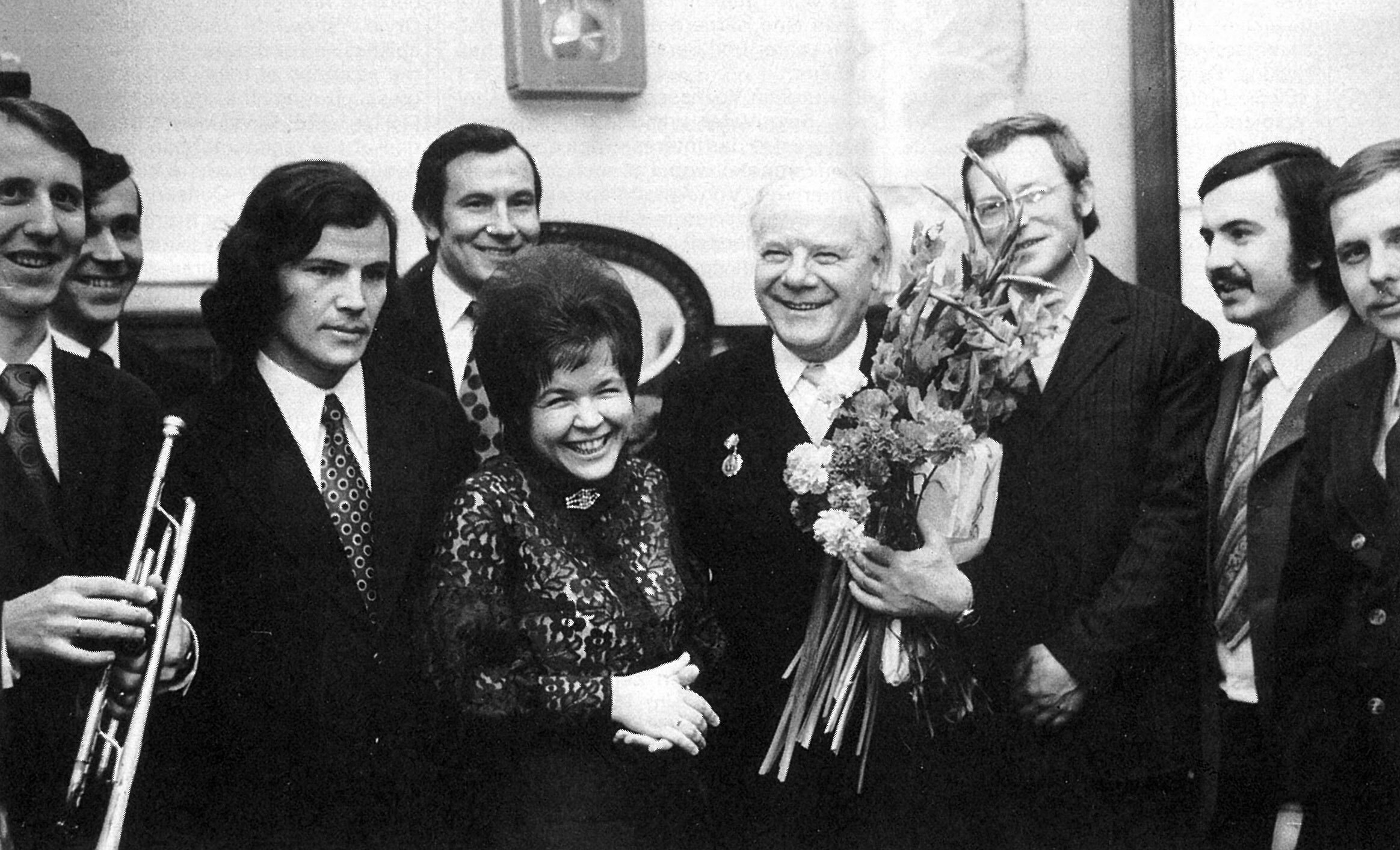
In december 1984 there was a memorial reception in the Little Hall of the Moscow Conservatoire, dedicated to Orvid on the occasion of his 80th birthday. The Moscow musical public, the best Soviet trumpet soloists, the Moscow trumpet quartet, the student brass quintett of the Moscow Conservatoire, the trumpet ensemble of the stage wind band of the Bolshoi Theatre have been playing.

(Translated from Russian by Jelena Kuznetsova.)

Brass Bulletin 55, III / 1986 pagine 75–79

Tutti i contenuti sono protetti dal diritto d’autore © Brass Bulletin 1986–2026

Condividi questo articolo

Facebook LinkedIn
Loading…

Domande e risposte

Come funziona l’edizione digitale

Che cosa comprende l’edizione digitale?

L’edizione digitale riunisce gli articoli già digitalizzati sotto forma di testi leggibili e ricercabili online — non semplicemente come scansioni o file PDF — insieme alle illustrazioni originali, alle note, agli autori, alle informazioni sul numero della rivista e alle traduzioni disponibili. I suggerimenti di articoli correlati comprendono attualmente solo questo materiale digitalizzato.

Gli articoli digitali sono identici agli originali?

Conserviamo il più fedelmente possibile il testo originale, la lingua, le illustrazioni, le didascalie, le note e il contesto editoriale. La presentazione viene adattata per una lettura confortevole online e gli evidenti errori di trascrizione o scansione possono essere corretti. Il contenuto e il carattere dell’articolo pubblicato rimangono invariati.

Quali lingue sono disponibili?

Brass Bulletin è stato pubblicato in inglese, francese e tedesco nel corso di tutta la sua storia. Le traduzioni italiane e spagnole sono state aggiunte a partire dal numero 60. Sui siti italiano e spagnolo, gli articoli dei numeri da 1 a 59 vengono quindi mostrati in inglese per impostazione predefinita.

Con quale frequenza vengono aggiunti nuovi articoli?

Nuovi articoli vengono aggiunti quasi ogni giorno, con circa un numero completo digitalizzato ogni settimana. Il ritmo può variare in base al lavoro di preparazione, elaborazione delle immagini e verifica editoriale necessario.

Perché non tutti gli articoli sono disponibili in formato digitale?

La collezione completa di Brass Bulletin comprende 1.246 articoli pubblicati tra il 1971 e il 2003. L’indice completo è già disponibile online e consente di scoprire tutti gli articoli della collezione, compresi quelli il cui testo integrale non è ancora stato digitalizzato.

La digitalizzazione è iniziata nel febbraio 2026. Ogni articolo viene accuratamente preparato per la lettura online, verificato e collegato al relativo numero, agli autori, agli argomenti e alle illustrazioni. Al ritmo attuale di digitalizzazione, la collezione completa dovrebbe essere disponibile online entro febbraio 2028.

Perché alcuni riferimenti citano articoli che non sono ancora disponibili?

I riferimenti presenti negli articoli originali vengono conservati anche quando il materiale a cui rimandano non è ancora stato digitalizzato. In questo modo si preserva l’integrità storica ed editoriale della rivista. Man mano che nuovi numeri vengono aggiunti all’edizione digitale, un numero crescente di questi riferimenti condurrà ad articoli leggibili online.

Posso suggerire un articolo o segnalare un errore di trascrizione?

Sì. Se desiderate che un determinato articolo venga digitalizzato, oppure se notate un possibile errore di trascrizione o un’informazione mancante, contattateci. I riscontri dei lettori ci aiutano a migliorare l’edizione digitale e a stabilire priorità utili all’interno dell’archivio.

Come posso sostenere Brass Bulletin?

Il vostro sostegno contribuisce a finanziare la preparazione, la verifica e la pubblicazione online dell’intera collezione.

Abbonati all’Edizione digitale

Preferite sostenerci senza abbonarvi?

Fate una donazione

Come procede la digitalizzazione?

Stiamo rendendo Brass Bulletin disponibile online gradualmente, articolo per articolo. Potete leggere gli articoli appena digitalizzati non appena sono pronti, anche prima che un intero numero sia completato.

Consultate il nostro calendario di digitalizzazione per scoprire le ultime aggiunte e le date di disponibilità stimate dei prossimi numeri. Le stime si basano sul nostro ritmo recente e possono cambiare.

Cerca in Brass Bulletin.