9 min. read
Part 1
From musical wallpaper to the twelve-note row
The trombone in the chamber ensemble at the beginning of modern music (1913-1934)
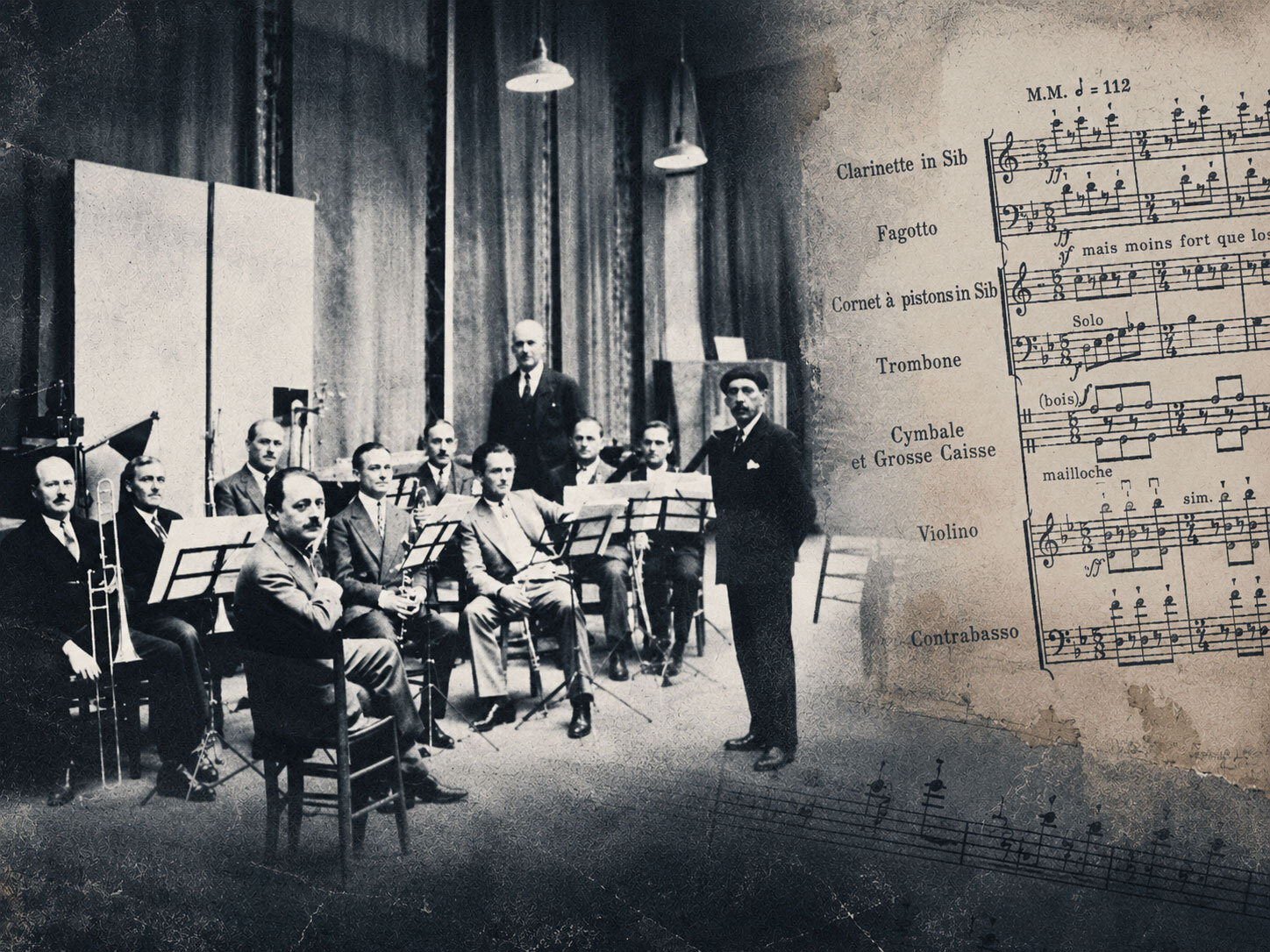
Darius Milhaud admired its "purity and clarity", Paul Hindemith saw it as a means of attacking musical norms and conventions unawares, and it gave Igor Stravinsky the opportunity to mount performances of his own works even amid the shortages of resources in the First World War. It is the "orchestra of soloists"; the theme of this study is to be the tendency of the younger generation of European composers of 1910/20 to scorn the large symphony orchestra and to favour in its place an ensemble consisting of a few solo instruments. This will be seen from a particular point of view, of course: for, since the movement towards a thoroughly solistic style of writing for chamber ensemble would have been unthinkable without the technical and aesthetic emancipation of all the instruments involved, it was accompanied by the increasing involvement of hitherto neglected or ridiculed instruments — percussion, for example, or the saxophone, but also the trombone, which had rarely been entrusted a solo role in the Romantic orchestra.
Here the new preference for the small group instead of the large symphony orchestra, as well as the discovery of new instrumental colours, emerge as two factors in a general criticism of the musical heritage of the 19th century and its forms (chamber music, symphony, opera) which to many of these post-Wagnerians seemed intellectually too ornate (Hindemith), music of illusion and sentimentality (Stravinsky, Milhaud), or inappropriate to a new material awareness (Schönberg and the Viennese school). The main targets of the avant-garde's polemics were the gigantic overgrown orchestras of late Romanticism (as in Gustav Mahler's "Symphony of a Thousand" and Richard Strauss's "Sinfonia domestica"), whose orchestral gargantuanism was taken as a symptom of the decadence of pre-war bourgeois society. The musical manifestations of this were the restriction of instrumental resources to small ensembles, mostly in unusual combinations, a return to older, pre-Romantic forms (especially 18th-century ones — concerto grosso, suite, etc.) and the integration of the lighter muse (jazz, salon music), the pure shock effect of certain "low" instruments such as percussion was used particularly in France to horrify the culture-saturated middle class ("épater le bourgeois").
The trombone was particularly well suited for this task: as an instrument of scandal it could scarcely fail — if only because of its supposed noisy vulgarity — for its hard sound, rich in overtones, was more appropriate to the new anti-Romantic sound ideal than the soft sound of the horn, and the early twenties saw the beginning in Europe of its triumphal progress as the characteristic instrument of jazz. In addition, thanks to progress in instrument making around the turn of the century and innovations in playing technique in the late Romantic symphony orchestra, it offered a high level of technical ability which made up for its backwardness in comparison with more traditional solo instruments.
There is no doubt that the Viennese Arnold Schönberg was the first to introduce, with his "Chamber Symphony" op. 9 for 15 solo instruments (1906), the "lifting of the natural boundaries between chamber music and symphony"¹. But Igor Stravinsky — with works such as the "Soldier's Tale" and "Ragtime" for 11 instruments (both 1918) whose instrumentation goes back to jazz — was the first to mark a new predilection for the trombone in chamber ensembles of the most varied tendencies: the nonchalant jazz works of Milhaud, the playful neo-Baroque chamber concertos of Hindemith or the strictly serial miniatures of Anton Webern.
The following survey of important chamber ensemble works with trombone from the period 1913 - 1934 — a decisive period for the development of modern music — is intended not only to suggest repertoire for trombonists interested in mixed ensembles²; it also demonstrates that it was the extremely varied musical tendencies in Europe of the twenties, each with its own ideas of form and sound, that made possible the emancipation of the trombone in chamber music.
Brass Bulletin 55, III / 1986 pages 6–14
All content is protected by copyright © Brass Bulletin 1986–2026