5 min. read
The classical solo concerto for trombone and its interpreters in the 19th century
By Werner Beyer
Where do the origins of the classical trombone literature lie?
This question can be followed through to the first trombone concertos which were written in the 18th century specifically for alto trombone (Albrechtsberger, Wagenseil). The origins of solo literature for tenor trombone however, lie in the early 19th century. The center of composing and performing for the trombone was at that time central Germany. The presence of good solo performers brought about the best conditions for this.
The programmes of the Gewandhaus Orchestra in the 19th century are a valuable source for the origins of trombone repertoire. In them is contained a "Concertino for Trombone and Orchestra" by Carl Maria von Weber. The performance was on the 6th March 1826 with another on the 15th November 1832. The soloist in this concertino was Carl Traugott Queisser. Unfortunately this was not an original composition of Webers. As there was at this time no usable solo trombone literature, C.T. Queisser had arranged Webers Concertino for Horn op. 45 for trombone. A review in the Leipziger Allgemeine Zeitung (34, 1832, p. 869) ran thus: "Our Queisser had arranged for the bass trombone a Concertino for horn by C. M. v. Weber and played it with his usual mastery, only the composition seemed to us not quite suitable for this instrument."
Another "Concertino for Trombone" was composed by the then violinist in the Gewandhaus Orchestra and later director of music in Altenburg, C. G. Müller. The first performance of this work took place on the 10th January 1828. The soloist was once again C. T. Queisser. In the following 7 performances he was also the soloist. The last performance recorded in the programmes of the Gewandhaus Orchestra was on the 19th October 1843. This Concertino of C. G. Müller is the first traceable classical concerto in the tenor trombone repertoire. In the concert programmes of this epoch there were often one or more instrumental works.
These programmes were also very wide-ranging and undemanding. With the passage of time other criteria have come to be set. Stimulated by the copious demands of the concert programmes of the day, composers ran off instrumental concertos one after the other. In old solo books for trombone are to be found such names as: Paudert, Demerssmann, Wichtel, Belke, Jehmlich, Kühn, Knopp, Müller, Nowakowsky, Gräfe, Rex, Sachse and David; to mention but a few. From the multitude of compositions which appeared at this time, only very few works have stood the test of time and still enjoy recognition. A concerto which is — above all amongst central European musicians — rightly recognized as the classical trombone concerto is the "Concertino for Trombone" by Ferdinand David op. 4. With this concerto technical and musical criteria are set even today at auditions and examinations at music colleges. Of lasting merit are the first and second movements of this work: Allegro maestoso and Andante, marcia funebre. The third movement is unfortunately merely a thematic repetition of the first movement.
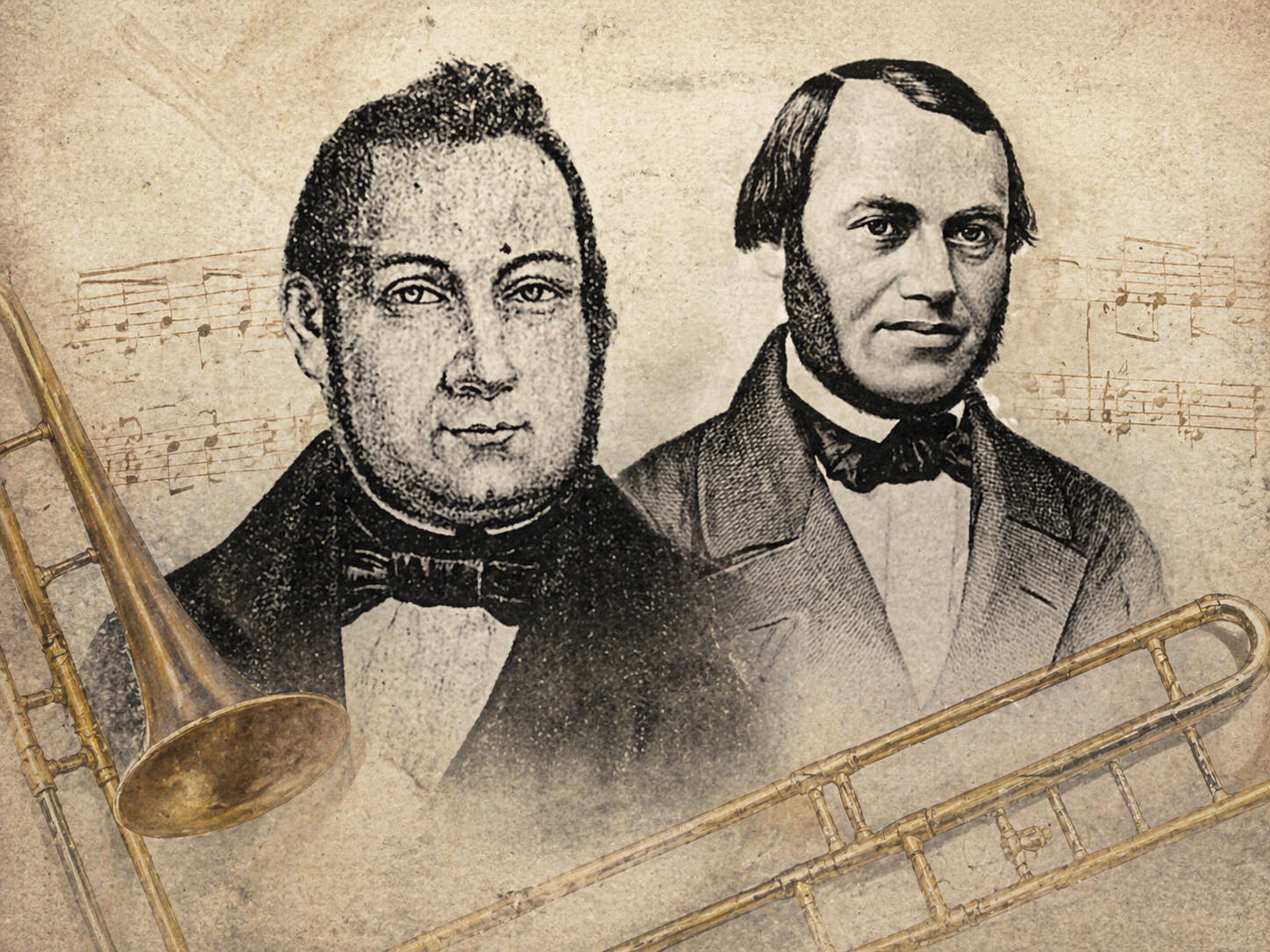
In the continuation, the central role of Ferdinand David and Carl Traugott Queisser is explored in detail, along with the performance history of the concertino and the evolution of the trombone as a solo instrument in the 19th century.
Brass Bulletin 25, I / 1979 pages 51–55
All content is protected by copyright © Brass Bulletin 1979–2026