Discoveries for brass players, once a month. Join our free newsletter →

2 min. read

This article is for subscribers.

Special Finland

Brass achieves academic respectability
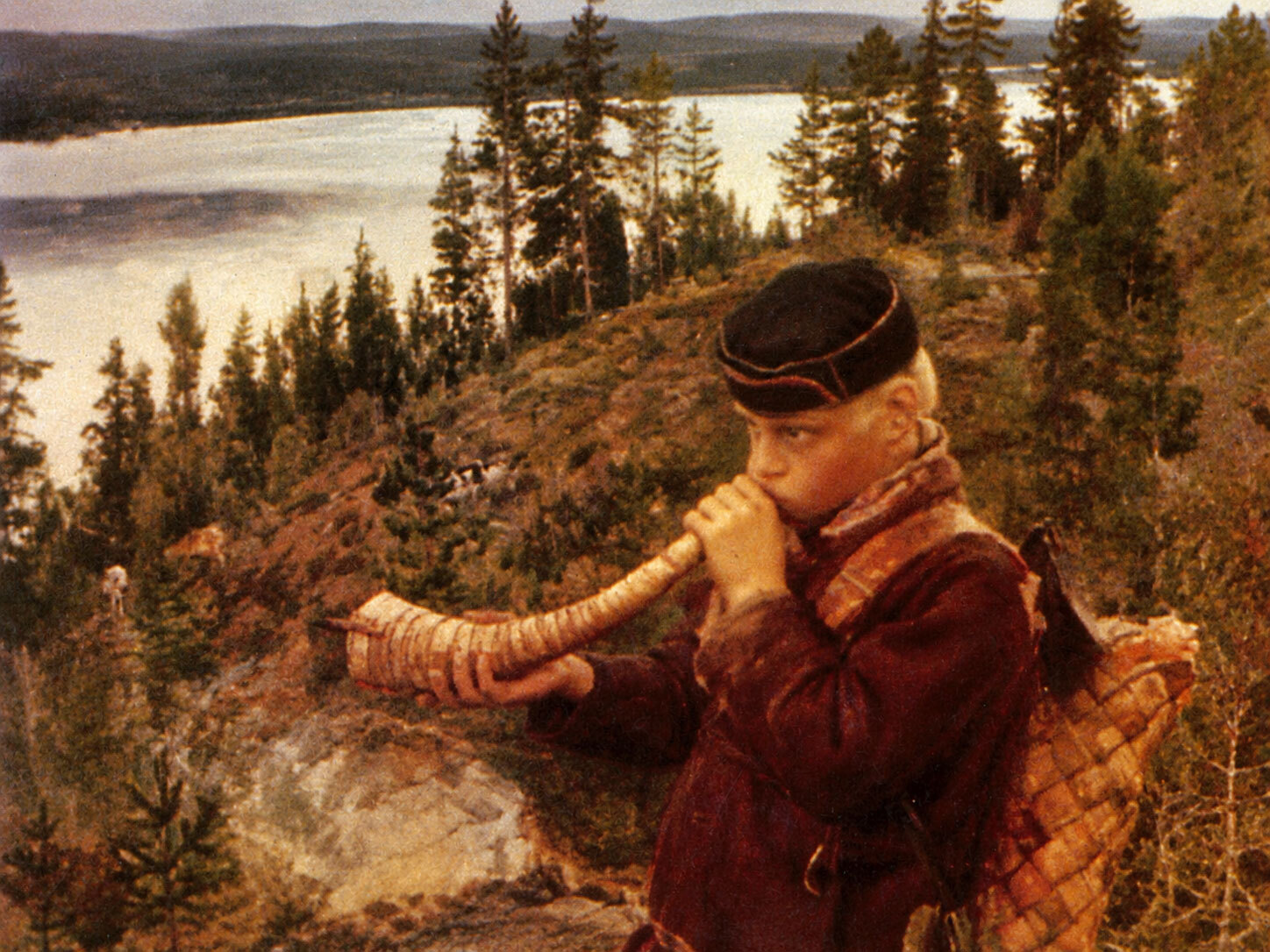
Once treated as marginal, Finland’s brass septet tradition entered academic research, challenging where folk practice ends and music history begins.
Brass achieves academic respectability

In 1975 four musicians — Holger Fransman, Kauko Karjalainen, Arvo Kuikka and Olavi Lampinen (whose place was taken after his death in 1983 by Jukka Vuolio) — realised the urgency of taking action to save what was left of the surprising — and endangered — tradition of the Finnish brass septet.¹

They lobbied, hunted, researched and appealed. Soon the Finnish Academy decided to finance a large research project with the title “Processes of change in Finnish musical culture”. Fortunately our four musician’s work on the septet tradition was included in it, Kauko Karjalainen being given official responsibility to head this section. The study should be completed by the end of 1986.

The following aspects have, so far, been raised: brass septets as an instrumental combination (practical and historical aspect), educational and professional background of the players (sociological aspect), septets as social entertainment (sociological aspect), brass septets and popular movements and organizations (historical, political and sociological aspect), brass septets as “regional orchestras” of their time (cultural aspect), septets reflecting the rural and urban cultures (change in rural culture), providing the septets with instruments (historical and practical aspect) and finally the repertoire of the septets (historical, musicological and also sociological aspect). There is also the question of the change of sound ideal. Charles Haam describes the establishment of brass bands in the United States around 1830 as “a dramatic change”² — before that people were accustomed to hear mostly woodwinds in military bands.

In Finland the development towards brass bands began as early as the 1840’s. The military bands had a very strong Russian influence at that time, indeed they belonged to Czar’s army. No doubt the military brass bands then served as a model for the amateur civilian bands, especially when, occasionally, military bands were abolished and the musicians moved to different parts of Finland. There is much in common with Swedish brass bands (mostly sextets). A similar study of these is available for comparison.⁴ This is also the study from which the concept of meso music has been taken.

Although the great majority of the septet repertoire has consisted of marches, dance music and folk tunes, there are also pieces which were originally composed for brass septet and which alongside arrangements of concert overtures and opera paraphrases can be considered as “art music”. Tiera by Jean Sibelius, a composition that has been published and recorded⁵ is one example.

This article is for subscribers.

CHF 5.00 per month · Cancel auto-renewal anytime.

Enjoy unlimited access to all digitized Brass Bulletin articles.

Brass Bulletin 53, I / 1986 pages 36–39

All content is protected by copyright © Brass Bulletin 1986–2026

Share this article

Facebook LinkedIn
Loading…

Questions & Answers

How the Digital Edition works

What does the Digital Edition include?

The Digital Edition brings together the articles already digitized as searchable online texts—not simply as scans or PDF files—along with their original illustrations, notes, authorship, issue information, and available translations. Related-article suggestions currently include only this digitized material.

Are the digital articles identical to the originals?

We preserve the original text, language, illustrations, captions, footnotes, and editorial context as faithfully as possible. The presentation is adapted for comfortable online reading, and obvious transcription or scanning errors may be corrected. The substance and character of the published article remain unchanged.

Which languages are available?

Brass Bulletin was published in English, French, and German throughout its history. Italian and Spanish translations were added from issue No. 60 onward.

On the Italian and Spanish sites, articles from issues 1–59 are therefore shown in English by default.

How often are new articles added?

New articles are added almost daily, with approximately one complete issue digitized each week. The pace may vary depending on the preparation, image work, and editorial checking required.

Why aren’t all articles available digitally?

The complete Brass Bulletin collection contains 1,246 articles published between 1971 and 2003. The full index is already available online, allowing readers to discover every article in the collection, including those whose complete text has not yet been digitized.

Digitization began in February 2026. Each article is carefully prepared for online reading, checked, and connected to its issue, authors, subjects, and illustrations. At the current pace of digitization, the complete collection is expected to be available online by February 2028.

Why do some references mention articles that are not available yet?

References in the original articles are preserved even when the material they point to has not yet been digitized. This keeps the historical and editorial record intact. As more issues are added to the Digital Edition, an increasing number of these references will lead to articles that can be read online.

Can I suggest an article or report a transcription error?

Yes. If there is an article you would particularly like to see digitized, or if you notice a possible transcription error or missing detail, please contact us. Reader feedback helps us improve the Digital Edition and prioritize useful connections within the archive.

How can I support Brass Bulletin?

Your support helps fund the preparation, verification, and online publication of the complete collection.

Subscribe to the Digital Edition

Prefer to support us without subscribing?

Make a donation

How is the digitization progressing?

We’re gradually making the Brass Bulletin available online, article by article. You can read newly digitized articles as soon as they’re ready, even before an entire issue is complete.

Visit our Digitization Roadmap to browse recent additions and see estimated availability for upcoming issues. These estimates follow our recent pace and may change.

Search Brass Bulletin.