13 min. read
The Fellowship of the Minstrels
By J. E. Spruit
1. Origin • Bloom • Decline
"About 180 years ago it so happened in the Saxon town of Hamelin on the Weser, that on the day of Mary Magdalen the devil was seen to roam around in the alleys piping merrily, alluring little boys and girls and leading them out of the town gate and away to a far mountain ... »
Thus Hiob Fincel begins his famous tale "The Pied Piper of Hamelin » in 1556.
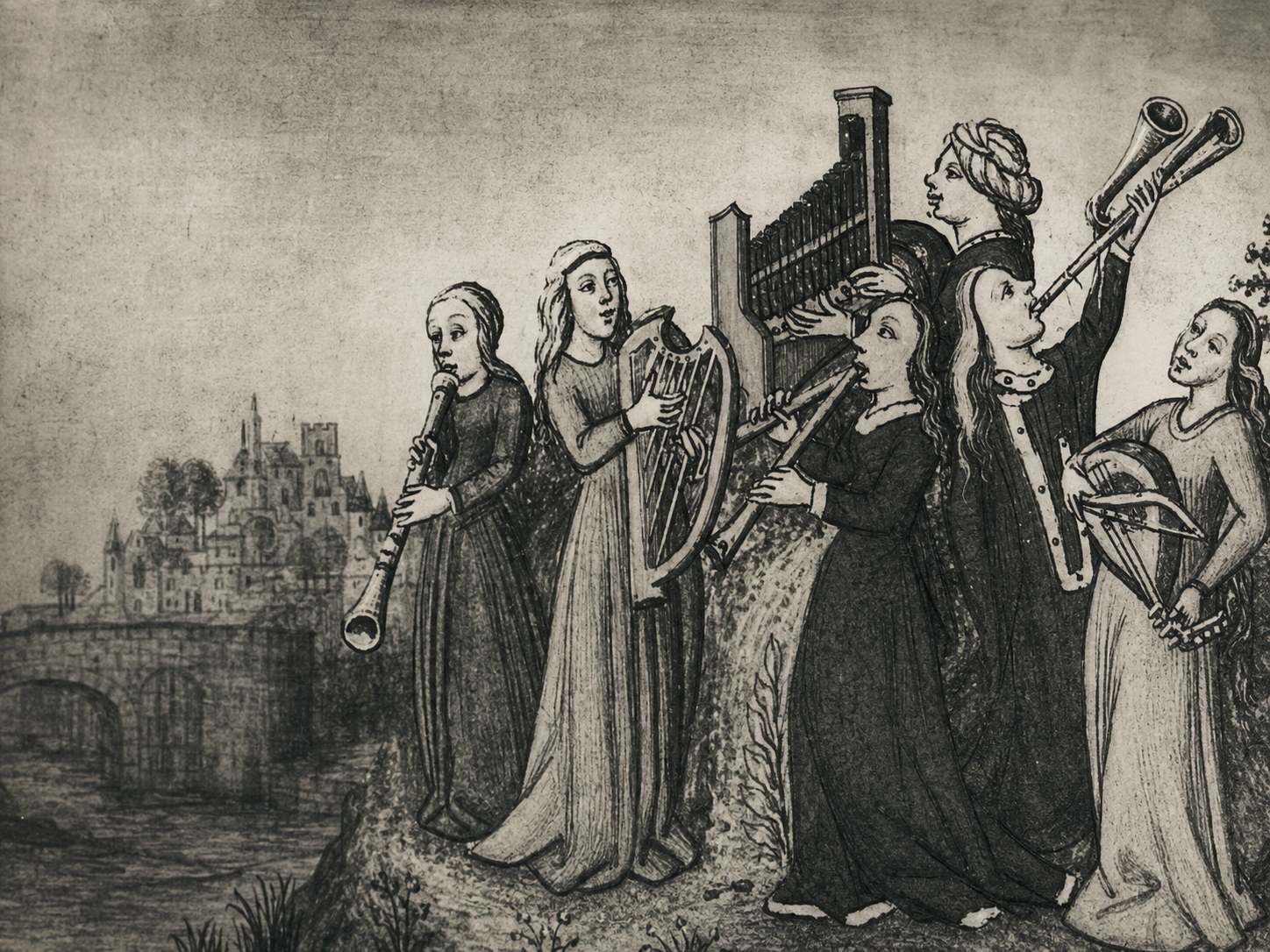
In the Christian world of the Middle Ages the itinerant musicians, who would turn up out of nowhere and suddenly disappear again, often were taken for the devil incarnate. They were said to lead innocent children away from their homes, to resuscitate the dead and make them dance the "dance macabre», as is expressed in many sagas and pictures of those days. The minstrel truly did not have a good reputation, neither with the well-behaved citizens nor with the Church: "der böse Spielmann" (the wicked minstrel), one said, was by nature "ein unstet Mensch" (an unsettled being) whose frivolous profession and mode of life called forth the wrath of the righteous. Not without reason one considered the gay and careless vagabond to be a pillar of heresy and immorality. Yet we have never found a canonical law of excommunication in virtue of the minstrel's profession and he certainly was not so completely without legal protection as is often supposed.
Brass Bulletin 8, II / 1974 pages 60–84
All content is protected by copyright © Brass Bulletin 1974–2026